
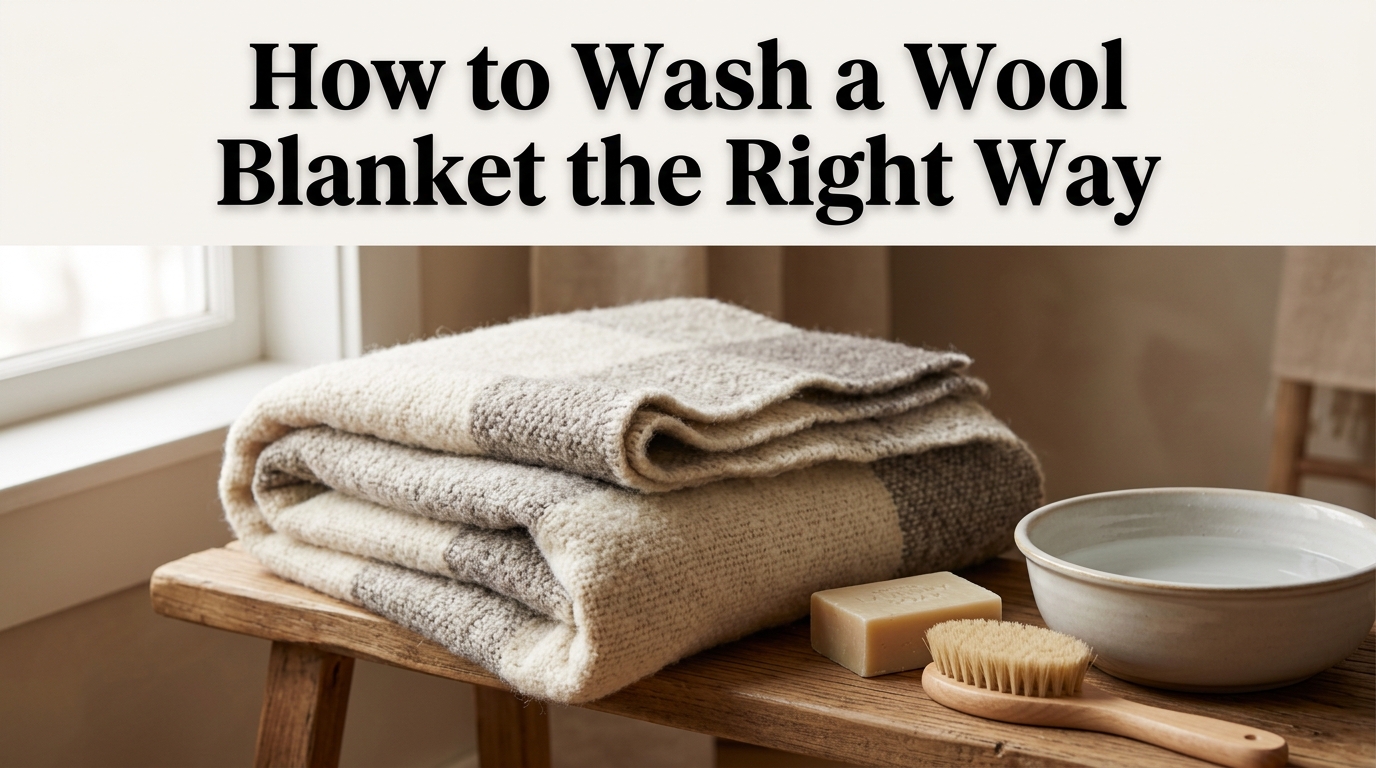
Wool blankets have a reputation for being tricky, and honestly, that reputation isn’t entirely fair. Most people ruin them not because wool is fragile, but because they wash it the same way they wash a cotton bedsheet. Hot water, a regular spin cycle, and a hot dryer will turn a beautiful wool blanket into something the size of a doormat.
If you’re wondering how to wash wool blanket without shrinking it, felting it, or stripping away its softness, you’re in the right place. This guide walks through everything step by step, in plain language, so you can clean your blanket with confidence whether you’re doing it by hand or in a machine.
Wool is actually one of the easier fibers to live with day to day. It resists odor, sheds dust, and rarely needs washing more than a few times a year. The catch is that when it does need a wash, the process has to respect how the fiber behaves in water and heat. Get that part right, and your blanket can genuinely last for decades.
Why Wool Blankets Behave Differently From Other Blankets
Cotton and synthetic blankets are made of fibers that stay pretty much the same shape no matter what you do to them. Wool is different. Each strand of wool is covered in tiny overlapping scales, almost like shingles on a roof.
Under normal conditions, those scales lie flat. But add heat, moisture, and agitation together, and the scales open up and start locking onto each other. That’s what causes felting and shrinkage, and once it happens, it can’t really be undone.
This is also why wool doesn’t need frequent washing in the first place. The fiber structure naturally resists dirt, moisture, and odor far better than cotton or polyester does. Many wool care guides note that wool is naturally stain and odor resistant because of how the fiber is built, which is why it needs far less washing than most people assume.
Knowing this one fact changes how you approach the entire laundry process. You’re not just avoiding stains. You’re avoiding heat, friction, and sudden temperature changes, because those three things are what actually damage wool.
Check the Care Label Before You Do Anything Else
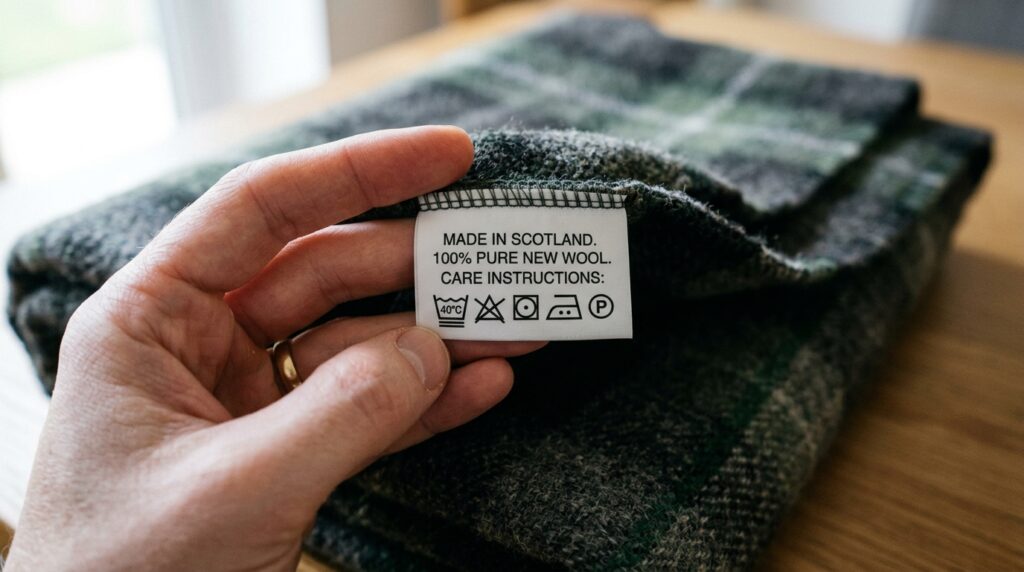
Before you fill a sink or load a washing machine, find the care tag. It’s usually stitched into a corner or seam of the blanket. This single tag tells you more than any general guide ever could, because manufacturers test their specific fabric blend and finish.
Here’s what the common symbols generally mean:
| Symbol | Meaning |
|---|---|
| Washtub with a hand inside | Hand wash only |
| Washtub with a number | Machine washable at that temperature |
| Washtub with an X through it | Do not wash, dry clean only |
| Circle | Dry clean recommended |
| Square with a circle | Safe to tumble dry (rare for wool) |
| Square with a circle and an X | Do not tumble dry |
If the tag has faded or fallen off, treat the blanket as hand wash only until you know more about it. Some manufacturers also publish detailed explanations of these care label symbols that can help you decode anything unfamiliar.
One more thing worth checking: whether the blanket is 100 percent wool or a wool blend. Blends with acrylic or polyester are usually more forgiving, while pure wool and merino wool need the gentlest treatment of all.
How Often Should You Actually Wash a Wool Blanket?
This is where most people overdo it. Wool doesn’t behave like other fabrics that trap sweat and bacteria. It has a natural ability to resist odor and shed light dirt just from being aired out.
A general rule that many textile experts follow is washing a wool blanket only once every few months, not after every use. Some care guides even suggest washing wool bedding roughly once every three months under normal household conditions, unless there’s a visible stain or spill.
Instead of washing, try this first:
- Take the blanket outside and shake it out well
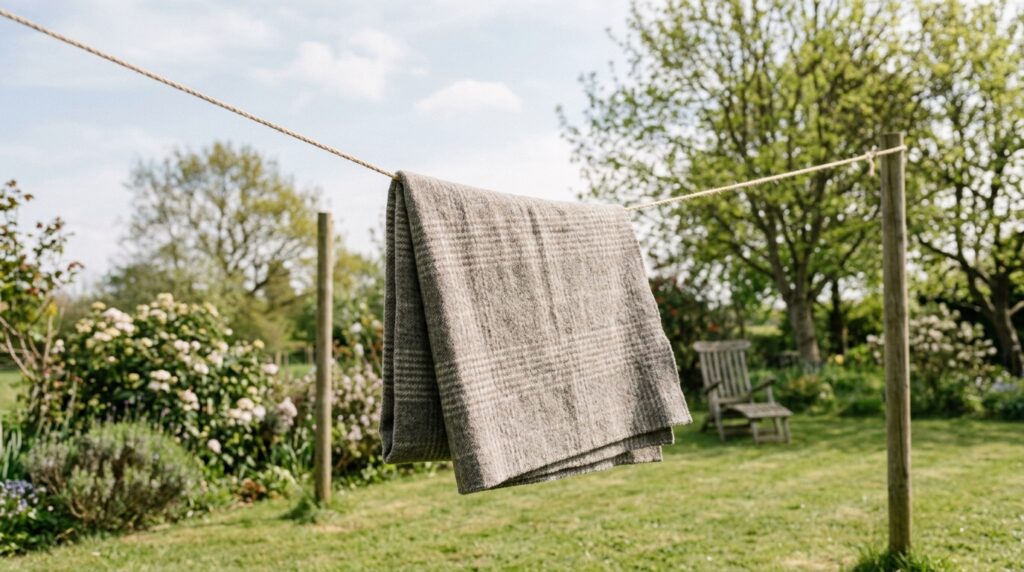
- Hang it over a railing or line for an hour or two of fresh air
- Brush the surface gently with a soft garment brush to lift dust
- Spot clean any small stains instead of washing the whole blanket
Overwashing is actually one of the fastest ways to wear out a wool blanket. Every wash cycle, even a gentle one, puts some stress on the fibers. Fewer, more careful washes will always beat frequent, casual ones.
What You’ll Need Before You Start Washing
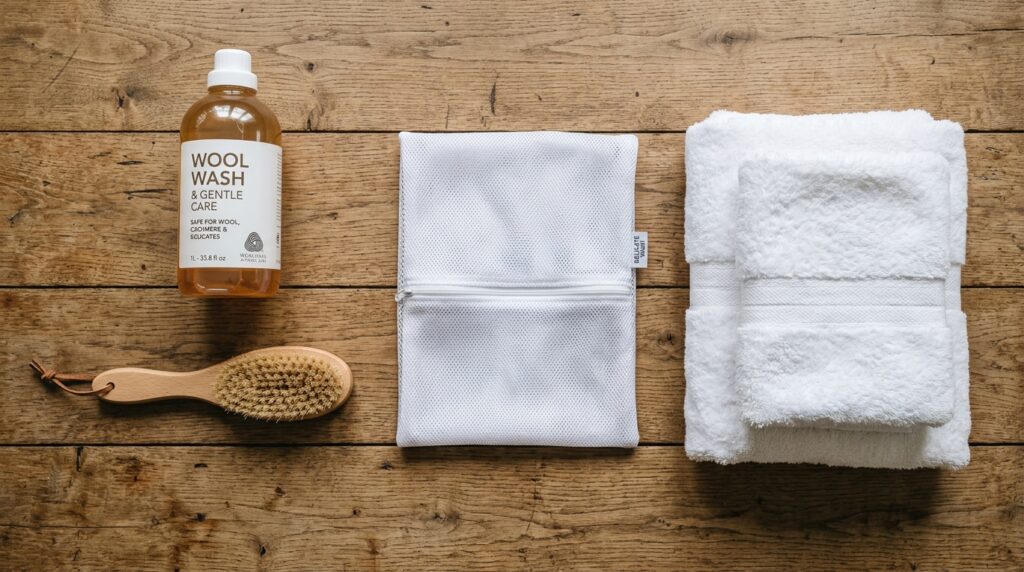
Gathering the right supplies before you start makes the whole process smoother and reduces the temptation to grab whatever detergent is closest.
You’ll want:
- A wool-specific or delicate fabric detergent, ideally one that is pH neutral
- A large sink, tub, or basin (for hand washing) or a front-loading washing machine
- Two or three clean, absorbent towels
- A mesh laundry bag if you’re using a machine
- A soft-bristled brush for spot cleaning
Avoid regular laundry detergent, and steer clear of anything containing bleach, optical brighteners, or enzymes. Enzyme-based detergents are actually designed to break down protein stains, and wool itself is a protein fiber, which means those detergents can quietly damage the wool over time.
Water temperature matters just as much as detergent choice. Lukewarm water, somewhere around 86 to 104 degrees Fahrenheit, is the safe zone. Anything hotter risks shrinking the fibers, and anything too cold may not clean effectively.
Hand-Washing Method: A Gentle Way to Clean Wool Blankets
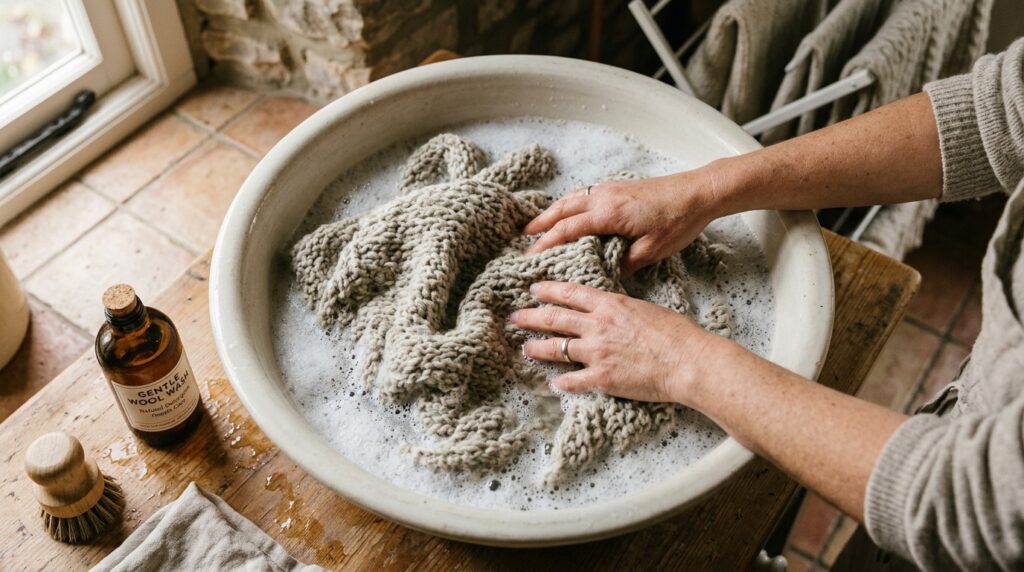
If your care label says hand wash only, or if you simply want the safest possible option, this method works well for almost any wool blanket. Many people specifically search for how to wash wool blanket by hand, and the process is more straightforward than it sounds.
Step 1: Fill a Tub With Lukewarm Water
Use a bathtub, a large basin, or even a clean sink, depending on the blanket’s size. Fill it with enough lukewarm water to fully submerge the blanket.
Step 2: Add a Small Amount of Wool Detergent
Add the detergent to the water first, swishing it around before the blanket goes in. This helps it dissolve evenly instead of sitting concentrated on one spot of fabric.
Step 3: Submerge the Blanket and Let It Soak
Gently push the blanket down into the water until it’s fully soaked. Let it sit for about 10 to 15 minutes. This soaking time does most of the cleaning work, so there’s no need to scrub.
Step 4: Press, Don’t Rub
If there are dirtier areas, press and squeeze them gently between your hands. Never rub, twist, or wring wool while it’s wet, since that’s exactly the kind of friction that causes felting.
Step 5: Drain and Rinse Thoroughly
Drain the soapy water, then refill with clean lukewarm water for rinsing. Press the blanket gently to release soap residue. Repeat the rinse once or twice until the water runs clear.
Step 6: Remove Excess Water Carefully
Never wring the blanket. Instead, press it against the side of the tub to release water, then move on to the towel-rolling method described later in this guide.
Machine Washing Method: How to Wash Wool Blanket in a Washing Machine
Not every wool blanket needs to be washed by hand. Many modern wool blankets are labeled machine washable, and plenty of washing machines now come with a dedicated wool cycle designed specifically for this fiber. Understanding how to wash wool blanket in a washing machine correctly can save a lot of time compared to hand washing a large blanket.
Here’s the safe process:
- Check the care label again. Only proceed if it explicitly allows machine washing.
- Place the blanket in a mesh laundry bag. This reduces friction against the drum and other fabric.
- Select the wool or delicate cycle. If your machine doesn’t have one, use the gentlest cold cycle available, ideally with reduced spin.
- Use cold or lukewarm water only. Never use hot water for wool, even on a gentle cycle.
- Add a wool-safe detergent in the amount recommended on the bottle, usually less than a regular load.
- Skip fabric softener. Wool doesn’t need it, and some softeners can leave residue on the fibers.
- Reduce or skip the spin cycle if possible, since high-speed spinning can stretch and distort wet wool.
Manufacturer testing generally confirms that a properly labeled wool item can safely go through a washing machine on the wool setting multiple times without shrinking, as long as the cycle and water temperature stay within the recommended range.
Keep the load small. Washing machines work by tumbling fabric against itself, and an overcrowded drum multiplies friction, which increases the risk of pilling and felting.
What If My Machine Doesn’t Have a Wool Cycle?
Use the delicate or hand-wash cycle instead, and manually confirm the water temperature setting is cold. Some machines default to warm water even on delicate cycles, so it’s worth checking the manual or running a test cycle empty first.
How to Dry a Wool Blanket Without Shrinking It

Drying is where a lot of the real damage happens, even when washing was done correctly. Heat is the enemy here, more than water ever is.
Follow this sequence:
- Lay two clean, dry towels flat on the floor or a large table
- Place the wet blanket on top and roll it up like a jelly roll, towels and all
- Press down along the length of the roll to absorb water, then unroll
- Repeat with fresh dry towels if the blanket is still very wet
- Reshape the blanket to its original size and dimensions while it’s still slightly damp
- Lay it flat on a mesh drying rack, a clean sheet on the floor, or over several parallel lines to spread the weight evenly
Never hang a wet wool blanket from a single point, like one corner over a hanger. The weight of the water will stretch it out of shape permanently. Spreading the weight across a flat surface is what keeps the blanket’s original dimensions intact.
Avoid direct sunlight while drying, since it can fade colors and dry the outer fibers faster than the inner ones, leaving the fabric feeling coarse. A shaded, well-ventilated spot works best, and most blankets are fully dry within 24 to 48 hours depending on thickness and humidity.
Tumble drying is almost never a good idea for wool blankets, even on a low heat setting. The mechanical tumbling combined with heat is essentially the exact recipe for felting.
Removing Stains From a Wool Blanket the Safe Way
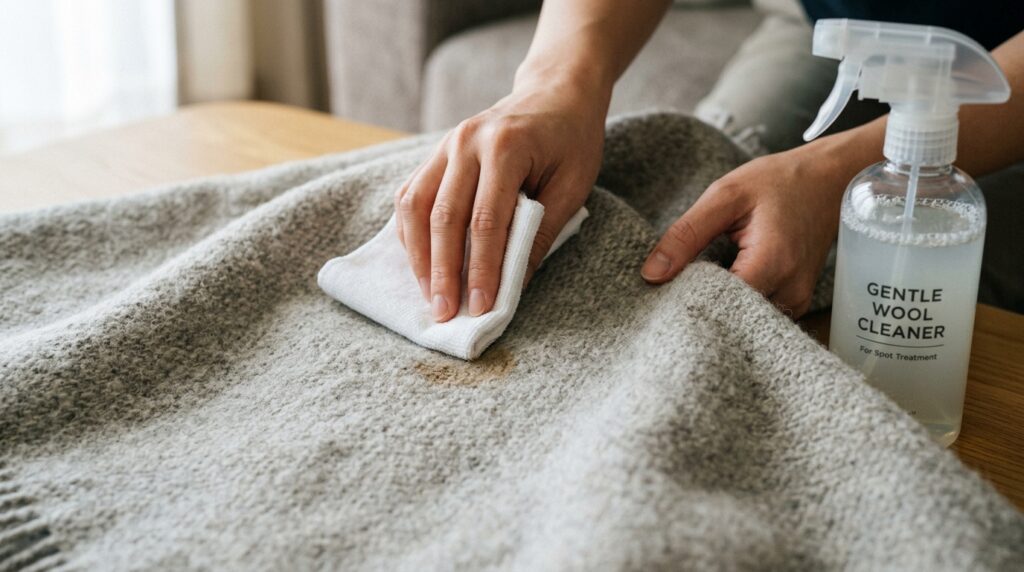
Most spills don’t require a full wash. Spot cleaning is faster, gentler, and keeps the rest of the blanket from going through unnecessary wear.
Here’s a simple approach for fresh stains:
- Blot the spill immediately with a clean, dry cloth. Don’t rub, since rubbing pushes the stain deeper into the fibers.
- Mix a small amount of wool detergent with cold water.
- Dab the solution onto the stain using a soft cloth or sponge, working from the outside of the stain inward.
- Rinse the area by dabbing with a cloth dampened in clean water.
- Press a dry towel against the spot to absorb moisture, then let it air dry.
For older or set-in stains, a slightly longer soak with wool detergent on just that section, using the same gentle pressing motion described in the hand-washing steps, usually does the trick. Avoid stain removers made for cotton or synthetic fabrics, since many contain enzymes or bleach agents that react poorly with wool’s protein structure.
Common Mistakes That Damage Wool Blankets
A surprising number of ruined wool blankets come down to just a handful of repeated mistakes. Here are the ones to watch for:
- Using hot water. Heat is the single biggest trigger for shrinkage and felting.
- Wringing or twisting the wet fabric. This creates friction exactly where wool is most vulnerable.
- Skipping the care label. Not all wool blankets are treated or finished the same way.
- Using regular laundry detergent. Standard detergents are often too harsh or contain enzymes that break down protein fibers.
- Tumble drying on any heat setting. Even “low” heat in a dryer is usually too much for wool.
- Hanging wet blankets from a single point. This stretches and distorts the shape permanently.
- Washing too often. Frequent washing accelerates wear even when done gently.
If you avoid just these seven habits, a well-made wool blanket can realistically last well over a decade with its softness and shape intact.
How to Store Wool Blankets Between Seasons
Storage matters almost as much as washing when it comes to keeping a wool blanket in good shape. A clean blanket stored the wrong way can still end up damaged, usually by pests rather than by wear.
Always wash or air out a wool blanket thoroughly before putting it away for an extended period. Even light body oils or unnoticed food residue can attract fabric pests, and soiled wool is far more likely to develop problems in storage than clean wool. Extension entomologists note that soiled woolens are the primary food source for clothes moth larvae, since the larvae need nutrients found in stains and body oils rather than in clean fiber alone.
For safe long-term storage:
- Fold the blanket loosely rather than compressing it tightly
- Store it in a breathable cotton or canvas bag rather than sealed plastic, which can trap moisture
- Keep it in a cool, dry, dark place away from direct sunlight
- Add cedar blocks or chips nearby, since cedar naturally deters moths without chemicals
- Check on stored blankets every couple of months, giving them a shake and some fresh air
Avoid storing wool near damp basements or humid attics, since moisture combined with darkness creates ideal conditions for both mildew and pests.
Expert Tips for Keeping Wool Blankets Soft and Long-Lasting
A few small habits make a noticeable difference over the life of a wool blanket.
- Air it out weekly instead of washing it. A quick shake and a few hours outside does more for freshness than most people expect.
- Rotate how you fold it. Constantly folding along the exact same lines can create permanent creases over time.
- Brush it occasionally. A soft-bristle garment brush lifts surface dust and keeps the fibers looking fresh between washes.
- Deal with pilling gently. Small fuzz balls are normal on new wool. A fabric comb or lint roller removes them without damaging the surface.
- Keep pets off it when possible. Pet oils and dander speed up the need for washing.
- Never iron wool blankets directly. If wrinkles are stubborn, use a press cloth and the lowest possible heat setting, or simply reshape the blanket while slightly damp instead.
None of these habits require much effort, but together they can add years to a blanket’s usable life.
Hand Washing vs Machine Washing: Which Should You Choose?
Both methods work well when done correctly. The right choice usually comes down to your blanket’s size, its care label, and how much control you want over the process.
| Factor | Hand Washing | Machine Washing |
|---|---|---|
| Safety for delicate wool | Very safe, most gentle option | Safe only with wool cycle and cold water |
| Time required | 30 to 45 minutes, more hands-on | Faster, mostly hands-off |
| Best for | Large, thick, or unlabeled blankets | Blankets clearly labeled machine washable |
| Risk of shrinkage | Lowest, since you control every step | Slightly higher if settings are wrong |
| Physical effort | Requires lifting wet fabric | Minimal effort |
| Ideal for | Antique, inherited, or high-value blankets | Everyday washable wool blends |
If you’re ever unsure which method to use, hand washing is the safer default. It gives you full control over water temperature, agitation, and handling, which are the three factors that matter most for wool.
Frequently Asked Questions
Can you put a wool blanket in the washing machine?
Yes, but only if the care label specifically says it’s machine washable. Use a wool or delicate cycle, cold water, a mesh laundry bag, and a wool-safe detergent to avoid shrinking or felting the fibers.
What happens if you accidentally wash wool in hot water?
Hot water combined with agitation causes the fiber scales to lock together, resulting in shrinkage and a dense, matted texture called felting. Unfortunately, this process usually can’t be reversed once it happens.
How often should a wool blanket be washed?
Most wool blankets only need washing every few months, since wool naturally resists odor and dirt. Airing the blanket outside and spot cleaning small stains is usually enough between full washes.
Can I use regular laundry detergent on a wool blanket?
It’s best to avoid regular detergent, especially anything with enzymes or bleach, since wool is a protein fiber and these ingredients can break it down over time. A dedicated wool or delicate detergent is a safer choice.
How do I get the wrinkles out of a wool blanket without an iron?
Reshape the blanket while it’s still slightly damp from washing and lay it flat to dry. This naturally smooths out most wrinkles. If ironing is necessary, use a press cloth and the lowest heat setting available.
Final Thoughts
Washing a wool blanket doesn’t have to feel intimidating once you understand the basics. Keep the water cool, handle the fabric gently, skip the dryer, and give the blanket time to rest between washes. That’s really the whole formula.
Whether you choose to hand wash or use a wool cycle in the machine, the goal is the same: protect the natural structure of the fiber so the blanket keeps its softness, shape, and warmth for years to come. Treat it gently, store it properly, and your wool blanket will likely outlast most other bedding in your home.
This article is for informational purposes only and does not replace the specific care instructions provided by the manufacturer of your wool blanket. Always check the attached care label before washing, drying, or storing your item.

