
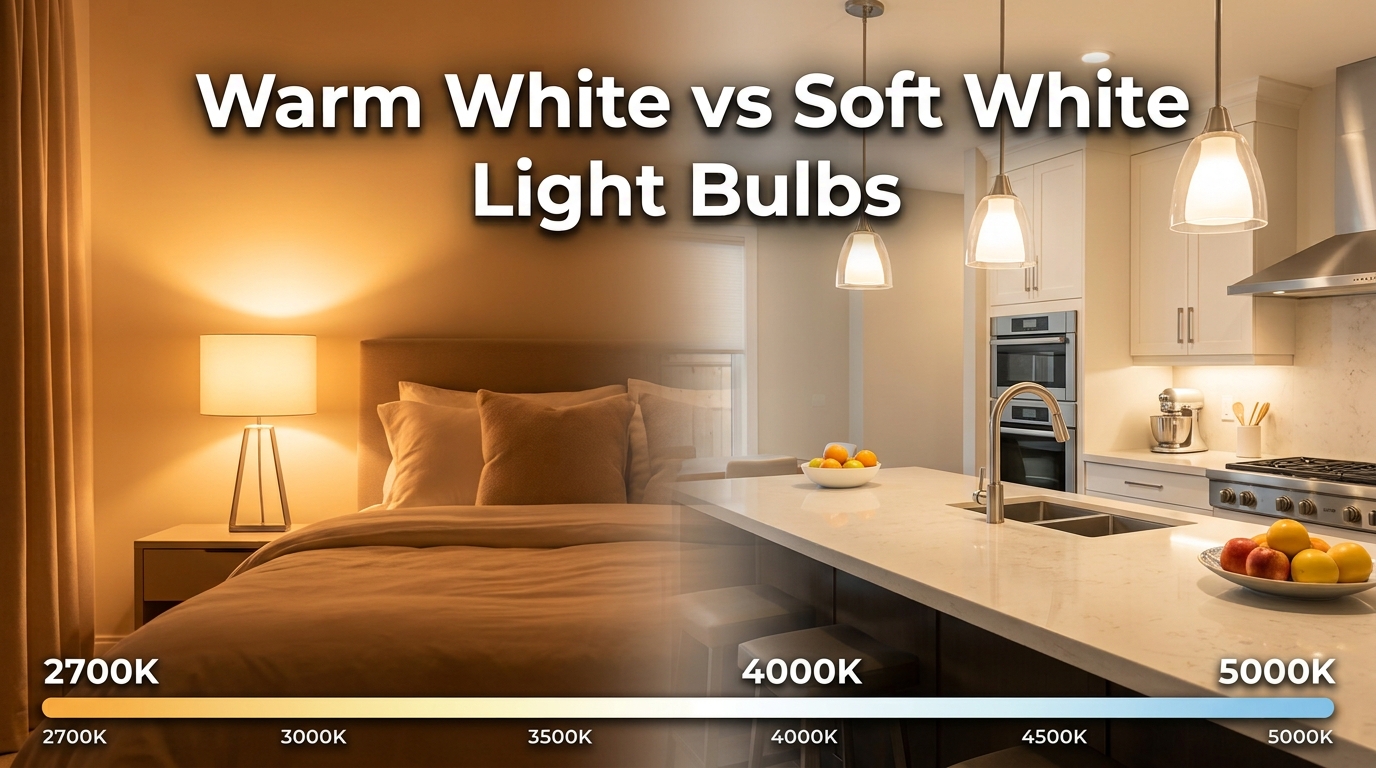
Standing in the lighting aisle with three nearly identical boxes in your hands is one of those small moments that shouldn’t feel this confusing. One box says “soft white.” Another says “warm white.” A third just lists a number like 2700K and expects you to know what that means.
If you’ve ever grabbed a bulb, screwed it in, and thought “wait, this isn’t the color I expected,” you’re not alone. The debate around warm white vs soft white light bulbs trips up even people who’ve been buying bulbs for years, mostly because the packaging language isn’t consistent from one brand to the next.
This guide breaks it down in plain English. No electrical engineering degree required. By the end, you’ll know exactly which one belongs in your bedroom, your kitchen, your home office, and everywhere in between, and you’ll never second-guess a lighting aisle again.
What Is Color Temperature and Why Does It Matter?
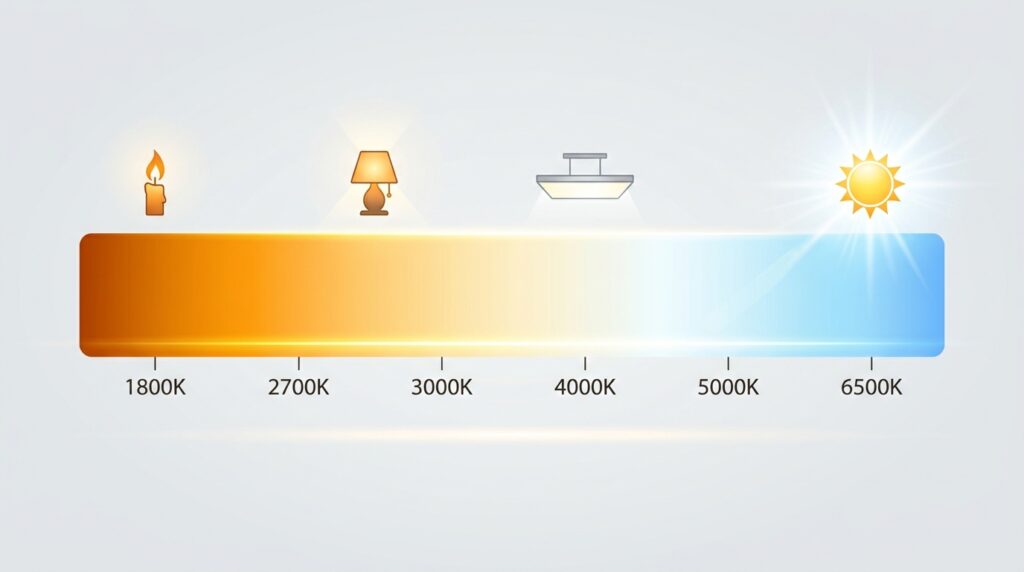
Before comparing the two terms directly, it helps to understand the system behind them. Every light bulb sold for home use is rated on something called the Kelvin scale, and this number is the real key to understanding the difference between warm white and soft white.
The concept originated from a strange but useful idea in physics: heat a solid black object and it will glow different colors depending on how hot it gets. At lower temperatures, it glows reddish orange. As the temperature climbs, the glow shifts toward white, then eventually toward blue. Lighting manufacturers borrowed this concept to describe the color temperature of artificial light, even though the bulb itself isn’t actually burning at that temperature.
Here’s the part that trips people up the most: a lower Kelvin number means warmer, more yellow-toned light. A higher Kelvin number means cooler, bluer-toned light. It feels backwards compared to how we normally use the words “warm” and “cool,” but once it clicks, it clicks for good.
Most residential bulbs fall somewhere between 2200K and 6500K. On this scale:
- 2200K–3000K produces a golden, amber-tinged glow similar to candlelight or a classic incandescent bulb.
- 3000K–4000K produces a cleaner, more neutral white light.
- 5000K–6500K produces a crisp, bluish light that resembles daylight at noon.
This is the exact scale used on the Lighting Facts label required on light bulb packaging, so even if the marketing name changes from brand to brand, the Kelvin number printed on the box stays consistent. That number is your most reliable clue.
Warm White Light Bulbs Explained

Warm white light bulbs typically sit in the 3000K to 4000K range, though some brands stretch this label slightly lower or higher. The light has a soft yellow-white quality; it’s brighter and cleaner than a candle, but still noticeably golden compared to daylight.
Think of the light you’d find in a boutique hotel lobby or a well-lit kitchen in a home renovation photo. It’s warm enough to feel welcoming, but bright enough that you can still read a recipe card or find your keys without squinting.
Where Warm White Works Best
Warm white bulbs are a strong fit for spaces where you want comfort without sacrificing too much visibility:
- Kitchens (especially over islands and counters)
- Bathrooms, particularly around vanity mirrors
- Home offices that double as reading nooks
- Hallways and entryways
The Feel of Warm White
Because it sits closer to the middle of the Kelvin scale, warm white strikes a balance. It doesn’t have the sleepy, dim quality of a very low Kelvin bulb, and it doesn’t have the sterile, clinical feel of a daylight bulb. Many homeowners describe it as the “in-between” option, warm enough to feel comfortable, but bright enough to function as everyday task lighting.
Soft White Light Bulbs Explained

Soft white bulbs sit lower on the Kelvin scale, generally between 2700K and 3000K. This is the closest match to the traditional incandescent bulbs that lit most American homes for the better part of a century, which is exactly why the term has stuck around even as LED technology has replaced the old filament bulbs almost entirely.
Soft white has a deeper, more amber cast than warm white. It’s the light most people associate with cozy evenings, table lamps, and the classic glow of a bulb behind a lampshade.
Where Soft White Works Best
Soft white shines (literally) in spaces built around comfort and winding down:
- Bedrooms
- Living rooms and family rooms
- Dining rooms
- Reading lamps and accent lighting
The Feel of Soft White
Soft white light tends to flatter skin tones, wood furniture, and warm color palettes. It’s the reason a room lit with soft white bulbs can feel instantly more relaxed than the same room under a bluish daylight bulb. It’s less about brightness and more about mood.
Warm White vs Soft White Light Bulbs: Key Differences at a Glance
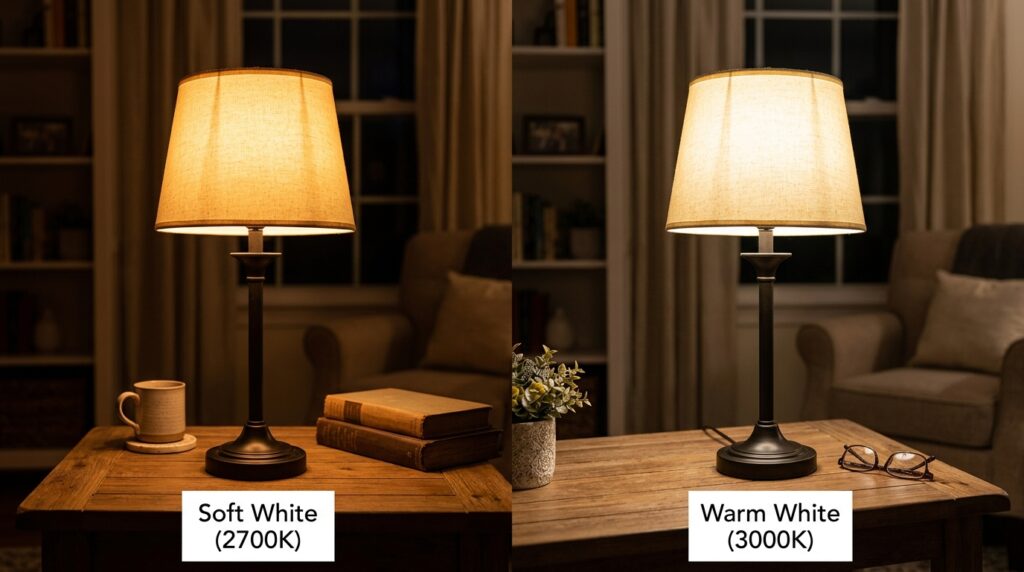
Because the two terms sound so similar, a direct comparison makes the differences much easier to remember.
| Feature | Soft White | Warm White |
|---|---|---|
| Kelvin range | 2700K–3000K | 3000K–4000K |
| Light tone | Deep amber, golden | Lighter yellow-white |
| Closest match | Traditional incandescent bulb | Slightly brighter daylight-adjacent glow |
| Best rooms | Bedrooms, living rooms, dining rooms | Kitchens, bathrooms, hallways, offices |
| Mood created | Relaxing, cozy | Comfortable but functional |
| Task suitability | Low to moderate | Moderate to high |
A useful way to remember the order: soft white is the warmest of the “white” category, and warm white is a step brighter and cleaner. It’s a small naming quirk that trips up a lot of shoppers, since logically you’d expect “warm” to be the deepest amber tone. In practice, soft white usually wins that title.
If you’re shopping and the packaging doesn’t clarify things, skip the marketing name entirely and look for the Kelvin number. It’s required on the ENERGY STAR light bulb purchasing guide label, and it’s the one piece of information that never changes meaning between brands.
How Color Temperature Affects Mood, Sleep, and Productivity
Lighting isn’t just decoration. It genuinely shapes how your body and brain respond to the time of day, and this is where the choice between warm white and soft white becomes more than an aesthetic decision.
The Melatonin Connection
Your body relies on light cues to regulate its internal clock. Bright, cooler-toned light in the evening can suppress melatonin production and delay the feeling of sleepiness, while warmer, lower Kelvin light has a much smaller effect on that process. According to the Sleep Foundation, dim yellow and amber tones have little impact on circadian rhythm and are considered a better choice for evening use compared to cooler, bluer light.
This is one of the clearest practical arguments for choosing soft white bulbs in bedrooms and nighttime spaces. The lower Kelvin range mimics the natural warmth of sunset and firelight, both of which signal to the body that it’s time to relax.
Daytime Alertness
The opposite is true during working hours. Slightly cooler, brighter light, closer to the warm white or even neutral white range, tends to support alertness and focus. This is part of why offices and workspaces often lean toward the 3500K to 4500K range rather than the deep amber tones used in bedrooms.
A Simple Rule of Thumb
If a room is used mostly in the evening for winding down, lean toward soft white. If a room is used for tasks that require focus during the day, lean toward warm white or slightly higher on the Kelvin scale. It’s not a strict rule, but it’s a helpful starting point when you’re standing in front of a wall of bulb options.
Choosing the Right Light for Every Room in Your Home
Not every room needs the same glow, and matching the bulb to the room’s actual function makes a bigger difference than most people expect.
Bedrooms
Soft white is almost always the better fit here. The lower Kelvin range supports winding down at night, and it tends to make bedding, walls, and wood furniture look richer and more inviting. Save brighter, cooler bulbs for closets or reading lamps used earlier in the evening.
Living Rooms
This is a flexible space. Soft white works beautifully for a cozy, movie-night atmosphere, while warm white can work well if the living room doubles as a reading or work area during the day. Many households use dimmable bulbs here so they can shift the mood depending on the time of day.
Kitchens
Warm white tends to perform better in kitchens because food prep, reading labels, and checking that chicken is actually cooked through all benefit from a slightly brighter, cleaner light. Soft white can feel a touch too dim for detailed tasks like chopping vegetables or reading recipe measurements.
Bathrooms
Warm white is generally recommended for bathroom vanities because it renders skin tones more accurately than very warm, amber-heavy soft white bulbs, without tipping into the harsh, clinical feel of daylight bulbs.
Home Offices
Warm white, or something slightly higher on the Kelvin scale, tends to support focus better than the deep amber tones used in bedrooms. If your office also serves as a reading nook in the evening, a dimmable or tunable bulb gives you flexibility.
Dining Rooms
Soft white is the classic choice, especially for pendant lighting and chandeliers over the table. It flatters food, faces, and table settings, and it supports the relaxed, unhurried feel most people want during meals.
Outdoor and Entryway Lighting
This depends on purpose. Porch lights and entryways often use warm white or soft white for a welcoming feel, while security or garage lighting tends to favor much higher Kelvin ratings for maximum visibility.
Pros and Cons of Warm White Light Bulbs
Pros:
- Bright enough for everyday tasks without feeling harsh
- Works well in kitchens, bathrooms, and offices
- A comfortable middle ground for shared spaces used both day and night
- Pairs well with a wide range of interior color palettes
Cons:
- Slightly too bright or clinical for some people’s taste in bedrooms
- Not ideal as the sole light source right before bedtime
- Can feel inconsistent if mixed with soft white bulbs in the same room, since the tones are noticeably different
Pros and Cons of Soft White Light Bulbs
Pros:
- Closest match to traditional incandescent lighting, so it feels familiar
- Ideal for bedrooms, living rooms, and relaxing spaces
- Flatters warm wood tones, skin tones, and cozy decor
- Gentle on the eyes in the evening
Cons:
- Can feel too dim or yellow-tinted for detailed tasks
- Less effective in kitchens or workspaces that need brighter, cleaner light
- May not provide enough contrast for reading fine print for some people
Expert Tips for Choosing Between Warm White and Soft White
- Always check the Kelvin number, not just the marketing name. “Soft white” and “warm white” can vary slightly between manufacturers, but the Kelvin rating printed on the Lighting Facts label is standardized and won’t mislead you.
- Keep color temperature consistent within the same room. Mixing a 2700K bulb with a 4000K bulb in the same fixture or open space creates a mismatched, slightly uncomfortable look, even if both bulbs are technically “good” lighting.
- Match brightness (lumens) separately from color temperature. These are two different specifications. A bulb can be warm and dim, warm and bright, cool and dim, or cool and bright. Don’t assume a warmer bulb is automatically a dimmer one.
- Consider dimmable or tunable bulbs for flexible spaces. Living rooms, home offices, and multipurpose rooms often benefit from bulbs that let you shift between warmer and cooler tones depending on the time of day.
- Look for a Color Rendering Index (CRI) of 80 or higher. This measures how accurately a bulb renders colors compared to natural light, and it matters just as much as Kelvin for rooms like kitchens, bathrooms, and closets where you need to judge color and detail accurately.
- Don’t underestimate energy savings when comparing bulb types. Modern LED bulbs use a fraction of the electricity that older incandescent bulbs required, regardless of whether you choose warm white or soft white, so the color choice won’t affect your energy bill nearly as much as the bulb technology itself.
Common Mistakes People Make When Choosing Light Bulb Color
- Buying based on the bulb’s appearance in the store. Store lighting is often bright and neutral, which makes it hard to judge how a bulb will actually look once it’s installed at home.
- Ignoring the room’s existing color palette. A cool-toned bulb can clash with warm wood furniture, while a very warm bulb can wash out cooler gray or blue decor schemes.
- Assuming all “soft white” bulbs are identical across brands. Always double check the Kelvin number rather than relying on the label name alone.
- Overlooking dimmer compatibility. Not every LED bulb works well with older dimmer switches, which can cause flickering or a shortened bulb lifespan.
- Forgetting to test before committing to a whole house. Buying one bulb to test in your actual fixture, at the actual time of day you’ll use it most, saves you from having to return a dozen bulbs later.
Frequently Asked Questions
Is warm white the same as soft white?
No, they’re related but not identical. Soft white typically falls between 2700K and 3000K, giving it a deeper amber tone, while warm white usually sits between 3000K and 4000K, giving it a slightly cleaner, brighter appearance. Both are warmer than daylight bulbs, but soft white is generally the warmer of the two.
Which is better for bedrooms, warm white or soft white?
Soft white is generally the better choice for bedrooms. Its lower Kelvin range supports a relaxed atmosphere and has less impact on your body’s natural wind-down process compared to brighter, cooler-toned light.
Can I use warm white and soft white bulbs in the same room?
It’s possible, but it’s usually not recommended for the same fixture or immediately adjacent lights, since the visible difference in tone can look mismatched. It works better when the two are separated into different areas of a larger open space, such as ambient lighting versus task lighting.
Does warm white or soft white save more energy?
Color temperature itself doesn’t significantly affect energy use. What matters far more is the bulb technology. Switching from an older incandescent bulb to an LED bulb, regardless of whether it’s labeled warm white or soft white, delivers the real energy savings.
What Kelvin number should I look for if the bulb doesn’t say “warm” or “soft” white?
Look for a number between 2700K and 3000K if you want a soft white look, or between 3000K and 4000K if you want a warm white look. The Kelvin number is the most reliable indicator, since naming conventions can vary between manufacturers.
Final Thoughts
The difference between warm white and soft white light bulbs comes down to a few hundred degrees on the Kelvin scale, but that small shift changes how an entire room feels. Soft white leans into cozy, relaxed, evening-friendly light. Warm white leans slightly brighter and cleaner, better suited to spaces where you still need to get things done.
There’s no universal winner here. It depends on the room, the mood you’re going for, and how the space gets used throughout the day. A good starting point is soft white for bedrooms and living rooms, warm white for kitchens, bathrooms, and offices, and a quick glance at the Kelvin number whenever the label leaves you guessing.
Take that knowledge with you the next time you’re standing in the lighting aisle. Check the Kelvin rating, think about how the room is actually used, and pick the glow that fits the life happening in that space.

