
Honey has a way of getting everywhere except the tea it was meant for. A dripping spoon on the way from the jar to the mug, a toddler’s fist, a jar that tips over in the pantry — and suddenly you’re standing over a stain that seems to have bonded itself to whatever it landed on. If you’re searching for how to remove honey stains, you’ve probably already discovered the first frustrating truth about this particular mess: wiping it just spreads it around.
The good news is that honey isn’t actually a hard stain to beat, once you understand what it’s doing to the surface underneath it. It’s mostly sugar and water, which means it behaves differently than grease, wine, or ink. That difference is exactly why the standard “blot and scrub” advice sometimes backfires, and why this guide walks through the right method for each surface instead of a single one-size-fits-all trick.
Why Honey Stains Are Trickier Than They Look
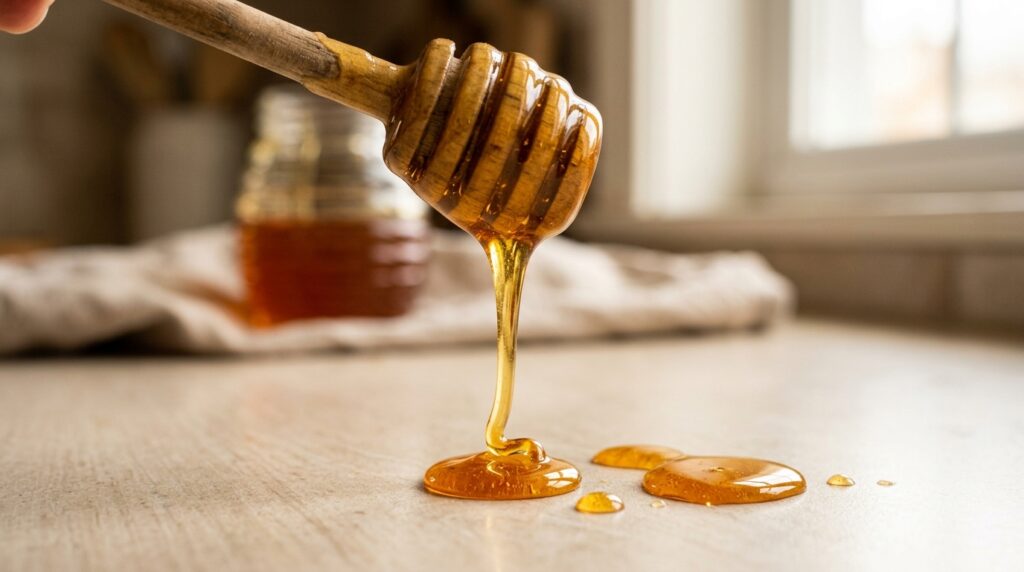
Honey is roughly 80% sugar, and the rest is water, trace enzymes, and pollen residue. That sugar content is the whole problem. Once the water evaporates, what’s left behind is a thin, hardened sugar glaze that grabs onto fibers and grout lines the way caramel grabs onto a pan. Dust and dirt then stick to that glaze, which is why an untreated honey spot often looks dingy or gray days later, even though honey itself is clear to pale gold.
Because it’s water-soluble, honey doesn’t need harsh solvents. It needs warm water, a little dish soap or detergent, and patience. Rubbing alcohol, bleach, or aggressive scrubbing usually do more harm than good, especially on carpet fibers or wood finishes, because they can push the sugars deeper or damage the surface you’re trying to save.
How Honey Behaves Differently on Different Surfaces
Not every surface reacts to honey the same way, and understanding that difference saves you a lot of guesswork. On fabric, honey soaks into the weave and dries around individual fibers, which is why a stain can feel stiff or crunchy once it’s set. On carpet, it behaves more like a coating, sitting on top of the pile and gluing fibers together into little clumps. On hard surfaces like tile or sealed wood, it mostly just sits on the surface, which is why those spots are usually the fastest to clean, as long as you get to them before the sugar fully dries and hardens into a shell.
That difference in behavior is also why a single all-purpose “honey remover” spray rarely works as well as advertised. A product built to loosen honey from a hard countertop doesn’t necessarily have the gentleness needed for silk upholstery, and a fabric-safe enzyme cleaner isn’t always strong enough for a carpet spill that’s been sitting for a week. Matching the method to the material, rather than reaching for the nearest bottle under the sink, is what actually gets the stain out on the first try.
What You’ll Need Before You Start
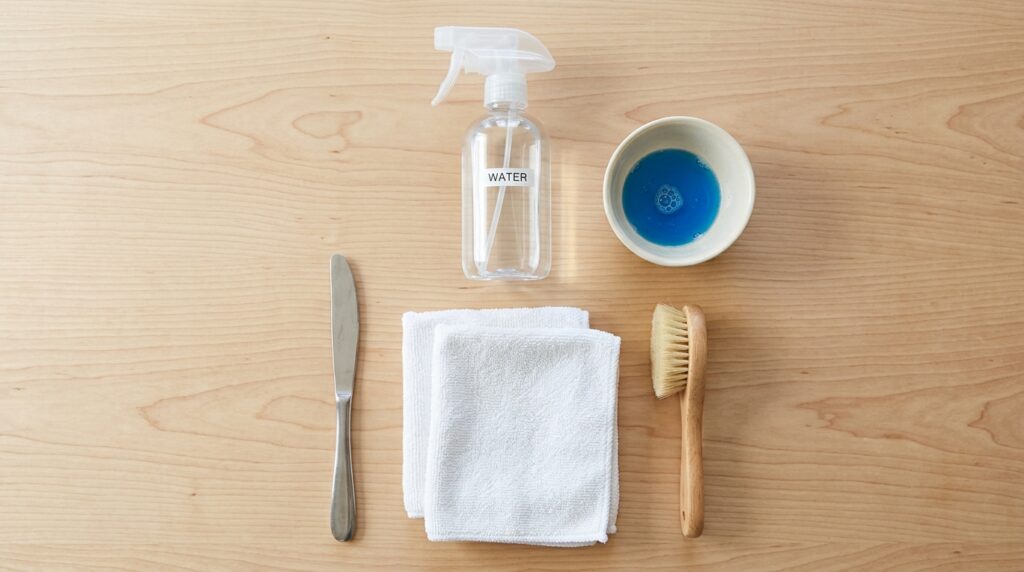
You don’t need a cabinet full of specialty products for this. A short list of basics covers almost every surface:
- A dull knife or spoon, for scraping off excess honey before you add any liquid
- Cool or lukewarm water (not hot, since heat can set some stains into fabric)
- A mild dish soap or liquid laundry detergent
- White vinegar, for tougher or older spots
- Clean white cloths or paper towels, so dye from a colored towel doesn’t transfer onto the stain
- A soft-bristled brush for carpet and tile work
One rule applies everywhere in this guide: work from the outside of the stain inward, and blot rather than rub. Rubbing spreads the sticky sugars further into the fibers or across the surface, which is how a coin-sized spill turns into a saucer-sized problem.
How to Remove Honey Stains From Clothes
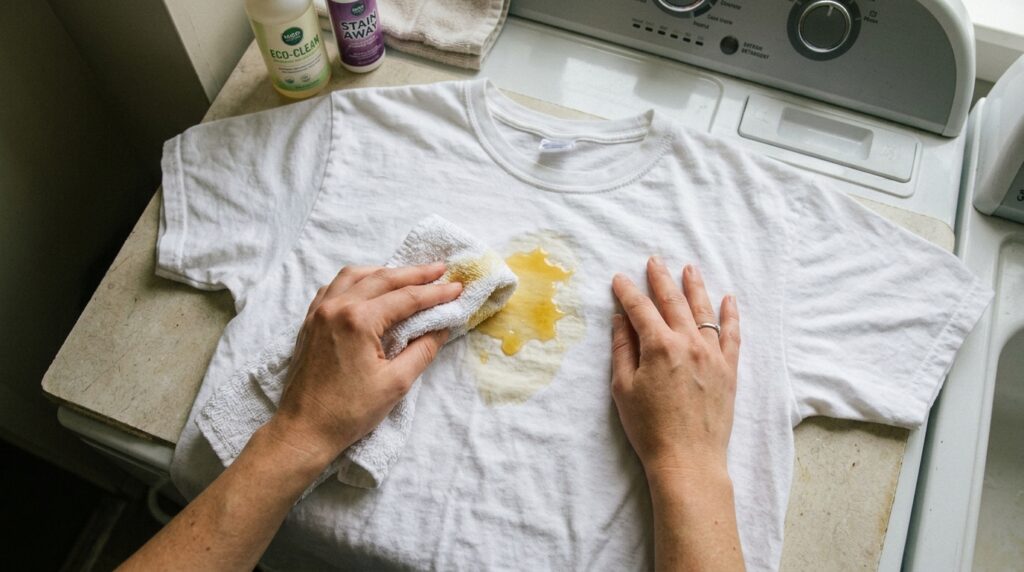
Fabric is usually the most forgiving surface for honey, mainly because you get to finish the job in a washing machine. The method changes slightly depending on how long the stain has been sitting.
Treating a Fresh Honey Stain on Fabric
- Scrape off any excess honey with a spoon or dull knife, working from the edges toward the center.
- Turn the garment inside out and run cool water through the back of the stain. This pushes the honey out of the fabric instead of driving it further in.
- Apply a small amount of liquid dish soap or laundry detergent directly to the stain and gently work it in with your fingers or a soft toothbrush.
- Let it sit for 5 to 10 minutes, then rinse thoroughly with cool water.
- Launder as usual in the warmest water the fabric care label allows.
- Check the stain before drying. Heat from the dryer can permanently set any sugar residue that’s still there, so if you can still see a mark, repeat the treatment before it goes near the dryer.
Removing a Dried or Set-In Honey Stain
Old honey stains stiffen and can even feel slightly crusty. Soak the item in cool water for 15 to 20 minutes first to soften the sugars, then follow the same detergent-and-rinse steps above. For stubborn spots on white or colorable fabrics, an enzyme-based stain remover applied before washing gives the detergent a head start, since enzymes are built to break down organic residues like these.
How to Remove Honey Stains From Carpet
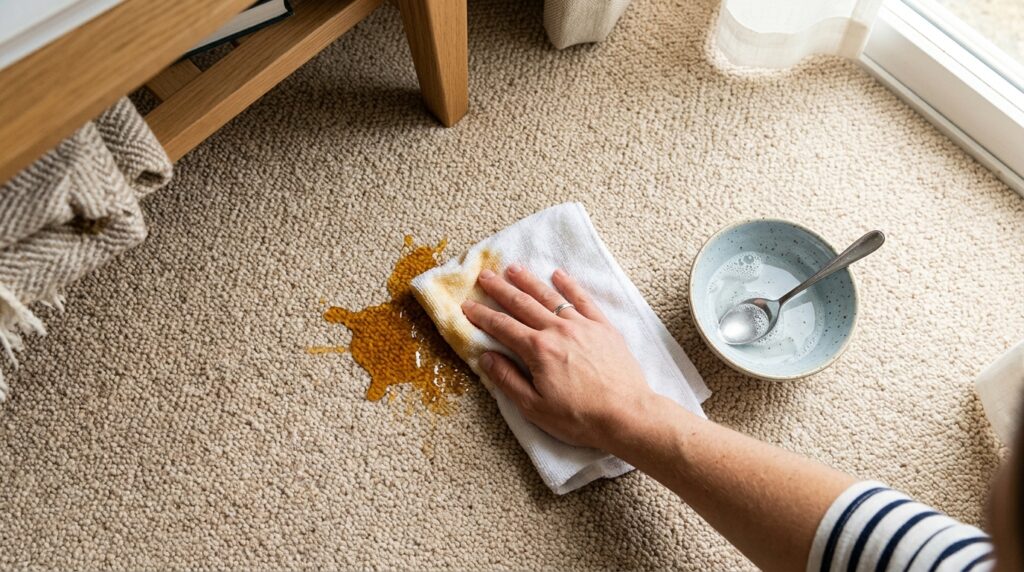
Carpet takes a bit more patience because you can’t throw it in a washing machine, and you don’t want to leave it damp for long. Cleaning experts who specialize in removing honey stains from carpet generally agree on the same core sequence: lift, dissolve, rinse, dry.
- Scoop up as much honey as possible with a spoon before you add anything wet.
- Mix one tablespoon of dish soap with two cups of warm water.
- Dip a clean cloth into the solution and blot the stain, working from the outer edge in, and switch to a clean section of cloth often so you’re not just moving the sugar around.
- Rinse by blotting with a cloth dampened in plain water to lift the soapy residue, since leftover soap actually attracts more dirt over time.
- Press dry towels firmly into the spot to draw out as much moisture as possible, then let it air dry completely, ideally with a fan pointed at it.
Skip vacuuming a fresh honey spill. It just spreads the stickiness onto the vacuum roller and, from there, onto more of the carpet. Once the area is fully dry, vacuum normally.
How to Remove Honey Stains From Tiles
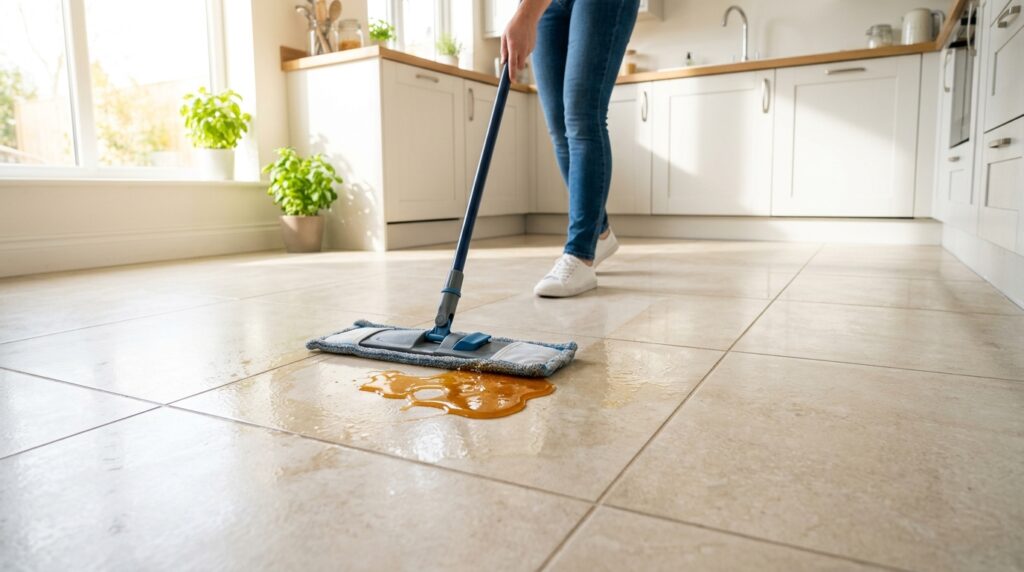
Tile is the easiest surface on this list, but grout lines complicate things because they’re porous and can trap sugary residue if you rush the job.
- Wipe up the bulk of the spill with a paper towel or cloth.
- Mop or scrub the area with warm water and a few drops of dish soap.
- For grout lines, use a soft-bristled brush dipped in the soapy solution and work in small circles.
- If a hazy or sticky film remains, a diluted white vinegar solution (about one part vinegar to four parts water) helps break it down on ceramic and porcelain, though it should be avoided on natural stone tile, which can etch from the acid.
- Rinse with clean water and dry the floor so it doesn’t stay slippery or attract new dust.
If you’re dealing with a stubborn film rather than a fresh spill, this general approach to cleaning sticky residue off floors applies just as well to a hardened honey spot as it does to everyday grime.
How to Remove a Honey Stain From a Couch
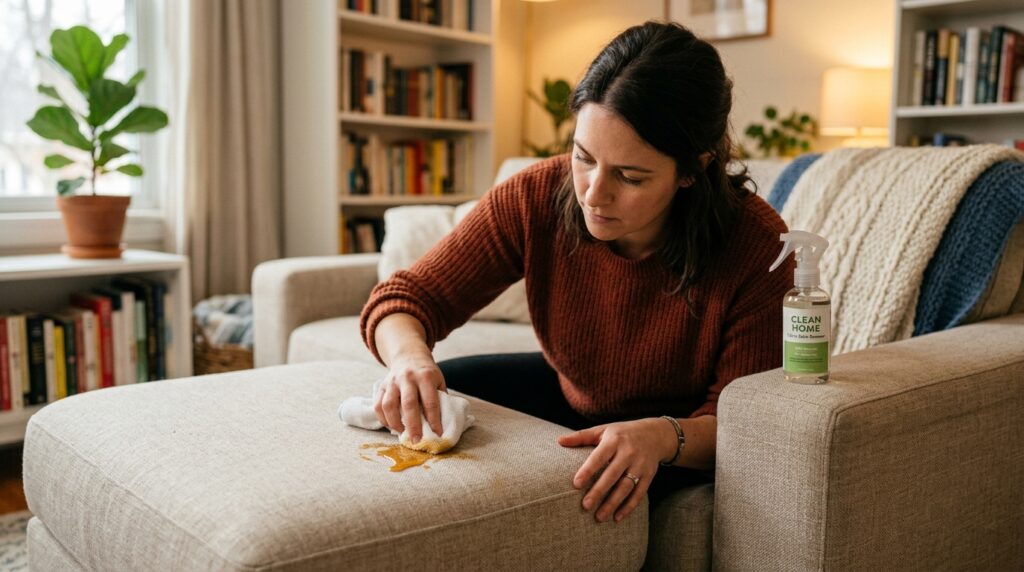
Upholstery adds one more variable: the cleaning code on the manufacturer’s tag. Most sofas have a small tag, often under a cushion, marked W, S, WS, or X.
| Code | What it means | Safe honey stain approach |
|---|---|---|
| W | Water-based cleaners are safe | Dish soap and water solution, blotted gently |
| S | Solvent-based cleaners only, avoid water | Use a dry-cleaning solvent made for upholstery |
| WS | Either water or solvent is fine | Water and dish soap solution works well |
| X | Vacuum only, no liquid cleaners | Scrape off excess honey and vacuum once fully dry, or call a professional |
For a W or WS couch, scrape off the excess honey, then blot (never rub) with a cloth dampened in a mild dish soap and water mix, working from the outside of the stain inward. Rinse by blotting with a clean, water-only cloth, then blot dry with a towel and let it air out fully before anyone sits on it. If your sofa is leather, skip the soap altogether and simply wipe with a barely damp cloth, followed by a leather-safe conditioner, since honey’s sugars won’t damage leather the way they can fabric.
Honey Stains on Delicate Fabrics
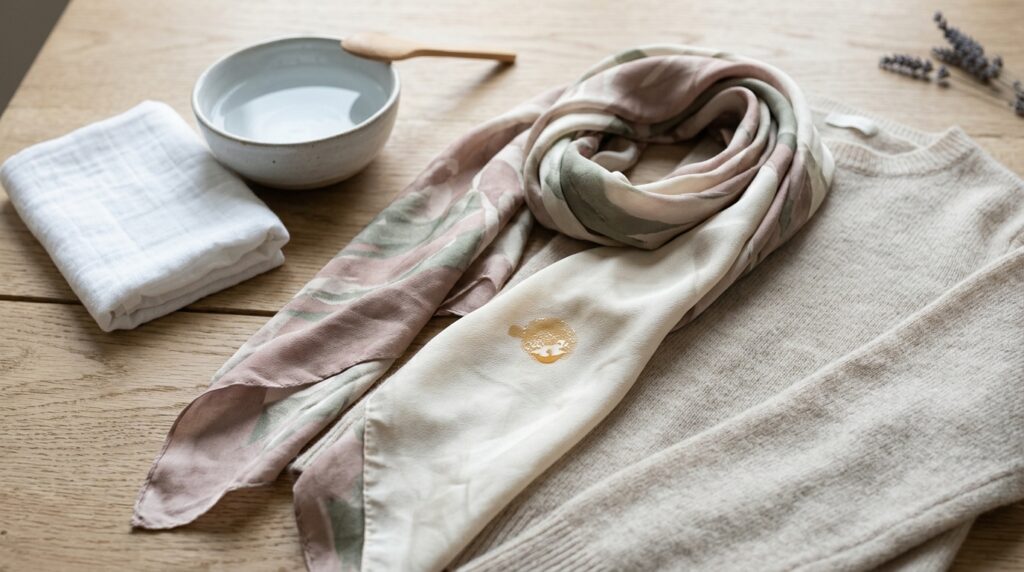
Delicate fabrics need a lighter touch than cotton or polyester, since aggressive scrubbing or the wrong cleaner can permanently damage the weave or finish.
Silk: Scrape off excess honey gently with a spoon, then blot, don’t rub, with a cloth dampened in cool water. Avoid regular dish soap, which can be too harsh for silk fibers, and reach for a gentle, pH-neutral soap made for delicates instead. If the stain doesn’t lift easily, a trip to the dry cleaner is usually the safer call than risking a watermark or texture change from repeated home treatment.
Wool: Wool reacts poorly to hot water and vigorous rubbing, both of which can cause shrinking or felting. Blot with cool water and a wool-safe detergent, working in small, gentle motions, then let the item air dry flat rather than hanging it, which can stretch the fibers while they’re still damp.
Suede and nubuck: These surfaces should never get soaked. Let the honey dry completely first, then gently scrape away the hardened residue with a dull edge before brushing the area with a suede brush. A damp cloth can help with any remaining tackiness, but keep the amount of moisture to an absolute minimum.
How Long Does It Take to Remove a Honey Stain?
Most fresh honey stains on fabric or hard surfaces come out within 10 to 15 minutes of active treatment, not counting drying time. Carpet and upholstery tend to take a little longer, closer to 20 to 30 minutes when you factor in the blot-rinse-dry cycle needed to avoid leaving soap residue behind. Older, set-in stains understandably take longer, sometimes requiring a soak or a repeat treatment the next day, but very few honey stains genuinely require more than two rounds of cleaning to fully disappear.
How to Prevent Honey Stains Before They Happen
The easiest honey stain to remove is the one that never happens. A few small habits cut down on spills significantly:
- Use a dipper with a built-in drip catch, or set the honey jar on a small plate or tray so any drips land somewhere easy to wipe rather than on carpet or fabric.
- Store honey away from the counter edge, especially in homes with young kids or pets who can knock a jar over reaching for something else.
- Keep a damp cloth within arm’s reach whenever honey comes out for breakfast, tea, or baking, so a drip gets caught within seconds instead of minutes.
- Warm the jar slightly before pouring if your honey has crystallized, since forcing a thick, stubborn stream out of the jar is one of the most common ways it ends up flying off a spoon.
- Line drawers or cabinet shelves where honey is stored with a wipeable liner, so any slow leaks from a loose lid don’t reach wood or fabric surfaces underneath.
None of these habits take more than a few seconds, but they add up to a lot fewer emergency cleanups over time.
Expert Tips for Faster, Cleaner Results
- Speed matters more than strength. A fresh honey spill treated with plain warm water often disappears with almost no effort. The longer it sits, the more the sugars bond to the surface.
- Avoid hot water on fabric stains. Heat can cook the sugars into the fibers, making them harder to lift, so stick with cool or lukewarm water until the stain is gone.
- Never rub a honey spot with a dry cloth. Dry friction just smears the sticky sugar over a wider area instead of lifting it.
- Check before you dry. Whether it’s a garment in the dryer or a wood surface near a heat vent, applying heat before confirming the stain is gone can set it permanently.
- Keep a small kit near problem zones, like a spoon and a travel-size dish soap bottle in a kitchen drawer, so you can treat a spill within the first minute or two.
Pros and Cons of Common Honey Stain Removal Methods
| Method | Pros | Cons |
|---|---|---|
| Dish soap and warm water | Gentle, safe on most fabrics and surfaces, inexpensive | Needs a few repeat applications on older stains |
| White vinegar solution | Cuts through sticky film well, natural | Not safe on natural stone or some delicate fabrics |
| Enzyme-based stain remover | Effective on set-in or older stains | Needs to sit before washing, so it’s not instant |
| Commercial upholstery cleaner | Formulated for fabric-specific safety | Requires checking the cleaning code first |
| Professional carpet or upholstery cleaning | Best for stains that have been sitting for weeks | Costs more and takes longer to schedule |
Common Mistakes That Make Honey Stains Worse
- Wiping instead of blotting, which spreads the sticky sugars across a wider area
- Using hot water on fabric before confirming the stain is gone
- Vacuuming a fresh spill on carpet, which transfers stickiness to the vacuum and other areas of the floor
- Skipping the rinse step and leaving soap residue behind, which then attracts new dirt and can look like the stain never left
- Using acidic cleaners like vinegar on natural stone tile or countertops, which can permanently etch the surface
Frequently Asked Questions
Does honey stain permanently if left too long?
Not usually, though a spot that’s been ignored for days or weeks becomes harder to fully lift, especially on light-colored carpet or fabric. The sugar itself won’t dye most materials the way a food coloring would, but dirt that collects on the sticky residue can leave behind a dingy mark that looks like a stain even after the honey is gone.
Can I use hot water to remove a honey stain?
It’s better to start with cool or lukewarm water, particularly on fabric. Hot water can help dissolve sugar faster, but it also runs the risk of setting other components of the stain into certain fibers before you’ve had a chance to treat it properly.
Is vinegar safe for cleaning honey off every surface?
No. Vinegar works well on sealed tile, glass, and many fabrics, but its acidity can damage natural stone surfaces like marble or travertine, causing etching that isn’t reversible. Always confirm your surface type before reaching for vinegar.
What if the honey stain has already dried and hardened?
Soften it first. A damp cloth left over the spot for 10 to 15 minutes, or a few minutes of warm water on fabric, will loosen the hardened sugar enough that your usual dish soap and blot method can take over from there.
Should I call a professional cleaner for a large honey spill?
For small to medium spots, the home methods in this guide typically handle the job. Larger spills on carpet or upholstery that have been sitting for an extended period, or that involve delicate materials like silk or antique wood finishes, are usually worth handing to a professional who can assess the surface without risking permanent damage.
Will honey attract ants or pests if I don’t clean it up right away?
Yes, and this is one of the more practical reasons to treat a honey spill quickly rather than letting it sit. The sugar content makes it genuinely attractive to ants and other insects, especially in warmer months. Even after the visible honey is gone, a sticky residue left behind on carpet or a baseboard can continue drawing pests until the area is fully cleaned and rinsed.
Can I use a magic eraser or melamine sponge on a honey stain?
On hard, non-porous surfaces like sealed tile or laminate countertops, a melamine sponge can help lift the last bit of sticky residue after you’ve already removed most of the honey with soap and water. It’s a poor choice for fabric or carpet, though, since the mild abrasive action that works well on hard surfaces can fray fibers or dull a carpet’s texture over repeated use.
Final Thoughts
Honey stains look intimidating mostly because of how they feel, not because they’re actually difficult to lift. Once you treat them as a sugar problem rather than a grease or dye problem, the fix is almost always the same short list of steps: scrape, dissolve with warm soapy water, blot instead of rub, and rinse thoroughly so nothing sticky is left behind to attract dirt later. Keep a spoon and a little dish soap within reach of wherever honey tends to spill in your home, and the next mess will take a lot less time to disappear.

