
How to Keep Bedroom Cool at Night
You crawl into bed, flip the pillow to the “cool side,” and within twenty minutes you’re kicking off the sheets anyway. If you’ve spent more nights than you’d like to admit sweating through your sheets, you already know the frustration of a bedroom that just won’t cool down. Learning how to keep bedroom cool at night doesn’t require a new HVAC system or a $2,000 mattress. Most of the time, it comes down to a handful of small, fixable habits around airflow, light, bedding, and timing.
This isn’t a list copied from a product page. It’s a practical breakdown of what actually moves the needle when a room feels like a sauna at 11 p.m., what’s mostly marketing noise, and how to build a nighttime setup that keeps you comfortable without turning your electric bill into a second mortgage payment.
Why Bedrooms Get Hotter Than the Rest of the House
Bedrooms are often the warmest room in a home after sunset, and there’s a simple reason for that. Heat that builds up in walls, ceilings, and windows throughout the day doesn’t just disappear when the sun goes down. It radiates slowly into the room for hours afterward, which is exactly when you’re trying to fall asleep.
A few things make bedrooms especially prone to overheating:
- They’re usually smaller and less ventilated than living spaces.
- Doors stay closed most of the day, trapping stale, warm air.
- Bodies generate heat, and two people sharing a bed roughly doubles that heat output in a confined space.
- Electronics like TVs, chargers, and lamps quietly add warmth even on standby.
The Sleep Science Behind a Cooler Room
Your body isn’t just uncomfortable in a warm room. It’s fighting biology. Core body temperature naturally drops in the hours before sleep, and that drop is part of the signal that tells your brain to release melatonin. A hot bedroom works against this process, which is why most experts recommend a bedroom temperature between roughly 60 and 71 degrees Fahrenheit for comfortable rest.
That range isn’t identical for everyone. Age, metabolism, bedding, and even what side of the bed you sleep on can shift your ideal number by a few degrees. Still, if your thermostat is sitting above 74°F at bedtime, that’s usually the first thing worth adjusting before buying anything new.
Quick takeaway: the goal isn’t to make the room freezing. It’s to help your body do what it’s already trying to do on its own.
Find Your Ideal Sleep Temperature First
Before rearranging fans or buying cooling sheets, it helps to know what temperature you’re aiming for. Start in the middle of the recommended range, somewhere around 65 to 68°F, and adjust from there over a few nights.
A simple way to dial it in:
- Set the thermostat or fan to your starting number for three nights in a row.
- Note how you felt: too warm, too cold, or just right.
- Adjust by one or two degrees and repeat.
- Once you land on a number that works, keep it consistent, including on weekends.
Consistency matters more than most people expect. Your body adapts to a regular sleep environment, so bouncing between a cold room one night and a warm one the next can make it harder to settle in either way.
Block the Heat Before It Ever Gets In
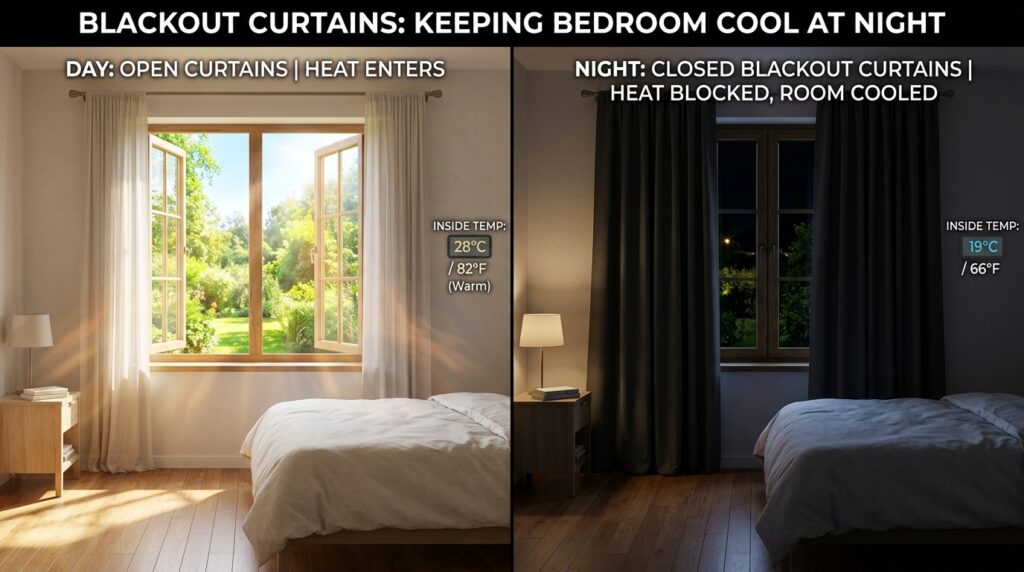
The most effective way to keep a bedroom cool at night starts hours before bedtime, during the day, while the sun is still doing damage.
Close Curtains and Blinds During Peak Sun Hours
Sunlight pouring through a window for six or eight hours turns glass into a slow-acting heater. Closing blinds, blackout curtains, or even simple sheets during the hottest part of the day keeps that heat from ever settling into the room. This single habit is one of the most consistently mentioned tips across home energy guidance from ENERGY STAR, and it costs nothing.
Use Reflective or Blackout Window Coverings
Standard curtains block light but do little for heat. Blackout curtains, cellular shades, or reflective window film bounce a meaningful amount of solar heat back outside instead of letting it soak into the fabric and glass.
Seal Gaps Around Windows and Doors
Warm outside air can sneak in through surprisingly small gaps. A basic weatherstrip or draft stopper along the bottom of a bedroom door can noticeably reduce how much hot air drifts in overnight, especially in older homes.
Fix Airflow Instead of Fighting It
Air conditioning isn’t always available, affordable, or even necessary if airflow is handled well. Moving air feels cooler than still air, even at the exact same temperature, because it helps sweat evaporate off your skin faster.
Create Cross Ventilation
If your bedroom has two windows, or a window and a door that opens to a cooler hallway, open both to create a path for air to move through the room rather than just sitting in one corner.
Position Fans With Intention
A single fan pointed randomly at the bed does less than you’d think. Try one of these setups instead:
- Place a box fan in the window facing outward to pull hot air out of the room.
- Point a second fan toward the open door to pull cooler air in from elsewhere in the house.
- Angle a fan across the room rather than directly at your body for a more even, less drying airflow.
Use Ceiling Fans the Right Way
A ceiling fan set to spin counterclockwise in warmer months pushes air straight down, creating a wind-chill effect on your skin. This is one of the cheapest cooling upgrades available, and the Department of Energy notes that a ceiling fan can let you feel noticeably cooler while raising the thermostat a few degrees, which also trims your cooling costs.
Choose Bedding and Sleepwear That Actually Breathe
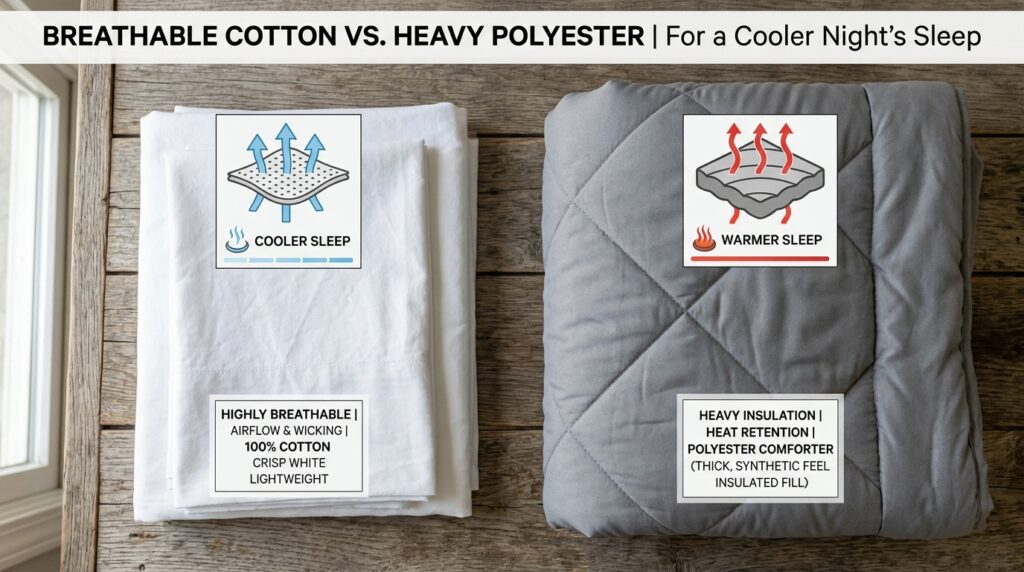
What you sleep in and sleep on has more impact on nighttime temperature than most people assume, sometimes more than the thermostat setting itself.
Fabrics That Help
| Fabric | Breathability | Best For |
|---|---|---|
| Cotton (percale weave) | High | Hot sleepers, humid climates |
| Linen | Very high | Warm climates, minimal upkeep |
| Bamboo blends | High, moisture-wicking | Night sweats |
| Silk | Moderate | Temperature-neutral feel |
| Flannel or fleece | Low | Cold climates only |
Fabrics to Avoid at Night
- Heavy polyester blends that trap heat and moisture
- Thick flannel sheets during warm months
- Memory foam pillow inserts without a cooling cover, since they retain body heat
Layer Instead of Piling On One Heavy Blanket
A lighter top sheet plus a breathable blanket you can kick off partway through the night usually works better than one thick comforter, since it gives your body room to self-regulate.
Mattress and Pillow Choices That Support Cooler Sleep
Traditional memory foam is notorious for trapping heat against the body. If you’re waking up damp or flipping your pillow constantly, the mattress and pillow setup itself might be working against you.
Helpful adjustments include:
- A mattress topper made from gel-infused foam or natural latex, both of which sleep cooler than standard memory foam.
- Pillows filled with buckwheat, latex, or down alternative rather than dense synthetic foam.
- A breathable mattress protector instead of a plastic, waterproof one whenever possible.
Pros and Cons of Cooling Mattress Upgrades
| Approach | Pros | Cons |
|---|---|---|
| Cooling mattress topper | Noticeable heat reduction, affordable | Adds bulk, needs occasional replacement |
| Latex pillow | Breathable, supportive, durable | Heavier and pricier than standard pillows |
| Cooling mattress protector | Easy to add, machine washable | Slightly less waterproofing than plastic versions |
| Full mattress replacement | Long-term comfort upgrade | Highest upfront cost |
You don’t need to replace an entire mattress to notice a difference. A topper and a better pillow cover often solve 80 percent of the problem for a fraction of the cost.
Old-School Cooling Tricks That Still Work
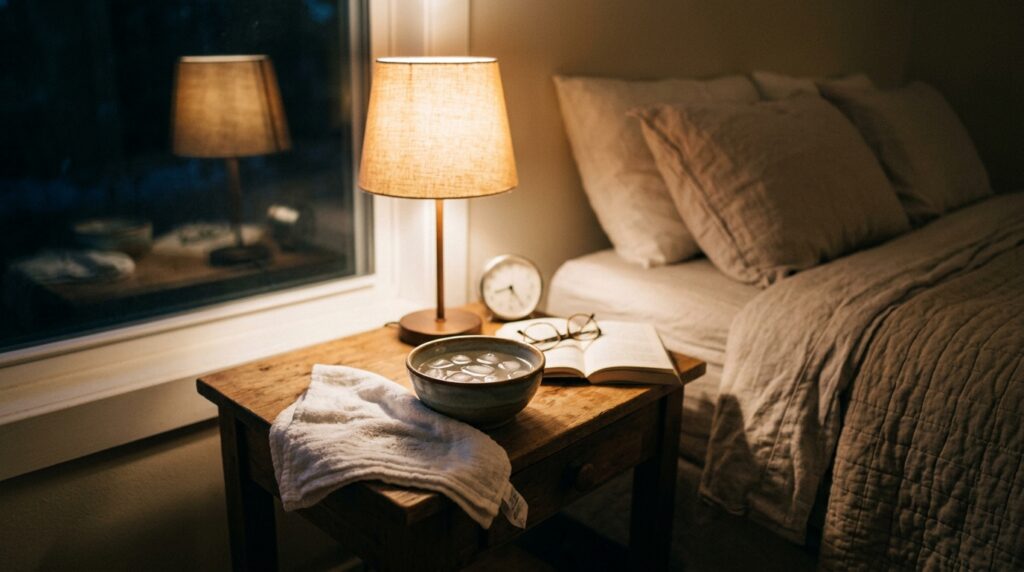
Some of the simplest tricks are the ones grandparents already knew, long before “cooling technology” was a marketing term.
- Frozen washcloth or ice pack: Wrap ice in a thin towel and press it to pulse points like wrists, neck, or ankles for quick relief before bed.
- Chilled pillowcase: Store a spare pillowcase in the freezer for the last hour before bed, then swap it on right before you lie down.
- Damp sheet trick: In very dry climates, a lightly dampened top sheet can cool the surrounding air as the moisture evaporates.
- Cool shower before bed: A lukewarm to slightly cool shower about 30 to 60 minutes before sleep helps your body’s core temperature drop faster, working with your natural sleep signals instead of against them.
These tricks won’t replace proper airflow or insulation, but they’re useful backup tools on the hottest nights of the year.
Get More Out of Your AC and Fans Without Overspending
If you do have air conditioning, small adjustments can make it far more effective without running it nonstop.
- Set the AC fan to “auto” rather than “on” so it isn’t running constantly when the room has already reached temperature.
- Keep the bedroom door and vents open so cooled air can circulate freely.
- Change the air filter regularly. A clogged filter forces the system to work harder while cooling less efficiently, as outlined in ENERGY STAR’s guidance on heating and cooling efficiency.
- Pair the AC with a ceiling or box fan so you can comfortably raise the thermostat a few degrees. Ceiling fans allow many households to raise the thermostat by up to four degrees without losing comfort, which keeps the room cool without the higher energy cost.
- Consider a programmable or smart thermostat so the bedroom automatically cools down shortly before your regular bedtime, rather than relying on you to remember to adjust it.
Small Habit Changes That Add Up
Temperature control isn’t only about hardware. A few nightly habits quietly influence how warm your bedroom feels.
- Skip late-night screen time in bed. Phones, tablets, and laptops give off real, measurable heat during extended use, on top of the light exposure that already disrupts sleep.
- Turn off unused lamps and electronics before bed rather than leaving them on standby.
- Keep the bedroom door closed during the day if the rest of the house heats up faster, then open it in the evening once outdoor temperatures drop.
- Declutter surfaces near vents or windows so air isn’t blocked before it reaches you.
- Hydrate earlier in the evening rather than right before bed, since being well-hydrated helps your body regulate temperature more efficiently overnight.
None of these changes alone will transform a hot room, but stacked together they often make a bigger difference than a single expensive purchase.
Bigger Fixes Worth Considering If the Problem Persists
If you’ve tried the habit-level fixes and the room still feels stuffy every night, the issue might be structural rather than behavioral.
- Attic and wall insulation: Poor insulation lets outdoor heat seep in far more than most people realize, and upgrading it can noticeably lower nighttime temperatures in upstairs bedrooms.
- Window upgrades: Older single-pane windows transfer heat much faster than newer double-pane or low-E glass options.
- Ceiling fan installation: If your bedroom doesn’t have one yet, it’s one of the more affordable structural upgrades with a fast payoff in comfort.
- Portable or window AC unit: For bedrooms without central air, a properly sized unit for the square footage can outperform fans alone during extended heat.
These are bigger investments, so it’s worth trying the lower-cost fixes first and only moving to structural changes if the room is still consistently uncomfortable.
A Simple Nightly Cooling Checklist
- Curtains or blinds closed during peak afternoon sun
- Fans positioned for airflow, not just noise
- Lightweight, breathable bedding swapped in for the season
- Electronics and standby lights turned off
- Thermostat set 30 to 60 minutes before your usual bedtime
- Door open or closed based on which side of the house is cooler that evening
Expert Tips Worth Remembering
- Layer your bedding instead of relying on one heavy blanket, so your body can adjust without fully waking up to remove covers.
- A well-placed fan is often more effective per dollar spent than a new mattress, especially in smaller bedrooms.
- Consistency in your bedtime and wake time supports your body’s natural temperature rhythm, which is part of why a consistent cool bedroom environment supports more uninterrupted sleep.
- If you share a bed with a partner who runs warmer or colder than you, separate lightweight blankets often solve more disagreements than adjusting the shared thermostat ever will.
For a broader look at how bedroom setup affects rest beyond just temperature, the ideal bedroom environment for sleep covers lighting, noise, and layout choices that work alongside a cooler room.
Frequently Asked Questions
What is the best temperature to keep a bedroom at night?
Most sleep guidance points to somewhere between 60 and 71°F, with many people landing comfortably around 65 to 68°F. The right number varies by person, so it’s worth adjusting gradually rather than assuming one temperature fits everyone.
How can I cool down my bedroom without air conditioning?
Focus on blocking heat during the day with closed curtains, creating real airflow with fans positioned across the room rather than pointed at one spot, and switching to breathable bedding. Combined, these steps often make as much difference as running an AC unit.
Why is my bedroom hotter than the rest of my house?
Bedrooms often stay closed off during the day, which traps warm air and blocks the ventilation the rest of the house might get. Upper-floor bedrooms are also more exposed to heat radiating down from the roof.
Does a ceiling fan actually lower the temperature of a room?
Not directly. A ceiling fan doesn’t lower the air temperature itself, but it moves air across your skin, which helps sweat evaporate and makes the room feel noticeably cooler, often letting you raise the thermostat a few degrees comfortably.
Is it bad to sleep in a room that’s too cold?
Sleeping in an overly cold room can be just as disruptive as a hot one, sometimes causing stiffness or restless waking. The goal is a comfortable, consistent temperature rather than the coldest setting possible.
Final Thoughts
A bedroom that stays comfortably cool at night usually comes down to a mix of small, boring habits rather than one big purchase: closing curtains before the sun hits, moving air with intention instead of just switching on a fan and hoping, and choosing bedding that actually breathes. Start with the free fixes, layer in a fan or two, and only reach for bigger structural changes if the room is still uncomfortable after that. Small adjustments made consistently tend to beat any single “miracle” product.

