
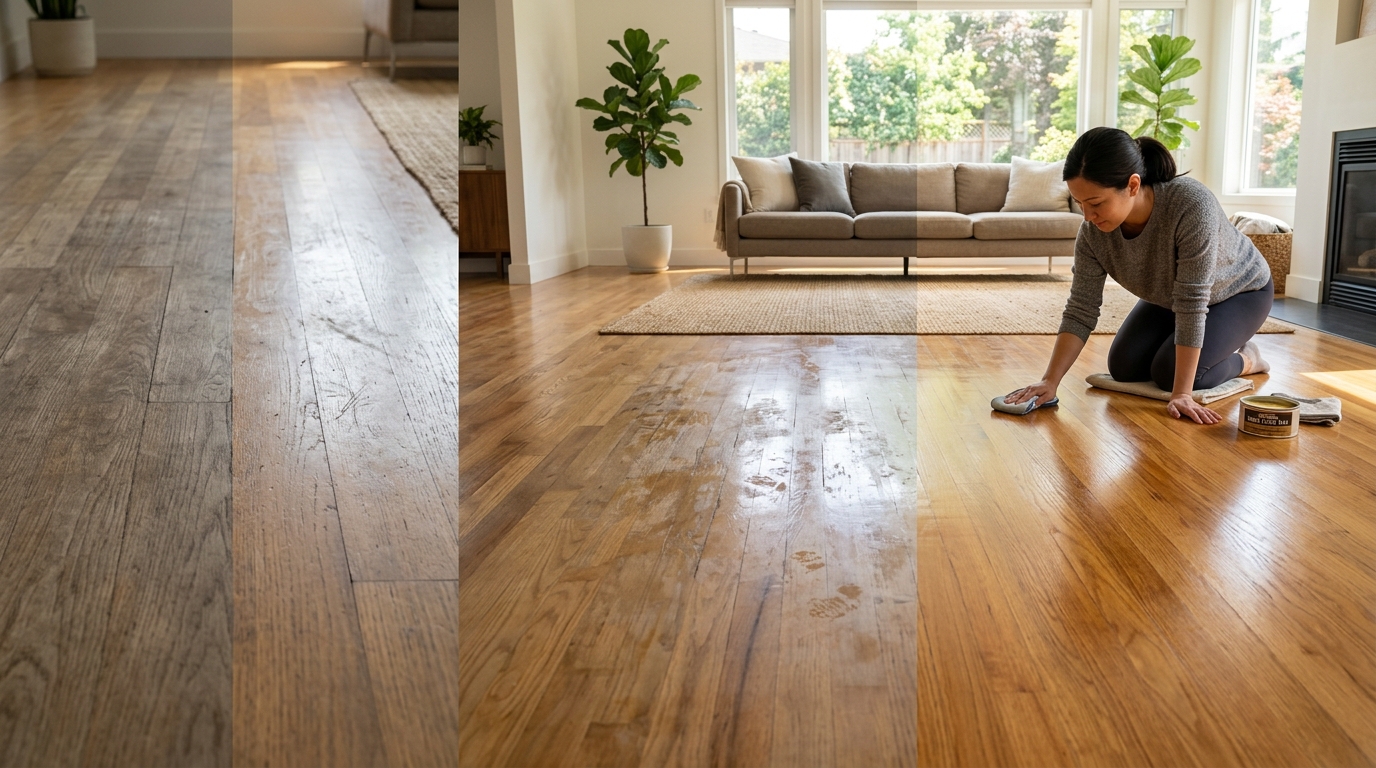
Wood floor waxing is one of the most effective ways to restore wooden floors while protecting them from everyday wear. Done correctly, it creates a protective layer against scratches, stains, moisture and foot traffic, while enhancing the natural colour, texture and grain of the wood for a warmer, richer finish.
However, waxing requires careful preparation, the right products and proper technique. When rushed or done incorrectly, floors may look dull, feel sticky underfoot or remain vulnerable to damage. Understanding the most common waxing mistakes helps homeowners, landlords and commercial property owners achieve a finish that looks better, lasts longer and protects the floor properly.
Skipping Floor Preparation
One of the biggest mistakes is applying wax to a surface that has not been properly cleaned. Dust, grease, cleaning residue and old wax build-up prevent new wax from bonding evenly with the wood. Instead of forming a smooth protective layer, the wax can trap contaminants beneath the surface, leaving the floor cloudy, patchy or uneven.
Professional preparation begins with a detailed inspection and thorough cleaning, so the floor’s condition can be assessed before any product is applied. Without this stage, even a high-quality wax may fail to deliver the shine, durability or protection expected from a professional finish.
Waxing Over Damage Instead of Restoring First
Wax can refresh wooden floors, but it is not a solution for every type of damage. Deep scratches, dents, loose boards, moisture marks and heavily worn areas should be addressed before waxing – otherwise, the wax may highlight imperfections rather than improve appearance.
This matters especially when considering the cost of wood floor sanding and waxing. A floor with significant wear may need repairs, sanding or extra preparation first. The cheapest option is rarely the most cost-effective, because poor preparation often leads to a finish that wears out quickly or needs correcting later. A professional assessment determines whether the floor is suitable for waxing, or whether more detailed restoration is needed first.
Applying Too Much Wax
A common misconception is that more wax means better protection. In reality, applying too much is a main reason floors become sticky, greasy or uneven. Thick layers fail to dry properly, attract dust and leave the surface uncomfortable to walk on.
Effective waxing depends on thin, controlled and even application. Depending on the floor’s type and condition, professionals may use paste or liquid wax to create a balanced protective layer that enhances the wood without overloading it. When applied correctly, the floor feels smooth and natural – not heavy, slippery or sticky.
Choosing the Wrong Wax for the Floor Type
Different wooden floors require different treatments. Hardwood, oak, parquet and engineered wood flooring all demand the right combination of product, preparation and technique.
Oak needs a finish that brings out its natural warmth and grain without looking artificial. Parquet requires particular precision, because detailed block patterns make uneven coverage more visible. Engineered wood must be handled carefully to protect its thin surface layer. Using the wrong wax can cause streaks, dullness, poor adhesion and reduced protection – so choosing the correct product is essential for both appearance and long-term condition.
Skipping Buffing
Buffing is a key part of the waxing process, yet it is often underestimated. Before wax is applied, buffing helps create a smoother surface and improves how evenly the wax bonds with the wood. After drying and curing, final buffing brings out the shine and creates a cleaner, more refined finish.
When buffing is skipped or done poorly, the floor may look flat or patchy – some areas appearing dull, others feeling sticky. A well-buffed floor should have a natural, elegant shine rather than an overly glossy or uneven appearance. This stage is particularly important for older floors and high-traffic spaces.
Walking on the Floor Before It Has Cured
Wax needs time to dry and cure. Walking on the floor too soon, moving furniture back immediately or cleaning the surface before the wax has settled can damage the finish, leaving marks, dull spots or areas where the protective layer has not formed correctly.
Drying and curing times vary depending on the wax, the condition of the wood and the indoor environment. A professional service follows the correct process so the finish hardens properly – rushing this stage can undo much of the work already completed.
Ignoring High-Traffic Areas
Wooden floors in hallways, offices, restaurants, schools and gyms face far more wear than those in quieter rooms. They are exposed to footwear, moisture, dirt and frequent cleaning, so the protective layer wears down more quickly. Regular waxing and polishing help protect these floors from premature wear and keep them looking presentable for longer. For commercial spaces, planned wood floor waxing maintains a professional appearance while extending the life of the flooring.
Treating Waxing as a Simple DIY Task
DIY waxing may appear straightforward, but professional results require more than basic application. The floor must be inspected, cleaned, buffed, treated with the correct wax, allowed to dry and cure, and then polished. Poor preparation, over-application or unsuitable products can cause sticky residue, uneven shine, trapped dirt and weak protection – issues that are often difficult to correct.
Understanding the Cost of Waxing
The cost of waxing a wooden floor depends on the size of the area, the condition of the floor and the type of finish required. Floors with old wax build-up, visible wear or surface damage may need more preparation before waxing can begin. This is why a detailed quote matters: a professional assessment identifies the right treatment, ensures the result suits the floor and reduces the risk of avoidable restoration costs in the future.
Professional Wood Floor Waxing for Long-Lasting Protection
Wood floor waxing can restore natural beauty, improve durability and protect floors from daily wear. But when rushed or completed with the wrong products, it can leave floors dull, sticky or unprotected. The best results come from careful inspection, thorough cleaning, correct wax selection, professional application, proper curing and final buffing.
FloorOx provides professional wood floor waxing across the United Kingdom – including East London, Central London, North London, Essex and Hertfordshire – covering hardwood, oak, parquet and engineered wood flooring in both residential and commercial properties. For property owners who want a smooth, reliable and long-lasting finish, FloorOx offers a service designed to restore the character of wooden floors while helping preserve their condition over time.

