
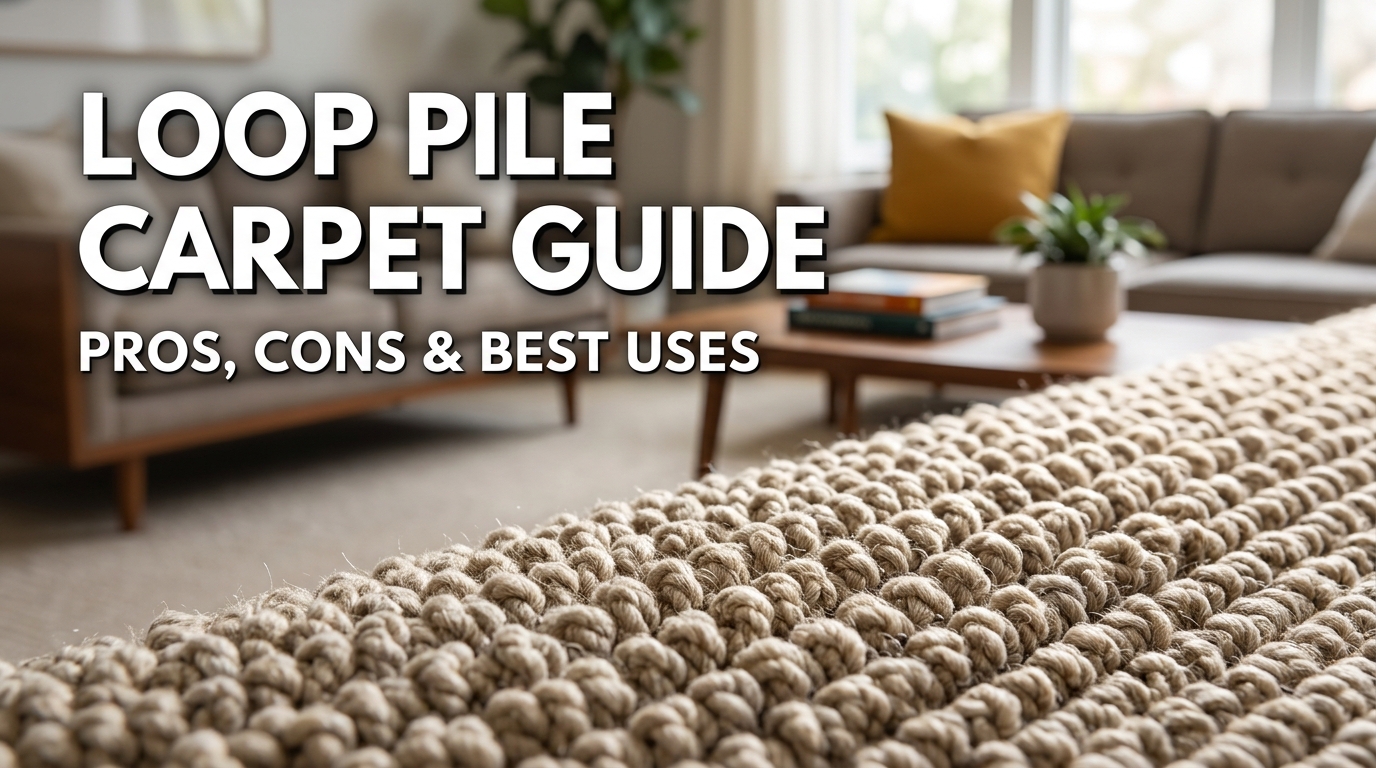
You’re standing in a flooring showroom, running your hand over two very different textures. One feels soft and sinks under your fingers. The other feels tighter, almost woven, like the surface of a basket. That second one is probably a loop pile carpet, and if you’ve ever wondered why some carpets look so much more structured and hold up so much better on stairs and in busy hallways, this is the style doing the work.
Loop pile carpet is built from continuous strands of yarn that are looped through a backing material and left uncut. Instead of standing up as individual tufts, the fibers stay connected in small loops, which is exactly what gives this carpet its firm, textured surface and its reputation for outlasting almost every other carpet style on the market.
This guide walks through what loop pile carpet actually is, the different styles you’ll run into while shopping, where it performs best, and where it falls short. No jargon, no sales pitch, just the practical information you need before you commit to a few hundred square feet of flooring.
What Is Pile Carpet, Exactly?
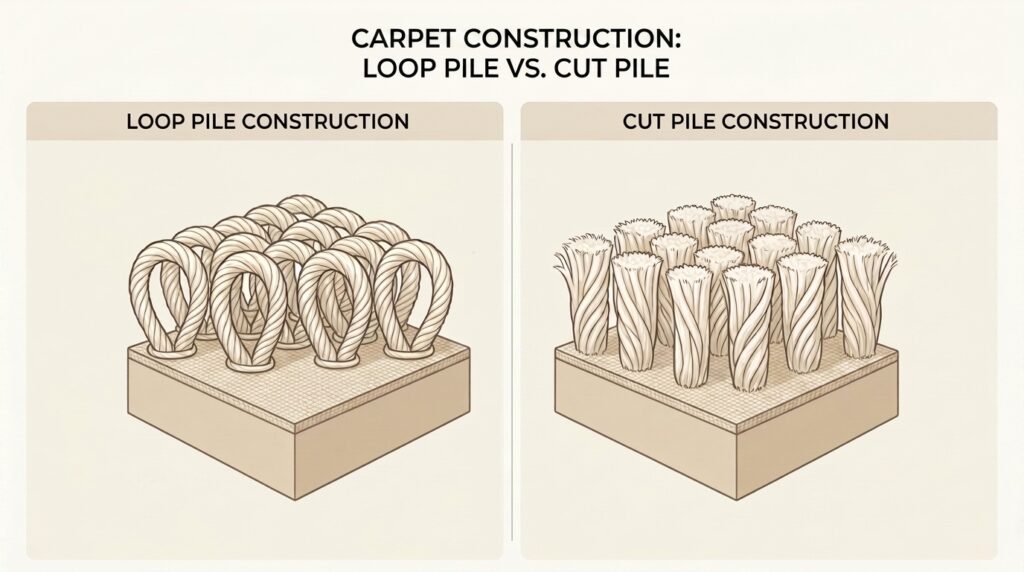
Before getting into loop styles specifically, it helps to understand what is pile carpet in general. Pile refers to the yarn strands woven through a carpet’s backing that create its visible surface. How that yarn is treated after weaving determines the two broad families of carpet you’ll encounter almost everywhere: cut and loop.
In a cut pile carpet, those woven strands get sheared at the top, so you end up with individual upright fibers standing on end. That’s what gives cut pile its soft, plush feel underfoot. A looped pile carpet, on the other hand, skips that shearing step entirely. The yarn stays in its loop form from the backing all the way up and back down again, which creates a much firmer and more uniform surface.
There’s also a hybrid category worth knowing about. Cut loop pile carpet combines both techniques in the same carpet, using cut fibers in some areas and looped fibers in others to create raised patterns or sculpted designs. It’s a nice middle ground if you like the textured look of loops but want a bit more visual dimension.
How Loop Pile Carpet Is Made
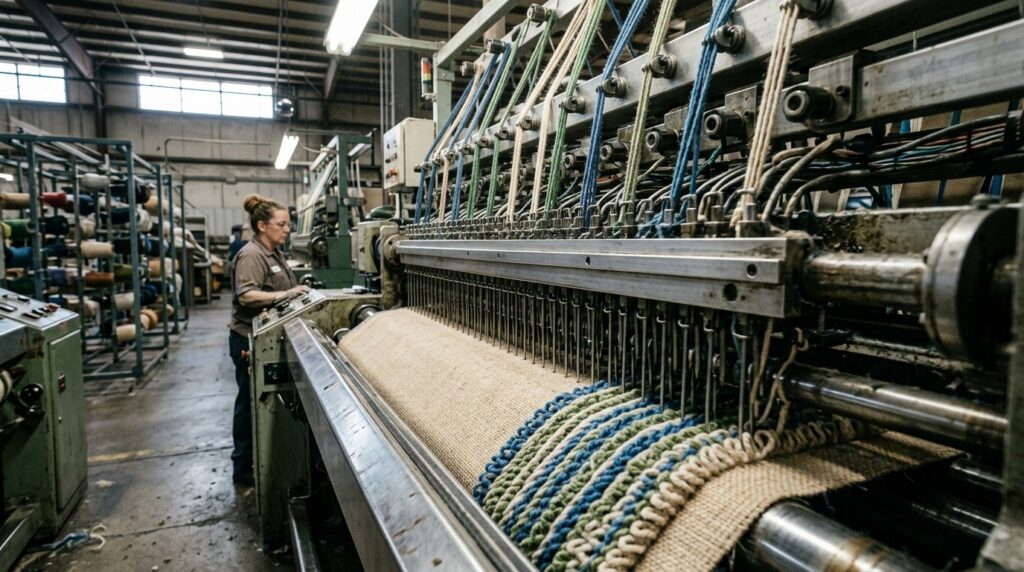
The manufacturing process for loop carpet pile starts the same way most tufted carpets do. Yarn gets threaded through a needle and pushed through a woven or synthetic backing material, forming small loops on the surface. In a cut pile carpet, a blade slices through the top of each loop. In loop pile, that step is skipped, so the loop just gets locked into place with adhesive on the backside.
That locked, uncut structure is the whole reason loop pile behaves so differently from cut pile once it’s installed. Because the fiber never gets sheared, there are no exposed fiber ends to fray, crush, or catch light unevenly. The surface stays tighter and more consistent, which is part of why a tightly woven carpet in loop pile construction tends to look the same after five years of foot traffic as it did on day one.
Manufacturers vary the height, density, and thickness of the loops to create different finishes, which brings us to the main styles you’ll actually be choosing between.
The Main Types of Loop Pile Carpet
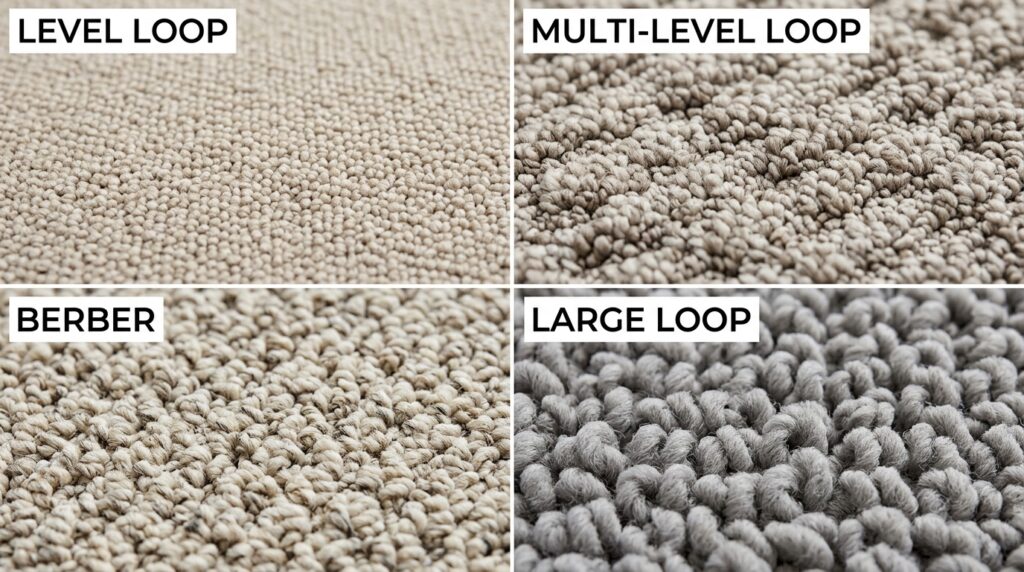
Not all loop pile carpets look or perform the same way. The category actually covers a fairly wide range of textures, and knowing the differences will save you from a lot of guesswork on the showroom floor.
Level Loop Carpet
Level loop is the most straightforward version: every loop is cut, well, not cut, but formed to the exact same height across the whole surface. That uniformity creates a smooth, tailored look that’s become the default choice for offices, hallways, and other spaces that see constant foot traffic. Because there’s no variation in loop height, there’s also less surface area exposed to snagging, which adds to its durability.
Multi-Level Loop and Patterned Loop Carpet
Multi-level loop, sometimes marketed as patterned loop carpet or pattern loop carpet, uses loops of two or three different heights to create texture, grooves, or even geometric patterns directly in the carpet surface. A patterned loop pile carpet can mimic the look of a woven rug while still being installed wall-to-wall, which makes it a popular pick for people who want more visual interest than a flat level loop but still want the durability that comes with loop construction. This style is common in living rooms, dens, and other spaces where you want the floor itself to contribute to the design.
Berber Loop Carpet
Ask most people to describe a loop carpet vs Berber comparison and they’ll usually pause, because Berber is technically a type of loop pile rather than a separate category. Berber carpet is essentially loop carpet made from short loops woven uncut into the backing, and it’s well known for being durable, easy to clean, and effective at hiding dirt. Traditional Berber carpet also often includes small flecks of a contrasting color woven into the loops, which is where its speckled look comes from. When people talk about Berber vs loop carpet, they’re really just distinguishing a specific loop style (Berber, with its chunkier loops and fleck pattern) from more generic level loop options.
Large Loop Carpet
Large loop carpet uses bigger, chunkier loops for a more casual, textured look. It reads as more relaxed and organic than a tight level loop, but the bigger loop size does make it more vulnerable to snagging, especially in homes with pets. This style tends to work best in low-to-moderate traffic areas where the bolder texture can be appreciated without much risk of catching on furniture legs or claws.
Low Pile Loop Carpet
A low pile loop carpet keeps the loop height short and tight to the backing. This construction is about as durable as loop pile gets, since there’s less loop surface exposed and less material to crush or flatten under weight. It’s a go-to choice for stairs, offices, and rental properties where long-term wear matters more than plushness.
Loop Pile vs Cut Pile: The Real Differences
The loop pile vs cut pile question comes up in nearly every carpet-shopping conversation, and for good reason. The two styles genuinely feel and perform differently once they’re underfoot.
| Feature | Loop Pile Carpet | Cut Pile Carpet |
|---|---|---|
| Texture | Firm, structured, slightly rougher | Soft, plush, smooth |
| Durability | Very high, resists crushing and matting | Moderate, more prone to matting over time |
| Best for | Hallways, stairs, offices, high-traffic rooms | Bedrooms, formal living rooms |
| Footprint/vacuum marks | Rarely shows them | Often shows them, especially plush styles |
| Pet-friendliness | Loops can snag on claws | Generally safer for pets’ nails |
| Stain resistance | Generally strong, especially with nylon | Varies by style and fiber |
| Feel underfoot | Firmer, less cushioned | Soft and cushioned |
Loop pile carpets tend to be more affordable than cut pile, generally running less per square foot, and they also need fewer replacements over their lifespan since the construction holds up longer. That said, the right choice really depends on the room. A loop carpet vs cut pile decision for a formal living room might favor cut pile for comfort, while the same decision for a mudroom or staircase almost always favors loop.
If you’re weighing the two for a specific project, it’s worth reading a full cut pile vs loop pile carpet comparison before making a final call, since the right pick often comes down to which room you’re furnishing and who (or what) walks across it every day.
Loop Pile Carpet Materials: Wool, Nylon, and Beyond
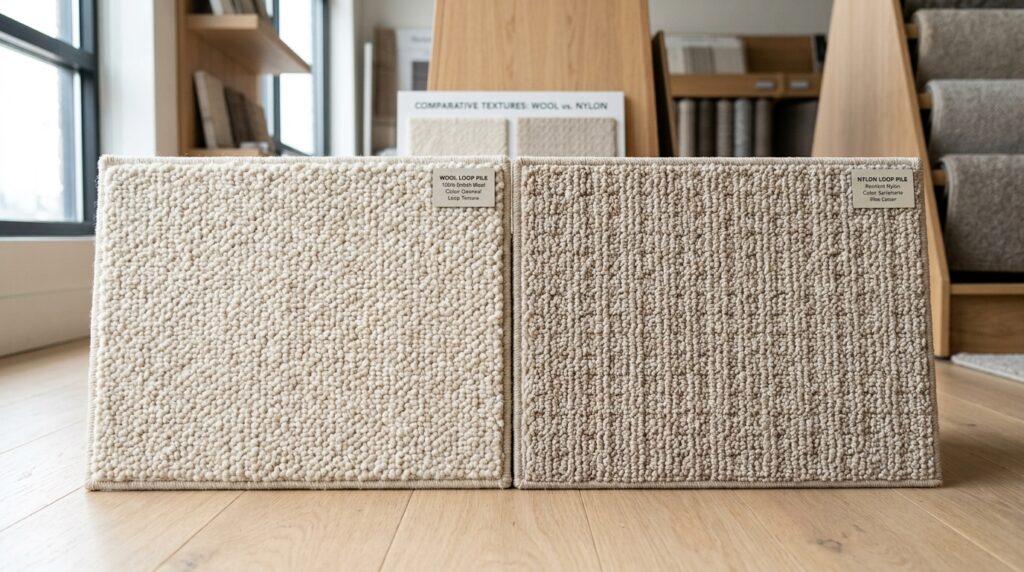
The fiber a loop carpet is made from changes its performance almost as much as the loop structure itself does.
Wool loop pile carpet is often considered the gold standard for natural fiber flooring. Wool has a natural resilience that helps it bounce back from crushing, plus it’s naturally flame-resistant and tends to hide dirt well between cleanings. A wool carpet loop pile is also biodegradable and has a warmer, more organic look than synthetic alternatives, though it usually carries a higher price tag.
Nylon is the most common synthetic choice for loop carpet, prized for its strength and stain resistance. Olefin (polypropylene) shows up frequently in Berber-style loops because it resists moisture well, which is part of why it’s a common pick for basements. Triexta, a newer fiber, adds strong built-in stain resistance without needing as much added chemical treatment.
If indoor air quality matters to you, it’s worth knowing that new carpet, padding, and adhesive can release volatile organic compounds for a period after installation. These emissions can be reduced substantially, though not eliminated entirely, in the first 72 hours through proper ventilation, and choosing a carpet certified under a recognized low-emission program can help further. You can review the EPA’s indoor air quality guidance for more detail on VOCs in household products, including flooring.
Loop Pile Carpet Pros and Cons
Every carpet style comes with tradeoffs, and loop pile is no exception. Here’s an honest breakdown before you buy.
Pros:
- Highly resistant to crushing, matting, and visible traffic patterns
- Doesn’t show footprints or vacuum lines the way plush cut pile does
- Generally more budget-friendly per square foot than comparable cut pile options
- Wide range of textures, from tight level loop to bold Berber patterns
- Well suited to high-traffic zones like stairs, hallways, and living rooms
Cons:
- Can feel firmer and less cushioned underfoot than cut pile
- Loops can snag on pet claws, luggage wheels, or sharp furniture legs
- Once a loop snags and pulls, it can unravel further if not addressed
- Tends to hide seams less effectively than dense cut pile
- Rougher texture may not suit bedrooms where softness is the priority
These loop pile carpet disadvantages aren’t dealbreakers for most households, but they’re worth weighing against your specific traffic patterns, whether you have pets, and how much softness underfoot actually matters to you room by room. If you’re comparing this to another popular twisted style, a rundown of twist carpet pros and cons can help round out the picture, since twist and loop styles often get shortlisted together for the same busy spaces.
Where Loop Pile Carpet Works Best

Loop pile earns its reputation in spaces that get walked on constantly. Because it’s the most durable carpet texture available and resists crushing and matting far better than cut fibers, it’s ideal for high-traffic areas like stairs, hallways, playrooms, and commercial spaces.
That durability is exactly why commercial loop carpet dominates in offices, retail stores, schools, and hotel corridors. Facilities managers gravitate toward level loop and low pile loop styles because they hold up to rolling carts, foot traffic, and constant cleaning without looking worn out after a year or two.
At home, the smartest places to use loop pile include:
- Staircases, where crushing and matting happen fastest
- Entryways and mudrooms, where dirt and moisture get tracked in
- Home offices, where rolling chairs put constant stress on the pile
- Family rooms or playrooms, especially with kids and frequent activity
- Basements, particularly with moisture-resistant fibers like olefin
Where is patterned loop pile carpet used most often? Living rooms and dining rooms tend to be the sweet spot, since the added texture and pattern give the space visual interest that a plain cut pile carpet can’t offer, while still holding up to regular use. Some designers also use patterned loop styles as a looped rug in a more contained area, layering it over hardwood to add texture without committing to wall-to-wall installation.
Loop Pile Carpet and Pets: What to Know
If you’ve got dogs or cats, this is the section to pay attention to. Loop pile’s biggest weak point is exactly what makes it structurally strong: the intact loops. Pet claws can snag on the loops, potentially damaging the carpet and causing frustration for both you and your pet.
That doesn’t mean loop pile is off the table for pet owners. Tightly constructed, low pile loop styles are far less prone to snagging than large loop or shag-style Berber, since there’s less loose loop surface for claws to catch. Nylon loop carpet also tends to hold up better against everyday scratching than wool, since the synthetic fiber is more resistant to tearing.
If snagging is a real concern in your household, a level loop or low pile loop carpet in a durable synthetic fiber is usually the safer middle ground between style and practicality.
Cleaning and Maintaining Loop Pile Carpet
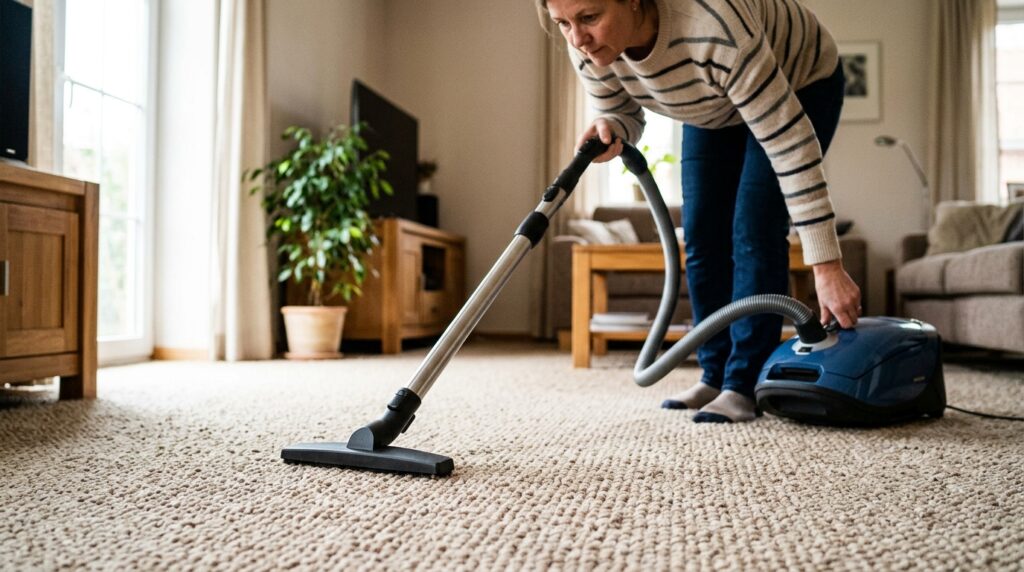
One of the underrated perks of a looped carpet is how manageable it is to keep clean. Because the surface is dense and doesn’t have exposed fiber tips, dirt has a harder time working its way deep into the pile, and the carpet doesn’t show vacuum lines the way a plush cut pile does.
That said, vacuuming technique matters more with loop pile than with other styles. A flat nozzle without a lot of bristles works best on loop pile, Berber, and similar constructions, and a beater bar or attachments with teeth or ridges isn’t recommended, since those can catch and pull at the loops instead of gently lifting debris.
A few practical maintenance habits:
- Vacuum with a suction-only or flat nozzle attachment rather than a beater bar
- Address spills immediately by blotting, never rubbing, to avoid pulling loops
- Trim any snagged loops with sharp scissors rather than pulling them
- Use furniture coasters to reduce localized crushing under heavy pieces
- Schedule professional deep cleaning every 12 to 18 months for high-traffic areas
Following steps like these can extend the life of both a wall-to-wall installation and a smaller looped rug used in a single room.
Loop Pile Carpet vs Other Popular Styles
It helps to see loop pile in context next to the other carpet families you’ll run into while shopping.
Cut loop carpet blends both constructions in one product, using the contrast between cut and uncut fibers to form raised or sculpted patterns. It gives you some of loop pile’s durability with a bit more of cut pile’s softness in the cut sections, though it’s generally not quite as tough as pure loop construction.
Twist carpet, a style of cut pile where the fibers are tightly twisted before being trimmed, is often cross-shopped with loop pile for high-traffic rooms. Twist holds up well to crushing thanks to the twist itself, but it still has exposed fiber ends, which means it behaves more like cut pile than loop pile in terms of long-term wear.
Frieze, another cut pile relative, has a shaggier, more casual look than either loop or standard twist, and it tends to hide footprints exceptionally well, though it isn’t as firm underfoot as a true loop construction.
Understanding where each style sits on the durability-versus-comfort spectrum makes it much easier to match the right pile carpets option to the right room, rather than picking based on looks alone.
Frequently Asked Questions
What is loop pile carpet made of?
Loop pile carpet can be made from wool, nylon, olefin (polypropylene), or triexta. The fiber choice affects softness, stain resistance, and price, while the loop construction itself is what gives the carpet its durability regardless of material.
Is loop pile carpet good for stairs?
Yes. Loop pile, especially low pile or level loop styles, is one of the best choices for stairs because it resists crushing and matting far better than cut pile, holding its appearance even with constant foot traffic and vacuuming.
Does loop pile carpet snag easily?
Larger loop styles and Berber can snag on pet claws, furniture legs, or sharp objects. Tighter, low pile loop constructions are much less prone to snagging since there’s less loop surface exposed to catch on anything.
Is loop pile carpet more durable than cut pile?
Generally, yes. Because the fiber ends stay locked into the backing rather than exposed and upright, loop pile resists crushing, matting, and visible wear patterns better than most cut pile styles, particularly in high-traffic areas.
Can you use a beater bar vacuum on loop pile carpet?
It’s not recommended. A beater bar or bristled attachment can catch and pull the loops, potentially causing snags or unraveling. A flat suction nozzle is the safer choice for cleaning loop pile, Berber, and similarly constructed carpets.
Bringing It All Together
Loop pile carpet earns its place in busy households and commercial spaces for a simple reason: it’s built to take a beating and still look presentable years later. Whether you land on a tight level loop for a hallway, a patterned loop for a living room that needs some visual texture, or a classic Berber for a casual family space, the underlying construction is doing the heavy lifting in every case.
If softness is your top priority, a cut pile carpet will probably win out for a bedroom or formal sitting room. But for stairs, entryways, offices, or any space that sees constant traffic, loop pile carpet remains one of the most reliable, cost-effective flooring choices available. Bring a sample home, walk on it barefoot, and picture how it’ll hold up a year from now, not just how it looks under showroom lighting.

