
Key Takeaways
- Put personal safety ahead of cleanup or repairs.
- Stop the water at a fixture valve or the main shutoff only if it is safe to do so.
- Treat water near electricity, sewage, gas odors, or structural damage as a serious hazard.
- Contain safe-to-reach water, protect belongings, and document damage while waiting for help.
- Know the locations of shutoff valves, the electrical panel, and emergency contacts before a problem occurs.
A burst pipe, overflowing toilet, or water heater leak can turn into a stressful situation quickly, especially during a cold North Shore, Illinois winter when frozen pipes are a concern. The first priority is protecting people from electrical, gas, sewage, and structural hazards, not attempting a complicated repair.
Once everyone is safe, homeowners can take practical steps to limit water damage before calling Pasquesi’s 24/7 emergency plumbers on the North Shore. A calm response can help protect floors, cabinets, furniture, and personal belongings while a qualified technician is on the way.
Why the First Few Minutes Matter
Water can travel well beyond the spot where a leak begins. A washing machine hose that starts spraying behind the appliance, for example, may soak drywall, flooring, nearby storage, and rooms below before anyone notices. Moving in a clear order helps: identify hazards, stop the flow if possible, protect the area, and document what happened.
Step 1: Check for Immediate Safety Hazards
Move People Away From Danger
Keep children, pets, and visitors away from standing water. Do not walk through water that may contact outlets, extension cords, appliances, or an electrical panel. Leave the area if a ceiling is sagging, a floor feels weak, debris is falling, or water is coming through a light fixture.
Know When to Leave the Home
Leave immediately if there is a strong gas odor, smoke, fire, visible electrical arcing, or a major structural concern. Call 911 or the appropriate utility provider from a safe location when there is an immediate threat. A plumbing repair can wait when gas, electricity, or building stability is involved.
Step 2: Stop the Water if It Is Safe
A fixture shutoff valve controls water to one appliance or fixture. These valves are commonly located beneath sinks, behind toilets, beside water heaters, and near washing machine connections. If the problem is isolated and the nearby valve is accessible, closing it may be enough.
The main water shutoff stops water to the entire home and may be near the water meter, where the service line enters the house, or in a utility area. Use it when the source is unclear, the leak is substantial, or a local valve does not work. Do not force a valve that is corroded or stuck, because it can break or begin leaking.
Step 3: Respond to Common Plumbing Emergencies
Burst Pipe or Major Supply Leak
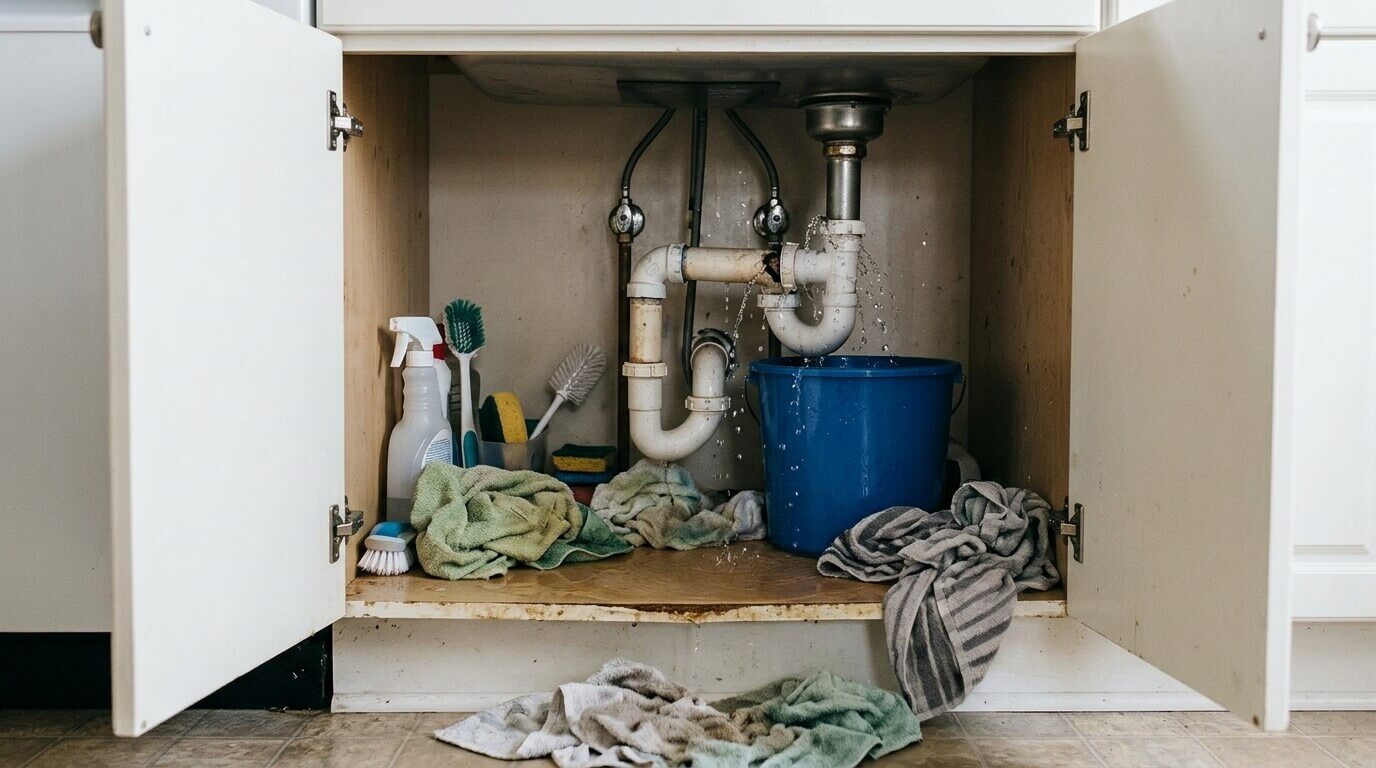
Turn off the nearest fixture valve or the main supply when it is safe to reach. Move rugs, electronics, boxes, and furniture only if you can use a dry path. Place buckets under active drips without reaching into an unsafe area, and avoid opening walls or ceilings unless directed by a professional.
Overflowing Toilet
Stop flushing immediately and close the supply valve behind the toilet if it is accessible. Keep people away from the water, particularly if it has spread across the floor. Do not add chemical drain cleaners to an overflowing toilet, since they can create an additional exposure hazard and will not address every cause of a blockage.
Water Heater Leak
Shut off the cold-water supply to the unit if the valve is easy to reach and the area is dry. Turn off power or fuel only when the controls are accessible without touching wet electrical components. Do not try to move a water heater, which is heavy and may remain hot.
Sewer Backup or Contaminated Water
Stop using toilets, sinks, showers, dishwashers, and washing machines if sewage is backing up. Wastewater can contain contaminants, so keep children and pets away and avoid direct contact. Large backups and sewage-contaminated areas are best handled by qualified cleanup professionals.
Step 4: Reduce Damage While Waiting for Help
- Use towels, mops, buckets, or a wet vacuum only when electricity is not a concern.
- Move small valuables and absorbent items to a dry location.
- Place a barrier beneath furniture legs when doing so is practical and safe.
- Keep the affected space clear so the source can be inspected quickly.
- Open interior doors for access, but do not run fans near visible mold or unsafe electrical equipment.
Step 5: Document the Damage Carefully
Take wide photos of affected rooms and close photos of the leak source, damaged materials, stains, fixtures, and belongings. Write down when the issue was discovered, whether water was still flowing, and which shutoff was used. Keep receipts for emergency supplies, cleanup, temporary repairs, and replacement items. FEMA advises households to keep detailed records and photographs when documenting property damage after an emergency.
What Not to Do During a Plumbing Emergency
- Do not enter standing water near electrical equipment.
- Do not use an open flame, torch, or heat gun near a suspected gas leak.
- Do not continue sending water into a blocked drain or overflowing fixture.
- Do not pour harsh chemicals into a sewer backup.
- Do not assume the problem is resolved simply because visible water has stopped.
Drying and Cleanup After the Water Stops
Cleaning up supply water from a small leak may be manageable after hazards are addressed, but sewage, floodwater, and unknown water require more caution. Wear gloves, sturdy footwear, and eye protection for basic cleanup in a safe area. Materials that remain wet can develop odors, staining, and mold growth, so prompt drying matters. The EPA’s guidance on drying wet materials and protecting indoor air offers useful precautions for cleanup decisions. For related prevention advice, see this guide to basement moisture control and waterproofing.
Prepare Before an Emergency Happens
- Locate and label the main water shutoff valve.
- Identify fixture valves under sinks, behind toilets, and near appliances.
- Keep towels, buckets, gloves, a flashlight, and basic cleaning supplies together.
- Save the phone numbers for your utility, insurer, property manager, and emergency plumber.
- Check exposed pipes, supply hoses, valves, and water heater connections for signs of moisture or corrosion.
Common Questions About Plumbing Emergencies
Should the Main Water Valve Always Be Shut Off?
No. If a problem is limited to one fixture and its local valve works, shutting off that fixture may be sufficient. Use the main valve when the source is unknown, the leak is major, or the local shutoff is unavailable.
What if the Shutoff Valve Will Not Turn?
Do not force it. Use another safe shutoff if available, then contact a qualified professional or property manager for guidance.
When Should a Plumber Be Called?
Call promptly for burst pipes, active flooding, sewer backups, whole-home water loss, water heater leaks, hidden leaks, or damage that cannot be safely controlled. When calling, describe the source, water flow, affected rooms, hazards, and whether a shutoff valve has been closed.
Conclusion
A plumbing emergency is easier to manage when the response plan is simple: protect people first, stop water only when it is safe, contain what you can, document the damage, and avoid risky repairs. A little preparation can help households respond more safely when an unexpected leak or backup occurs.

