
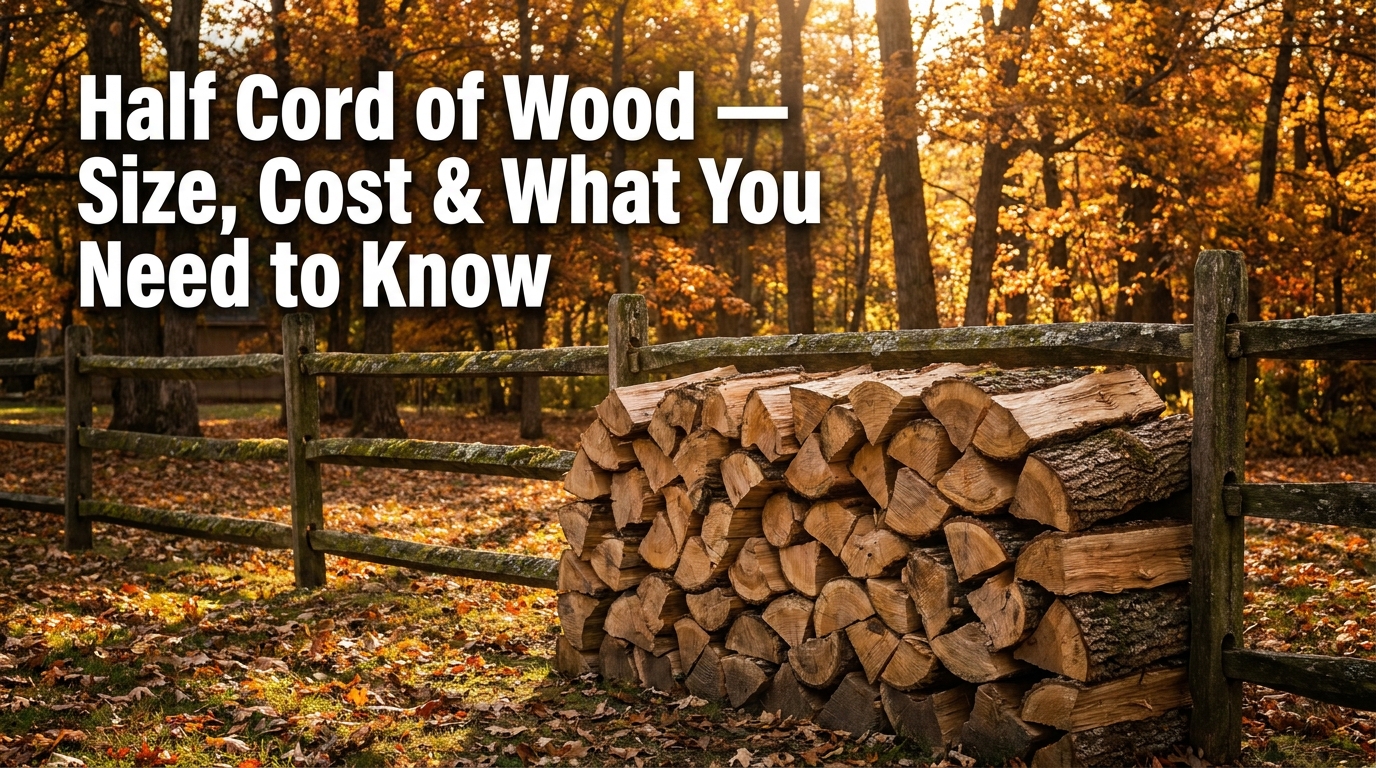
You call a firewood supplier, ask for “a half cord,” and get a price. But somewhere between hanging up the phone and watching the delivery truck pull into your driveway, a question creeps in: Wait — do I even know what a half cord actually is?
You’re not alone. Firewood measurements confuse a surprising number of people, including folks who’ve been buying wood for years. Terms like “cord,” “face cord,” “rick,” and “half cord” get tossed around loosely — and the differences matter, especially when you’re spending real money.
This guide breaks down everything you need to know about a half cord of wood: exactly how big it is, how much it weighs, what it typically costs, how long it lasts, and whether it’s the right amount for your situation.
Let’s start from the beginning.
What Is a Half Cord of Wood?
A half cord of wood is exactly what it sounds like — half of a full cord. To understand it properly, you first need to understand the standard measurement it comes from.
What Is a Full Cord?
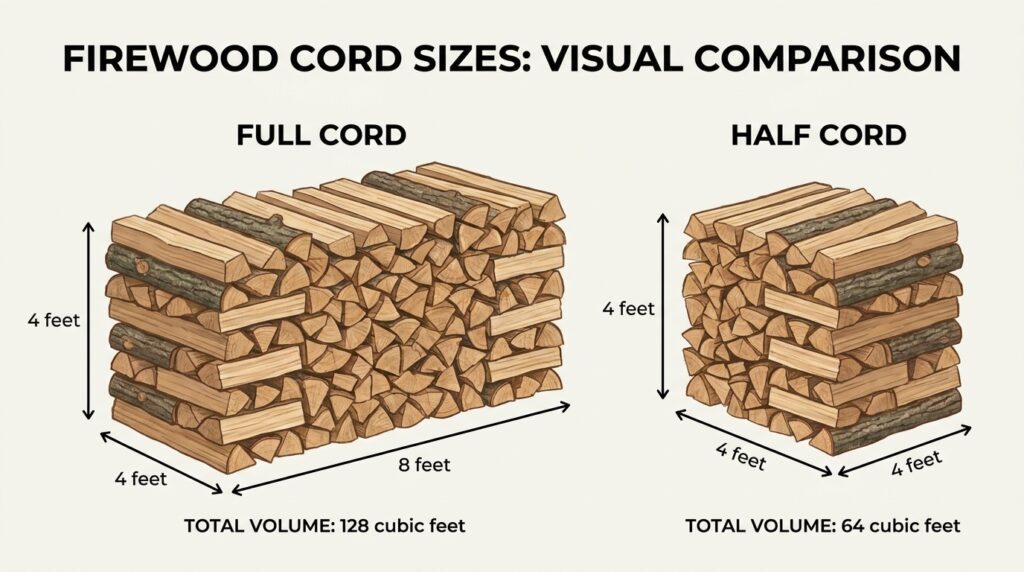
A full cord of firewood is a tightly stacked pile of wood that measures 4 feet high × 4 feet wide × 8 feet long, for a total volume of 128 cubic feet. This is the official, legally recognized measurement in most states and is regulated by weights and measures laws enforced by the National Institute of Standards and Technology (NIST).
So What’s a Half Cord?
A half cord is simply half that volume: 64 cubic feet of tightly stacked firewood. The standard dimensions are:
- 4 feet high
- 4 feet wide
- 4 feet long
Or it may also be stacked as a pile that’s 4 feet high, 8 feet long, and 2 feet deep — same volume, different arrangement. The key number to remember is 64 cubic feet of actual stacked wood (not loose-thrown).
| Measurement | Full Cord | Half Cord |
|---|---|---|
| Volume | 128 cubic feet | 64 cubic feet |
| Typical Dimensions | 4×4×8 ft | 4×4×4 ft |
| Approx. Pieces | ~700 pieces | ~350 pieces |
| Approx. Weight (hardwood) | 4,000–5,000 lbs | 2,000–2,500 lbs |
| Approx. Weight (softwood) | 2,500–3,000 lbs | 1,250–1,500 lbs |
Half Cord vs. Face Cord — Don’t Mix These Up
This is where most people get tripped up — and where sellers sometimes take advantage of buyers who don’t know the difference.
A face cord (sometimes called a “rick” or “stove cord”) looks like half a cord from the front. It’s 4 feet tall and 8 feet long — but the depth depends on the length of the wood pieces, which is typically 16 inches (one-third of the 4-foot depth in a full cord).
So a face cord is actually only about one-third of a full cord, not one-half.
Why does this matter?
Because some sellers price a face cord close to what a half cord costs. If you’re not paying attention, you could end up with significantly less wood than you paid for.
Quick Rule:
- Face cord = 4 ft × 8 ft × 16 in ≈ 42 cubic feet
- Half cord = 4 ft × 4 ft × 4 ft = 64 cubic feet
Always ask your seller: “What are the exact dimensions?” and “How long are the wood pieces?” before buying.
How Much Does a Half Cord of Wood Cost?
The price of a half cord of wood varies based on your region, wood species, whether it’s seasoned or green, and how it’s delivered.
National Price Ranges
| Wood Type | Half Cord Price Range |
|---|---|
| Softwood (pine, fir) | $75 – $150 |
| Mixed hardwood | $125 – $200 |
| Oak (seasoned) | $150 – $250 |
| Cherry, hickory, walnut | $175 – $300+ |
Factors That Affect Price
1. Region Prices in the Northeast and upper Midwest tend to run higher because firewood is a primary heating source. Southern and Pacific Northwest prices are often lower.
2. Seasoned vs. Green Wood Seasoned wood has been dried for 6–12+ months and burns hotter and cleaner. It costs 15–25% more than green (freshly cut) wood but is worth every penny.
3. Delivery Many suppliers charge a flat delivery fee ranging from $25 to $75 depending on distance. Some include delivery in the price; others don’t.
4. Stacking Stacking services typically add $20–$40 to the cost, but they save you serious time and back pain.
5. Time of Year Buying in late spring or summer — when demand is low — can save you 10–20% compared to peak fall and winter prices.
Expert Tip: Buy your half cord in May or June. You’ll get better prices, more time for the wood to finish seasoning, and you’ll beat the seasonal rush that causes shortages in colder months.
How Much Does a Half Cord Weigh?
Weight is an important practical concern — especially if you’re hauling it yourself.
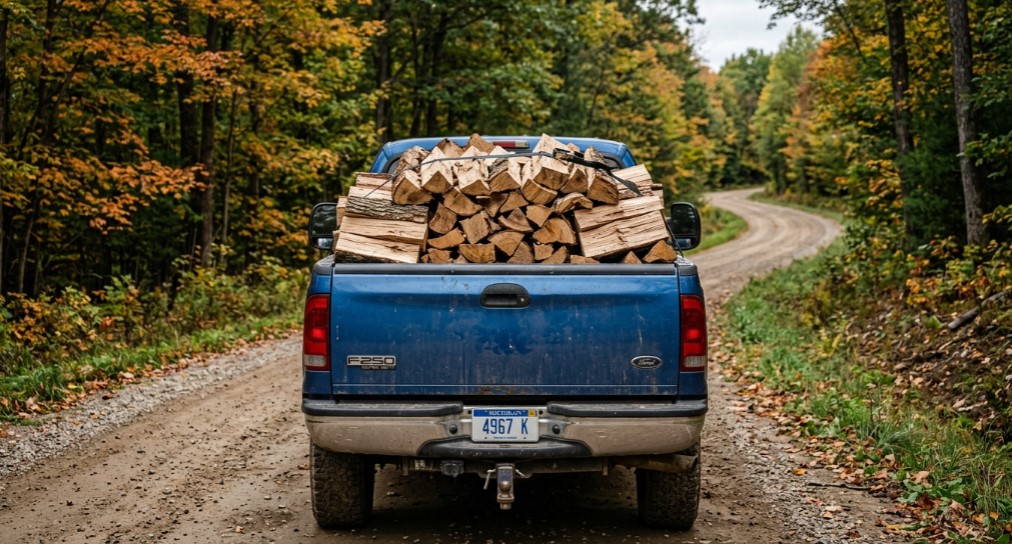
A half cord of hardwood (like oak or maple) weighs roughly 2,000 to 2,500 pounds when dry. Green hardwood can weigh considerably more — up to 3,000 lbs — because of moisture content.
A half cord of softwood (like pine or spruce) weighs around 1,250 to 1,500 pounds dry.
Can a Pickup Truck Carry a Half Cord?
Usually not in a single load.
A standard half-ton pickup truck (F-150, Silverado 1500, etc.) has a payload capacity of roughly 1,500 to 2,000 pounds depending on the configuration. A half cord of dry hardwood will often exceed that limit.
Options if you’re self-hauling:
- Make two trips
- Rent a utility trailer
- Use a 3/4-ton or 1-ton truck
- Ask the supplier to deliver
Always check your truck’s payload rating in the door jamb sticker or owner’s manual before hauling heavy loads. Overloading a truck damages suspension, tires, and frame — and it’s a safety risk.
How Long Does a Half Cord of Wood Last?
This is the question most people really want answered. And the honest answer: it depends.
Here’s a practical breakdown:
For a Wood-Burning Fireplace (Occasional Use)
If you burn fires 2–3 evenings per week in cooler months, a half cord can last an entire heating season — roughly November through March.
For a Wood Stove (Primary Heat Supplemental)
If you’re running a wood stove most evenings for supplemental heat, a half cord might last 6–8 weeks depending on your climate and how cold it gets.
For a Primary Heating System
If wood is your sole or primary heat source in a cold-weather climate, you’ll likely need 3–5 full cords per season. A half cord would last only 2–4 weeks under heavy use.
| Use Case | Estimated Duration |
|---|---|
| Recreational fireplace (2–3x/week) | Full season (5+ months) |
| Supplemental wood stove | 6–10 weeks |
| Primary heat source (mild climate) | 4–6 weeks |
| Primary heat source (cold climate) | 2–4 weeks |
Expert Tip: Track how quickly you go through your first half cord by making a small chalk mark on a log every time you light a fire. After a month, count the marks and estimate your burn rate. This makes future firewood planning much more accurate.
Best Wood Species for a Half Cord Purchase
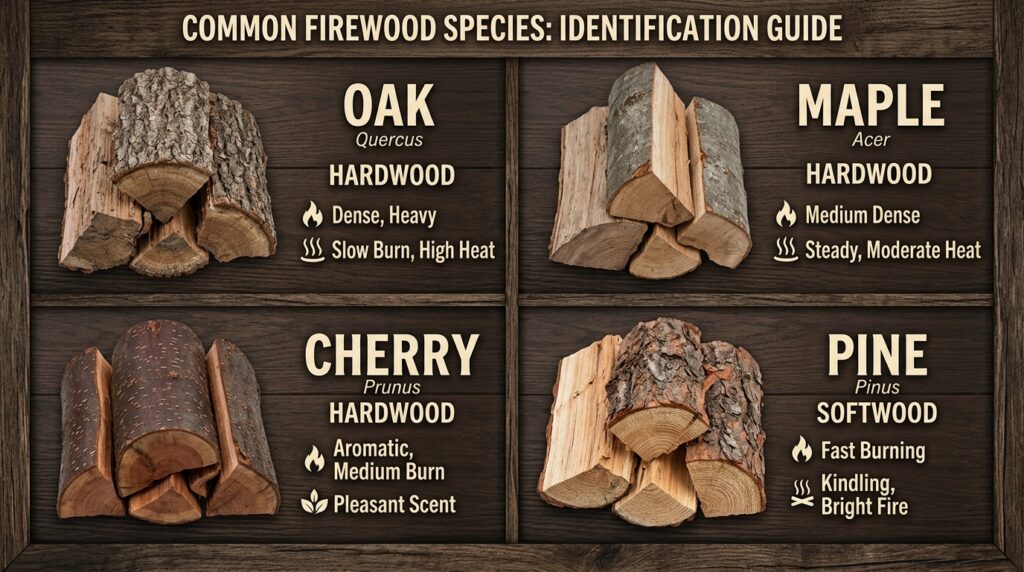
Not all firewood is equal. The species you buy dramatically affects heat output, burn time, ease of splitting, and how much smoke or creosote gets produced.
Top Hardwood Choices
Oak The gold standard for firewood. High heat output (around 26–28 million BTUs per cord), long burn times, low smoke. The downside: needs 12–24 months to season properly.
Maple (Sugar Maple) Close rival to oak in heat output, easier to split, and produces a pleasant scent. Great for both fireplaces and stoves.
Ash One of the few hardwoods that burns reasonably well even when not fully seasoned. Good all-around choice.
Hickory Extremely dense, high BTU output, slow burn. Excellent for overnight burns in a wood stove. Burns hot enough to cause problems in an oversized fireplace.
Cherry Moderate heat, beautiful aroma, very low smoke. A premium option often used for special occasions rather than daily heating.
When Softwood Makes Sense
Softwoods like pine, fir, and spruce burn faster and hotter initially but produce more creosote. They’re a smart choice for:
- Starting fires quickly
- Spring and fall shoulder seasons
- Areas where hardwood is scarce or expensive
Avoid burning green wood of any species — the high moisture content (above 20%) means more smoke, less heat, and dangerous creosote buildup in your chimney.
How to Buy a Half Cord Without Getting Ripped Off
The firewood industry has very little regulation, which means buyers need to be their own advocates. Here’s how to protect yourself.
Ask These Questions Before You Buy
- “What are the exact dimensions of the stack?” A half cord should be 64 cubic feet when stacked tightly.
- “How long are the individual pieces?” Standard is 16 inches. Longer pieces mean fewer pieces per cord.
- “Is the wood seasoned or green?” Ask how long it’s been drying.
- “Is delivery and stacking included?” Get the full price upfront.
- “What species of wood is it?” Mixed hardwood is fine, but you deserve to know what you’re getting.
Verify the Volume on Delivery
When the wood arrives (or when you pick it up), stack it yourself and measure before paying. You have every right to do this.
Formula to verify:
Length × Width × Height = Volume (cubic feet) For a half cord: should equal approximately 64 cubic feet
If it comes up short, contact your local Office of Weights and Measures — firewood is a regulated commodity in most states.
Watch Out for These Red Flags
- Sellers who use vague terms like “pickup load” or “pile” without dimensions
- Prices that seem too low (often means green, underdried, or short-measured wood)
- No clear answer on species or seasoning time
- Sellers who refuse to let you stack and measure
How to Store a Half Cord of Wood Properly
Even great firewood can turn to mold and mush if stored improperly. Here’s what to do:
The 4 Rules of Good Firewood Storage
1. Keep It Off the Ground Ground contact allows moisture to wick upward and invites insects — particularly termites, carpenter ants, and wood-boring beetles. Use a firewood rack or stack on pallets.
2. Stack It in a Single Row A single-row stack (one piece deep) allows maximum airflow, which is critical for continued drying. Avoid double-stacking if the wood isn’t fully seasoned.
3. Cover the Top Only Cover just the top of the pile with a tarp, metal roof, or dedicated firewood cover. Leave the sides open for airflow. Fully wrapping a pile in plastic traps moisture and causes mold.
4. Store Near — Not Against — the House Firewood stored against your home’s foundation is an open invitation for insects and rodents to find a path indoors. Keep it at least 20–30 feet from the house.
Expert Tip: Point the freshly cut ends (the ends that show the growth rings) outward in your stack. End grain dries much faster than the bark side, and exposing them to wind speeds up your seasoning time significantly.
How to Know If Your Wood Is Properly Seasoned
Seasoned wood burns better in every measurable way. Here’s how to confirm yours is ready.
Signs of Well-Seasoned Wood
- Bark peels or falls off easily
- Cracks or checks (small splits) visible on the ends — a natural sign of moisture loss
- Wood feels lighter than green pieces the same size
- Makes a hollow “clunk” when two pieces are knocked together (green wood makes a dull thud)
- Gray or faded color rather than bright, fresh-cut appearance
The Moisture Meter Test
The most accurate way to check: use an inexpensive wood moisture meter (often $15–$30). Split a fresh piece and measure the interior.
- Under 20% moisture: Ready to burn
- 20–25%: Usable, but burning performance will be reduced
- Above 25%: Needs more drying time
Well-seasoned firewood burns hotter, produces less smoke, and generates significantly less creosote buildup in your chimney — which is a leading cause of chimney fires.
Pros and Cons of Buying a Half Cord
Pros
- Lower upfront cost — easier on the budget than a full cord
- Easier storage — fits in smaller spaces and requires fewer shelves or racks
- Great for light to moderate users — recreational or supplemental firewood users may never need more
- Less waste — if you’re not sure how much wood you’ll burn, start here
- Faster to stack and organize
Cons
- Higher cost per unit — buying in half-cord increments is almost always more expensive per cord than buying a full cord
- Multiple deliveries if you underestimate your usage
- May not be enough for primary heating needs in cold climates
- Some suppliers charge the same delivery fee regardless of quantity
Expert Tips Summary
Here’s a quick reference of the best advice from this guide:
- Always verify dimensions before or on delivery — a half cord is exactly 64 cubic feet.
- Buy in the off-season (spring/summer) for the best prices and best wood selection.
- Ask for seasoned wood and confirm with a moisture meter — under 20% is ideal.
- Don’t confuse a face cord with a half cord — you could lose nearly a third of your firewood value.
- Store wood off the ground with top cover only and sides exposed to airflow.
- Dense hardwoods are worth the premium — oak, maple, and hickory give far more heat per dollar than softwoods.
- Know your burn rate — track your usage so next season’s order is spot-on.
Frequently Asked Questions About Half Cord of Wood
How many pieces of wood are in a half cord?
The exact number depends on the size and species of the wood, but a half cord typically contains 300 to 400 pieces of split firewood cut to 16-inch lengths. Larger-diameter logs mean fewer pieces; smaller splits mean more.
Is a half cord of wood enough for one winter?
It depends entirely on how you use it. For a recreational fireplace used a few times per week, a half cord can last a full winter season. For a wood stove used as primary heat, you may burn through it in 4–8 weeks during cold months.
What’s the difference between a half cord and a rick of wood?
A “rick” or “face cord” typically refers to a stack that’s 4 ft × 8 ft × 16 inches deep — about 42 cubic feet, or roughly one-third of a full cord. A half cord is 64 cubic feet. The terms are sometimes used interchangeably, but they’re not the same thing.
How do I find a reputable firewood supplier?
Start with recommendations from neighbors or local community groups. You can also check your state’s forestry division website for licensed dealers. Always read reviews, verify measurement practices, and get a receipt with specific volume listed.
Can I burn a half cord of wood indoors safely?
Yes, as long as your fireplace or wood stove is properly maintained. Have your chimney inspected and cleaned annually by a Chimney Safety Institute of America (CSIA) certified sweep. Only burn seasoned hardwood, and always ensure proper ventilation to prevent carbon monoxide buildup. Install a carbon monoxide detector near sleeping areas.
Conclusion
A half cord of wood is a practical, flexible purchase that suits a wide range of buyers — from someone who loves the occasional cozy fire to a homeowner looking for supplemental winter heat without committing to a full cord.
The most important things to take away:
- Know the dimensions: 64 cubic feet, stacked tightly
- Don’t confuse it with a face cord — they’re different by about 22 cubic feet
- Buy seasoned hardwood for the best heat output and safety
- Verify before you pay — you have legal protections as a buyer
- Store it right so the wood you bought stays in peak condition
Whether you’re heating a cabin, supplementing your home’s furnace, or just setting the mood on winter evenings, a well-bought, well-stored half cord of wood is one of the simplest and most satisfying purchases you can make.
Ready to buy your firewood this season? Use the guidance in this article to ask the right questions, get the right amount, and make sure every log in that stack is worth what you paid for it.

