
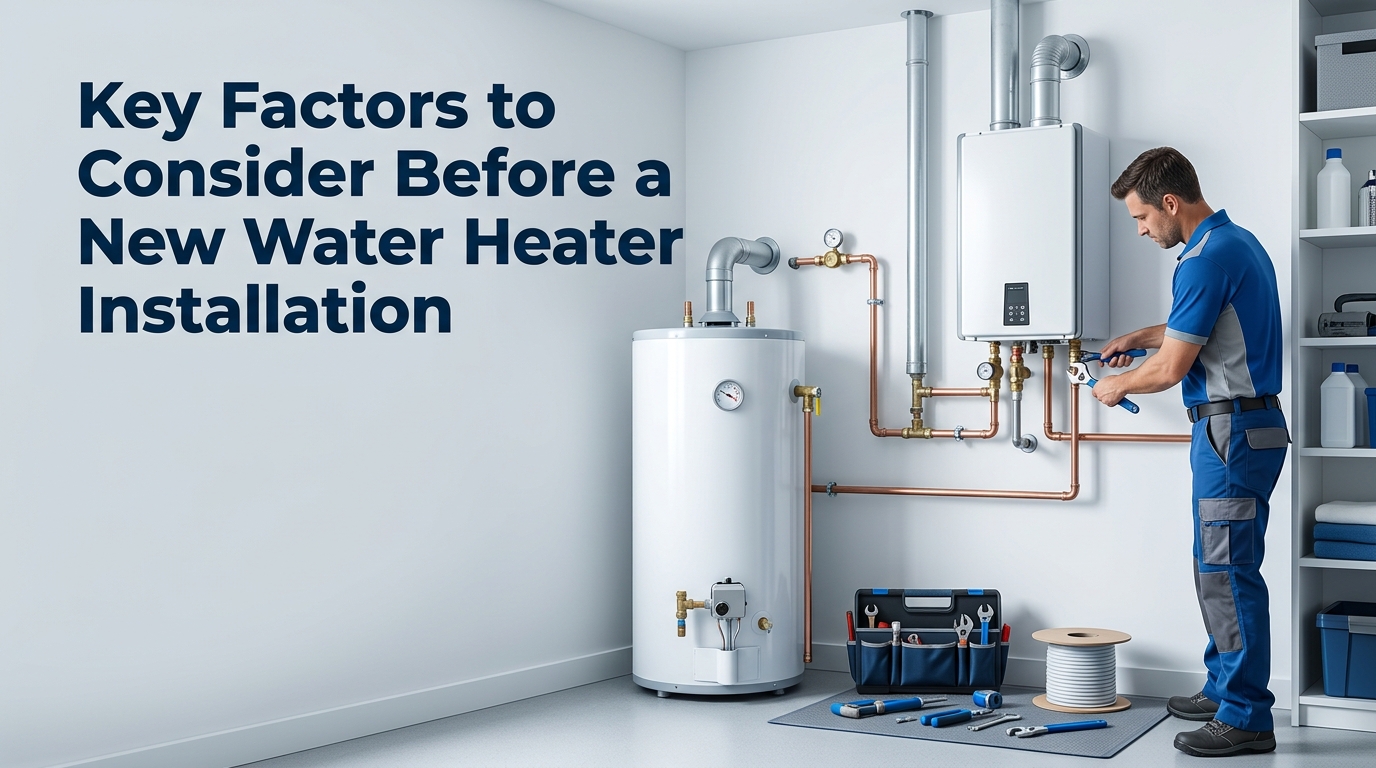
Key Factors to Consider Before a New Water Heater Installation
Choosing a new water heater, especially a tankless model, involves more than just picking a unit off a shelf. For Pasadena homeowners, several critical factors can significantly impact the long-term efficiency, comfort, and cost-effectiveness of their investment. Understanding these elements is the first step toward making an informed decision that perfectly aligns with your household’s unique demands and the Southern California climate.
First, household size is paramount. The number of residents, bathrooms, and hot-water-using appliances (such as dishwashers and washing machines) directly influences the hot-water capacity your home requires. A larger household will naturally have a higher demand for hot water, making the continuous supply of a tankless system particularly appealing.
Next, consider your fuel source. Tankless water heaters are available in electric, natural gas, and propane models. Pasadena homes primarily use natural gas, which often makes tankless gas units a highly efficient and cost-effective replacement option. However, electric tankless heaters are also an option, especially if gas lines are not readily available or if you are looking to move away from fossil fuels. The availability and cost of each fuel type in your specific area of Southern California will guide this decision.
Space savings are another compelling advantage of tankless systems. Unlike bulky traditional tanks that can occupy significant floor space, tankless units are compact. They can often be mounted on a wall, freeing up valuable real estate in garages, utility closets, or basements. This is a considerable benefit for many Pasadena homes where space might be at a premium.
Finally, the Southern California climate itself plays a subtle but important role. While we don’t experience extreme cold that would significantly impact water heater performance, the year-round demand for hot water makes energy efficiency a priority. Tankless systems, with their on-demand heating, are inherently more efficient in this regard, as they eliminate the standby energy losses associated with traditional tanks.
When embarking on this important home upgrade, it’s wise to consult with experienced professionals who understand the nuances of local requirements and best practices for Water heater installation Pasadena. Such expertise ensures that your new system is not only perfectly matched to your needs but also installed safely and efficiently, in compliance with all local codes.
Comparing Tank vs. Tankless Systems for Southern California Homes
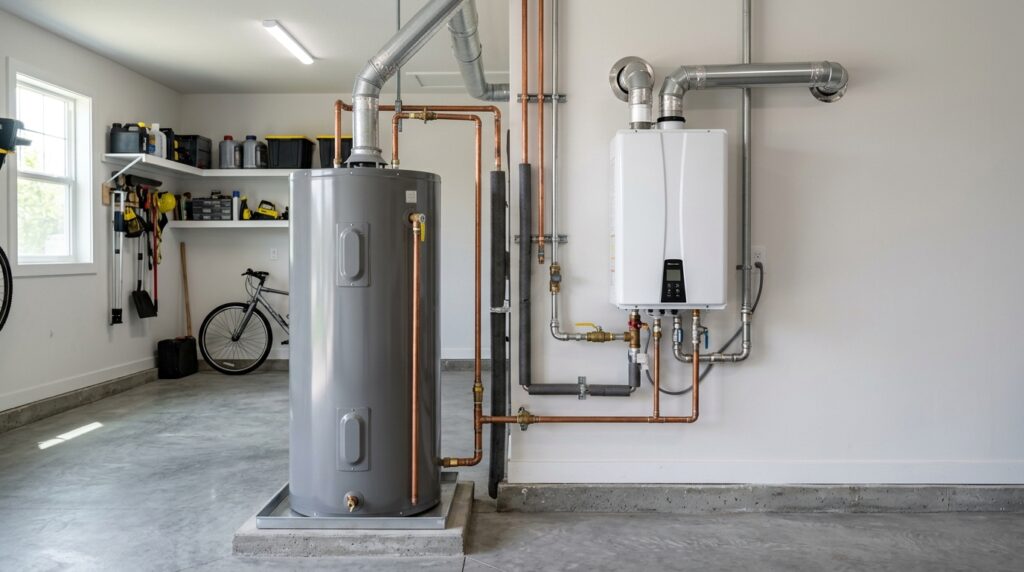
The debate between traditional tank water heaters and modern tankless systems is a crucial one for homeowners seeking to optimize their hot water supply. While both serve the fundamental purpose of providing hot water, their operational mechanisms, efficiency, and long-term benefits differ significantly. For residents across Southern California, understanding these distinctions is key to making a choice that enhances comfort and reduces utility expenses.
Here’s a comparison to help illustrate the differences:
| Feature | Traditional Tank Water Heater | Tankless Water Heater |
|---|---|---|
| Operation | Heats and stores a fixed volume of water continuously. | Heats water on demand as it flows through the unit. |
| Hot Water Supply | Limited by tank size and may run out during peak usage. | Provides a continuous supply of hot water, as long as demand remains within the unit’s capacity. |
| Energy Efficiency | Prone to standby energy loss because water is constantly reheated. | Highly energy-efficient since it heats water only when needed. |
| Lifespan | Typically lasts 8–15 years. | Often lasts 20+ years with proper maintenance. |
| Space Requirements | Large, bulky tank requiring significant floor space. | Compact, wall-mounted design that saves space. |
| Installation | Generally easier and less expensive to install. | More complex installation with higher upfront costs. |
| Maintenance | Less frequent maintenance, though sediment buildup can occur. | Annual descaling is recommended, especially in hard-water areas. |
| Environmental Impact | Higher energy consumption and larger carbon footprint. | Lower energy consumption and reduced environmental impact. |
The promise of endless hot water is another major draw. Imagine never having to worry about running out of hot water during back-to-back showers or while running the dishwasher and laundry simultaneously. Tankless systems deliver a continuous supply of hot water, ensuring comfort and convenience for even the busiest households.
Furthermore, the space-saving design of tankless water heaters is a practical benefit. Their compact size allows for installation in tighter spaces, such as utility closets or even on an exterior wall, freeing up valuable floor space that a traditional tank would occupy. This can be particularly advantageous for homeowners looking to maximize their living or storage areas.
Sizing Your System for Efficient Water Heater Installation
Properly sizing your tankless water heater is critical to ensuring it meets your household’s demands without compromise. This involves understanding flow rate and gallons per minute (GPM), which quantify how much hot water your home needs at any given moment.
To determine the right size, you’ll need to estimate your simultaneous fixture use during peak demand. For example, consider how many showers, dishwashers, washing machines, or faucets might be running hot water simultaneously. Each fixture has a typical GPM requirement. A professional will calculate the total GPM needed for your household’s peak usage and recommend a tankless unit capable of delivering that flow rate at your desired temperature rise. An undersized unit could lead to lukewarm water or reduced flow when multiple fixtures are in use, while an oversized one might be an unnecessary expense.
Signs It Is Time to Plan for a Water Heater Installation
Recognizing the signs that your current water heater is nearing the end of its life or performing inefficiently can save you from unexpected cold showers and costly emergencies. Being proactive allows you to plan for a replacement on your terms, ensuring a smooth transition to a more reliable and efficient system.
Here are common indicators that it might be time to consider a new water heater installation:
- Rusty Water: If you notice discolored, reddish-brown water coming from your hot water taps, it often indicates rust inside your water heater’s tank. This can signal corrosion, which will eventually lead to leaks.
- Inconsistent Temperatures: A water heater that struggles to maintain a consistent hot water temperature, or provides only lukewarm water, is a clear sign of declining performance. This could be due to sediment buildup, a failing heating element, or an aging system.
- System Age: Traditional tank water heaters typically last between 8 and 15 years. If your unit is approaching or has exceeded this age range, it’s a good idea to start planning for its replacement, even if it seems to be working fine. Proactive replacement can prevent sudden breakdowns.
- Leaks or Puddles: Any sign of water pooling around the base of your water heater is a serious red flag. Leaks often indicate cracks in the tank or failing connections, which can lead to significant water damage if left unaddressed.
- Mineral Accumulation: A rumbling or popping noise coming from your tank water heater is often caused by sediment buildup at the bottom of the tank. These minerals harden over time, reducing efficiency and potentially damaging the heating element. While tankless units don’t have a tank for sediment to accumulate in, mineral buildup in the heat exchanger can still reduce efficiency and lifespan if not properly maintained.
Addressing these signs promptly can prevent more serious issues and ensure your home always has a reliable source of hot water.
Navigating Local Regulations and Hard Water Challenges in Pasadena
When considering a tankless water heater replacement in Pasadena, be aware of local regulations and environmental factors that can influence your installation and long-term maintenance. Compliance with building codes and understanding the unique characteristics of Pasadena’s water supply are key to a successful and durable upgrade.
One significant factor for homeowners in Pasadena is water hardness. Southern California, including Pasadena, is known for having relatively hard water. This means the water contains higher concentrations of dissolved minerals, primarily calcium and magnesium. While generally safe to drink, hard water can lead to mineral buildup (scale) inside plumbing fixtures and appliances, including tankless water heaters. In tankless units, this scale can accumulate within the heat exchanger, reducing efficiency, restricting water flow, and potentially shortening the unit’s lifespan. To combat this, annual flushing and descaling are highly recommended maintenance practices for tankless systems in hard water areas. Some homeowners may even consider installing a water softener to mitigate the effects of hard water on all their home’s plumbing.
Beyond water quality, homeowners must also navigate local building permits and safety compliance. In Pasadena, as in many municipalities, replacing a water heater typically requires a permit from the city’s building department. This ensures the installation complies with all safety codes, including proper venting, gas line connections, and electrical work. For tankless units, which often require specific venting systems and potentially upgraded gas lines or electrical circuits, these permits are crucial. A professional installer will be familiar with these requirements and can handle the permitting process on your behalf, ensuring your installation is safe, compliant, and passes inspection.
Additionally, components such as expansion tanks are often required by local codes, especially in closed water systems common in newer homes or in homes with backflow preventers. An expansion tank protects your plumbing system from excessive pressure caused by expanding hot water, preventing damage to your water heater and other fixtures. Ensuring all these elements are correctly addressed during installation is vital for the safety, efficiency, and longevity of your new tankless water heater.
Frequently Asked Questions About Water Heater Upgrades
Homeowners often have a range of questions when considering a significant upgrade, such as a tankless water heater. Understanding these common concerns can help demystify the process and provide confidence in your system selection. We aim to offer professional advice to guide you through this important decision.
How long do tankless water heaters last compared to traditional tank water heaters?
The lifespan of a water heater is a major consideration for any homeowner. Tankless water heaters are renowned for their superior durability and extended operational life compared to their traditional counterparts. On average, a well-maintained tankless unit can last 20 years or more, with some models reaching 25 years. This longevity is significantly longer than the typical traditional tank longevity of 8 to 15 years. The extended lifespan of tankless systems is largely due to their design, which eliminates the standing water that can lead to corrosion and sediment buildup in tanks. With proper care, a tankless water heater represents a long-term investment in your home’s comfort and efficiency.
What maintenance is required for a tankless water heater in Pasadena?
While tankless water heaters generally require less frequent attention than traditional tanks, specific maintenance is crucial, especially given Pasadena’s water characteristics. The primary maintenance task is annual flushing and descaling. As discussed, Southern California’s hard water can lead to mineral buildup in the heat exchanger. Regular flushing with a descaling solution removes these deposits, preserving the unit’s efficiency and preventing premature wear. This process is vital for hard water mitigation and ensuring optimal system efficiency. Additionally, it’s recommended to periodically check the air intake filter, exhaust vents, and gas or electrical connections. While some homeowners may attempt basic tasks, professional service is highly recommended for comprehensive descaling and inspection to ensure all components are functioning correctly and safely.
Can a tankless water heater supply multiple bathrooms simultaneously?
Yes, a properly sized tankless water heater can absolutely supply multiple bathrooms and other hot water fixtures simultaneously. The key lies in selecting a unit with an adequate flow rate, measured in GPM (gallons per minute). As mentioned earlier, a professional will calculate your home’s peak hot-water demand, accounting for all fixtures that might run simultaneously. For instance, if you anticipate two showers and a dishwasher running concurrently, the combined GPM requirement for those fixtures will dictate the minimum GPM capacity your tankless unit needs. Modern tankless heaters come in various capacities, and for very large homes or those with exceptionally high demand, it’s even possible to install multiple tankless units in parallel to meet all simultaneous usage needs without any drop in performance or temperature. This ensures that everyone in your household enjoys a continuous supply of hot water, even during the busiest times.
Conclusion
Upgrading to a tankless water heater represents a forward-thinking decision for homeowners in Pasadena and across Southern California. These innovative systems offer a compelling blend of continuous hot water, superior energy efficiency, and significant space savings, making them an ideal choice for modern living. While the initial investment might be higher than a traditional tank, the extended lifespan, reduced utility bills, and enhanced comfort provide substantial long-term value.
Navigating the selection and installation process requires careful consideration of your household’s specific needs, local regulations, and the unique challenges posed by Pasadena’s hard water. By understanding factors such as proper sizing based on GPM, the importance of annual descaling, and the need for local permits, you can ensure a seamless, compliant installation.
Choosing the best tankless water replacement means partnering with experienced professionals who can guide you through every step, from selecting the right unit to ensuring a flawless professional installation. With the right system and expert service, you can look forward to years of reliable hot water, improved energy efficiency, and enhanced comfort in your Southern California home.

