
Key Takeaways
- A higher water bill, musty odor, peeling paint, or soft flooring can signal a concealed leak.
- Bathrooms, kitchens, laundry areas, water heaters, and outdoor fixtures deserve routine inspection.
- A water meter test can reveal water use when fixtures and appliances are off.
- Moisture sensors and flow monitors can provide earlier warnings in vulnerable areas.
- Leaks behind walls, beneath floors, near electrical equipment, or below slabs require professional attention.
Hidden water leaks do not always announce themselves with a puddle. Water can move behind drywall, under flooring, through cabinet bases, or into the soil around a foundation before a homeowner notices any obvious signs. Regular checks help catch small problems before repairs become more expensive.
For difficult-to-locate leaks, homeowners may consult A Wake Forest Plumbing Company for information about leak detection and plumbing assessment.
Why Hidden Leaks Need Prompt Attention
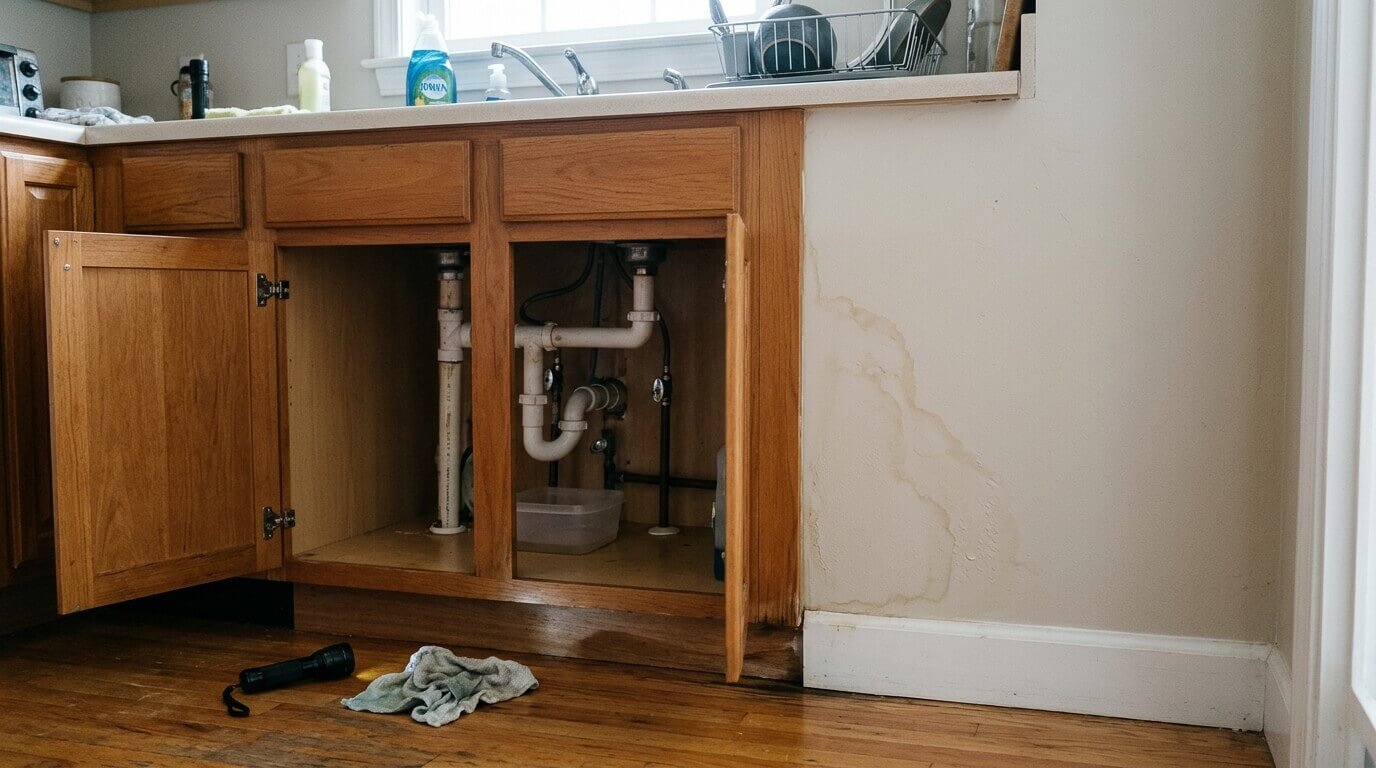
A slow drip can continue for days or weeks without creating a visible pool of water. Over time, moisture may stain ceilings, swell cabinet panels, loosen flooring, damage insulation, and create persistent odors. The first visible mark is not always directly below or beside the leak. For example, a small supply-line leak under a kitchen sink can travel into the wall cavity and appear later at a baseboard several feet away.
Early Warning Signs to Watch For
Pay attention to changes that do not have an easy explanation. A single clue may not confirm a leak, but several clues together justify a closer inspection.
- A water bill rises even though household routines have not changed.
- Ceilings or walls develop stains, damp patches, bubbling paint, or peeling finishes.
- Wood, laminate, or vinyl flooring buckles, swells, or feels soft underfoot.
- Cabinets, closets, or baseboards have a musty smell.
- You hear water moving or a toilet refilling when no fixture should be running.
- Bathroom grout cracks, tile loosens, or dampness appears around a toilet base.
- A dry-weather yard develops an unexplained wet spot near a water line or irrigation zone.
Check Common Leak Locations
Bathrooms
Listen for toilets that periodically refill. To test for a silent toilet leak, add a few drops of food coloring to the tank and wait without flushing. Color appearing in the bowl can indicate that water is passing through the flapper. Also inspect the toilet base, shutoff valve, exposed supply line, tub edge, shower wall, and faucet connections for moisture.
Kitchens
Open the cabinet beneath the sink and look at pipe joints, shutoff valves, the garbage disposal, and the cabinet floor. Check refrigerator water lines and dishwasher connections, especially after moving an appliance. Dark wood, swollen particleboard, corrosion, and damp paper towels are useful warning signs.
Laundry, Utility, and Outdoor Areas
Inspect washing-machine hoses for cracks, bulges, and loose connections. Look beneath the water heater for pooling, rust, or dampness around fittings. Outside, check hose bibs, irrigation zones, and areas where water runs toward the foundation. In changing seasonal temperatures, exposed outdoor plumbing and irrigation components merit attention before and after colder weather.
Use a Simple Water Meter Test
- Turn off faucets, ice makers, washing machines, dishwashers, irrigation, and other water-using equipment.
- Record the water meter reading or photograph the display.
- Do not use water for at least 30 minutes.
- Check the meter again.
- If the reading changes, investigate accessible fixtures or arrange a professional inspection.
Meter displays vary, and a confirmed change does not identify the source. A plumber may need to isolate parts of the plumbing system when the meter indicates water use but no accessible leak is visible. Non-invasive plumbing repair methods can help locate certain concealed leaks without unnecessary demolition.
Start With Safe Home Checks
Place a dry paper towel beneath accessible pipe joints and valves, then return later to look for fresh moisture. Review recent utility bills against the same season in the prior year, inspect flexible appliance hoses, and look behind water-connected appliances with a flashlight. Regular plumbing maintenance can also help identify deteriorating connections before they leak. Avoid cutting into drywall, lifting flooring, or attempting repairs on concealed pressurized piping. Walls and floors can contain electrical wiring, plumbing, and other hidden systems.
Consider Leak Sensors and Flow Monitors
Moisture sensors are installed in specific high-risk areas, such as beneath a water heater, washing machine, refrigerator, or sink cabinet, and alert you when water reaches the sensor. Whole-home flow monitors track water movement and may identify unusual patterns. The EPA explains that leak detection and flow monitoring devices can help homeowners identify unexpected dampness or irregular water use. Select a device based on where protection is needed, whether it requires professional installation, and how alerts are delivered.
Know When to Call a Professional
Professional help is the safer choice when the meter changes while fixtures are off, the leak is behind a wall or below a floor, a ceiling is sagging, or water is near an outlet, appliance, or light fixture. Call promptly if you cannot stop the water supply, notice sewage odors or backups, or cannot find the source after basic checks. A concealed leak should not be ignored simply because the visible area dries. A water damage emergency response plan can help homeowners understand the steps to take when hidden moisture causes damage.
What to Do During a Sudden Leak
- Close the nearest fixture shutoff valve or the home’s main water shutoff valve.
- Move valuables, furniture, and electronics away from the affected area.
- Take photos before cleanup for your records.
- Use towels or containers to limit spread when it is safe to do so.
- Contact a qualified plumber if the leak continues or the source is unclear.
Never step into standing water near outlets, extension cords, appliances, or electrical panels. If sewage may be present, avoid direct contact and seek appropriate emergency assistance.
A Practical Maintenance Schedule
Monthly
- Review water bills and listen for running toilets.
- Look beneath sinks and around water-connected appliances.
Every Six Months
- Inspect washing-machine hoses, water-heater connections, outdoor faucets, and irrigation areas.
- Test leak sensors and replace batteries when needed.
Once a Year
- Test the main water shutoff valve.
- Check exposed pipes for corrosion, mineral buildup, or recurring drips.
- Schedule an evaluation for repeated leaks or unexplained pressure problems.
Common Questions About Hidden Water Leaks
Can a high water bill confirm a leak?
No. It is a warning sign, but guests, irrigation, seasonal use, and billing changes can also affect usage. Pair bill review with a meter test and fixture inspection.
Can a leak exist without visible water?
Yes. Water can remain inside walls, beneath floors, under slabs, or in surrounding soil before a visible symptom develops.
How quickly should a leak be addressed?
Address it as soon as possible. Quick action can reduce the time water has to affect building materials and make the source easier to trace.

