
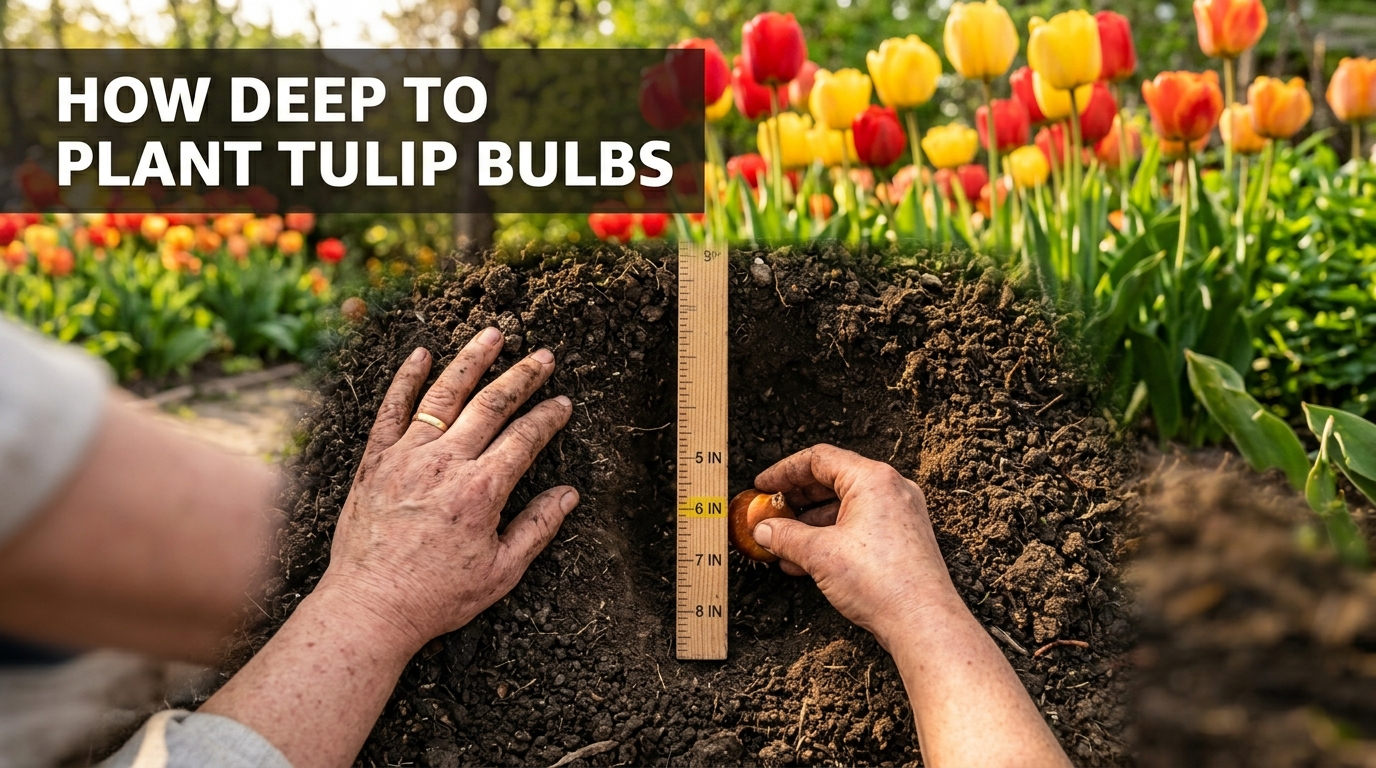
There’s something almost magical about tulips. You push a plain, papery bulb into cold soil in autumn, forget about it for months, and then — one spring morning — you walk outside to find a row of jewel-bright flowers standing tall like they own the garden.
But here’s the thing most beginner gardeners don’t realize: the difference between a tulip garden that wows your neighbors and one that barely limps out of the ground often comes down to how deep you plant the bulb.
Too shallow, and your tulips freeze out in winter or fall over in spring winds. Too deep, and they struggle to emerge at all. Get it just right, and you’re rewarded with strong stems, vivid colors, and blooms that last weeks longer than average.
This guide covers everything you need to know — how deep to plant tulip bulbs in the ground and in pots, the best time to plant, how far apart to space them, what to do with sprouted bulbs, and whether you can still plant in spring. Whether you’re a first-time gardener or looking to level up your technique, you’ll find clear, practical answers here.
How Deep to Plant Tulip Bulbs
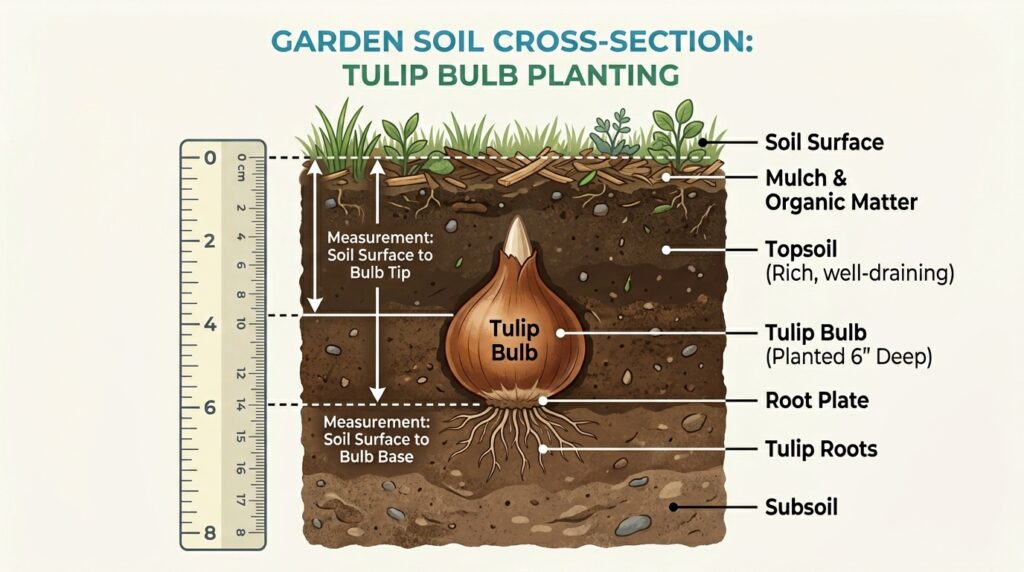
The standard rule for planting tulip bulbs in the ground is three times the height of the bulb, but in practice, that usually works out to 6 to 8 inches deep (measured from the base of the bulb to the soil surface).
Most tulip bulbs sold in garden centers are 1.5 to 2 inches tall, which means following the “3x rule” puts the top of the bulb about 4.5 to 6 inches down, and the base 6 to 8 inches down. When gardeners and extension services say “plant 6 inches deep,” they’re referring to the depth of the hole — bottom of the hole to the soil surface.
Planting bulbs at the correct depth is one of the most critical factors in ensuring strong, healthy blooms. Shallow planting is the number one mistake beginners make.
Why Depth Matters So Much
- Cold protection: In climates with hard winters, deep planting insulates bulbs from freeze-thaw cycles that can damage or rot them.
- Stem strength: Bulbs planted deep enough develop longer, stronger stems that resist wind damage.
- Reblooming: Tulips planted at the right depth are more likely to return the following year, though most modern hybrids are best treated as annuals anyway.
- Pest deterrence: Squirrels and other animals are less likely to dig up bulbs planted 6+ inches down.
Quick Depth Reference Table
| Bulb Size | Recommended Planting Depth (hole) |
|---|---|
| Small (under 1.5 in) | 4–5 inches |
| Medium (1.5–2 in) | 6 inches |
| Large (2+ in) | 6–8 inches |
| Giant/Exhibition | 8 inches |
How Deep to Plant Tulip Bulbs in cm
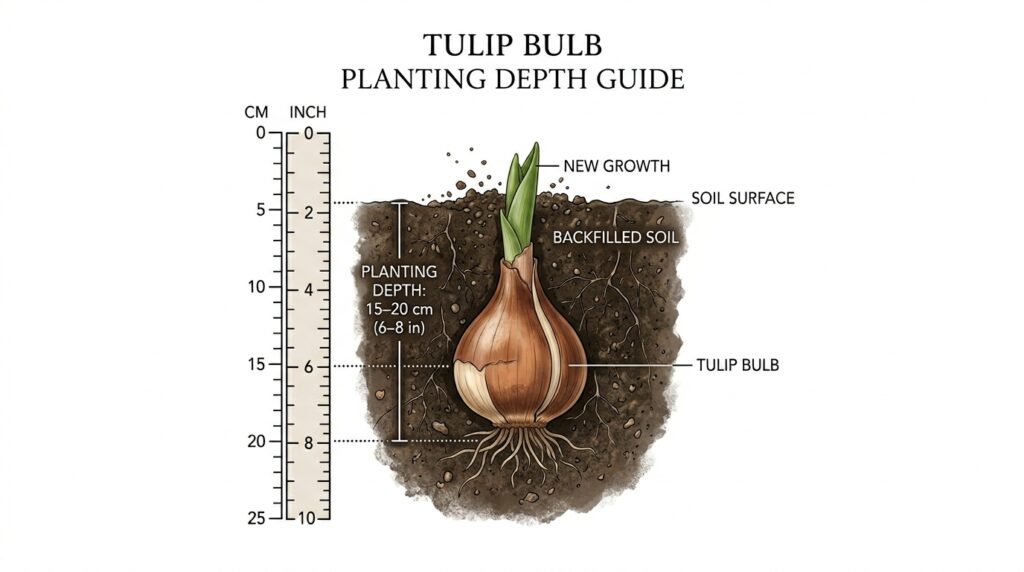
For those who prefer metric measurements, the planting depth guideline translates to approximately 15 to 20 centimeters (measured from the soil surface to the base of the bulb).
- Small bulbs: 10–13 cm
- Standard tulip bulbs: 15 cm
- Large or exhibition tulips: 20 cm
Depth of at least 15 cm for most tulip varieties, noting that deeper planting in cold-climate areas helps reduce frost damage and encourages stronger root development.
If you’re using a bulb planter tool — which makes the job much easier — most come with depth markings in both inches and centimeters so you can calibrate quickly.
How Deep to Plant Tulip Bulbs in Pots
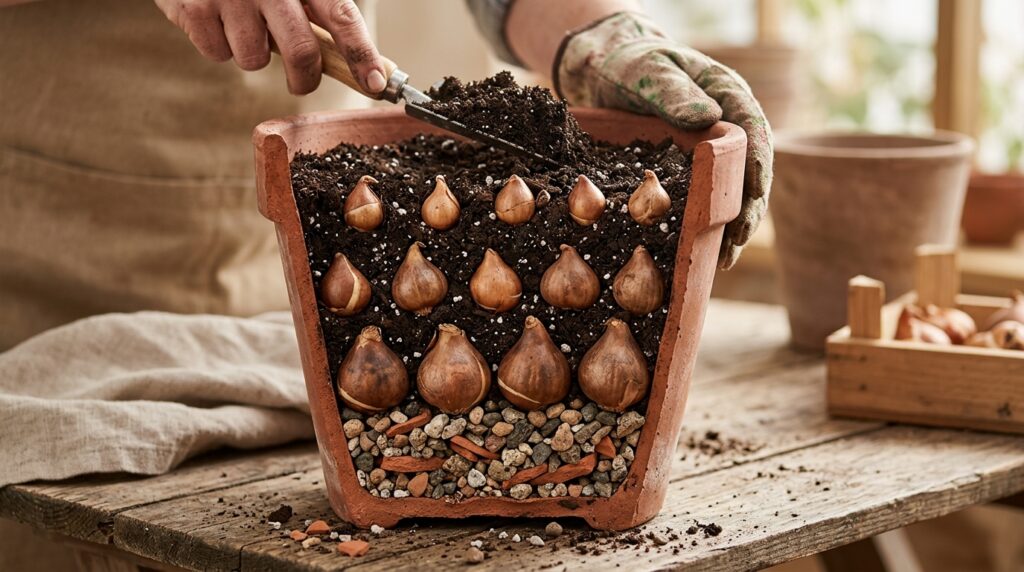
Container gardening opens up incredible possibilities for tulips — you can grow them on a patio, balcony, or even indoors. But planting depth in pots works a little differently than in the ground.
Pot Depth Basics
When planting tulip bulbs in pots:
- Minimum pot depth: 12 inches (30 cm) — this gives roots enough room and allows proper bulb depth
- Bulb depth in pot: Place bulbs 4 to 6 inches deep from the top of the potting mix
- The bulb’s pointed tip should face upward
- Leave at least 1 inch of soil above the nose (tip) of the bulb
Because containers don’t have the insulating power of garden soil, you’ll need to take extra steps in colder climates — either move pots to an unheated garage or shed during winter, or wrap them in burlap.
The “Lasagna” Method for Pots
One of the most popular pot-planting techniques is called the lasagna method — and it’s exactly as layered as it sounds.
- Place a drainage layer (gravel or broken pottery) at the bottom
- Add 3–4 inches of potting mix
- Plant the largest bulbs (like tulips) with their bases at 6 inches from the pot top
- Cover with 2 inches of soil
- Add a second layer of smaller bulbs (like crocuses or grape hyacinths) at 3–4 inches from the top
- Cover with potting mix, leaving 1 inch of space from the rim
This creates a multi-wave bloom effect in spring, which looks spectacular in a pot on your front porch or entryway.
Pot Selection Tips
- Use a pot with drainage holes — standing water will rot bulbs fast
- Terracotta pots breathe well but can crack in freezing temps; plastic or fiberglass are better for cold climates
- A pot 12–16 inches in diameter works well for 6–10 tulip bulbs
When to Plant Tulip Bulbs
Timing is arguably just as important as depth. Plant too early and warm soil encourages disease or premature sprouting. Plant too late and roots don’t establish before the ground freezes.
The Golden Window: Fall Planting
Tulip bulbs should be planted in autumn, specifically when:
- Soil temperatures have dropped to 40–50°F (4–10°C)
- Nighttime temps are consistently cool but the ground isn’t yet frozen
- This typically falls between September and November, depending on your region
The Old Farmer’s Almanac recommends planting tulip bulbs 6 to 8 weeks before the first hard frost in your area. You can check your local frost dates using tools like the USDA Plant Hardiness Zone Map to figure out when to act.
Regional Timing Guide
| Climate Zone | Best Planting Window |
|---|---|
| USDA Zones 3–4 (Very Cold) | September–October |
| USDA Zones 5–6 (Cold) | October–November |
| USDA Zones 7–8 (Mild Winter) | November–December |
| USDA Zones 9–10 (Warm) | December–January (pre-chilled bulbs) |
In warmer zones (9–10), tulips need to be pre-chilled in the refrigerator for 8–10 weeks before planting because they require a cold dormancy period to bloom properly. The University of California Cooperative Extension has excellent resources on chilling bulbs for warm-climate gardening.
How to Plant Tulip Bulbs in the Fall
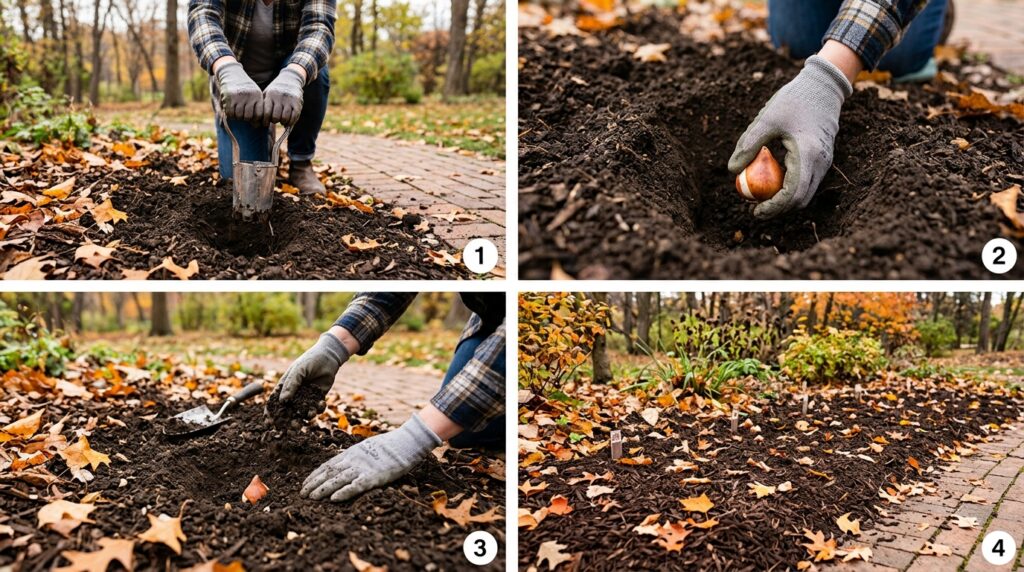
Fall planting is the gold standard for tulips. Here’s a complete walkthrough so you get it right from the first step to the last.
What You’ll Need
- Tulip bulbs (firm, dry, free of mold)
- Bulb planter or hand trowel
- Compost or bulb fertilizer
- Mulch (straw, wood chips, or shredded leaves)
- Gloves (some people are sensitive to tulip bulb skins)
Step-by-Step: Planting Tulip Bulbs in Fall
Step 1: Choose and Prepare Your Site Tulips love full sun — at least 6 hours of direct sunlight per day. They need well-drained soil; they’ll rot in soggy ground. If your soil is heavy clay, amend it with compost or coarse sand before planting.
Step 2: Dig the Hole Use a bulb planter for neat, consistent holes. Set it to 6–8 inches deep. If planting a large bed, consider digging a trench rather than individual holes — it’s faster and ensures even depth.
Step 3: Add Fertilizer Drop a small amount of slow-release bulb fertilizer into the hole or mix bone meal into the planting area. Avoid high-nitrogen fertilizers, which push leafy growth at the expense of blooms.
Step 4: Place the Bulb Place the bulb pointy side up, flat or root side down. If you’re unsure which end is up (it happens!), plant it on its side — the shoot will find its way up naturally, though it takes slightly longer.
Step 5: Cover and Firm Fill the hole with soil, gently firming it down to eliminate air pockets. Don’t compact too hard.
Step 6: Water In Water thoroughly after planting to settle the soil and trigger root development. You don’t need to water much after this — fall and winter rainfall generally handle it.
Step 7: Mulch Apply a 2–3 inch layer of mulch over the planted area. This moderates soil temperature, retains moisture, and suppresses weeds. Pull mulch back slightly in spring so emerging shoots aren’t blocked.
Step 8: Mark Your Spots This step is more important than it sounds. It’s incredibly easy to forget where you planted bulbs and accidentally dig them up in spring. Use plant markers, take a photo, or draw a simple map.
How Far Apart to Plant Tulip Bulbs
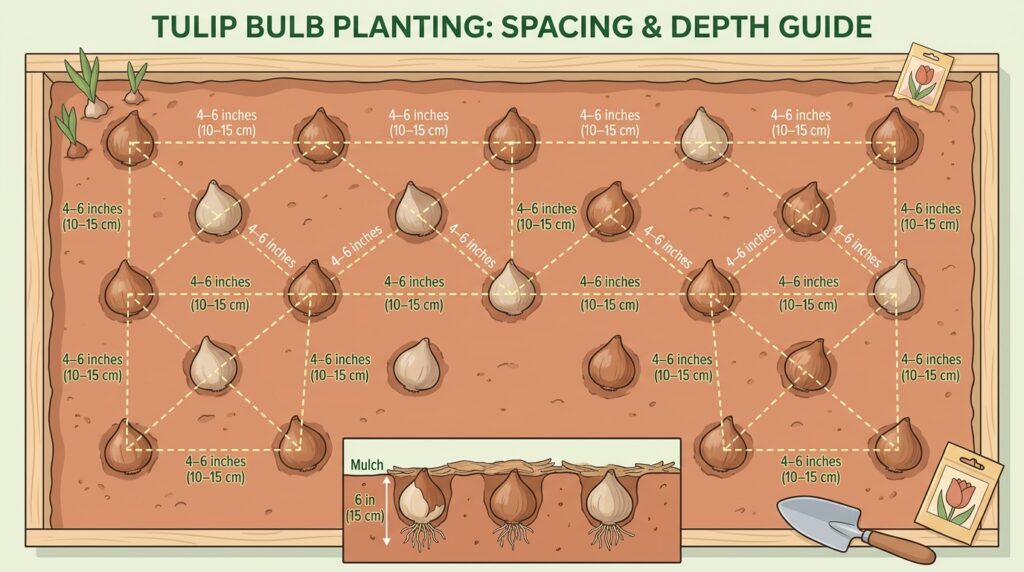
Spacing affects not just aesthetics but also air circulation, nutrient competition, and ultimately the health of your bulbs.
Standard Spacing Recommendations
- Formal, dense look: Space bulbs 4–5 inches apart (center to center)
- Natural, relaxed look: Space bulbs 6 inches apart
- Mass planting beds: You can plant as close as 3 inches for a carpet effect, though this increases disease risk
A minimum of 4–6 inches between tulip bulbs to allow adequate root expansion and reduce competition for water and nutrients.
The “Scatter” Method for Natural-Looking Displays
If you want a less formal, meadow-like display, try this:
- Gather a handful of bulbs
- Gently toss them onto the prepared soil
- Plant them roughly where they land
The randomness creates a surprisingly beautiful, natural-looking arrangement — much like you’d see in a woodland garden or a classic Dutch landscape.
Row vs. Cluster Planting
| Method | Best For | Spacing |
|---|---|---|
| Single rows | Garden borders | 4–5 inches |
| Clusters/drifts | Mixed beds | 5–6 inches |
| Mass planting | Dedicated tulip beds | 3–4 inches |
| Container | Pots & window boxes | 2–3 inches (more forgiving) |
What About Tulip Bulbs That Have Already Sprouted?
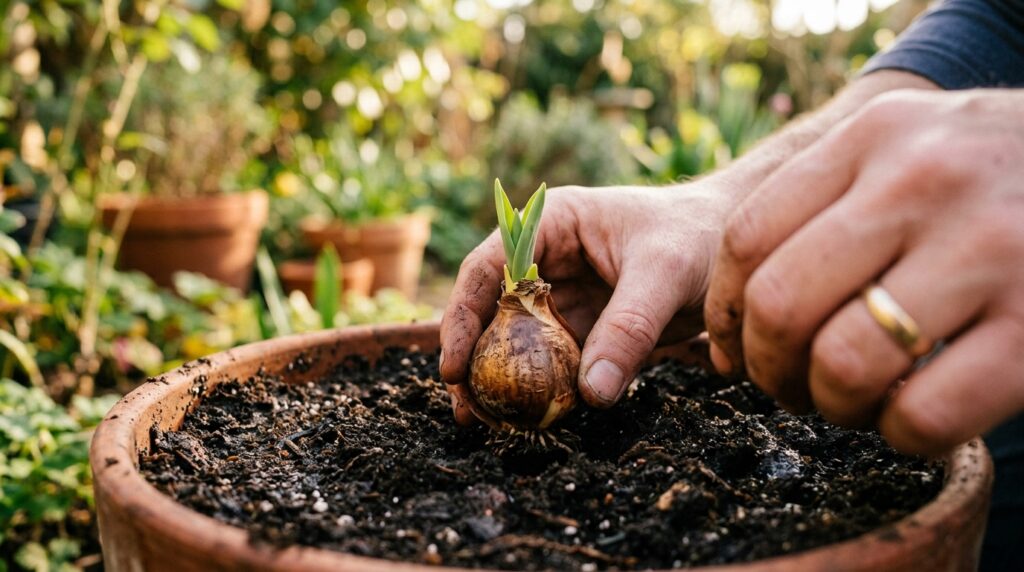
Found a bag of tulip bulbs at the back of the closet and noticed they’ve already started sprouting? Don’t panic — and definitely don’t throw them out.
Can You Still Plant Sprouted Tulip Bulbs?
Yes, absolutely. Sprouted bulbs are still viable and can bloom successfully, as long as:
- The sprout is small (less than 1–2 inches)
- The bulb itself is still firm (soft or mushy bulbs are a different story — those are rotting)
- You plant them promptly
How Deep to Plant Sprouted Tulip Bulbs
Plant sprouted bulbs at the same depth as unsprouted ones — 6 inches in the ground. The sprout tip will grow up through the soil naturally.
Key tips for sprouted bulbs:
- Handle gently — the sprout snaps off easily, and while the bulb may still bloom without it, it’s a setback
- Plant as soon as possible; the longer you wait, the more energy the bulb wastes
- If the sprout is long (3+ inches), plant slightly shallower so the tip is close to the soil surface — just 1–2 inches below ground
- In warm weather, plant in a pot and move to a cool spot (40–50°F) to simulate cold dormancy
The Missouri Botanical Garden notes that bulbs that have sprouted prematurely may still bloom but could produce shorter stems or slightly smaller flowers in their first year — they typically recover and perform normally the following season.
Can I Plant Tulips in the Spring?
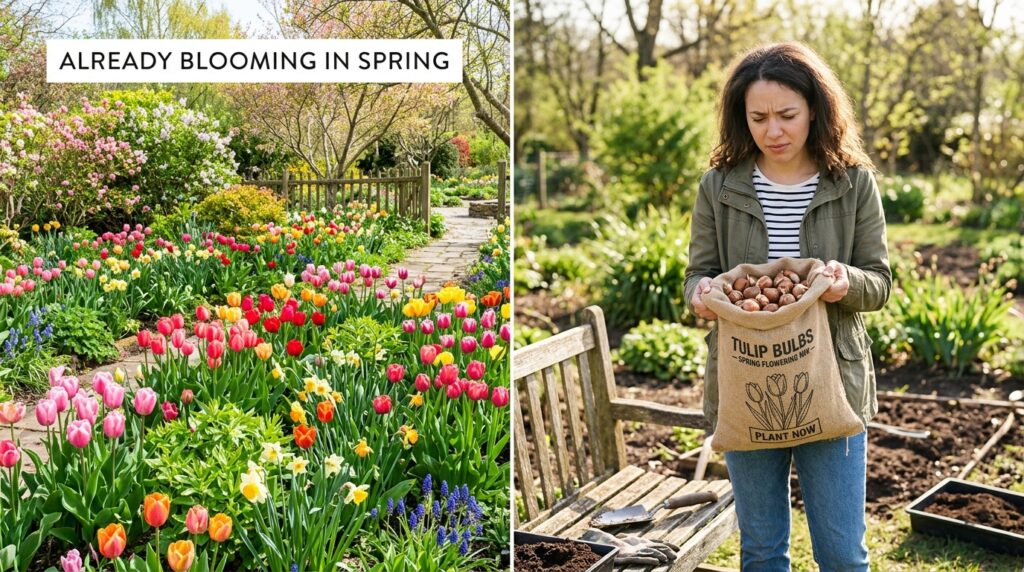
This is one of the most common questions beginners ask, usually because they found bulbs in spring that they forgot to plant in fall. Here’s the straight answer:
The Honest Truth
You can try, but results will be disappointing. Tulips require a cold dormancy period of 12–16 weeks at temperatures below 45°F (7°C) to trigger the hormonal processes that lead to blooming. Without this chilling period, they may grow leaves but rarely produce flowers.
If you plant unchilled bulbs directly in spring soil that’s already warming up, the best-case scenario is that you’ll get foliage this year and blooms the following spring after the bulbs experience natural winter cold.
What You Can Do Instead
- Refrigerator chilling: Place bulbs in a paper bag in the refrigerator (away from fruit, which releases ethylene gas that damages bulbs) for 8–12 weeks. Then plant in early spring while temperatures are still cool.
- Buy pre-chilled bulbs: Some garden centers sell pre-chilled tulip bulbs in spring specifically for late planting.
- Plant for next year: Plant the bulbs as soon as the ground can be worked in early spring. You likely won’t get blooms this season, but the bulbs will establish and bloom the following spring.
- Opt for potted tulips: For immediate spring color, buy potted tulips already in bloom from a nursery.
Tulip bulbs planted without adequate chilling will not reliably bloom and may exhaust their stored energy producing foliage alone.
When to Plant Tulip Plants (Not Bulbs)
Sometimes people purchase potted tulip plants — already in leaf or even in bloom — rather than dry bulbs. The planting rules are completely different here.
Potted Tulip Plants: When and How
- Plant anytime in spring while temperatures are still mild (ideally when highs are below 65°F)
- Dig a hole large enough to accommodate the root ball without crowding
- Set the plant at the same depth it was growing in the pot
- Water in well and keep moist during the bloom period
- Do NOT cut the foliage after blooming — let it yellow and die back naturally so the bulb can recharge for next year
The main thing to understand about potted tulips purchased in bloom is that they’re often treated as one-season plants by the industry. Many varieties sold this way are forced hybrids that won’t reliably rebloom in subsequent years. For a perennial display, look for “species tulips” (like Tulipa tarda or Tulipa turkestanica), which are much more likely to naturalize and return year after year.
Expert Tips for Growing Perfect Tulips {#expert-tips}
These are the details that separate a good tulip garden from a great one:
Tip 1: Buy the Biggest Bulbs You Can Find
Larger bulbs contain more stored energy and produce bigger, more vigorous blooms. When shopping, look for bulbs that feel heavy and solid. Avoid any that feel spongy or show signs of mold.
Tip 2: Chill Your Soil, Not Just Your Bulbs
Before planting, if your fall has been unusually warm, wait until soil temperature drops below 55°F at planting depth. A soil thermometer is a cheap, worthwhile investment for serious gardeners.
Tip 3: The Bone Meal Trick
Work a tablespoon of bone meal into the planting hole before placing your bulb. Bone meal is high in phosphorus, which promotes strong root development and flowering — exactly what tulip bulbs need as they establish over winter.
Tip 4: Naturalize with Species Tulips
Most hybrid tulips are bred for show, not longevity. If you want tulips that come back reliably for 5–10+ years without annual replanting, grow species tulips. Varieties like Tulipa clusiana (Lady Tulip) and Tulipa sylvestris (Wild Tulip) naturalize beautifully and are more disease resistant. American Meadows carries a good selection.
Tip 5: Let the Foliage Die Naturally
After blooming, resist the urge to cut back the green leaves. The foliage is photosynthesizing and recharging the bulb for next year. Let it yellow and brown completely — typically 6 weeks after bloom. You can tie leaves into neat bundles to tidy the bed while they die back.
Tip 6: Rotate Your Planting Spots
Tulip fire (caused by the fungus Botrytis tulipae) and other soil-borne diseases build up when tulips are planted in the same spot year after year. Rotate your planting location every 2–3 years, or refresh the soil with compost.
Common Tulip Planting Mistakes to Avoid
Even experienced gardeners slip up sometimes. Here are the pitfalls worth knowing:
Planting too shallow — The single most common mistake. Shallow planting means cold damage, weak stems, and poor bloom quality.
Planting too early in warm soil — Warm soil encourages fungal disease before roots can establish properly. Wait until soil cools.
Planting in poor drainage — Waterlogged soil is a death sentence for tulip bulbs. If water pools in your chosen spot after rain, find a better location or raise the bed.
Upside-down planting — Always plant pointy tip up. Though the shoot will eventually correct course, an upside-down bulb wastes energy and blooms later.
Ignoring spacing — Cramming bulbs too close together looks sparse at bloom time (because not all bulbs will succeed) and increases disease risk.
Skipping mulch — Especially in USDA zones 5 and below, mulch is not optional. It prevents soil heaving from freeze-thaw cycles that can actually push shallow-planted bulbs right out of the ground.
Cutting leaves too soon — Premature foliage removal starves the bulb. Wait until the leaves are fully yellow before removing them.
FAQs
What happens if I plant tulip bulbs too deep?
Planting deeper than 8 inches isn’t necessarily fatal, but it forces the shoots to travel farther to reach the surface, which delays blooming and can weaken the stem. Very deep planting (10+ inches) may prevent emergence altogether in heavy or compacted soils.
Do tulip bulbs multiply underground?
Yes — tulip bulbs naturally produce small offsets (called “daughter bulbs”) each year. Over 2–3 seasons, you’ll notice more stems appearing from one original planting spot. You can dig and separate these offsets in late summer after foliage dies and replant them to spread your tulip display.
How many tulip bulbs should I plant per square foot?
For a full, lush look, plant 4–5 bulbs per square foot in a garden bed. In containers, you can fit them slightly closer. Remember that not every bulb will produce a bloom, so always plant a few extras.
Should I soak tulip bulbs before planting?
No. Unlike some seeds and bare-root plants, tulip bulbs should not be soaked before planting. Soaking can promote mold and rot. Keep them dry until they go in the ground.
Why didn’t my tulips bloom this spring?
Several factors can prevent blooming:
- Planted too late and roots didn’t establish before freeze
- Planted too shallow and bulbs were winter-damaged
- Warm climate without enough chilling hours
- Foliage was cut back too early last year, preventing bulb recharge
- Overcrowding from years of naturalization — dig, divide, and replant
Conclusion
Tulips are one of the most rewarding flowers you can grow — and they’re far more forgiving than their diva reputation suggests, as long as you get the fundamentals right.
The core principles are simple: plant 6–8 inches deep (or 15–20 cm), space bulbs 4–6 inches apart, and plant in fall when soil temperatures drop below 55°F. Give them good drainage, a little bone meal, a layer of mulch, and then step back and let the cold do its work.
Come spring, you’ll understand why gardeners have been growing tulips for over 400 years. There’s nothing quite like that first flush of color breaking through cold soil and gray skies.
Ready to Plant?
Now that you know exactly how deep to plant tulip bulbs and all the variables that affect success, you’re set to create a display that turns heads. Start with a handful of varieties — try mixing early, mid, and late-season types for continuous color — and build from there each year.
Quick Summary
| Question | Answer |
|---|---|
| How deep to plant tulip bulbs? | 6–8 inches (15–20 cm) from soil surface to base of bulb |
| How deep in pots? | 4–6 inches from top of potting mix |
| When to plant? | Fall: September–November (when soil is 40–55°F) |
| How far apart? | 4–6 inches center to center |
| Can I plant sprouted bulbs? | Yes — same depth, handle gently |
| Can I plant in spring? | Limited success; pre-chill bulbs for 8–12 weeks first |
| What side goes up? | Pointed tip always faces up |
| How deep in cm? | 15–20 cm standard; 10 cm for small bulbs |

