
As Australian suburbs and cities grow denser, traffic and neighbourhood noise have become common frustrations for homeowners. Constant street noise can disrupt daily activities and interfere with sleep. The World Health Organization recommends keeping nighttime road traffic noise below 45 decibels to help prevent adverse effects on sleep. Furthermore, research from Harvard Health reports that people living near road traffic noise were 13% more likely to develop high blood pressure over an eight-year period compared to those without such noise exposure. Understanding how to soundproof your home can help reduce unwanted noise and create a quieter indoor environment.
Upgrading Your Windows for Acoustic Control
Windows are often a major entry point for unwanted external sounds. Standard single-pane glass offers limited sound insulation, usually achieving a Weighted Sound Reduction Index (Rw) of around 25 to 28. Improving this rating can help reduce the amount of outside noise entering a room. For homes near busy roads or railway lines, standard windows may not provide sufficient noise reduction.
Rather than replacing the entire window frame, installing secondary glazing can be an effective alternative. This method involves adding an independent internal window, ideally with an air gap of 100 to 200 millimetres, creating a barrier against low-frequency sounds such as heavy trucks. When combined with laminated glass containing a polyvinyl butyral interlayer, this approach can increase a window’s acoustic rating to approximately Rw 40 to 48, depending on the glazing system and installation. Using asymmetrical glass, where the inner pane has a different thickness from the outer pane, can also improve sound insulation because the panes respond differently to sound frequencies.
Before planning window improvements, reviewing window and door planning considerations can help identify issues such as worn seals, damaged frames, and gaps that may affect acoustic performance.
Internal Treatments and Wall Modifications
While glass upgrades can reduce incoming noise, treating the interior surfaces of your home is another important step. Sound waves reflect off hard surfaces, increasing echoes and making rooms feel noisier. The Australian Standard AS/NZS 2107 outlines recommended internal design sound levels for different building spaces, providing guidance for residential acoustic design.
Adding dense materials and sound-absorbing furnishings can help reduce internal echoes. When planning structural improvements, consider incorporating solid wall panelling, acoustic plasterboard, and strategically positioned bookshelves. These materials can help limit sound transmission, depending on their construction and installation.
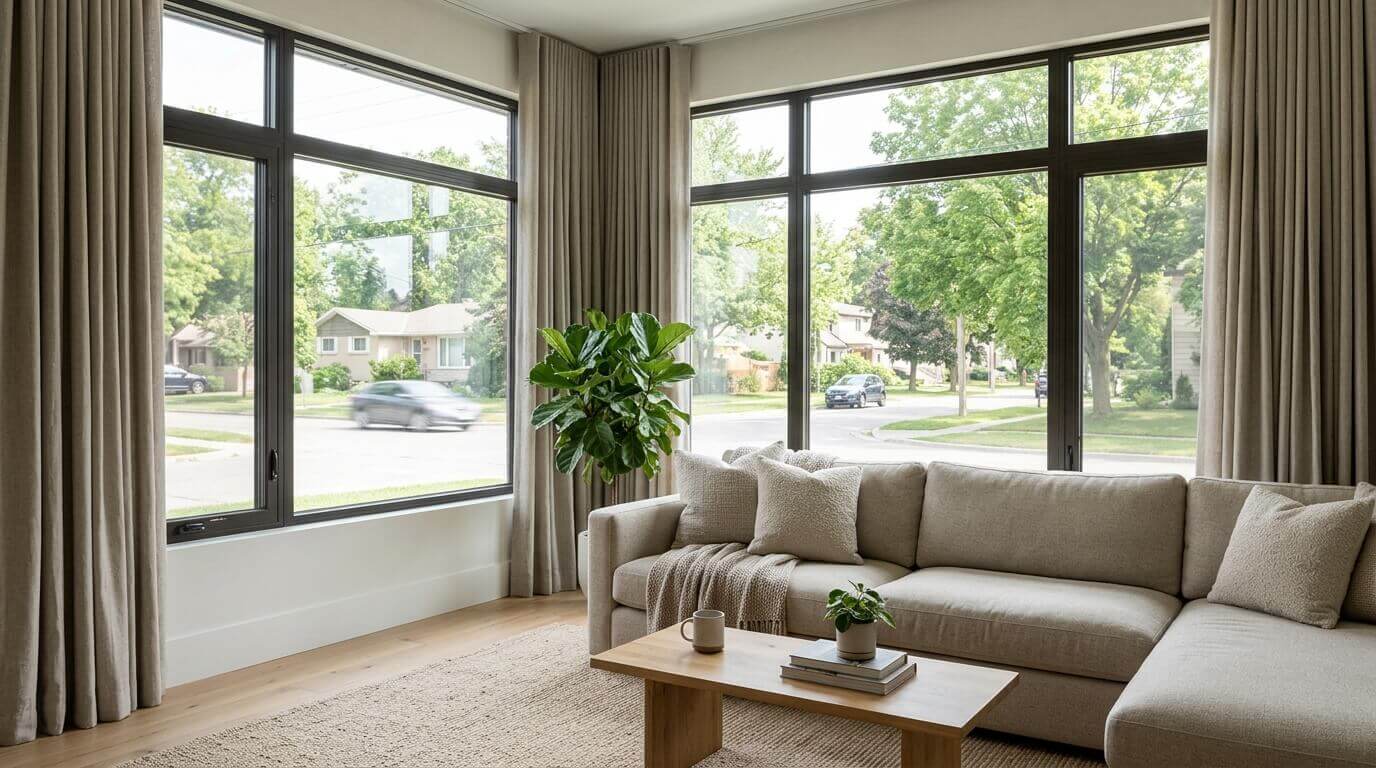
Soft furnishings such as thick rugs, upholstered sofas, and heavy curtains also absorb some sound, particularly at higher frequencies. Choosing suitable window treatments can provide additional coverage around windows while helping manage light and privacy.
Step-by-Step Improvements for a Quieter Home
Reducing household noise requires a combination of structural improvements and practical interior changes. The following steps can help limit environmental noise:
- Seal every gap: Sound can travel through small openings around windows and doors. Use suitable weatherstripping around window sashes and door frames to reduce airborne noise.
- Install solid-core doors: Hollow-core doors provide limited sound insulation. Solid timber or specially designed acoustic doors can reduce sound transmission between rooms and from outside.
- Layer your window dressings: Heavy, tightly woven fabrics and cellular shades can help soften higher-frequency sounds. However, they will not completely block low-frequency traffic noise.
- Rethink your landscaping: Dense shrubs and trees can help diffuse some outdoor sound before it reaches exterior walls. Their effectiveness depends on plant density, height, and distance from the noise source. Appropriate front yard landscaping can also provide additional privacy.
Understanding how sound enters a building makes it easier to identify areas that need attention. Start by checking windows, doors, and gaps before considering more extensive structural changes. Whether through improved glazing, interior treatments, or better sealing, these measures can help create a quieter and more comfortable home.

