
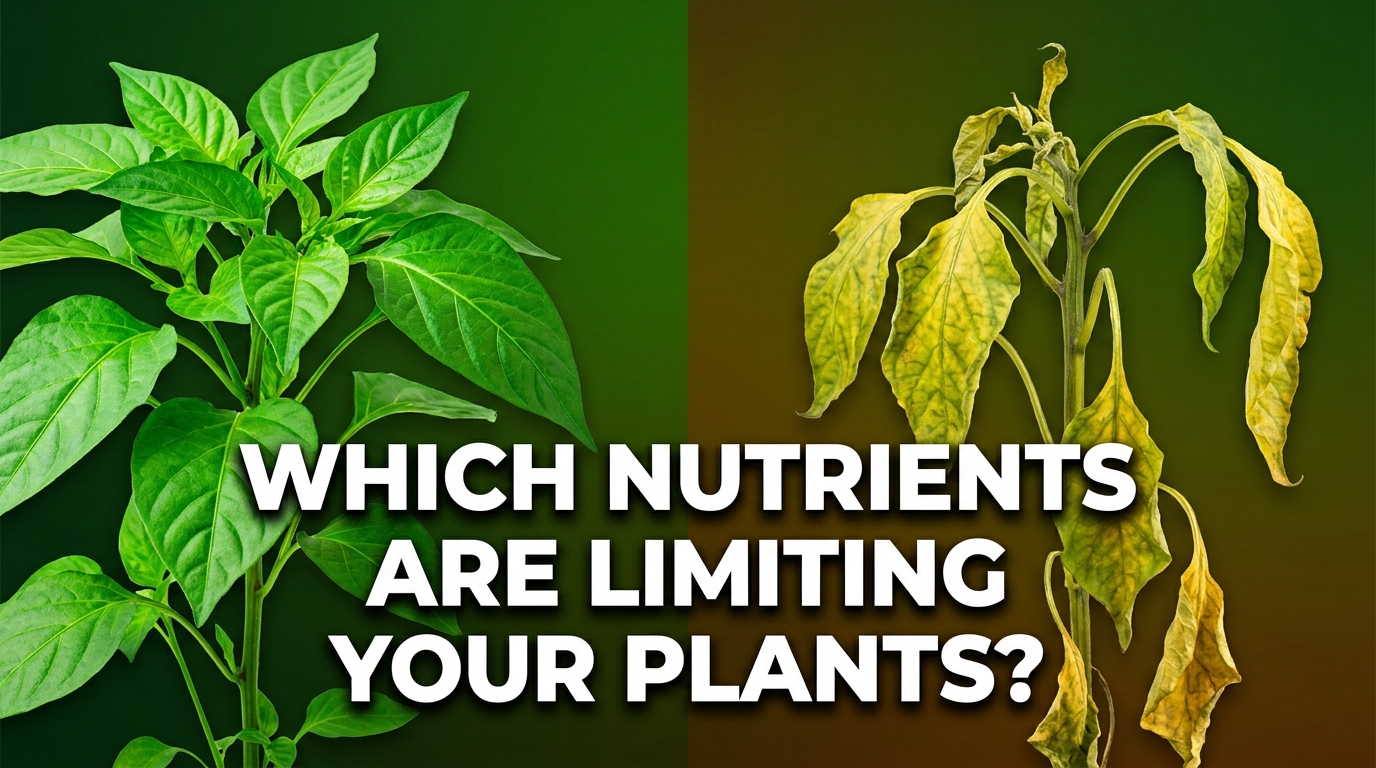
You’ve watered your plants. You’ve given them sunlight. You’ve done everything you think you’re supposed to do — and yet they still look pale, stunted, or just… wrong.
Here’s a truth most gardeners and farmers learn the hard way: water and sunlight are only part of the story. What’s often quietly sabotaging plant growth is an invisible bottleneck — a limiting nutrient.
Think of it like a three-legged stool. Even if two legs are strong, a short third leg makes the whole thing wobble. The same principle applies to plant nutrition. No matter how much of other nutrients you provide, a deficiency in just one essential element can halt growth entirely.
This concept is formally known as Liebig’s Law of the Minimum, and it’s one of the most foundational ideas in plant science and agriculture.
In this guide, you’ll learn exactly which nutrients are most commonly limiting, how to recognize the signs of each deficiency, and — most importantly — what you can do about it.u
What Is a Limiting Nutrient?
A limiting nutrient is the one essential element that is in shortest supply relative to a plant’s needs. Even if all other nutrients are abundant, the scarcest one dictates how much a plant can grow.
The concept comes from Justus von Liebig, a 19th-century German chemist. He discovered that crop yield is not determined by the total nutrients available — it’s controlled by whichever nutrient is in least supply.
Here’s an analogy: imagine filling a barrel with water. The barrel is made of wooden staves of different heights. No matter how much water you pour in, the water only fills up to the height of the shortest stave. That short stave is your limiting nutrient.
Plants need 17 essential nutrients to complete their life cycle. These are divided into:
- Macronutrients — needed in large quantities (nitrogen, phosphorus, potassium, calcium, magnesium, sulfur)
- Micronutrients — needed in tiny amounts but still critical (iron, zinc, manganese, copper, boron, molybdenum, chlorine, nickel)
A deficiency in any one of these can become the limiting factor — but some are far more commonly limiting than others.
The Big Three: Macronutrients That Most Often Limit Growth
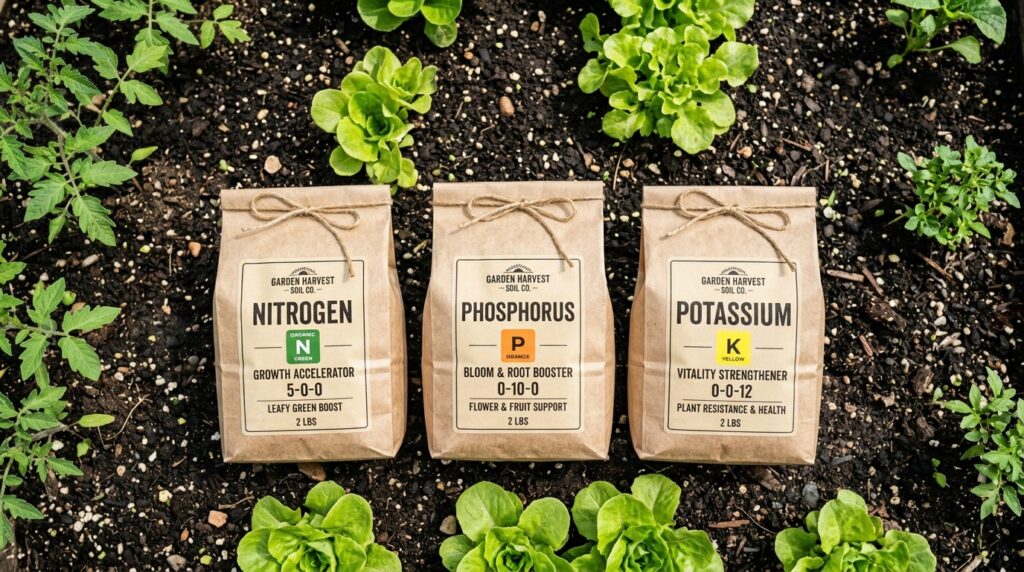
1. Nitrogen (N) — The Most Common Limiting Nutrient
If there’s one nutrient that limits plant growth more than any other, it’s nitrogen.
Nitrogen is a core building block of amino acids, proteins, and chlorophyll — the green pigment plants use to capture sunlight for photosynthesis. Without enough nitrogen, plants can’t build new tissue, and they can’t photosynthesize efficiently.
Signs of nitrogen deficiency:
- Yellowing of older, lower leaves first (called chlorosis)
- Slow, stunted growth
- Pale green or yellowish overall plant color
- Reduced leaf size
- Premature leaf drop
According to the University of Minnesota Extension, nitrogen deficiency is the most widespread nutrient limitation in agricultural crops worldwide. It’s also a major reason why synthetic fertilizers — first developed in the early 20th century — transformed global food production.
Why is nitrogen so often limiting?
Unlike phosphorus or potassium, nitrogen in soil is highly mobile. It leaches out with water, gets used up by soil microbes, and cycles rapidly. In sandy, well-drained soils or heavy rain conditions, nitrogen depletes quickly.
How to fix it:
- Apply a nitrogen-rich fertilizer (look for high first number, e.g., 10-5-5 on the NPK label)
- Use organic sources like composted manure, blood meal, or fish emulsion
- Plant nitrogen-fixing cover crops like legumes (clover, vetch, soybeans) before your main crop
2. Phosphorus (P) — Critical for Roots and Reproduction
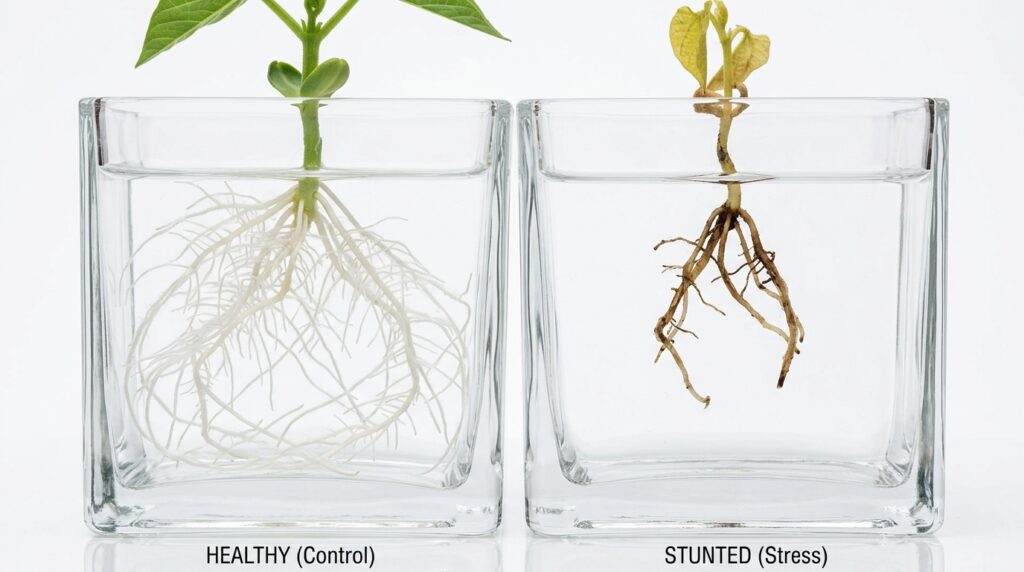
Phosphorus is the energy currency of plant cells. It’s a component of ATP (adenosine triphosphate), the molecule that powers virtually every biological process inside a plant.
It’s also essential for:
- Root development
- Flower and seed formation
- Cell division and growth
- Energy transfer throughout the plant
Signs of phosphorus deficiency:
- Purple or reddish coloration on the undersides of leaves or stems
- Dark green, dull leaves
- Delayed maturity and poor flowering
- Weak, shallow root systems
- Small fruit or seed yield
Phosphorus deficiency is particularly common in cold soils, because roots can’t absorb phosphorus efficiently when soil temperatures drop below 50°F (10°C). This is why many cool-season crops struggle early in spring, even in phosphorus-rich soil.
Research from Penn State Extension shows that phosphorus uptake can be severely impaired in waterlogged or highly acidic soils (below pH 5.5), as well as highly alkaline soils (above pH 7.5).
How to fix it:
- Apply bone meal, rock phosphate, or superphosphate fertilizers
- Maintain soil pH between 6.0–7.0 for best phosphorus availability
- Encourage mycorrhizal fungi — these root-associated fungi dramatically extend the root’s phosphorus-gathering surface area. Products inoculated with mycorrhizae can be found at most garden centers.
3. Potassium (K) — The Regulator Nutrient
Potassium doesn’t build plant structures directly, but it regulates almost everything that does. It activates over 60 different enzymes in plant cells and controls the opening and closing of stomata — the tiny pores through which plants breathe and manage water loss.
Signs of potassium deficiency:
- Browning or “scorching” on the edges and tips of leaves (called marginal leaf scorch)
- Yellowing between veins on older leaves
- Weak stems that bend or break easily
- Increased susceptibility to drought, disease, and pests
- Poor fruit quality and reduced shelf life
Potassium deficiency is especially common in sandy soils, soils with high rainfall, and heavily cropped soils where nutrients are regularly removed without being replaced.
How to fix it:
- Apply potash-based fertilizers (potassium chloride or potassium sulfate)
- Use organic sources like wood ash, kelp meal, or granite dust
- The third number in an NPK fertilizer ratio represents potassium — look for a high third number (e.g., 5-5-10)
Secondary Macronutrients That Can Become Limiting
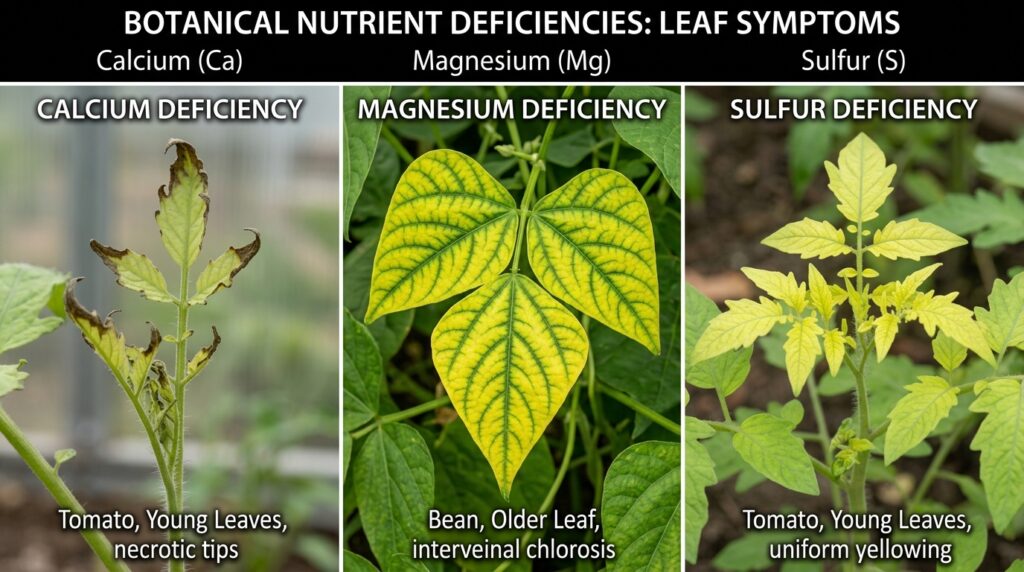
While nitrogen, phosphorus, and potassium are the most commonly discussed, three secondary macronutrients can also become limiting — especially in intensive growing systems.
Calcium (Ca)
Calcium is the cement of plant cell walls. Without it, new cell walls can’t form properly, leading to structural collapse in rapidly growing tissues.
Deficiency symptoms:
- Distorted, curled young leaves
- Blossom end rot in tomatoes, peppers, and squash (a dark, sunken patch at the base of the fruit)
- Tip burn in lettuce and cabbage
- Poor root development
According to the University of Florida IFAS Extension, calcium deficiency in vegetables is often not a soil deficiency — it’s a delivery problem. Calcium moves through plants only in water, so inconsistent watering or high humidity that limits transpiration can cause deficiency even in calcium-rich soil.
Magnesium (Mg)
Magnesium sits at the center of every chlorophyll molecule. No magnesium = no chlorophyll = no photosynthesis.
Deficiency symptoms:
- Interveinal chlorosis — yellowing between leaf veins while veins stay green, usually starting on older leaves
- Early leaf drop
- Reduced fruit and seed quality
Quick fix: A foliar spray of Epsom salt (magnesium sulfate) dissolved in water can provide fast relief. Epsom salt has long been used as a rapid magnesium supplement in gardens.
Sulfur (S)
Sulfur is essential for protein synthesis and is a component of some amino acids. It’s also what gives crops like garlic, onions, and brassicas their characteristic flavor and smell.
Deficiency symptoms:
- Uniform yellowing of young leaves (unlike nitrogen deficiency, which starts in old leaves)
- Delayed growth and maturity
- Pale green or yellowish new growth
Sulfur deficiency has become more common in recent decades because air pollution controls have reduced the amount of sulfur deposited by rain — a major natural source in previous eras. This has been documented by the USDA.
Micronutrients: Small Amounts, Big Consequences
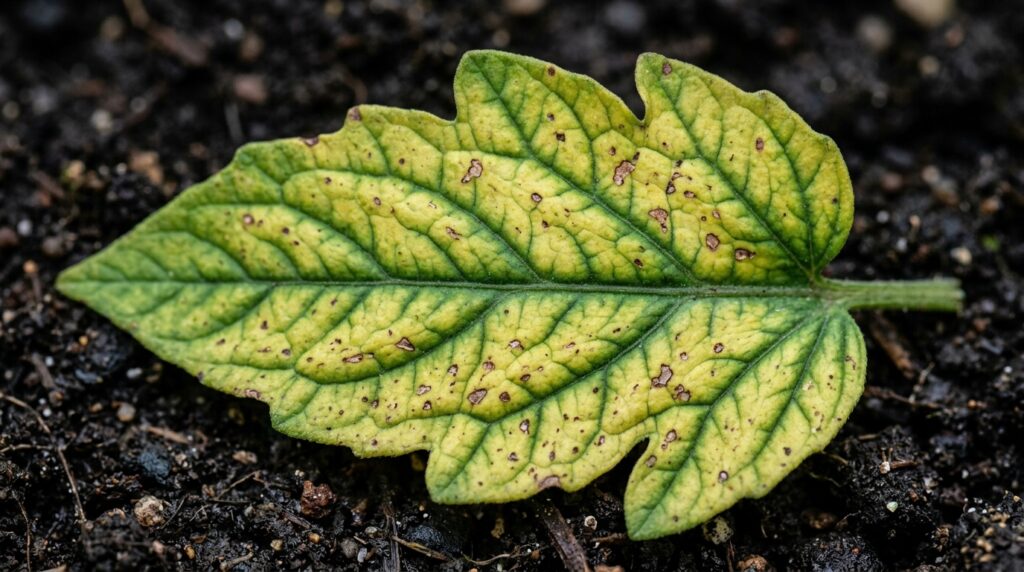
Micronutrients are sometimes called trace elements, but don’t let the name mislead you. Plants need them in tiny amounts, but a deficiency can be just as crippling as a macronutrient shortage.
Iron (Fe)
Iron is essential for chlorophyll synthesis and is a component of many enzymes involved in energy transfer. Despite being one of the most abundant elements in soil, iron deficiency is common — because most soil iron exists in forms plants can’t absorb.
Deficiency symptoms:
- Interveinal chlorosis on young leaves (the reverse of magnesium — iron deficiency strikes new growth first)
- Leaves turn pale yellow to almost white
- Severe cases: browning and leaf death
Iron becomes unavailable in alkaline soils (pH above 7.0). A Research shows that the most effective treatment is to acidify the soil rather than simply add more iron — since the iron is already there, it just can’t be absorbed.
Zinc (Zn)
Zinc plays a critical role in the production of growth hormones and the enzyme systems that regulate plant development.
Deficiency symptoms:
- Short internodes (small gaps between leaves on a stem), causing a rosette-like growth pattern
- Small, distorted leaves
- Mottled yellowing
- Delayed maturity in corn and other cereals
Zinc deficiency is one of the most widespread micronutrient problems in global agriculture, affecting crops on over 50% of the world’s agricultural soils, according to research published in the journal Frontiers in Plant Science.
Boron (B)
Boron supports cell wall formation and the transport of sugars through the plant. It’s particularly important for reproduction — pollen germination and fruit set depend heavily on adequate boron.
Deficiency symptoms:
- Hollow stems in broccoli and cauliflower
- “Hollow heart” in beets and turnips
- Poor pollen viability and fruit set
- Death of growing tips (terminal bud death)
Important: Boron has an unusually narrow range between deficiency and toxicity. Over-applying boron can quickly become harmful. Soil testing is strongly recommended before applying boron amendments.
Manganese (Mn) and Copper (Cu)
Both manganese and copper are involved in photosynthesis and enzyme function. They become limiting primarily in:
- Sandy, low-organic-matter soils
- High-pH soils (alkaline conditions lock both nutrients out)
- Heavily limed soils
Manganese deficiency looks similar to iron deficiency (interveinal chlorosis on young leaves), while copper deficiency often causes a bluish-green tint followed by wilting and leaf roll.
The Role of Soil pH in Nutrient Availability
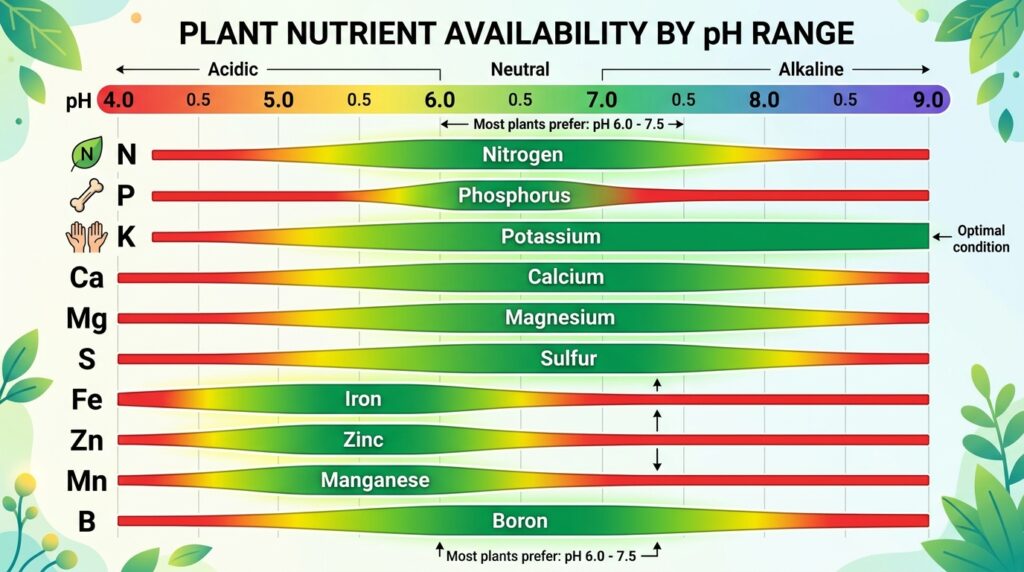
Here’s a fact that surprises most beginners: you can have plenty of a nutrient in your soil and still have plants that are deficient in it. How? Because soil pH controls how available nutrients are.
According to the Soil Science Society of America, most nutrients are most available to plants at a slightly acidic to neutral pH of 6.0–7.0.
Here’s what happens outside that range:
| Soil pH | Problem |
|---|---|
| Below 5.5 | Phosphorus locks up; aluminum and manganese reach toxic levels |
| Below 6.0 | Calcium and magnesium become less available |
| Above 7.0 | Iron, zinc, manganese, boron, and copper become less available |
| Above 8.0 | Phosphorus locks up again (forms insoluble calcium phosphate) |
The takeaway: Before buying expensive fertilizers, test your soil pH. Adjusting pH alone often solves apparent nutrient deficiencies — for free (or nearly so).
- To lower pH (make soil more acidic): Apply elemental sulfur, acidic organic matter like pine bark, or acidifying fertilizers
- To raise pH (make soil more alkaline): Apply agricultural limestone (calcium carbonate) or dolomitic lime (contains both calcium and magnesium)
You can test your soil at home with an inexpensive soil pH test kit or send a sample to your local Cooperative Extension Service for a comprehensive analysis.
Nutrient Interactions: When One Nutrient Blocks Another
One of the trickier aspects of plant nutrition is that nutrients interact with each other. Adding too much of one nutrient can actually cause a deficiency in another. These are called antagonistic interactions.
Common antagonistic pairs:
- Too much potassium → limits magnesium and calcium uptake
- Too much phosphorus → blocks iron and zinc absorption
- Too much calcium → reduces availability of potassium, magnesium, and boron
- Too much manganese → interferes with iron
This is why balanced fertilization matters. Dumping huge amounts of a single nutrient — even with the best intentions — can create new deficiencies elsewhere.
The International Plant Nutrition Institute (now IPNI/IFA) has published extensive guidance on balanced nutrient management to avoid these cascading imbalances.
How to Identify Limiting Nutrients in Your Garden or Farm
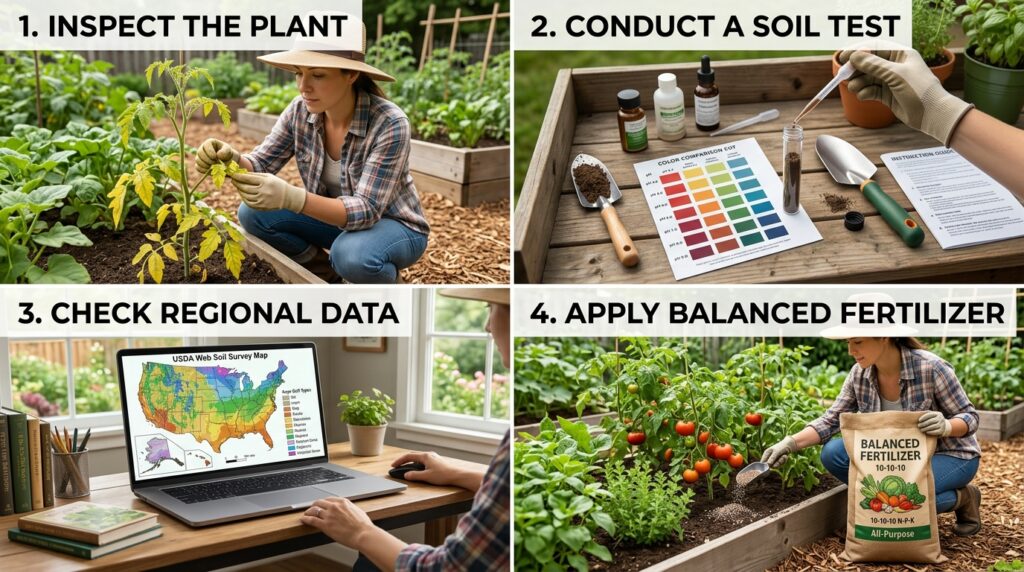
Guessing which nutrient is limiting is a losing game. Here’s how to find out for certain:
Step 1: Read Your Plants (Visual Diagnosis)
Your plants are constantly telling you what they need. The key is learning the language.
Two critical diagnostic questions:
- Which leaves are affected — old leaves or young leaves?
- Is the yellowing between the veins (interveinal) or does it affect the whole leaf?
| Symptom Pattern | Likely Deficient Nutrient |
|---|---|
| Yellowing of old/lower leaves, whole leaf | Nitrogen |
| Purple tint on undersides of old leaves | Phosphorus |
| Brown scorching on leaf edges (old leaves) | Potassium |
| Tip burn, fruit rot at base | Calcium |
| Interveinal yellowing of old leaves | Magnesium |
| Uniform yellowing of young leaves | Sulfur |
| Interveinal yellowing of young leaves | Iron or Manganese |
| Rosette growth, small leaves, stunted internodes | Zinc |
| Hollow stems, poor fruit set | Boron |
Step 2: Test Your Soil
Visual diagnosis gives clues, but a soil test gives certainty. A comprehensive soil test measures:
- Available macronutrients and micronutrients
- Soil pH
- Organic matter content
- Cation Exchange Capacity (CEC — a measure of the soil’s ability to hold nutrients)
You can get a professional soil test through your state’s Cooperative Extension Service for $15–$30 — one of the best investments you can make for your garden or farm.
Step 3: Consider Your Soil Type and History
- Sandy soils: More prone to nitrogen, potassium, and magnesium deficiencies (nutrients leach out easily)
- Clay soils: Better at holding nutrients, but prone to waterlogging (reduces iron and manganese availability)
- Organic-rich soils: Rarely deficient in most nutrients, but may still have pH-related lockout issues
- Fields with history of continuous cropping: Often depleted in potassium and micronutrients
Limiting Nutrients in Aquatic and Hydroponic Systems
It’s worth noting that limiting nutrients work differently in water-based environments.
In natural lakes, rivers, and oceans, phosphorus is typically the most limiting nutrient for algae and aquatic plant growth — not nitrogen. This is why agricultural runoff rich in phosphorus causes eutrophication, the explosive algae blooms that choke out oxygen in waterways and kill fish.
In hydroponic systems, where plants grow in water with added nutrients, the grower has complete control over nutrient concentrations. However, this means that any miscalculation can quickly create a limiting condition. Hydroponic growers typically use:
- Complete hydroponic nutrient solutions that include all essential macro and micronutrients
- pH meters to maintain solution pH between 5.5–6.5 (optimal for soilless growing)
- Electrical conductivity (EC) meters to monitor total nutrient concentration
Expert Tips: Getting the Most from Your Soil
Here are seven expert-level tips for managing limiting nutrients effectively:
- Test before you fertilize — Blind fertilization wastes money and can cause new imbalances. Get a soil test first.
- Fix pH before adding nutrients — Correcting pH is often more cost-effective than adding expensive amendments, since many nutrients are already present but unavailable.
- Use slow-release fertilizers for nitrogen — Controlled-release nitrogen fertilizers reduce leaching and provide a steadier supply to plants.
- Feed your soil biology — Mycorrhizal fungi and soil bacteria dramatically improve nutrient uptake. Adding compost and reducing tillage supports this biology. The USDA Natural Resources Conservation Service has excellent resources on soil health.
- Watch your nutrient ratios, not just totals — A potassium-to-magnesium ratio that’s too high will cause magnesium deficiency even in magnesium-rich soil. Ratios matter.
- Time your applications — Apply nitrogen when plants are actively growing and can use it, not in late fall when it’s likely to leach away before spring.
- Consider foliar feeding for quick fixes — When a deficiency is severe, applying a diluted nutrient solution directly to leaves can bypass root uptake problems and deliver nutrients to the plant rapidly.
Pros and Cons of Different Approaches to Fixing Limiting Nutrients
| Approach | Pros | Cons |
|---|---|---|
| Synthetic fertilizers | Fast-acting, precise nutrient ratios, inexpensive | Can leach, may disrupt soil biology, risk of over-application |
| Organic amendments (compost, manure) | Improves soil structure, feeds biology, slow-release | Slower results, nutrient content variable, bulky |
| Foliar spraying | Fast delivery, bypasses root issues | Short-term fix, labor-intensive, risk of burn if overconcentrated |
| Soil pH adjustment | Addresses root cause, long-lasting | Takes weeks to months to fully act |
| Cover cropping / green manure | Free nitrogen (legumes), improves organic matter | Requires planning ahead, takes growing season space |
FAQs: Limiting Nutrients for Plant Growth
What is the most common limiting nutrient for plant growth?
Nitrogen is the most commonly limiting nutrient for plant growth in both natural ecosystems and agricultural systems. It’s highly mobile in soil, depletes quickly, and is essential for chlorophyll production and protein synthesis. Most general-purpose fertilizers are designed primarily to supplement nitrogen for this reason.
How do I know if my plant has a nutrient deficiency?
Look at which leaves are affected and how the yellowing pattern develops. Old leaf yellowing suggests nitrogen, potassium, or magnesium deficiency. Young leaf yellowing or distortion points to iron, zinc, sulfur, or calcium. The most reliable method is a professional soil test combined with visual diagnosis.
Can too much fertilizer cause a nutrient deficiency?
Yes — this is called nutrient lockout or antagonism. Over-applying one nutrient can block the absorption of another. For example, excess phosphorus blocks iron and zinc uptake. Excess potassium can cause magnesium deficiency. Always follow recommended application rates from your soil test results.
What’s the difference between a macronutrient and a micronutrient deficiency?
The difference is primarily in the quantity needed, not in severity. Macronutrients (nitrogen, phosphorus, potassium, calcium, magnesium, sulfur) are required in larger amounts and deficiencies appear more frequently. Micronutrients (iron, zinc, manganese, boron, copper, etc.) are needed in tiny amounts, but deficiencies can be equally damaging, particularly for specific crops. Both can be limiting depending on soil conditions.
How often should I test my soil for nutrient levels?
For home gardens, test your soil every 2–3 years. For vegetable gardens or intensive cropping systems, annual testing is recommended. Always test when plants show unexplained deficiency symptoms, when changing crops, or after major weather events. Your local Cooperative Extension Service can recommend testing labs in your area.
Conclusion
Understanding limiting nutrients is one of the most powerful things you can do for your plants — whether you’re tending a backyard tomato patch or managing hundreds of acres.
The core principle, Liebig’s Law of the Minimum, is simple: your plant’s potential is determined not by the nutrients it has plenty of, but by the one it lacks most. Nitrogen is the most common culprit, followed by phosphorus and potassium. But micronutrients, soil pH, and nutrient interactions all play their roles too.
The good news? Most nutrient limitations are diagnosable and fixable. Start with a soil test. Learn to read your plants. Adjust pH before throwing money at fertilizers. And remember that feeding the soil ecosystem is often just as important as feeding the plants directly.
Ready to take action? Order a soil test from your local Cooperative Extension Service this week, and you’ll know exactly what your plants are missing — and exactly how to give it to them.
Article researched and written for educational purposes. Always consult your local agricultural extension service or a certified agronomist for crop-specific recommendations.

