
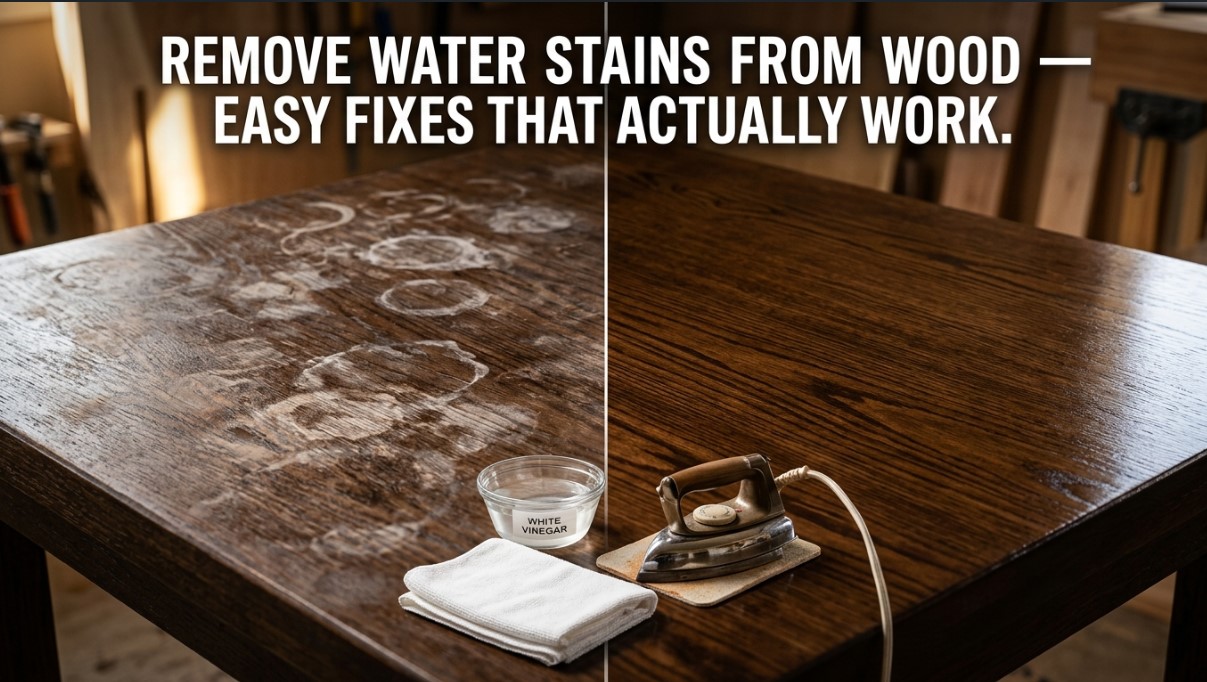
You set a glass down for five minutes. Maybe you forgot a coaster. Maybe a plant pot leaked overnight. Whatever happened, you now have a white ring, a cloudy patch, or a dark ugly stain sitting right on your favorite piece of wood furniture — and it looks terrible.
Here’s the thing: water stains on wood are almost always fixable. Even the dark ones. Even the ones that have been sitting there for months. You don’t need to refinish the whole table or call a professional. In most cases, items already in your home will do the job completely.
This guide covers every type of water stain, every effective method, and tells you exactly which approach to try first depending on what you’re dealing with. Let’s get into it.
Understanding Water Stains on Wood — White vs. Dark
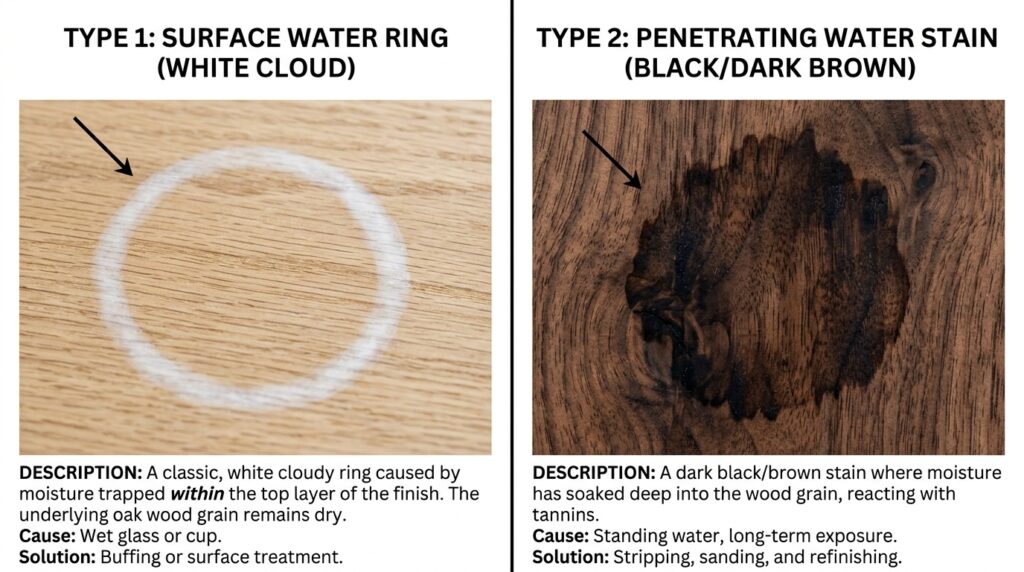
Not all water stains are the same, and knowing which kind you have determines which fix you need. There are two main types:
White Water Stains (Surface-Level)
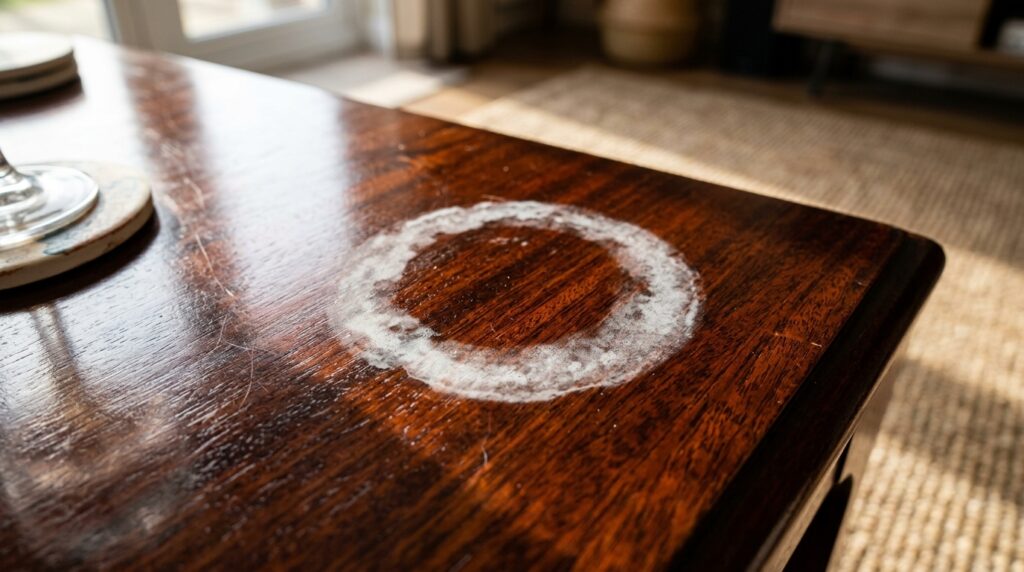
White rings or white cloudy patches are the most common water stains on wood. They sit in or just below the finish — the protective coating on the wood — rather than in the wood itself.
These happen when moisture gets trapped between the finish layers. The trapped water disrupts the finish’s clarity, creating that hazy, white appearance. Good news: because the damage is in the finish and not the wood grain, white stains are much easier to remove.
White stains respond well to:
- Heat (iron or hair dryer method)
- Mayonnaise or petroleum jelly
- Baking soda paste
- Toothpaste
- Fine steel wool with oil
Dark Water Stains (Deep Penetration)
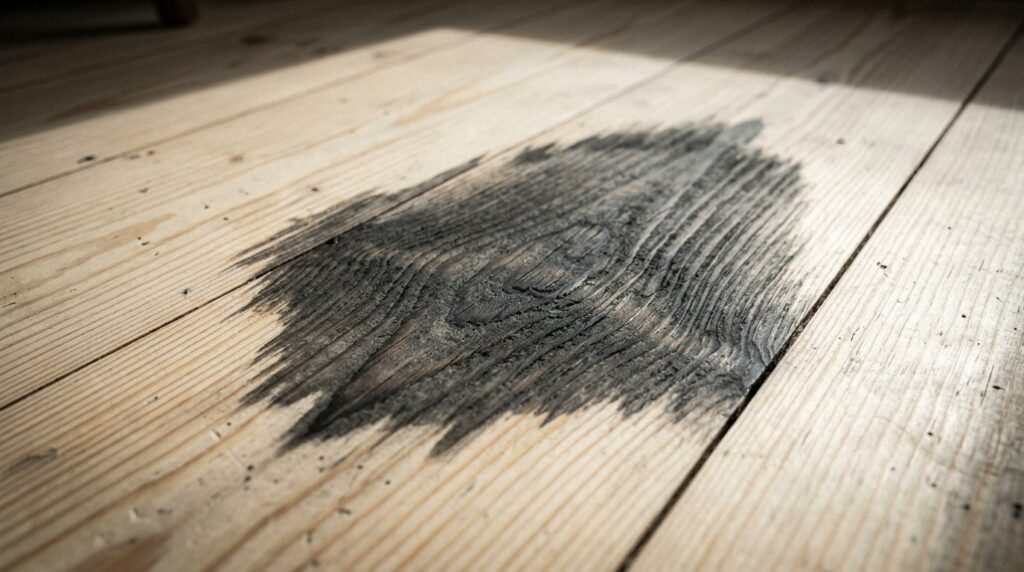
Dark stains — brown, gray, or black — mean moisture got through the finish entirely and soaked into the wood fibers themselves. These are tougher to deal with, but still very fixable.
Dark stains are caused by water reacting with tannins in the wood or by mold and mildew growing inside the grain. The older the stain, the darker it tends to get.
Dark stains typically require:
- Oxalic acid (wood bleach)
- Hydrogen peroxide
- Sanding and refinishing in severe cases
- Vinegar and baking soda for mild dark stains
What You’ll Need Before You Start
Before trying any method, gather your supplies and prep your surface. Working on a dry, room-temperature surface gives you the best results.
Basic supplies to have on hand:
| Supply | Used For |
|---|---|
| Clean white cloths | All methods — avoid colored cloths that can transfer dye |
| Clothes iron | Heat method for white stains |
| Hair dryer | Gentle heat method |
| White non-gel toothpaste | Mild white stains |
| Mayonnaise or petroleum jelly | White rings, overnight treatment |
| Baking soda | Paste method for white stains |
| White vinegar | Mild dark stains, cleaning |
| Fine steel wool (0000 grade) | Used with mineral oil for surface stains |
| Oxalic acid / wood bleach | Deep dark stains |
| Hydrogen peroxide (3%) | Moderate dark stains |
| Mineral oil or lemon oil | Conditioning after treatment |
| Fine-grit sandpaper (220 grit) | Final smoothing before refinishing |
| Wood finish or wax | Sealing after treatment |
Before you begin:
Always test any method in a small, hidden area first — underneath the table, on the back of a chair leg, or in a corner of the floor. Different wood finishes react differently. What works perfectly on an oil-finished surface can cloud a lacquer finish.
How to Remove White Water Stains from Wood
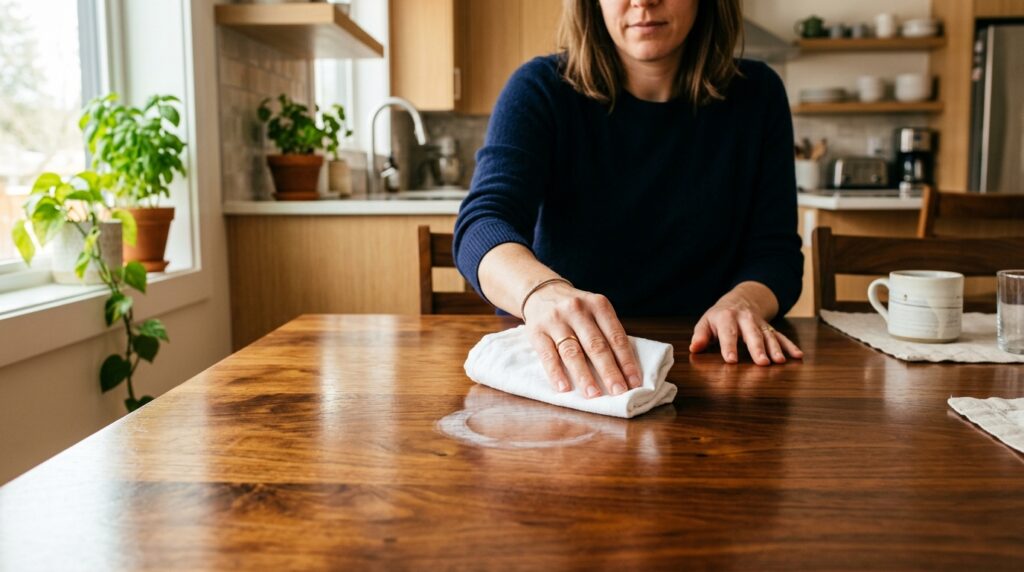
White stains are your best-case scenario. Most of them respond to one of the methods below within a single session. Start with the gentlest method and move up the scale if needed.
Method 1 — The Iron and Cloth Trick
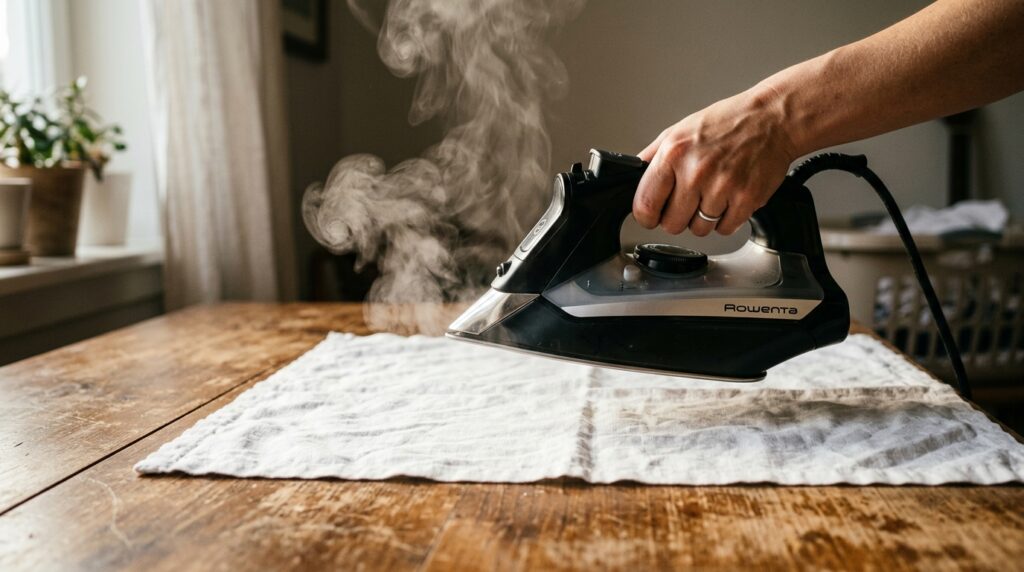
This is often the first method people try — and it works surprisingly well for fresh or moderately set white rings. The principle is simple: gentle heat evaporates the trapped moisture inside the finish.
What you need: A clothes iron and a clean, dry cotton cloth (a thin t-shirt works perfectly).
Steps:
- Set your iron to the lowest heat setting with NO steam.
- Lay the clean dry cloth flat over the water stain completely.
- Press the iron over the cloth for 5 to 10 seconds, moving it slowly.
- Lift the cloth and check the stain.
- Repeat in 5-second intervals, checking after each pass.
- Once the stain disappears, let the surface cool, then apply a thin coat of furniture wax or mineral oil.
Important: Never use steam — that adds more moisture to the problem. Keep the iron moving at all times to avoid scorching. Don’t press too hard.
This method works particularly well on lacquered and polyurethane finishes.
Method 2 — Mayonnaise or Petroleum Jelly Overnight
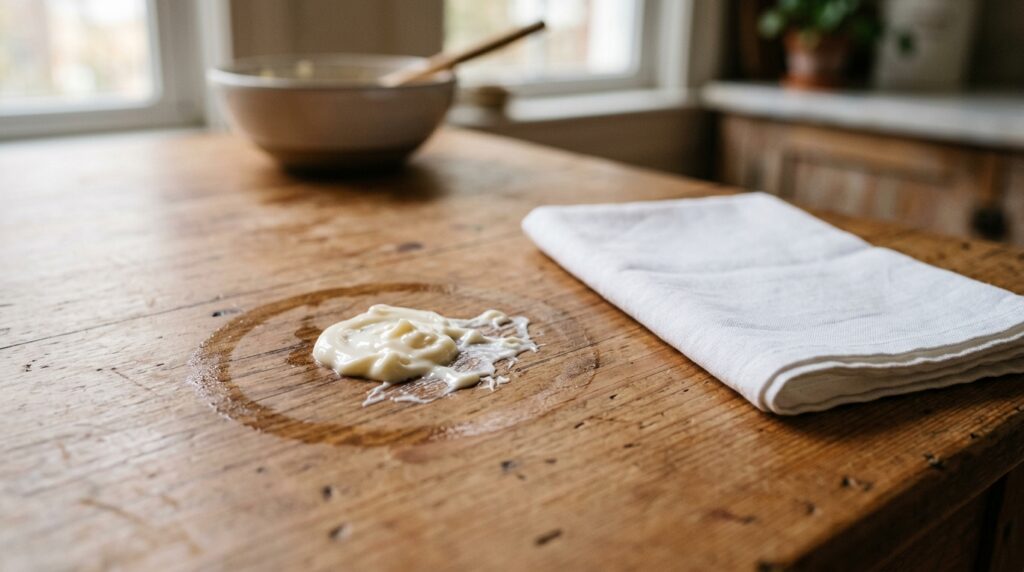
This sounds odd, but it genuinely works. The oils in mayonnaise (or petroleum jelly) slowly displace the moisture trapped in the finish, restoring its clarity.
Steps:
- Apply a generous dollop of full-fat mayonnaise or petroleum jelly directly over the stain.
- Leave it on for several hours — overnight works best for stubborn stains.
- Wipe it off completely with a clean cloth.
- Buff the area gently with a dry cloth.
- Condition the surface with furniture polish or wood oil.
This method is gentle, requires no scrubbing, and is safe on most finished wood surfaces. It works best on stains that are a few days to a few weeks old.
Method 3 — Non-Gel Toothpaste
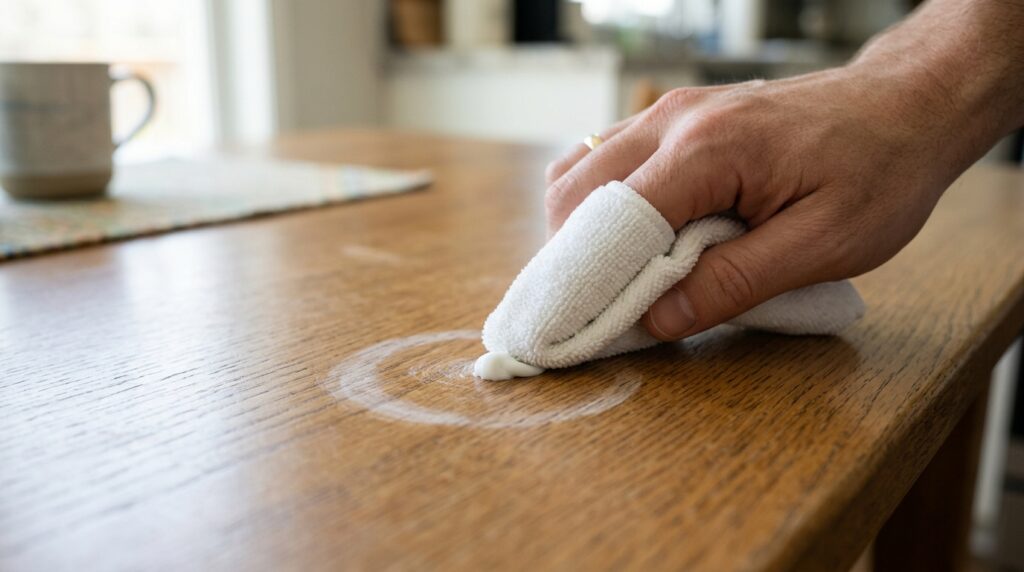
Plain white non-gel toothpaste contains mild abrasives that can gently buff out surface-level white rings without damaging most wood finishes.
Steps:
- Apply a small amount of white toothpaste directly to the stain.
- Rub gently in the direction of the wood grain using a soft cloth.
- Work in small circular motions if the stain is circular.
- Wipe away with a damp cloth and immediately dry the area.
- Buff with a dry cloth and apply furniture wax to finish.
For stubborn white rings, mix equal parts toothpaste and baking soda for extra abrasive power. Use sparingly and test first — this combination is slightly more aggressive.
Method 4 — Baking Soda Paste
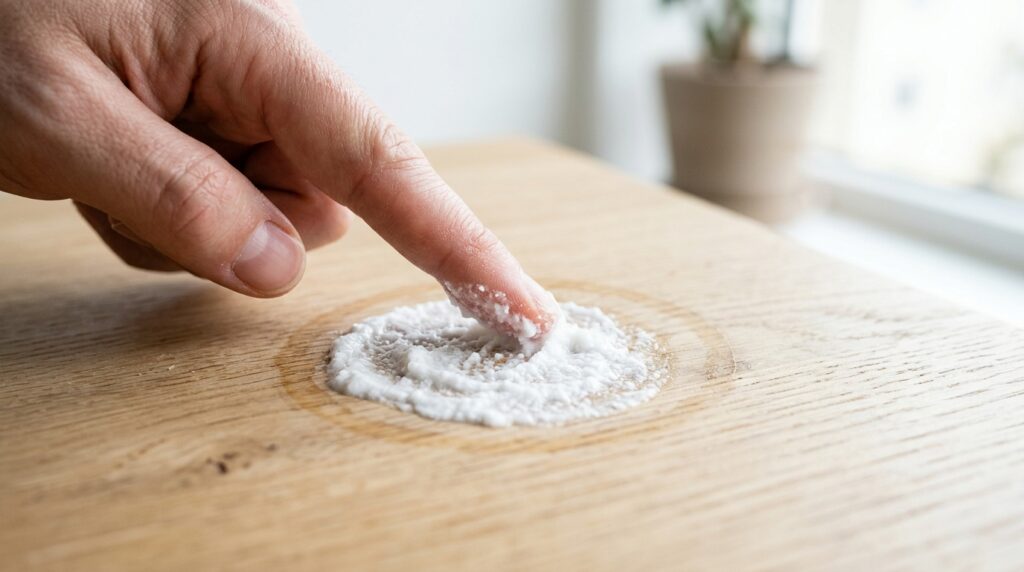
Baking soda is a mild alkaline abrasive that works similarly to toothpaste but is slightly stronger. It’s ideal when toothpaste alone hasn’t fully removed the stain.
Steps:
- Mix one tablespoon of baking soda with a few drops of water to form a thick paste.
- Apply to the stain with your finger or a soft cloth.
- Rub gently in the direction of the wood grain for 30 to 60 seconds.
- Wipe completely clean and dry immediately — do not let moisture sit.
- Polish the surface with furniture wax or oil to restore sheen.
Method 5 — Steel Wool and Mineral Oil
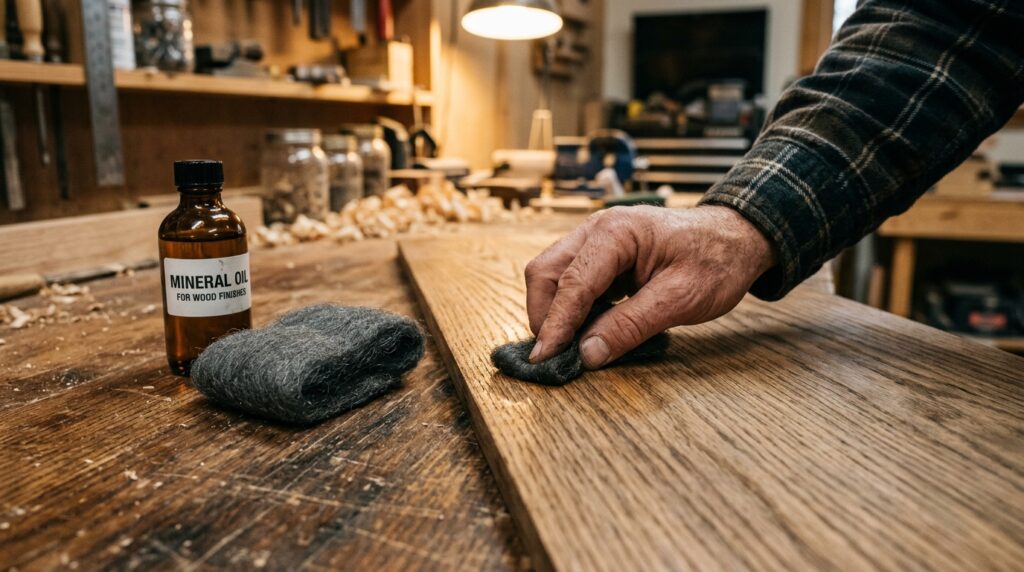
This method is slightly more aggressive and works well on white stains that have resisted other treatments. The steel wool provides very fine abrasion while the mineral oil acts as a lubricant to prevent scratching.
Only use 0000 (four-zero) grade steel wool. Anything coarser will scratch the finish badly.
Steps:
- Apply a small amount of mineral oil to the stained area.
- Dip the 0000 steel wool into the oil and rub gently along the grain.
- Use very light pressure — the goal is to buff, not sand.
- Wipe clean with a cloth and check the stain.
- Repeat if needed, then condition the surface with furniture wax.
This method works especially well on oil-finished and wax-finished wood surfaces.
How to Remove Dark Water Stains from Wood
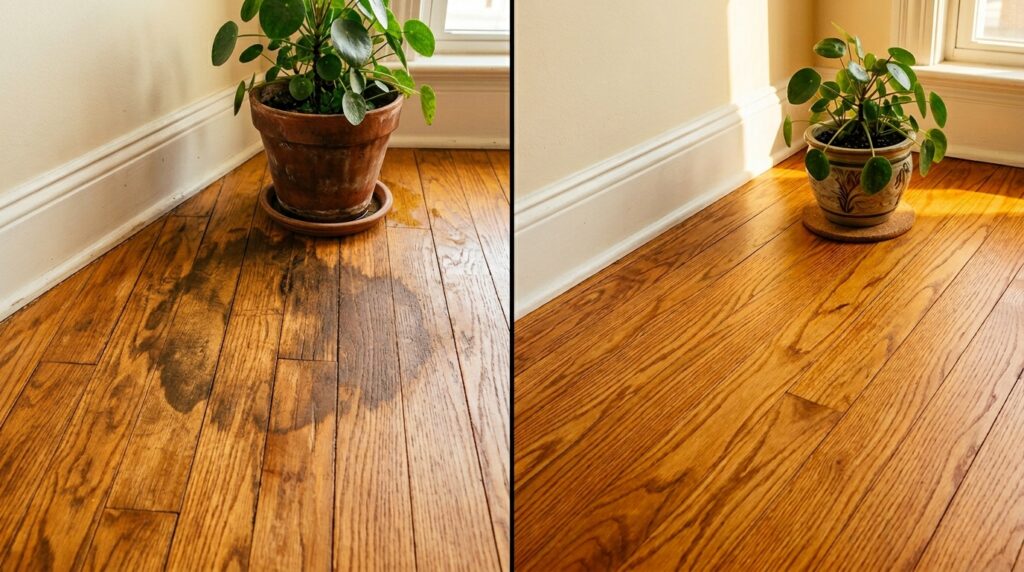
Dark stains are more serious, but they respond well to the right treatments. The key is being patient and understanding that dark stains often need multiple passes or an overnight soak.
Method 1 — White Vinegar and Baking Soda
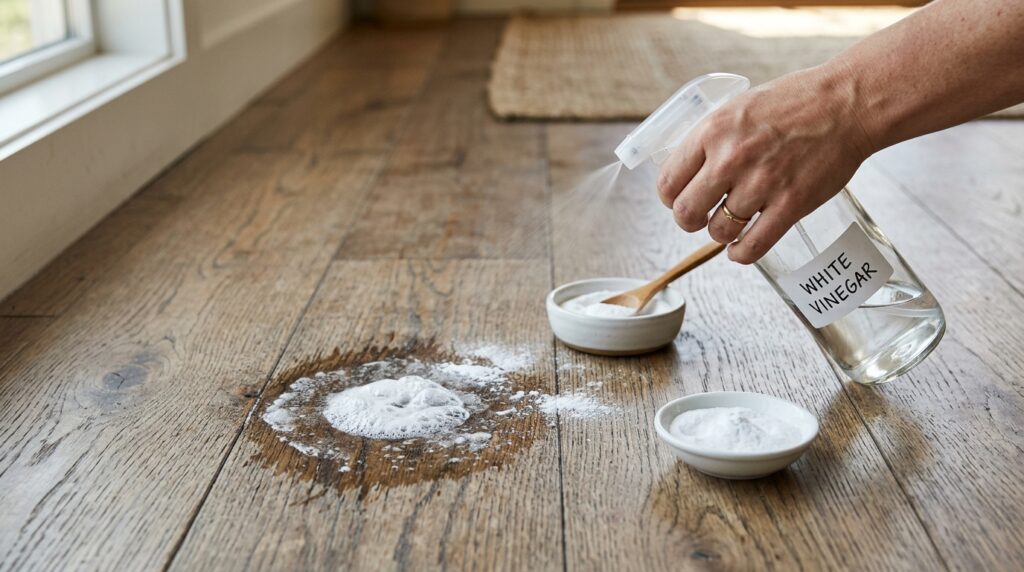
For mild to moderate dark stains, this combination creates a gentle chemical reaction that helps lift tannin-based discoloration.
Steps:
- Apply white vinegar to the stain with a cloth and let it sit for 5 minutes.
- Sprinkle baking soda over the wet area — it will bubble and fizz slightly.
- Let the reaction work for 5 to 10 minutes.
- Wipe clean and dry thoroughly.
- Assess the stain. Repeat if needed.
This method works best on relatively fresh dark stains and wood that still has some natural finish protecting it.
Method 2 — Hydrogen Peroxide for Moderate Dark Stains
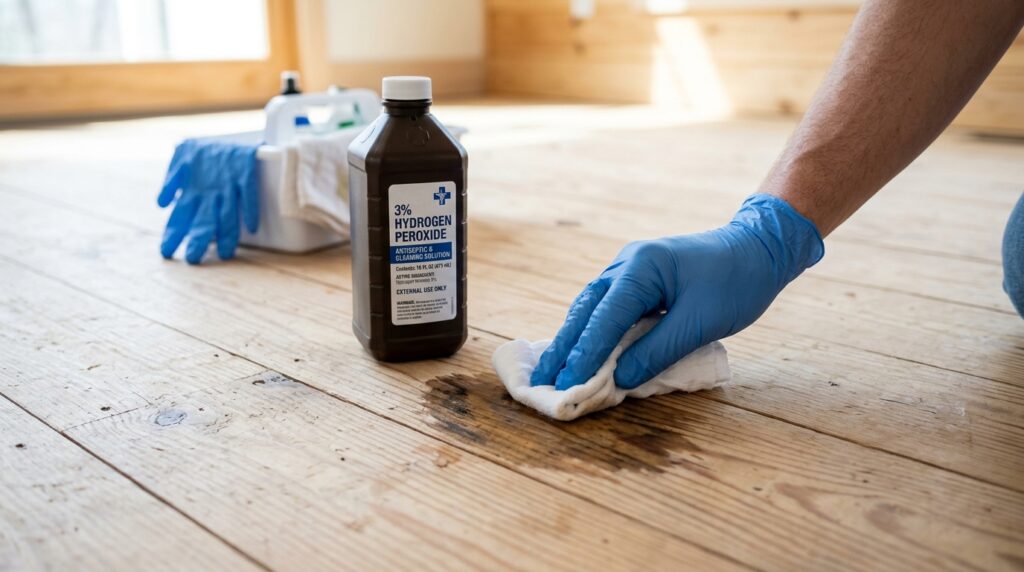
Hydrogen peroxide at 3% concentration (the type available at any pharmacy) is a gentle bleaching agent effective on moderate dark water stains.
Steps:
- Dampen a clean cloth with 3% hydrogen peroxide.
- Lay it over the stain and press it firmly into the grain.
- Leave for 30 minutes to 2 hours depending on stain severity.
- Check periodically — the stain should lighten progressively.
- Once lightened to satisfaction, wipe dry and let fully air dry.
- Sand lightly with 220-grit sandpaper if the grain has raised.
- Apply wood stain or finish to match the surrounding area.
Always wear gloves when using hydrogen peroxide on wood, especially if the surface is unfinished.
Method 3 — Oxalic Acid (Wood Bleach) for Severe Dark Stains
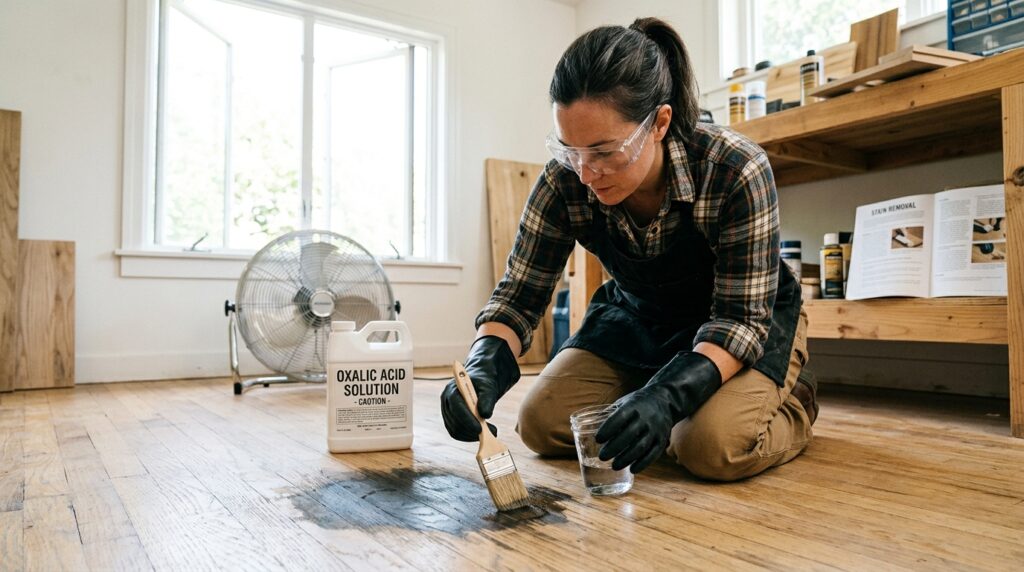
For deep, old, or severe dark stains — especially black marks from prolonged water exposure or pet accidents — oxalic acid (commonly sold as wood bleach) is the most reliable solution.
This is the same compound used by professional wood restorers for serious discoloration.
Important safety note: Oxalic acid is a chemical irritant. Wear rubber gloves, eye protection, and work in a ventilated space.
Steps:
- Sand away the finish over the stained area using 80 to 100-grit sandpaper to expose raw wood.
- Mix oxalic acid crystals with warm water following package directions (typically 1 oz per cup of water).
- Apply the solution liberally over the stain with a brush.
- Let it sit for 20 to 30 minutes, keeping the area wet.
- Rinse thoroughly with clean water and let dry completely (24 hours minimum).
- Neutralize the surface by wiping with a baking soda and water solution (2 tablespoons per cup of water).
- Let dry again, then sand smooth with 220-grit sandpaper.
- Apply stain and finish to match the surrounding wood.
Oxalic acid is available at most hardware and home improvement stores. It’s one of the most effective treatments available for serious dark staining.
How to Remove Water Stains from Wood Floors
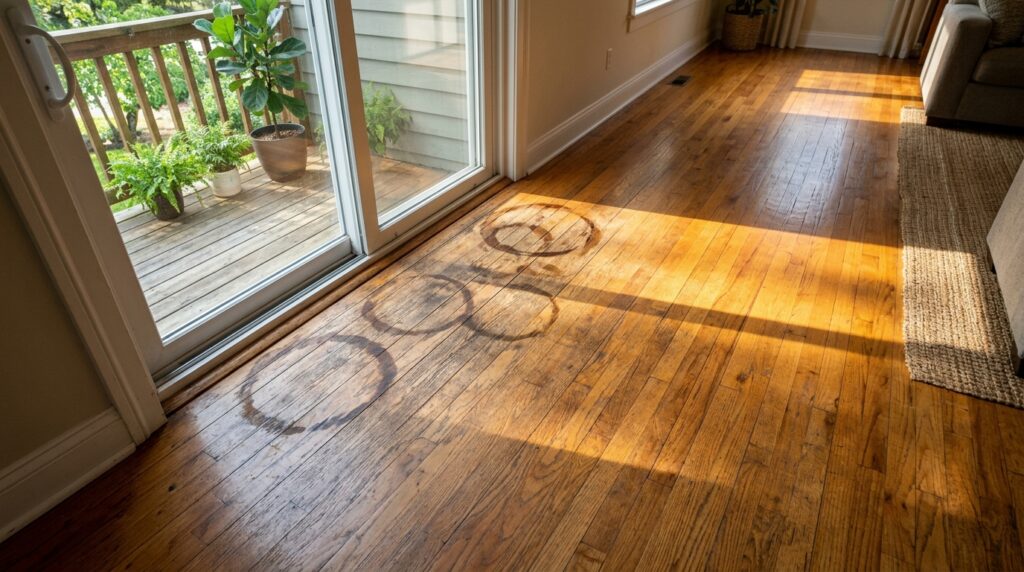
Wood floors present a slightly different challenge because you’re working on a large surface you walk on, and refinishing even a small section means matching the rest of the floor. Here’s how to approach it:
Light White Stains on Finished Floors
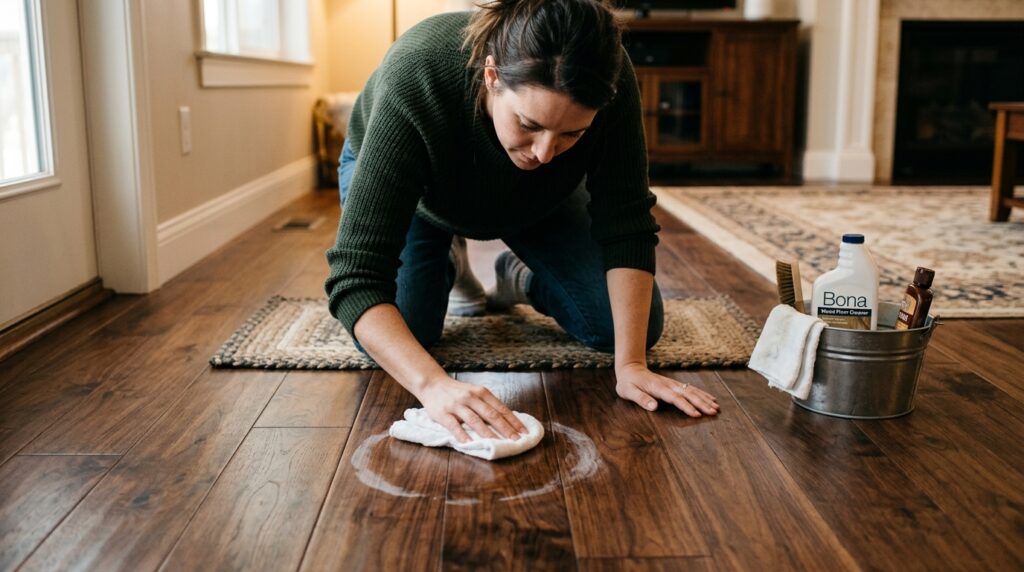
For white haze or rings on finished hardwood floors, the iron and cloth method and the toothpaste method are both effective. Work with the wood grain at all times.
After treating, apply a coat of hardwood floor cleaner appropriate for your finish type and buff to a shine.
One important rule for floors: never use water as part of your cleaning process if you can avoid it. Excess moisture on floors causes more staining and can lead to warping over time.
Dark Stains on Wood Floors
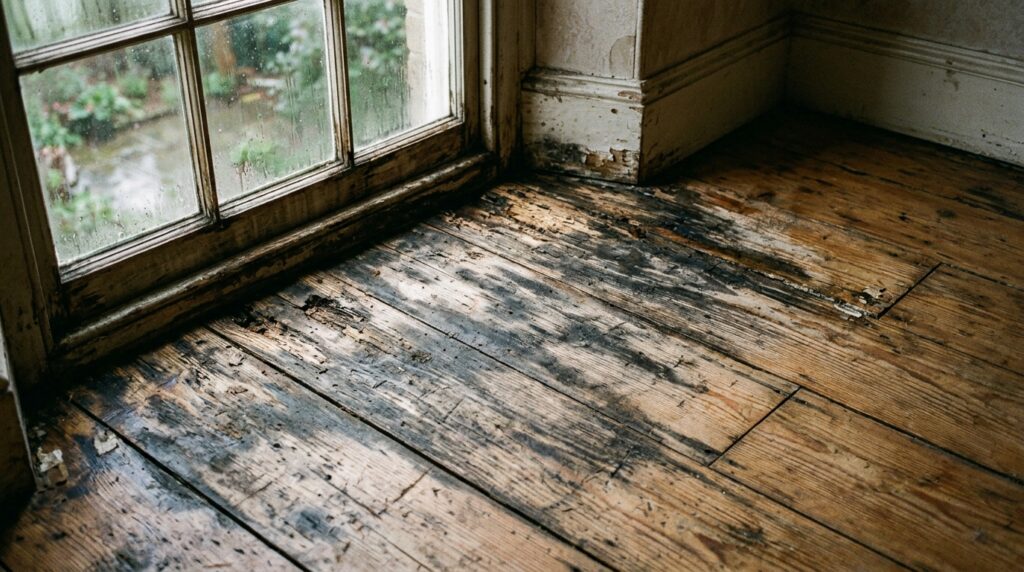
For dark stains on floors, hydrogen peroxide is often the go-to before pulling out oxalic acid. Apply it with a cloth, cover with plastic wrap to keep it active, and leave for several hours.
If the stain has penetrated deeply through years of exposure, spot sanding and refinishing the affected planks is sometimes the cleanest long-term solution. The National Wood Flooring Association offers guidance on when to DIY versus call a professional.
If you have an older floor with a wax finish (common in homes built before 1970), use steel wool and paste wax rather than liquid cleaners, as many modern floor cleaners will strip wax finishes.
How to Remove Water Stains from Wood Furniture
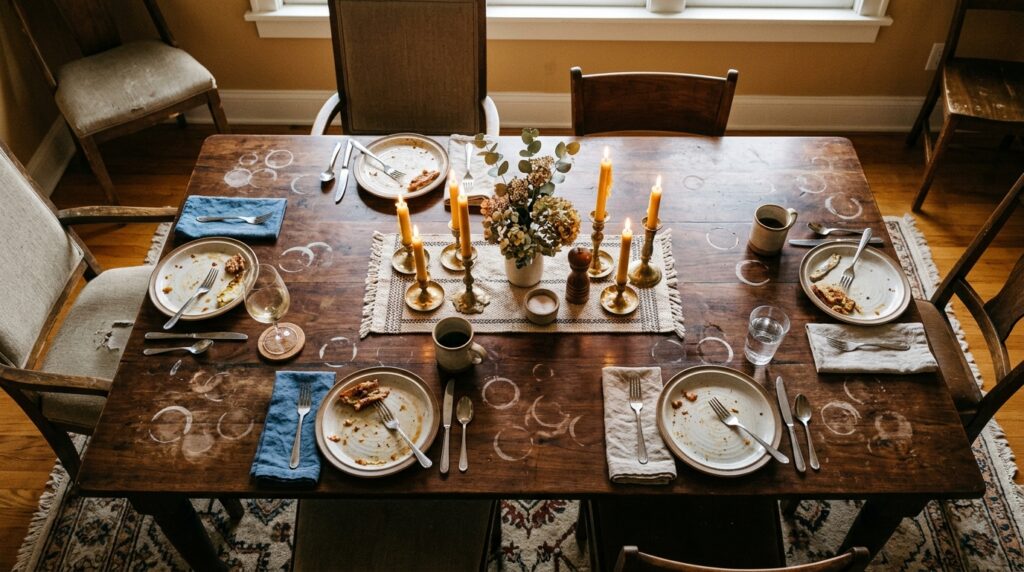
Furniture stains are the most common scenario — the wine glass left overnight, the flower vase that leaked, the coffee mug that sat on the side table for a week. Here’s how to approach different furniture pieces:
Water Stains on Wood Tables
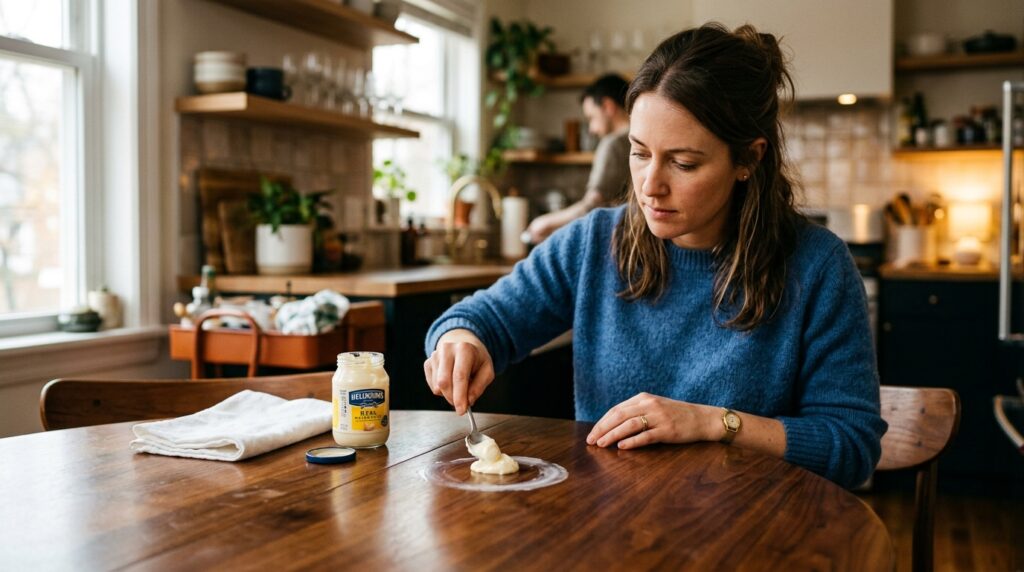
Tables are typically finished with polyurethane, lacquer, or varnish, all of which respond well to the heat method and the toothpaste method. Always test first on the underside of the tabletop.
For dining tables with heavy use, once you’ve removed the stain, protect the surface going forward with a quality table wax or furniture polish. Reapplying protection every few months significantly reduces future staining.
Water Stains on Wood Chairs and Legs
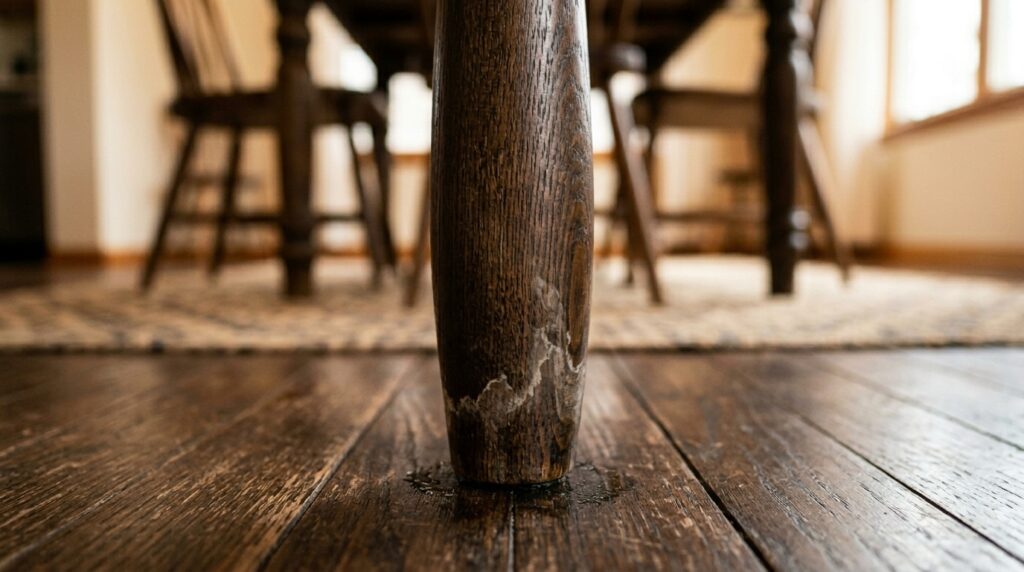
Chair legs often pick up water marks from sitting on wet floors. Because these surfaces are curved and less critical visually, you can use the steel wool and mineral oil method quite effectively.
Work in the direction of the grain and don’t apply too much pressure around the curves — steel wool can catch and scratch in corners if you’re not careful.
Water Stains on Antique or Delicate Wood
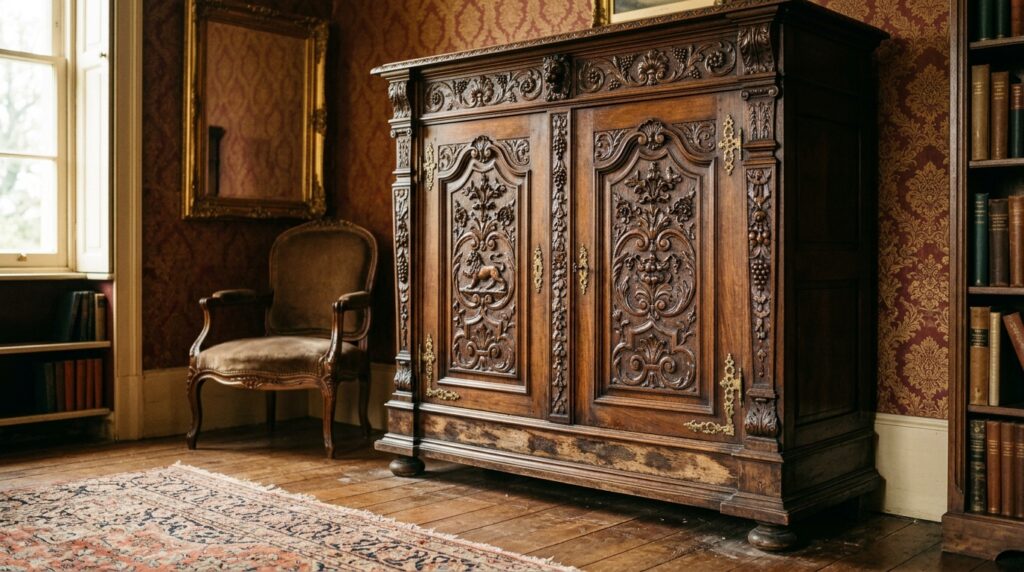
Antique furniture deserves extra care. The finishes on older pieces — shellac, lacquer, French polish — are often far more delicate than modern polyurethane.
For antique wood, always start with the gentlest method possible: petroleum jelly or mayonnaise left overnight. Avoid anything abrasive, and never use the iron method on shellac finishes (it can permanently cloud them).
If you’re unsure what finish your antique has, consult a furniture restoration specialist before attempting any treatment. The American Woodworkers Association can help locate qualified professionals.
Preventing Water Stains on Wood in the Future
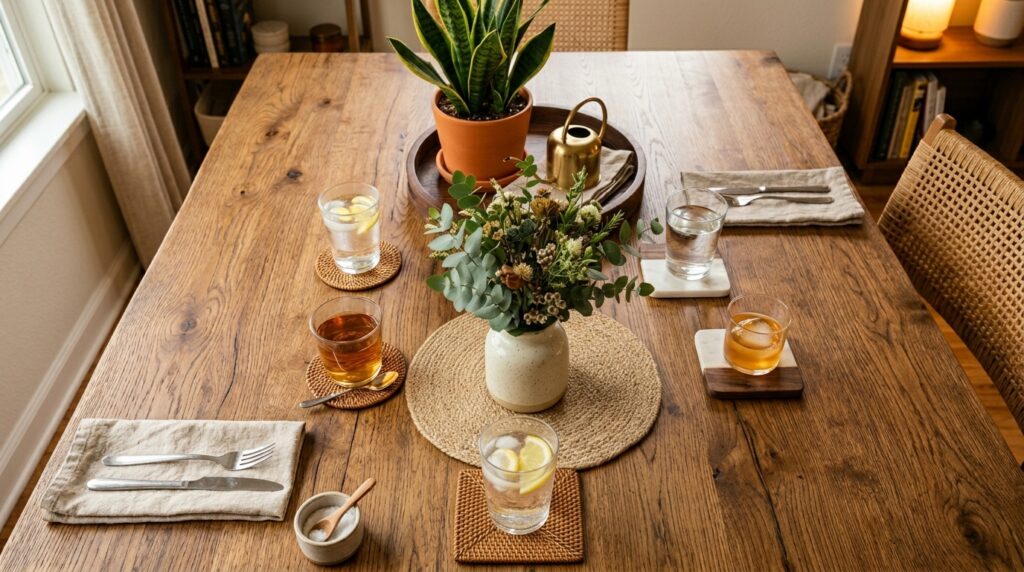
The best water stain is the one that never happens. These simple habits prevent virtually all future staining:
- Always use coasters under glasses, mugs, and bottles. Keep a supply in every room where you have wood furniture.
- Use waterproof plant saucers under all indoor pots. Even “drip-free” pots sweat condensation that stains over time.
- Wipe spills immediately. The first 30 seconds matter enormously. A quick wipe prevents a stain that would otherwise require an hour to fix.
- Reapply wood finish or wax regularly. A well-maintained finish is your wood’s primary defense. Furniture wax should be reapplied every 3 to 6 months on heavily used surfaces.
- Use felt pads under items that sit permanently on wood — lamps, vases, decorative objects. Water collects under them unseen.
- Maintain humidity levels in your home. Extremes in indoor humidity — especially very high humidity — can cause wood to absorb ambient moisture. A home hygrometer can help you monitor levels, with 35% to 55% being ideal for wood furniture.
Expert Tips for Better Results
These are the details that separate okay results from excellent results:
Always work with the grain. Rubbing against the wood grain — even lightly — creates micro-scratches that catch light and make the repair visible. Every pass of cloth, steel wool, or sandpaper should follow the direction of the grain.
Dry the surface completely between steps. Moisture from one treatment can interfere with the next. Use a dry cloth and let the wood air for 10 to 15 minutes before moving to the next step.
Start light and escalate. It’s tempting to go straight to the strongest method, but even difficult stains sometimes respond to gentle treatment. Starting strong risks damaging the finish unnecessarily.
Condition the wood after every treatment. Any treatment — even gentle ones — strips some natural oils from the wood. Finishing with mineral oil, boiled linseed oil, or furniture wax restores that moisture and protects the surface.
Know when to call a professional. If a stain doesn’t respond after three attempts with appropriate methods, or if the stain covers a large area, a professional refinisher will save you time and the risk of further damage. This is especially true for antiques and high-value furniture.
Don’t mix chemicals. If you try vinegar and then want to try hydrogen peroxide, wipe the surface completely dry between applications. Mixing household chemicals on wood can cause unexpected reactions.
Common Mistakes to Avoid When Treating Wood Stains
Even well-meaning attempts can make things worse. Avoid these mistakes:
Using too much water. Water is what caused the stain in the first place. Many cleaning approaches involve water, but on wood you should always use as little as possible and dry immediately.
Scrubbing too hard. Aggressive scrubbing scratches the finish, making the area look worse than the original stain. Let the treatment do the work — your pressure should be light throughout.
Using colored cloths. Colored fabric dyes can transfer onto damp wood surfaces, especially if you’re using any solution that opens the grain. Always use white or unbleached cloths.
Skipping the test area. Every piece of wood has a different finish. A method that works perfectly on one table can cloud another. The 60 seconds it takes to test on a hidden spot can save hours of repair work.
Sanding without refinishing. If you sand through the finish to treat a stain, you must refinish that area afterward. Bare wood absorbs stains and moisture instantly and will look terrible within days.
Using furniture polish before stain removal. Many furniture polishes contain silicone, which seals the surface and prevents treatments from penetrating. If you’ve recently used spray polish, wipe the surface with mineral spirits before attempting stain removal.
Pros and Cons of DIY vs. Professional Wood Restoration
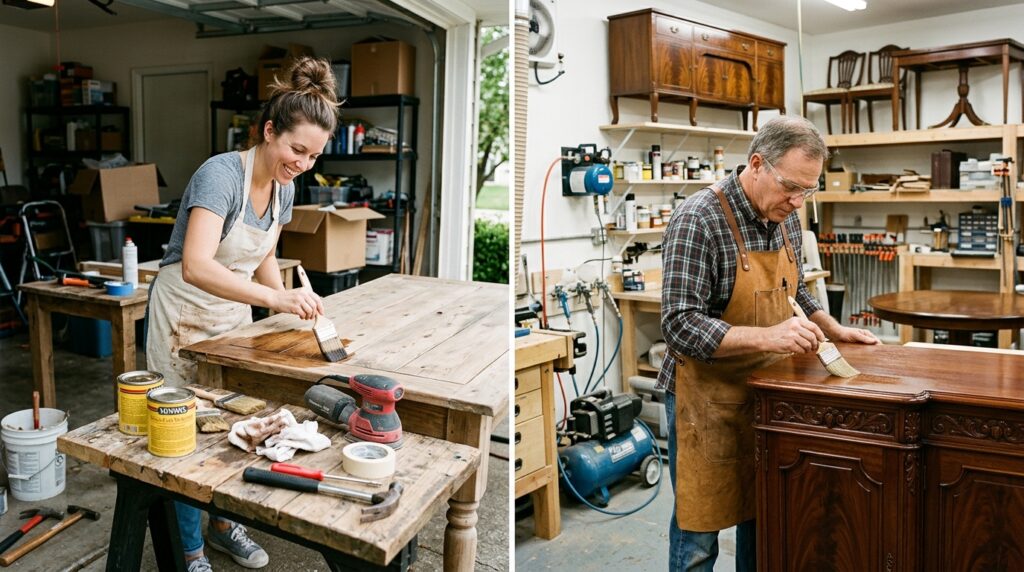
Deciding whether to handle water stain removal yourself or hire a professional depends on a few key factors:
| Factor | DIY | Professional |
|---|---|---|
| Cost | Low (usually under $20 in supplies) | $100–$500+ depending on piece and damage |
| Time | 1 hour to overnight | Drop-off and pickup, typically 1–2 weeks |
| Risk | Possible to damage finish if untested | Skilled hands with proper assessment |
| Best For | White rings, mild dark stains, modern furniture | Antiques, severe staining, full refinishes |
| Control | You decide every step | Professional uses their judgment |
| Quality | Good for surface stains when done correctly | Excellent for all stain types |
For most homeowners dealing with white rings or moderate dark stains on modern furniture, DIY is absolutely the right choice. The methods in this guide work. For antiques, high-value pieces, or stains that have been there for years and cover a large area, a professional restorer is worth the investment.
Frequently Asked Questions About Removing Water Stains from Wood
Can old water stains be removed from wood?
Yes — even stains that have been on wood for months or years can often be removed. The difference is that older stains typically require more aggressive methods. White rings from years ago may need the steel wool and mineral oil method or even gentle sanding. Dark stains that have had time to penetrate deeply may need oxalic acid treatment followed by sanding and refinishing. Age makes removal harder but rarely impossible.
Does toothpaste really remove water stains from wood?
It does, for mild to moderate white surface stains. The mild abrasives in plain white toothpaste gently buff the compromised finish layer, restoring clarity. It won’t work on dark stains or deep penetration. Always use plain white non-gel toothpaste — colored gel types don’t have the same abrasive properties and can stain the wood.
Will a hair dryer remove water stains from wood?
A hair dryer can help with fresh white rings by gently evaporating trapped moisture. Hold the dryer 6 to 8 inches from the surface on medium heat and move it constantly. It’s less reliable than the iron method because it provides less direct heat, but it’s a gentler option for delicate finishes. Don’t hold it in one spot — moving air is the goal, not scorching.
How do you remove black water stains from wood floors?
Black stains on wood floors require bleaching agents. Start with 3% hydrogen peroxide applied with a soaked cloth left over the stain for several hours. If that doesn’t fully remove it, oxalic acid (wood bleach) is your next step. Both methods require sanding and refinishing the treated area afterward to restore and protect the surface. For large areas of black staining, professional floor sanding is typically the most efficient solution.
How do you prevent water rings from forming on wood in the first place?
Consistent use of coasters, waterproof plant saucers, and regular application of wood wax or furniture polish creates a barrier that prevents most water marks. Beyond that, wiping up any spill or condensation immediately is the single most effective habit. Even the best finish won’t hold indefinitely against standing water — time is the enemy.
Quick Reference: Which Method to Use for Which Stain
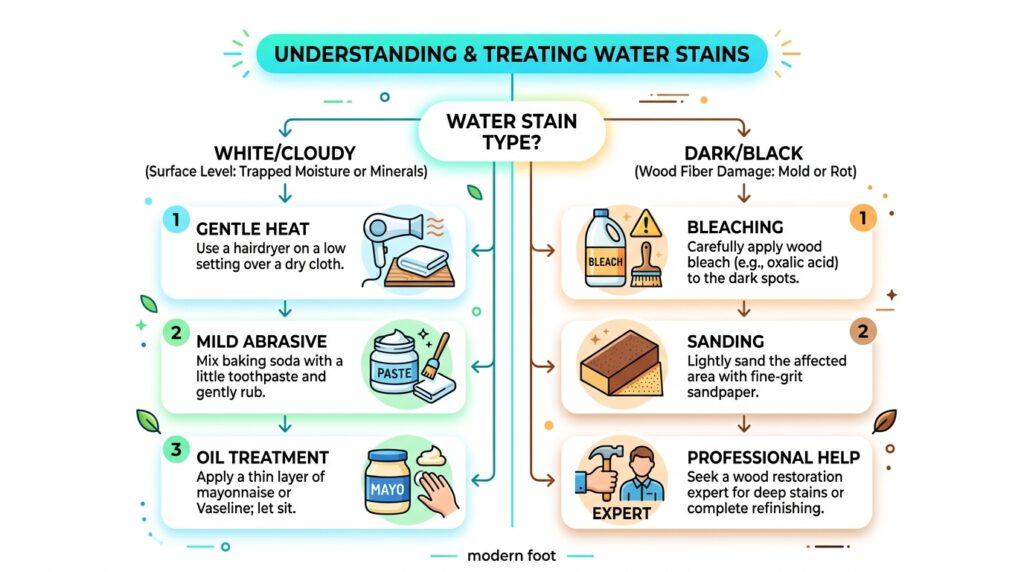
Use this quick guide to find your starting point:
White or Cloudy Stains:
- Fresh stain (under 24 hours) → Iron and cloth method first
- Stain 1 day to 2 weeks old → Mayonnaise or petroleum jelly overnight
- Stain won’t budge → Toothpaste or baking soda paste
- Still there → 0000 steel wool with mineral oil
- Covering large area → Light sand and refinish
Dark, Gray, or Black Stains:
- Mild darkening → White vinegar and baking soda
- Moderate dark stain → 3% hydrogen peroxide, several hours
- Deep or severe stain → Oxalic acid wood bleach (with full safety precautions)
- Covers large floor area → Professional sand and refinish
Final Thoughts
Water stains feel catastrophic when you first notice them. A beloved table, a beautiful floor, an heirloom cabinet — any of them can suddenly look ruined by what was just a forgotten glass of water.
But the reality is that wood is remarkably forgiving. With the right approach, patience, and the methods laid out in this guide, the vast majority of water stains — white or dark, fresh or old — can be removed without professional help.
Start gentle. Test before you commit. Work with the grain. Condition the wood when you’re done. And once the stain is gone, protect that surface so you’re not back here fixing the same problem in six months.
Your furniture is worth saving. And now you know exactly how to do it.

