
There are few things more annoying than a door that squeaks every single time you open or close it. Whether it is the front door, the bedroom door late at night, or the bathroom door that sounds like a haunted house effect, that noise can drive anyone crazy.
The good news? Fixing a squeaky door is one of the easiest home maintenance tasks you can do on your own. No professional needed. Most of the time, you only need a few basic supplies or items you already have in your kitchen cabinet.
This guide walks you through everything, step by step, so you can finally enjoy a quiet, smooth-swinging door.
Why Doors Squeak in the First Place
Before diving into the fixes, it helps to understand what is actually causing that sound. A squeaky door almost always comes down to one of a few simple reasons.
Friction between metal parts is the most common culprit. The hinge pins inside your door hinges rub against the hinge barrel when the door moves. When the lubricant that was originally there dries out or wears away, the bare metal grinding against bare metal creates that familiar squeak.
Rust and oxidation are another big factor. If a door hinge has been exposed to humidity over time, the metal starts to corrode. Rust creates rough, uneven surfaces that produce noise every time the door moves. Exterior doors and bathroom doors are especially prone to this.
Loose hinge screws can also cause squeaking. When the screws holding the hinge to the door frame or the door itself become loose, the hinge shifts slightly with each swing. That movement creates both noise and instability.
Dirt and debris buildup inside the hinge is another overlooked cause. Dust, paint flakes, and grime can accumulate inside the hinge barrel over years of use, creating a rough surface that generates friction and noise.
Warped or swollen wood can also force metal parts to rub unnaturally. Changes in humidity and temperature over the seasons cause wood doors and frames to expand and contract, sometimes pushing hinge components into positions that create noise.
Understanding which of these is causing your specific squeak will help you choose the right solution. In most cases, the fix is simpler than you think.
What You Need Before You Start
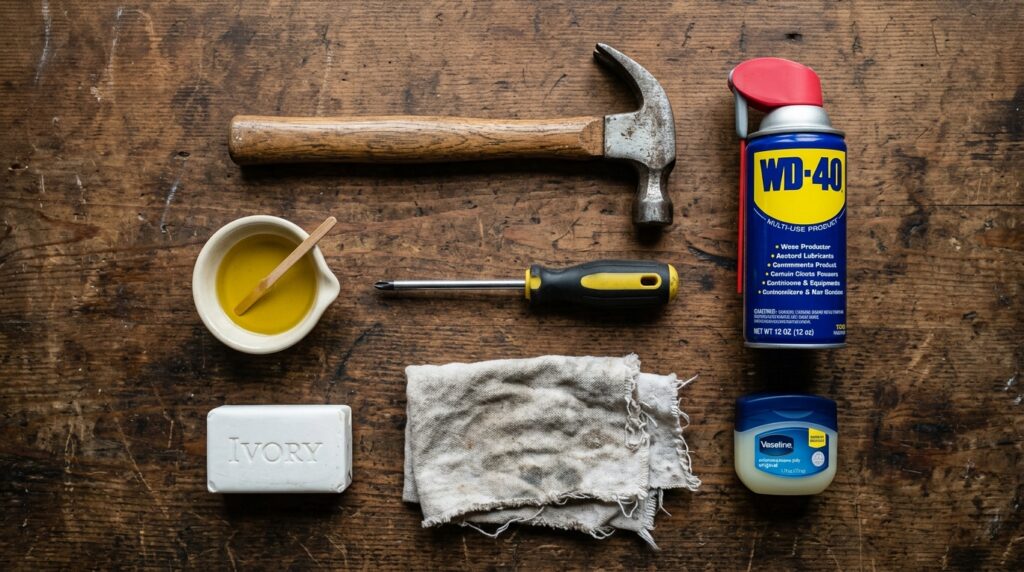
One of the great things about fixing a squeaky door is that you probably already have everything you need. Here is a quick list to gather before you get started.
Tools:
- Flat-head screwdriver
- Hammer
- Pliers (optional)
- Clean rags or paper towels
Lubricants and household items:
- WD-40 or a similar penetrating lubricant
- Olive oil or vegetable oil
- Petroleum jelly (Vaseline)
- Bar soap or wax candle
- 3-in-1 oil or light machine oil
- Cooking spray
Optional extras:
- Steel wool (for rust removal)
- Sandpaper (for wood adjustments)
- Wood glue or toothpicks (for fixing stripped screw holes)
- A piece of cardboard (to protect the floor)
Once you have these ready, you are set to tackle any type of squeaky door situation.
How to Fix Squeaky Door Hinges

Learning how to fix squeaky door hinges is the foundation of solving almost any door noise problem. The hinges are almost always the source, and the solution usually takes under ten minutes.
Step 1: Identify Which Hinge is Squeaking
Open and close the door slowly while you listen carefully. Most of the time, you can pinpoint whether the sound is coming from the top hinge, the middle, or the bottom. Sometimes it is all three.
Step 2: Open the Door to a 90-Degree Angle
This gives you full access to the hinge and keeps the door stable while you work on it.
Step 3: Remove the Hinge Pin
Place a flat-head screwdriver at the base of the hinge pin, which is the rod that runs through the center of the hinge barrel. Tap the screwdriver gently upward with a hammer until the pin pops out. Some pins come out easily; others that are rusty or stuck may need a bit more tapping.
If the pin is very stuck, you can use pliers to grip it and wiggle it loose.
Step 4: Clean the Pin and the Barrel
Once you have the pin out, you will likely see rust, old dried grease, or debris on it. Wipe it clean with a rag. For rust, use a piece of steel wool to scrub it down until the metal is smooth again.
Clean the inside of the hinge barrel as well using a thin cloth or a cotton swab. Removing all the grime makes the lubrication much more effective and longer lasting.
Step 5: Apply Lubricant
Coat the hinge pin thoroughly with your chosen lubricant. Rub it all over the pin, making sure it gets into every surface. Petroleum jelly works great here because it is thick enough to stay in place for a long time. WD-40 also works well for initial penetration.
Step 6: Reinstall the Pin
Slide the pin back into the hinge barrel and tap it down firmly with the hammer until it is fully seated. The lubrication will distribute throughout the barrel as the pin goes in.
Step 7: Test the Door
Open and close the door a few times. The squeak should be gone or significantly reduced. If there is still some noise, repeat the process with a fresh coat of lubricant.
How to Fix Squeaky Door Hinges Without Removing Them
Sometimes you do not want to deal with removing the hinge pin. Maybe the pin is completely stuck, or you just want a faster solution. The good news is that how to fix squeaky door hinges without removing them is entirely possible.
The Spray-In Method
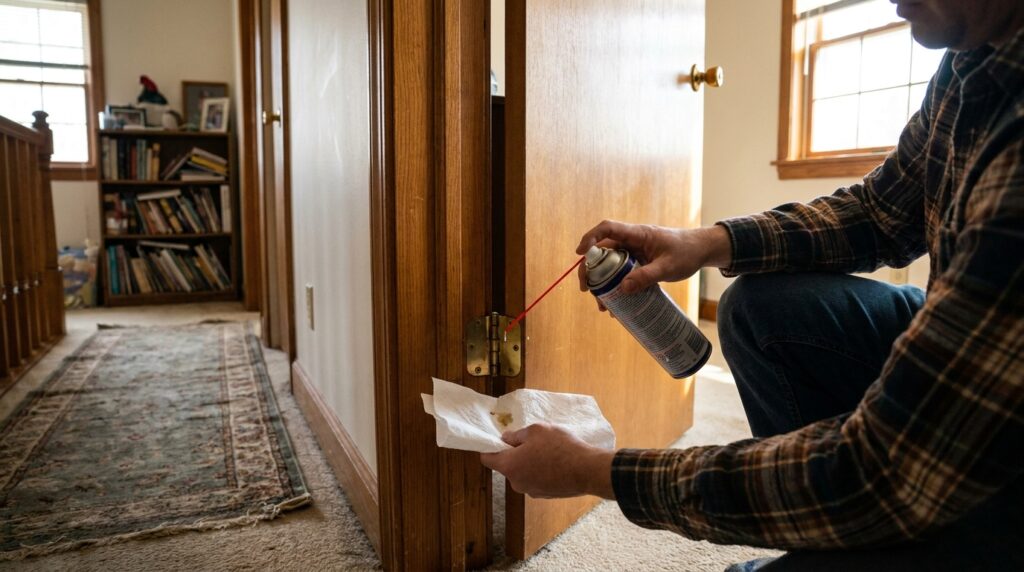
This is the quickest approach. Use a lubricant that comes in a spray can with a thin straw applicator, which allows you to direct the spray right into the gap between the hinge plates and the barrel.
Hold a rag or a piece of cardboard below the hinge to catch any drips. Spray the lubricant directly into the gap at the top and bottom of the hinge barrel while slowly opening and closing the door to work the lubricant inside.
Give it a minute to penetrate, then wipe away any excess with a cloth.
The Drip-In Method
If you are using a liquid lubricant like olive oil or 3-in-1 oil, use a dropper or tilt the bottle carefully to drip the oil directly onto the hinge pin area.
Open and close the door repeatedly to help work the oil into the metal surfaces. This method takes a little longer to work, but it gets the job done without any disassembly.
Using a Petroleum Jelly Stick
This is a clever trick that many homeowners swear by. Open the door and push a small amount of petroleum jelly into the gap between the hinge pin and the barrel using your fingertip or a butter knife.
The jelly is thick enough to stay in place and thin enough to spread throughout the hinge as the door moves. It does not drip, it does not dry out quickly, and it leaves no mess.
How to Fix Squeaky Door Hinges Without WD-40
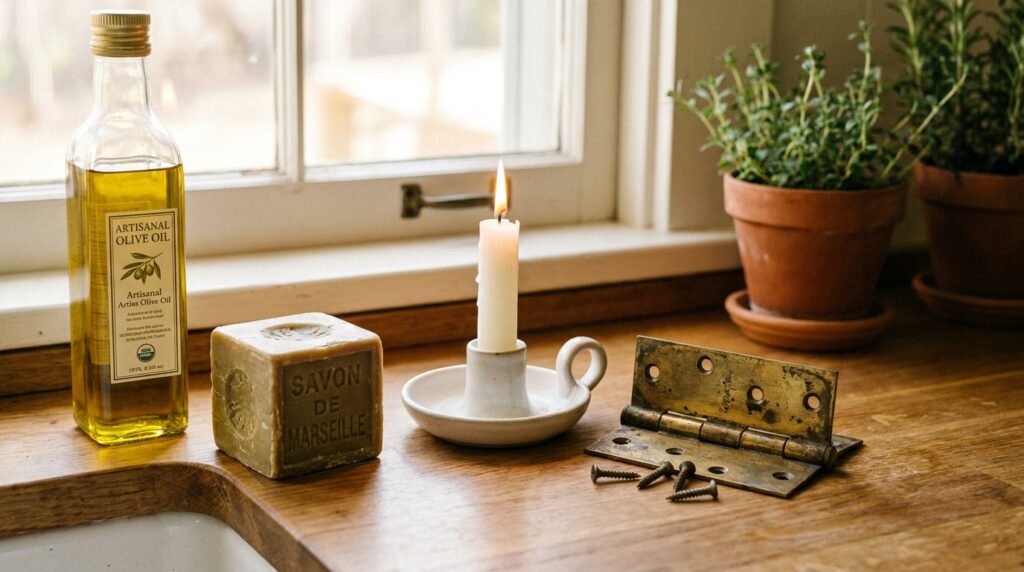
Not everyone keeps a can of WD-40 at home, and that is perfectly fine. There are several household alternatives that work just as well, and sometimes even better for long-term lubrication.
Petroleum Jelly (Vaseline)
This is arguably the best WD-40 alternative for door hinges. Petroleum jelly is thick, long-lasting, and does not evaporate the way spray lubricants can. Apply it directly to the hinge pin before reinserting it, or push it into the hinge gap.
Bar Soap
A plain bar of soap rubbed across a hinge pin or the inside of a hinge barrel works surprisingly well. The soap leaves a waxy coating that reduces metal-on-metal friction effectively. It is one of the oldest tricks in the book and still holds up today.
Wax from a Candle
Rubbing a candle along the hinge pin is another old-fashioned fix that delivers real results. The paraffin wax coats the metal surfaces and reduces friction. Rub the candle firmly over the hinge pin several times, then reinstall it.
Cooking Spray
A quick spritz of cooking spray into the hinge gap is an effective short-term fix. It works because cooking oils are natural lubricants. The downside is that cooking spray can eventually go rancid and attract dust, so it is better used as a temporary solution.
Olive Oil
Olive oil is one of the most popular and accessible alternatives. Read the full section below for details on how to use it properly.
How to Fix Squeaky Door Hinges With WD-40
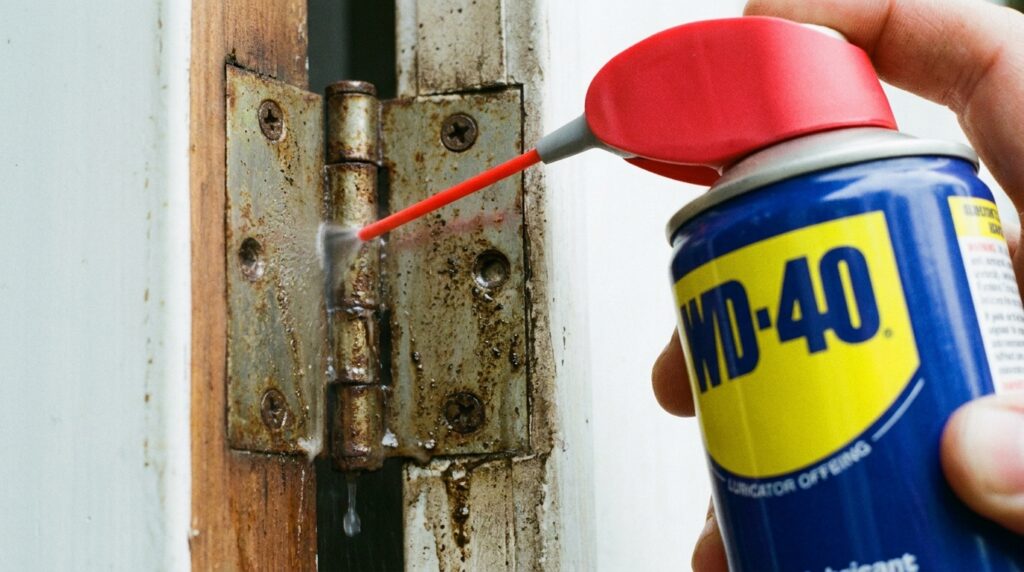
How to fix squeaky door hinges with WD-40 is the most popular internet search on this topic, and for good reason. WD-40 is fast, effective, and nearly everyone has a can somewhere in the garage.
The Right Way to Use WD-40 on Door Hinges
Attach the red straw that comes with the can to the nozzle. This allows you to direct the spray precisely into the hinge gap rather than spraying it all over the door.
Open the door to a 90-degree angle for the best access. Hold a rag below the hinge, then spray a short burst of WD-40 directly into the hinge barrel gap at both the top and the bottom of the hinge.
Open and close the door several times immediately after spraying to work the lubricant into the metal-on-metal contact points inside the barrel.
Wipe away any drips or excess with a cloth to prevent staining on your floor or door.
An Important Note About WD-40
Here is something many people do not realize: WD-40 stands for “Water Displacement, 40th formula.” It is technically a water displacer and a penetrating oil, not a long-term lubricant. It works great for loosening rust and providing an initial coating, but it tends to dry out faster than dedicated lubricants like white lithium grease or petroleum jelly.
For squeaky hinges that keep coming back, use WD-40 to clean and loosen the hinge first, then follow up with a longer-lasting lubricant like petroleum jelly or white lithium grease to maintain the fix.
How to Fix Squeaky Door Hinges With Olive Oil

Olive oil as a fix for squeaky hinges might sound like something your grandparent would suggest, but it genuinely works. How to fix squeaky door hinges with olive oil is a method that relies on the natural lubricating properties of the oil to coat metal surfaces and eliminate friction.
Step 1: Apply the Oil
The easiest method is to use a dropper, a cotton swab, or even your fingertip to apply olive oil directly to the hinge pin. If you want to avoid removing the pin, drip the oil into the gap between the hinge barrel and the hinge leaves while slowly swinging the door.
Step 2: Work It In
Open and close the door about ten times in a row. This motion distributes the olive oil throughout the inside of the hinge barrel, coating all the contact surfaces.
Step 3: Wipe the Excess
Use a dry cloth to wipe away any oil that has dripped onto the door or the floor. Olive oil can leave a stain on some surfaces if left for too long.
Does Olive Oil Last?
Olive oil is effective but not permanent. Because it is a natural oil, it can eventually evaporate or go rancid over time, especially in warm environments. Expect it to last a few months before you need to reapply.
If you want to make the most of olive oil, use it as a temporary fix while you gather more durable supplies. It is especially useful when nothing else is immediately available at home.
How to Fix a Squeaky Door Handle
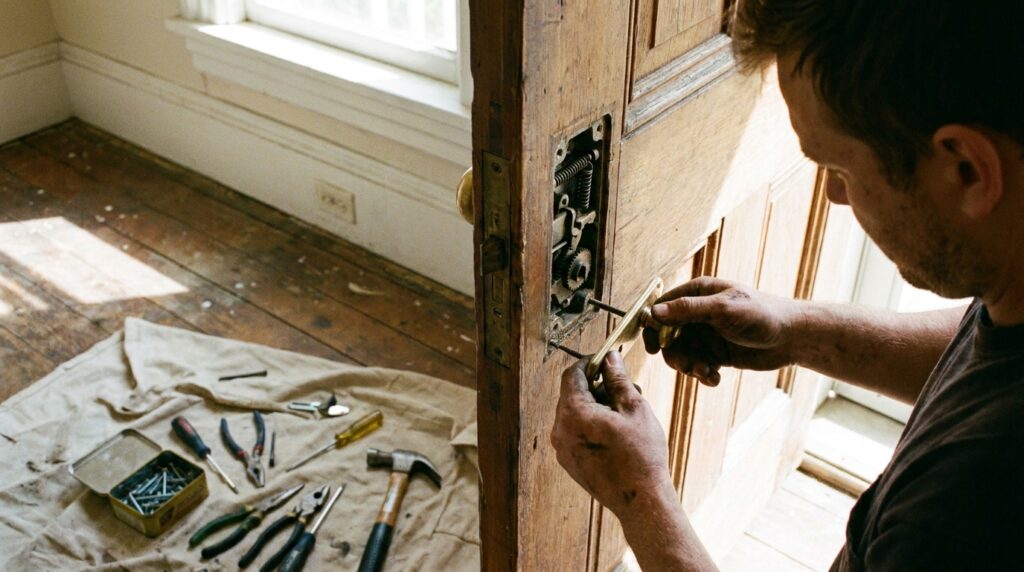
A squeaky door handle is a slightly different problem from hinge noise. The squeak from a handle usually comes from the internal mechanism of the latch assembly, specifically the spring inside the handle that controls the latch bolt.
Step 1: Check the Screws First
Before anything else, check whether the screws on the door handle plate are loose. Tighten them with a screwdriver. Sometimes that simple fix is all it takes.
Step 2: Remove the Handle
If tightening does not help, remove the door handle. Most door handles have screws visible on the interior rose plate (the decorative plate behind the handle). Remove those screws and gently pull the handle away from the door.
Some handles use a hidden set screw instead of visible screws. Look for a small hole in the handle shank and use an Allen wrench to loosen it before pulling the handle off.
Step 3: Locate the Squeak Source
With the handle removed, you can usually see the square spindle that runs through the door and the spring mechanism on each side. Test the parts by hand to find where the friction or noise is coming from.
Step 4: Lubricate the Moving Parts
Apply a small amount of petroleum jelly, light machine oil, or silicone-based lubricant to the spindle, the spring mechanism, and any other moving metal parts inside the handle assembly.
Avoid using too much lubricant because excess oil can attract dust and create a gummy residue that causes more problems over time.
Step 5: Reassemble and Test
Put the handle back together, tighten the screws, and test the handle several times. The squeak should be gone. If not, disassemble again and check for any metal parts that need additional lubrication or are visibly damaged.
How to Fix a Squeaky Door Knob
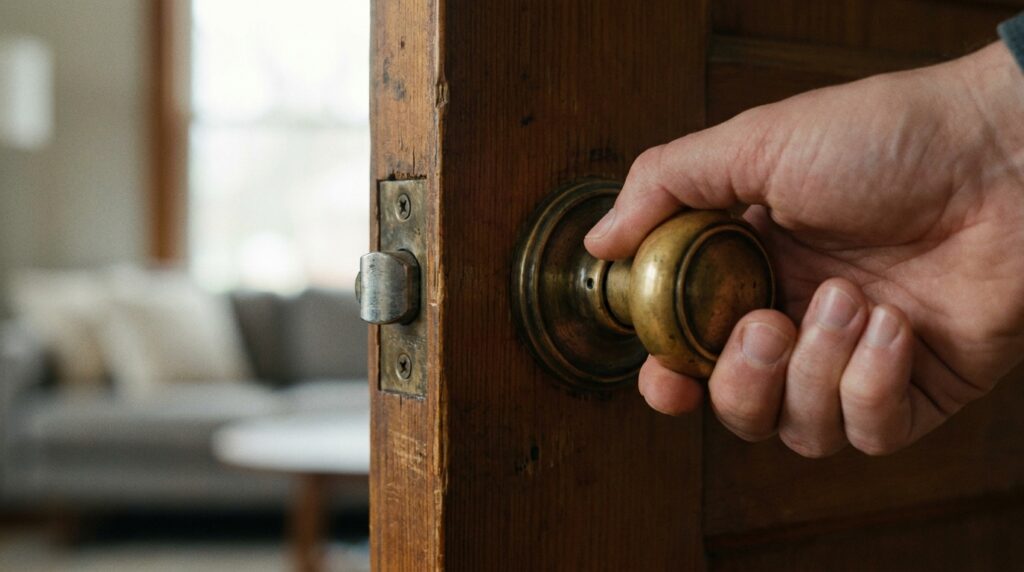
How to fix squeaky door knob problems follows a similar process to fixing a squeaky handle, with a few small differences based on how knobs are designed.
Common Cause of Squeaky Knobs
Door knobs typically squeak because of friction between the knob and the spindle, or inside the latch mechanism where the spring-loaded bolt extends and retracts. In older homes, worn spindles and dry springs are especially common.
Step 1: Remove the Door Knob
Most round door knobs have a visible screw on the stem or a small pinhole release. Insert a thin object like a bobby pin or a small Allen wrench into the pinhole, press the release tab, and slide the knob off the spindle.
Step 2: Remove the Rose Plate
Behind the knob is the rose plate, which is the decorative disc against the door surface. Remove the screws holding it in place and pull it off to expose the internal mechanism.
Step 3: Inspect and Lubricate
Look at the spindle and the spring mechanism. Apply a thin coat of lubricant to the spindle and any metal-to-metal contact points. A dry rag wrapped around the spindle and given a twist can also help clean off old dried lubricant before you apply fresh product.
Step 4: Check the Latch Bolt
Insert a screwdriver or your finger to manually push the latch bolt in and out. If this motion produces the squeak, apply a small amount of petroleum jelly or graphite powder to the latch bolt and the strike plate opening on the door frame.
Step 5: Reassemble and Test
Put everything back together and turn the knob repeatedly to test it. A properly lubricated knob should turn silently and smoothly.
Expert Tips to Prevent Squeaky Doors
Fixing a squeaky door is satisfying, but preventing it from coming back is even better. Here are expert-level tips that most home guides overlook.
Lubricate Hinges Annually
Get into the habit of applying a light coat of lubricant to all your door hinges at least once a year. This is especially important for exterior doors and bathroom doors that face humidity. A quick annual lubrication session takes less than thirty minutes for the entire house and prevents most squeaks from ever developing.
Tighten All Hinge Screws Every Year
Once a year, go around the house with a screwdriver and snug up all the hinge screws on every door. Loose screws are one of the most common causes of both squeaks and misaligned doors that swing on their own.
Fix Stripped Screw Holes Properly
If a screw hole is stripped and the screw will not tighten, do not just use a bigger screw. Instead, push a few toothpicks coated in wood glue into the hole, let it dry, then trim the toothpicks flush. Now the original screw will grip properly again. This technique also works for stripped door frame screws.
Control Indoor Humidity
Wood expands and contracts with changes in humidity. Using a humidifier in winter and a dehumidifier in summer helps keep wood doors and frames at a stable moisture level, reducing the warping that causes hinges to bind and squeak.
Choose the Right Lubricant for the Job
Not all lubricants are created equal. For indoor hinges, petroleum jelly and white lithium grease offer the longest-lasting results. For outdoor or car hinges, automotive grease is the superior choice. For quick fixes or emergency situations, olive oil, candle wax, and bar soap all work reliably.
Check Your Door Alignment
Sometimes a squeak is actually the door rubbing against the frame rather than hinge friction. If you see paint scuffing on the edges of the door or the frame, the door may need to be realigned or the hinges may need to be repositioned slightly. This is a slightly more advanced fix but is worth doing to prevent long-term wear.
Inspect for Rust After Storms
After periods of heavy rain or humidity, check outdoor and bathroom door hinges for signs of rust. Catching rust early and treating it with a penetrating oil before it becomes severe will extend the life of your hinges significantly.
Common Mistakes to Avoid When Fixing Squeaky Doors
Knowing what not to do is just as valuable as knowing the right steps.
Over-lubricating the hinge. More is not better when it comes to hinge lubricant. Excess oil drips down the door, stains the floor, and collects dust that eventually creates a gummy mess inside the hinge barrel. A thin, even coat is all you need.
Using cooking spray as a permanent fix. While cooking spray works in a pinch, it is made of organic oils that can go rancid over time and attract pests in certain environments. Use it only as a short-term measure while you gather proper supplies.
Ignoring loose screws. Many people go straight to lubricants when the real problem is a loose hinge screw causing movement and noise. Always check the screws first before reaching for the oil can.
Using the wrong lubricant on rubber parts. If your squeak comes from weatherstripping or rubber door seals, do not use petroleum-based lubricants on them. Petroleum degrades rubber over time. Use silicone-based products instead.
Painting over a squeaky hinge. Some people try to disguise or cover up a problem hinge with paint. Paint fills the gap between the hinge pin and barrel, causing more binding and usually a worse squeak. Always lubricate, never paint.
Squeaky Door Lubricant Comparison Table
| Lubricant | Longevity | Ease of Use | Cost | Best For |
|---|---|---|---|---|
| Petroleum Jelly | Very Long | Easy | Low | Indoor hinges, handles |
| WD-40 | Short | Very Easy | Low | Quick fix, rust penetration |
| White Lithium Grease | Very Long | Moderate | Medium | Car doors, garage doors |
| Olive Oil | Medium | Easy | Very Low | Emergency fix |
| Bar Soap / Candle Wax | Medium | Very Easy | Very Low | No-tool quick fix |
| 3-in-1 Oil | Long | Easy | Low | General door hardware |
| Silicone Spray | Long | Easy | Medium | Rubber seals, weatherstripping |
Frequently Asked Questions
How do I stop my door from squeaking without WD-40?
You have several excellent options. Petroleum jelly is the most effective alternative because it lasts longer and does not dry out. Rub it directly onto the hinge pin before reinserting it, or push it into the hinge gap. Bar soap, candle wax, and olive oil also work well and are things you almost certainly have at home right now.
Why does my door squeak even after I lubricated the hinges?
If the hinge lubrication did not solve the problem, the squeak may be coming from a different source. Check whether the door is rubbing against the frame at the top, bottom, or side edges. You might also hear noise from the latch mechanism inside the knob or handle. Tightening loose hinge screws is another step that often fixes lingering squeaks.
Can a squeaky door hinge be a sign of a bigger problem?
In most cases, no. A squeaky hinge is usually just a lubrication issue. However, if the squeak is accompanied by the door not closing properly, sticking, or visibly sagging, it may indicate a larger structural issue like a settling foundation, a warped door frame, or severely damaged hinges that need to be replaced.
How long does it take to fix a squeaky door?
Most squeaky door fixes take between five and fifteen minutes. Removing the hinge pin, cleaning it, and applying fresh lubricant is a ten-minute job at most. Fixing a squeaky door handle or knob may take slightly longer, around twenty to thirty minutes, especially if you need to remove and reassemble components.
Is there any lubricant I should never use on door hinges?
Yes. Avoid using cooking spray as a long-term solution since it can go rancid. Never use petroleum-based products on rubber door seals or weatherstripping. Avoid using thick automotive greases on lightweight interior door hinges, as these can collect dust and create more problems. And never use water on hinges, as it promotes rust rather than preventing it.
Conclusion
A squeaky door does not have to be a permanent annoyance. As you have seen throughout this guide, the fix is almost always straightforward, inexpensive, and something you can handle on your own in under half an hour.
Whether you are dealing with a noisy hinge, a squeaky handle, a stubborn door knob, or even a car door that groans every time you get in, the solution comes down to identifying the friction source and applying the right lubricant.
The most important takeaway is this: do not wait for the squeak to get worse. A little maintenance today prevents bigger issues tomorrow. Keep a tube of petroleum jelly or a can of WD-40 on hand, check your hinge screws once a year, and your doors will stay smooth and silent for years.
Now that you know exactly what to do, pick the squeakiest door in your home and get started. The quiet is worth it.
Have a door problem that still has you stumped? Revisit the relevant section of this guide and try an alternative lubricant from the comparison table. Most door noise problems respond to one of the methods covered here.

