
You pull your favorite shirt out of the dryer, and before you can even fold it, it’s stuck to your arm like it doesn’t want to let go. Static cling is one of those small, daily frustrations that nobody talks about but everyone deals with.
Knowing how to get static out of clothes is a skill that saves you from awkward moments, ruined outfits, and uncomfortable fabrics sticking to your skin all day. The good news? Most of the solutions are already sitting in your home right now.
This guide walks you through everything, from quick fixes you can do in seconds to long-term prevention strategies. Whether you’re getting dressed in a hurry or doing laundry on the weekend, there’s a method here that fits your routine.
What Causes Static in Clothes?
The Science Behind Static Cling (Kept Simple)
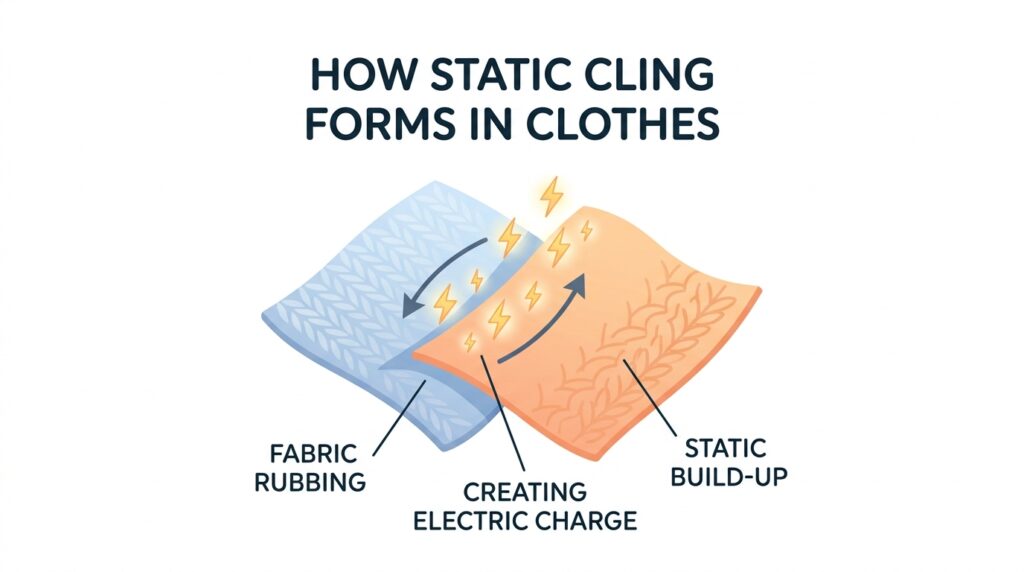
Static electricity in clothing happens because of friction. When two fabrics rub against each other, like inside a dryer or when you pull a shirt over your head, electrons transfer from one surface to another.
One fabric ends up with extra electrons (negatively charged) and the other loses them (positively charged). Opposite charges attract, which is why your clothes stick together or cling to your body.
Dry air makes this worse. During winter months or in low-humidity environments, there’s less moisture in the air to neutralize those charges. That’s why static is far more annoying in cold, dry weather.
Certain fabrics are also more prone to static than others. Synthetic materials like polyester, nylon, and acrylic tend to build up charges quickly, while natural fibers like cotton and wool are more forgiving.
How to Get Static Out of Clothes Right Now
1. Use a Metal Hanger or Safety Pin

This is the fastest trick you’ll find. Running a metal hanger along the inside or outside of your clothing discharges the static electricity. Metal conducts electricity, and the charge transfers from the fabric into the hanger and dissipates.
A safety pin works the same way. Pin it to the inside seam of your shirt or waistband, and it will quietly neutralize charges throughout the day. Nobody can see it, and it works non-stop.
How to do it:
- Grab a metal wire hanger
- Slide it between the layers of your clothing slowly
- Move it in one continuous direction
- Repeat on the outer surface if needed
This works best on dresses, slacks, skirts, and layered outfits.
2. Dampen Your Hands and Smooth the Fabric

Moisture is static’s worst enemy. When you lightly wet your hands and run them over your clothing, the water molecules neutralize the electrical charge almost instantly.
This method is perfect when you’re already dressed and realize your outfit is clinging. Step into a bathroom, dampen your palms, and gently smooth the fabric down. Within seconds, the static is gone.
You don’t need much water. Too much and you’ll leave visible wet spots. Just a light, even dampness across both palms is all you need.
3. Dryer Sheets
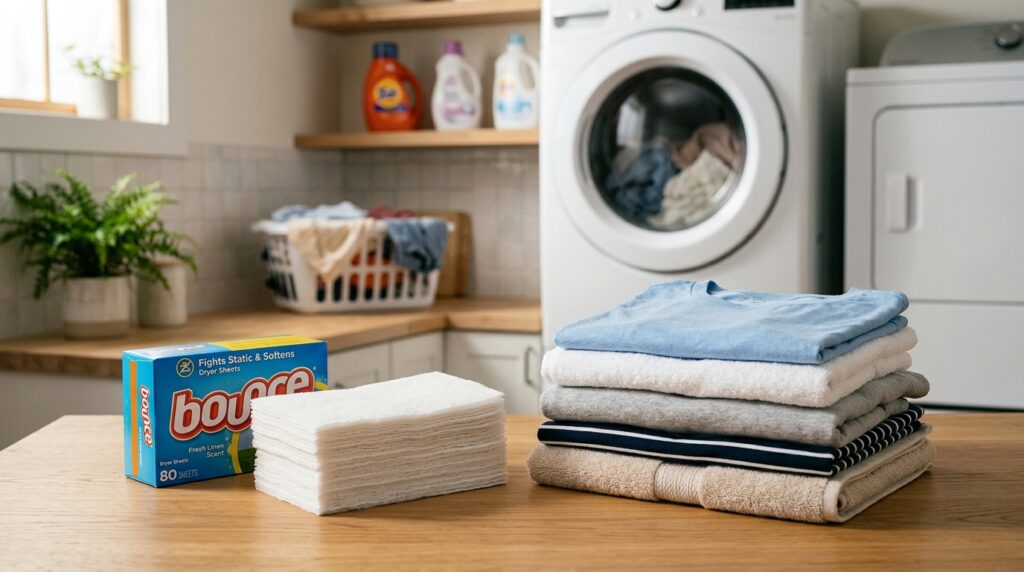
Dryer sheets are probably the most well-known fix for static cling. They work by coating fabric fibers with a thin layer of chemicals that reduce friction and neutralize electrical charges.
You can use them two ways:
In the dryer: Toss one or two sheets in with your laundry during the drying cycle.
On finished clothes: If you forgot to use one in the dryer, rub a fresh dryer sheet directly on the static areas of your garment. It works just as well after the fact.
Some people even keep one in their bag for emergencies. A single sheet rubbed lightly over a clinging skirt or shirt removes the static instantly.
4. Anti-Static Spray

Anti-static sprays are specifically designed to eliminate static from fabrics. They work by adding a thin layer of moisture and conductive ingredients that balance out the electrical charge.
You can find them in most grocery stores or laundry aisles. Spray lightly from about six inches away, let it dry for a moment, and the static is gone.
They’re especially useful on delicate fabrics where you can’t run a hanger or don’t want to apply any physical friction.
Tips for using anti-static spray:
- Always test on a hidden area first
- Don’t oversaturate the fabric
- Allow it to air dry before wearing
- Works well on synthetic fabrics like polyester and nylon
5. Make a DIY Anti-Static Spray at Home
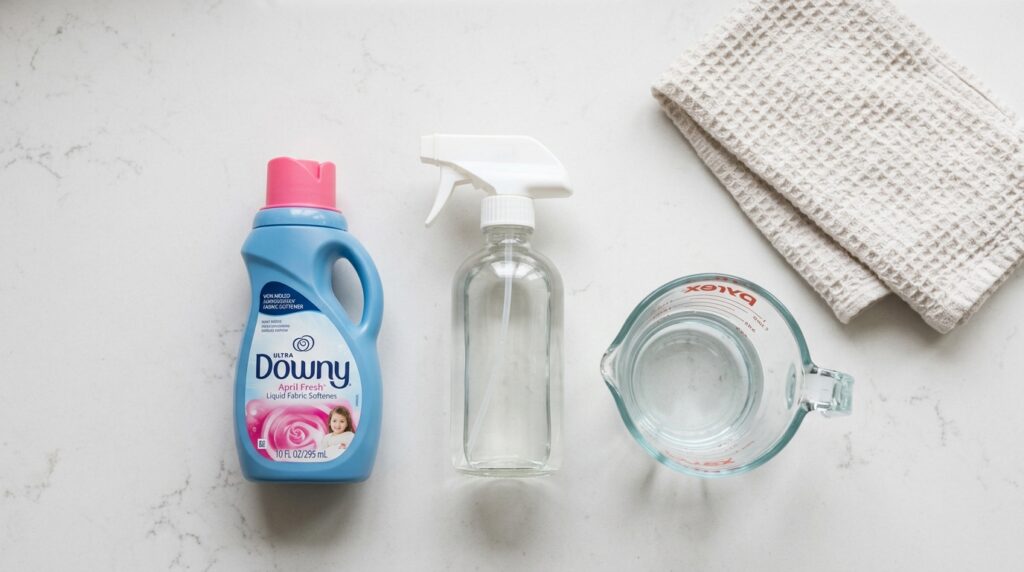
You don’t need to buy a specialty product. A homemade anti-static spray works just as well and costs almost nothing.
What you need:
- 1 teaspoon of liquid fabric softener
- 2 cups of water
- A small spray bottle
Mix the fabric softener with the water, pour it into the spray bottle, and shake gently. Spray it lightly on your clothing, let it dry, and the static disappears.
This DIY version is great for everyday use, especially if you have multiple people in the household dealing with static regularly.
6. Lotion or Body Moisturizer

Body lotion is another underrated quick fix. Dry skin conducts static more easily. When your skin is moisturized, it holds just enough moisture to prevent static from building up between your body and your clothing.
Apply a light layer of unscented lotion to your legs, arms, or wherever the static is worst before getting dressed. The slight moisture barrier prevents fabrics from clinging throughout the day.
This works especially well with skirts, dresses, and leggings.
7. Aluminum Foil Ball in the Dryer
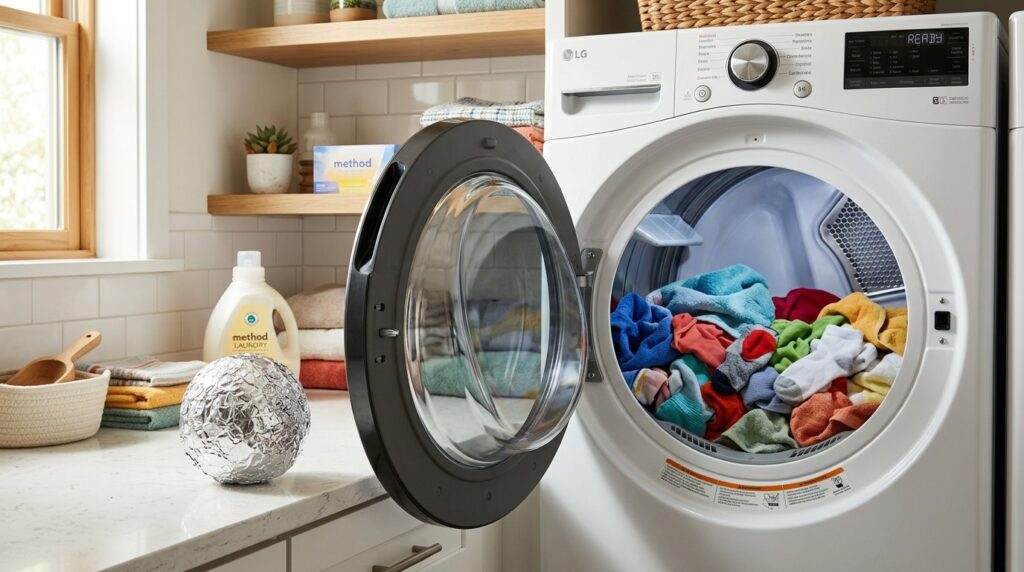
This is one of those laundry tricks that sounds unusual but genuinely works. Rolling aluminum foil into a tight ball and tossing it into your dryer helps discharge static during the drying cycle.
The foil acts as a conductor, collecting electrical charges from the tumbling fabrics and releasing them harmlessly. It also lasts for months, unlike dryer sheets that you toss after every use.
How to make one:
- Tear off about 18 to 24 inches of standard aluminum foil
- Crumple it tightly into a ball roughly the size of a tennis ball
- Toss it in the dryer with your wet laundry
- Use the same ball for up to three months before replacing
How to Prevent Static in Clothes Before It Starts
8. Use Liquid Fabric Softener in the Wash
Prevention is always easier than treatment. Adding liquid fabric softener to your wash cycle coats fabric fibers and reduces the friction that causes static in the first place.
Pour it into the designated softener compartment of your washing machine. It gets released during the rinse cycle, giving your clothes a smooth, static-resistant finish even before they go into the dryer.
9. Add White Vinegar to the Rinse Cycle
White vinegar is a natural fabric softener and one of the best eco-friendly alternatives for preventing static. Add about half a cup to your washing machine’s rinse cycle compartment.
Vinegar breaks down any soap residue on the fabric, which is one of the hidden causes of static buildup. It leaves clothes feeling softer without coating them in chemicals.
Don’t worry about the smell. It fully rinses out by the time your laundry is done.
10. Don’t Overdry Your Clothes
Overdrying is one of the biggest causes of static. The longer clothes spin in a dryer with no moisture remaining, the more friction builds between the fabrics, and the more static accumulates.
Pull your laundry out while it still has a tiny bit of moisture in it, then let it air dry the rest of the way on a drying rack. This simple change alone can dramatically reduce static problems.
Most modern dryers have a sensor dry setting that stops automatically when moisture is low. Using that setting instead of a timed cycle is a smarter option for both your clothes and your energy bill.
11. Separate Fabrics by Material When Drying
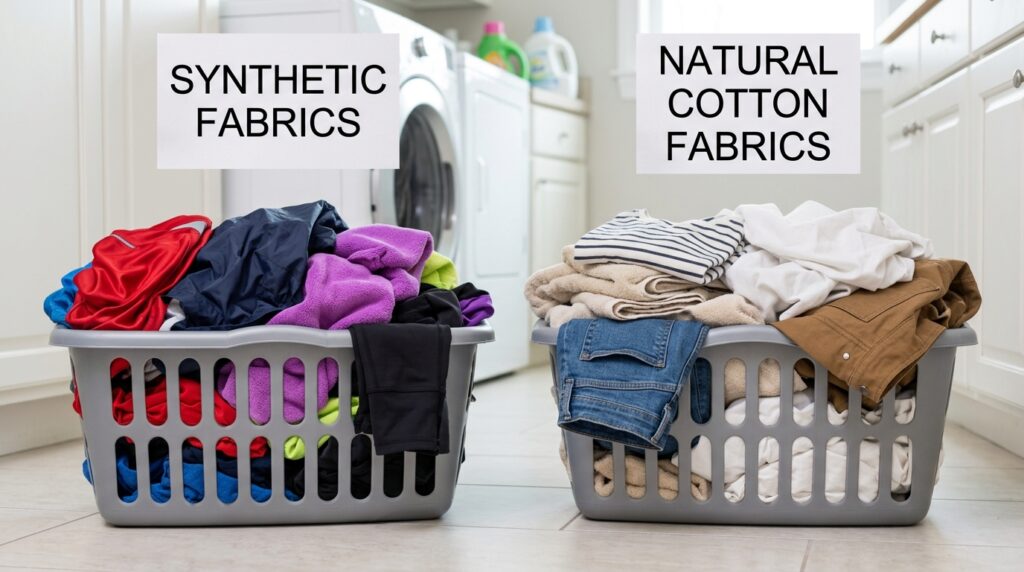
Mixing synthetic fabrics with natural ones in the dryer is a recipe for static disaster. Polyester and nylon generate strong negative charges while cotton remains more neutral, so they end up clinging to each other intensely.
Sort your laundry so that synthetic fabrics like workout gear, polyester blouses, and nylon tights dry separately from cotton and linen. Both loads come out less static-prone.
Expert Tips for Dealing With Static in Clothes
These are some of the most practical, professional-level tips that go beyond the basics:
Tip 1: Use dryer balls instead of dryer sheets Wool dryer balls are a reusable, chemical-free way to reduce static. They separate fabrics in the dryer, which reduces the friction that creates static in the first place. Add a few drops of essential oil if you want a light scent.
Tip 2: Hang your most static-prone items If certain garments always come out of the dryer full of static, take them out slightly damp and hang them instead. Air drying completely eliminates dryer-induced static.
Tip 3: Increase humidity in your home A humidifier adds moisture back into dry indoor air, which naturally reduces static across everything in your home, including your clothes, hair, and furniture. This is especially useful in winter.
Tip 4: Wear natural fiber underlayers Wearing a cotton undershirt or slip beneath synthetic outer layers reduces the friction between fabrics. Less friction means less static charge buildup.
Tip 5: Ground yourself before touching clothes Touching a metal object like a doorknob or faucet before handling laundry discharges static from your body. This prevents you from transferring charge to your clothes when you pull them out of the dryer.
Static Removal Methods: Pros and Cons
| Method | Pros | Cons |
|---|---|---|
| Dryer sheets | Fast, widely available, inexpensive | Single-use, contains chemicals |
| Metal hanger | Instant, free, no products needed | Requires a wire hanger on hand |
| Anti-static spray | Works on finished outfits | Costs money, can leave residue |
| Aluminum foil ball | Reusable, chemical-free | Must remember to add to dryer |
| White vinegar | Natural, eco-friendly, cheap | Must be used during wash cycle |
| Fabric softener | Easy to use, pleasant scent | Chemical-based, can irritate skin |
| Dryer balls | Reusable, natural, long-lasting | Less effective in very dry climates |
| DIY spray | Cheap, customizable | Requires prep time |
Why Some Fabrics Hold Static More Than Others
Not all fabrics behave the same way. Understanding which materials are most prone to static helps you shop smarter and care for your clothes better.
High-static fabrics:
- Polyester — Very common in athletic wear, blouses, and dress clothes
- Nylon — Found in stockings, activewear, and outerwear liners
- Acrylic — Common in sweaters and blankets
- Rayon — Lighter but still builds charge easily
Low-static fabrics:
- Cotton — Breathable, natural, and relatively static-resistant
- Wool — Naturally moisture-retaining, which reduces static
- Linen — Natural fiber with good moisture balance
- Bamboo — Eco-friendly and naturally anti-static
If static is a constant problem in your wardrobe, gradually adding more natural fiber clothing to your rotation can make a noticeable difference over time.
How to Get Static Out of Specific Clothing Items
Getting Static Out of Dresses and Skirts
Dresses and skirts are the most frustrating static victims, especially when they cling to tights or bare legs. The best approach here is layered:
- Moisturize your legs before getting dressed
- Wear a cotton slip underneath as a barrier layer
- Safety pin the hem to the slip if it keeps riding up
- Keep a travel-size anti-static spray in your bag for touch-ups
Getting Static Out of Sweaters and Knitwear
Sweaters, especially acrylic and synthetic blends, are notorious for static. The best methods for knitwear are:
- Use a metal hanger to ground the charge before wearing
- Store sweaters folded rather than on hangers to reduce friction
- Use wool dryer balls when drying knit fabrics
- Lay flat to dry when possible instead of using the dryer
Getting Static Out of Pants and Leggings
Leggings and athletic pants are almost entirely made of synthetic materials, so they attract static constantly. The most effective approach is prevention:
- Always use fabric softener or dryer balls when washing
- Never overdry them
- Rub a dryer sheet on the inside before putting them on
- Moisturize your skin before wearing them
Seasonal Static: Why Winter Is the Worst
Static is always worse during colder months. The reason is straightforward: cold air holds less moisture than warm air, and indoor heating makes things even drier.
When indoor humidity drops below 30%, static electricity builds up much faster on every surface, including your clothes, furniture, carpet, and hair.
During winter, combine multiple strategies for the best results. Run a humidifier in your bedroom or living space, use dryer balls in the dryer, apply lotion to your skin daily, and keep a travel anti-static spray nearby.
This multi-layer approach is far more effective than relying on just one method during the driest months.
Common Mistakes That Make Static Worse
A lot of static problems are caused by small, fixable habits. Here are the most common ones:
Over-drying your clothes. This is probably the top culprit. Heat and no moisture equals maximum static. Always take clothes out a little early.
Washing everything together. Mixing heavy synthetics with light natural fabrics allows maximum charge transfer in both the washer and dryer.
Skipping fabric softener. Even if you find it optional in summer, skipping it in dry months makes static much worse.
Ignoring indoor humidity. Dry indoor air amplifies every other static problem. A basic humidifier does more than most people expect.
Using too much detergent. Excess soap residue left on fabrics actually increases friction between fibers, which worsens static. Use the recommended amount of detergent and no more.
Natural and Eco-Friendly Anti-Static Solutions
If you prefer to avoid synthetic chemicals in your laundry routine, you have several effective natural options:
White vinegar is the most popular natural fabric softener and anti-static agent. Add half a cup to the rinse cycle.
Wool dryer balls reduce friction, absorb moisture, and separate fabrics during drying, all of which reduce static naturally.
Aluminum foil balls conduct and discharge electricity in the dryer without any chemicals at all.
Air drying eliminates the dryer’s role in static buildup entirely. A drying rack indoors or a clothesline outside keeps static from ever forming.
Baking soda added to the wash can also reduce static by softening fabric fibers and balancing pH levels in the water.
What to Do Based on Your Situation
| Situation | Best Solution |
|---|---|
| Already dressed and running late | Metal hanger or damp hands |
| Just finished the dryer | Dryer sheet rubbed directly on clothes |
| Getting ready for a special event | Anti-static spray or safety pin |
| Skirt or dress clinging to legs | Lotion + cotton slip |
| Repeated static every laundry day | Add dryer balls + white vinegar in wash |
| Whole home is dry and static-filled | Run a humidifier |
| Eco-conscious laundry approach | Wool dryer balls + white vinegar |
| Static in utility or workwear | Aluminum foil ball + fabric softener |
Frequently Asked Questions
1. Why do my clothes still have static even after using dryer sheets?
Dryer sheets lose effectiveness when clothes are overdried. If static persists, try reducing your drying time or switching to wool dryer balls, which work by physically separating fabrics rather than just adding a chemical coating.
2. Can hairspray remove static from clothes?
Yes, in a pinch. Light-hold hairspray can temporarily neutralize static cling on clothing. Spray very lightly from a distance and let it dry before touching the fabric. It is not ideal for delicate or light-colored fabrics, but it works as an emergency fix.
3. Does fabric type really matter for static?
Absolutely. Synthetic fabrics like polyester and nylon generate the most static because of how their fibers interact with friction. Natural fibers like cotton, linen, and wool are far less prone to static buildup. Choosing natural blends where possible reduces the problem over time.
4. Is static electricity in clothes harmful?
No, the static electricity found in everyday clothing is harmless. The small shocks you feel are uncomfortable but not dangerous. However, very strong static can potentially cause issues near sensitive electronics, and in rare cases, highly flammable environments require static-free clothing for safety reasons.
5. What is the fastest way to get static out of clothes when you’re already wearing them?
The fastest method is running a metal hanger along the inside of the garment, or lightly dampening your hands and smoothing them over the fabric. Both take under 30 seconds and require nothing special.
Conclusion
Static in clothes is one of those annoyances that seems small but affects your comfort and confidence every day. The good news is that the fixes are easy, affordable, and mostly already available in your home.
Start with the quick wins: keep a metal hanger in your closet, stock up on dryer sheets or invest in reusable dryer balls, and add a splash of white vinegar to your next rinse cycle. Adjust your dryer habits so you’re not overdrying fabrics, and consider a humidifier if static is a year-round issue in your home.
Whether you’re dealing with a clinging skirt, a sweater that sparks, or utility style clothing that picks up charges during machine washing, the right approach always comes down to reducing friction, adding moisture, and neutralizing charge.
Static doesn’t have to be a constant battle. With the right habits in place, it becomes a rare inconvenience instead of a daily frustration.
Take one or two of these methods, try them out this week, and notice the difference right away.
This article is for informational purposes only. The tips and methods shared here are based on general knowledge and common household practices. Always test any method on a small, hidden area of your garment before applying it broadly, especially on delicate fabrics.

