
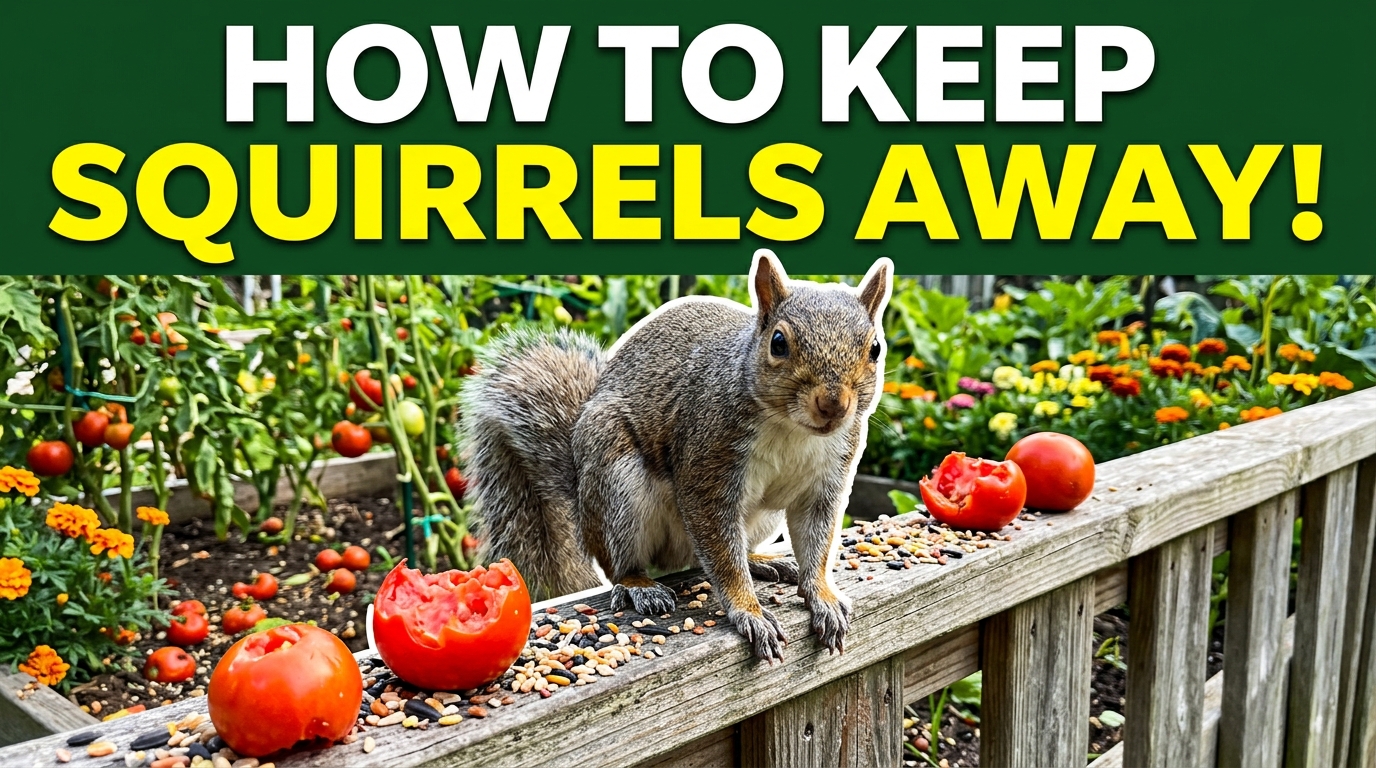
Squirrels are everywhere, and most of the time, they seem harmless enough. But once they find your garden, bird feeders, or attic, the situation changes fast.
If you’ve ever walked outside to find your tomatoes half-eaten, your potted plants dug up, or your bird feeder stripped clean before the birds even got a chance — you know exactly what this article is about.
The good news is that learning how to keep squirrels away doesn’t require expensive equipment or professional pest control. Most of the best solutions are simple, affordable, and safe for your yard, your pets, and the squirrels themselves.
This guide walks you through everything — from protecting bird feeders and fruit trees to keeping them off your roof and away from your vehicle.
Why Squirrels Become a Problem
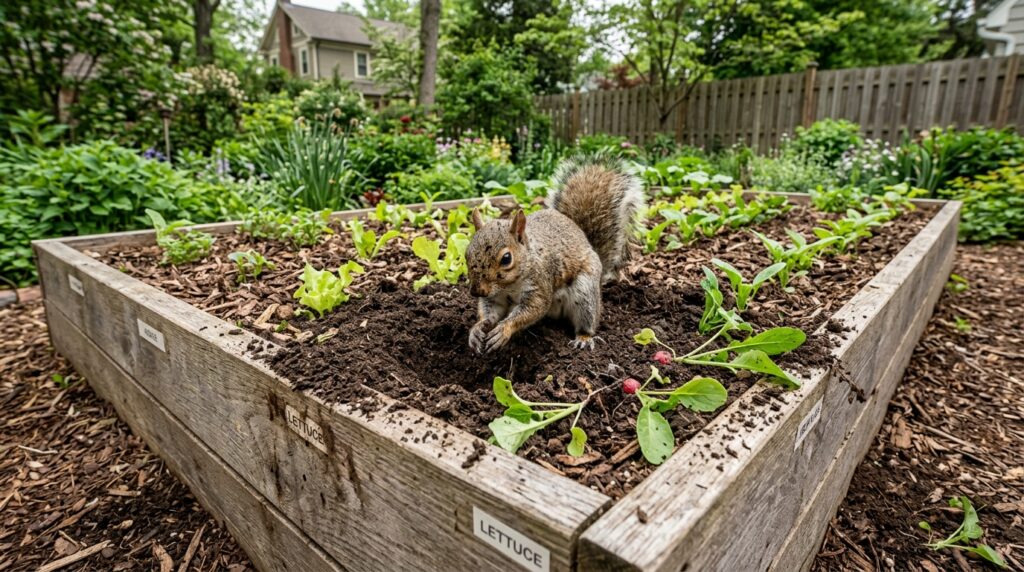
Squirrels are resourceful. They’re wired to find food and shelter, and your yard is full of both.
They’re driven by a few core instincts: foraging, nesting, and storing food for winter. Your garden, attic, bird feeder, and potted plants check all those boxes for them.
Understanding what attracts squirrels is the first step to keeping them out. Once you remove or block access to food sources and nesting spots, most squirrels will move on naturally.
Common reasons squirrels target your property:
- Easy access to food (birdseed, fruit, vegetables, nuts)
- Warm, sheltered spaces (roof gaps, attics, dense shrubs)
- Loose soil for burying food
- Potted plants that are easy to dig through
How to Keep Squirrels Away from Bird Feeders
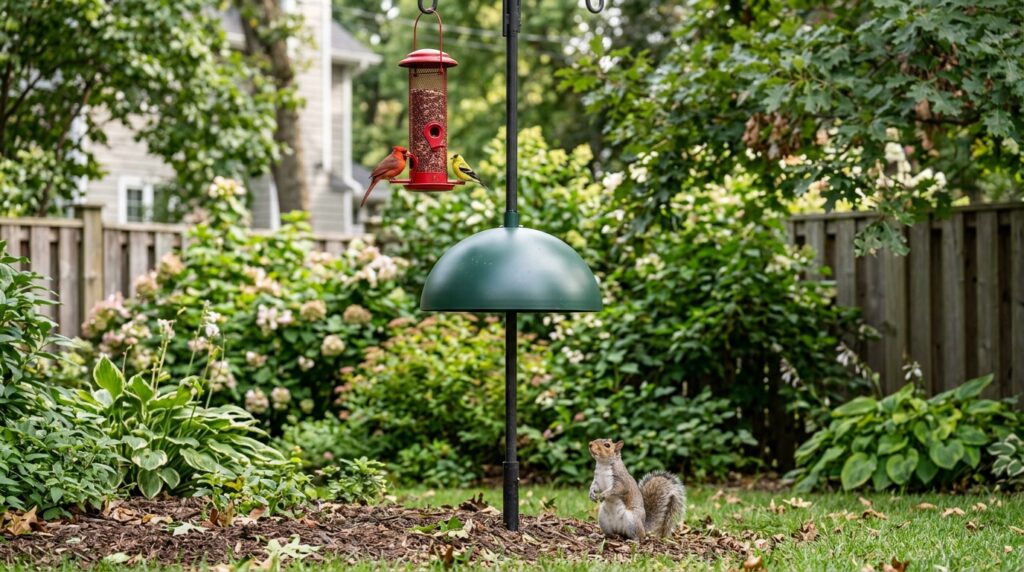
Bird feeders are squirrel magnets. They’re loaded with seeds, easy to reach, and often left unguarded.
Here’s how to make your feeder squirrel-proof without taking it down:
Use a Squirrel Baffle
A squirrel baffle is a dome or cylinder that slides onto the pole below the feeder. When a squirrel climbs up, the baffle tips or blocks their path and they slide back down.
Position your feeder at least 10 feet away from any tree, fence, or structure a squirrel could jump from.
Switch to Safflower Seeds
Squirrels tend to dislike safflower seeds. Most birds love them, but squirrels usually won’t bother. Switching your seed blend is one of the easiest changes you can make.
Try Hot Pepper Additives
Birds can’t taste capsaicin — squirrels absolutely can. Mixing hot pepper bird seed or coating feeders with hot pepper oil deters squirrels without affecting the birds at all.
How to Keep Squirrels Away from Your House and Roof
Squirrels on your roof are more than a nuisance. They chew through fascia boards, get into attic insulation, and can damage electrical wiring.
Trim Overhanging Tree Branches
The most direct route squirrels use to get on your roof is a nearby tree. Trim branches so they’re at least 6 to 8 feet away from your roofline. That gap is too wide for most squirrels to jump.
Seal Entry Points
Walk around your home and look for gaps, cracks, or openings near the roofline, eaves, and vents. Use hardware cloth or metal flashing to close off any opening larger than half an inch.
Squirrels are persistent chewers, so foam insulation or caulk alone won’t hold. Use metal materials where possible.
Install a Metal Collar Around Downspouts and Poles
A smooth metal wrap around downspouts or utility poles makes it impossible for squirrels to get a grip and climb. This is a low-cost, long-lasting fix.
Motion-Activated Sprinklers
Motion-activated sprinklers are highly effective deterrents. When a squirrel trips the sensor, a short burst of water startles them and drives them away. Over time, squirrels associate your yard with an unpleasant surprise.
How to Keep Squirrels Away from Your Garden
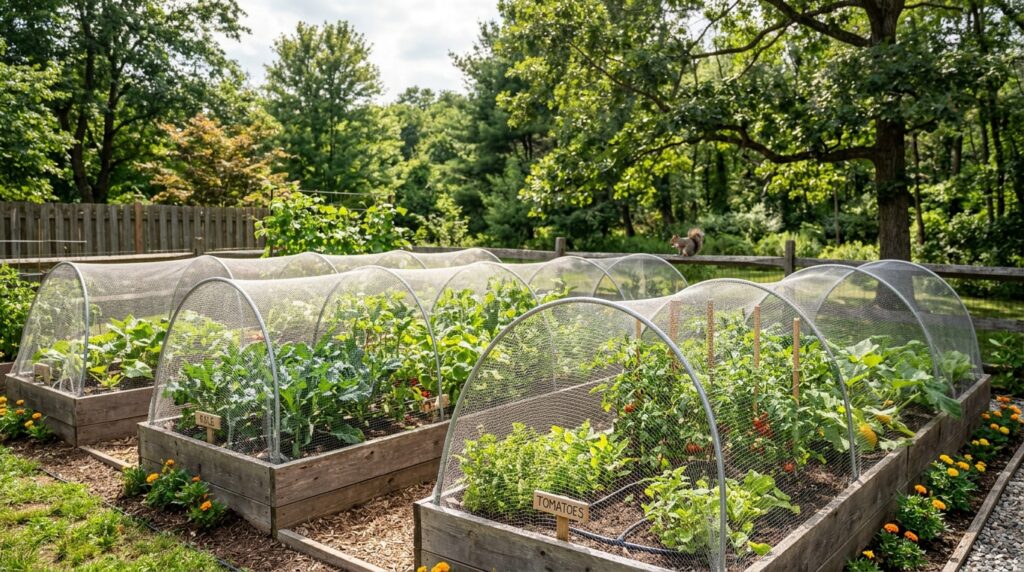
Use Row Covers or Netting
Physical barriers are one of the most reliable ways to protect a garden. Drape lightweight garden netting over beds or individual plants. Secure the edges with stakes or rocks so squirrels can’t push under it.
Apply Repellent Sprays
Squirrels hate certain smells. Repellent sprays made with hot pepper, garlic, or predator urine can be sprayed around the perimeter of garden beds.
Reapply after rain or every few weeks to keep the scent strong. These work best as a preventive measure before squirrels establish a feeding habit in your garden.
Plant Companion Deterrent Plants
Certain plants naturally repel squirrels. Try planting these around the border of your garden:
| Plant | Why It Works |
|---|---|
| Daffodils | Toxic to squirrels — they avoid them |
| Alliums (onions, garlic) | Strong smell squirrels dislike |
| Geraniums | Scent is unappealing to squirrels |
| Mint | Overwhelming smell deters foraging |
Use Crushed Red Pepper or Cayenne
Sprinkling cayenne pepper directly on soil around plants irritates squirrels when they dig. Reapply frequently, especially after rain.
How to Keep Squirrels Away from Plants and Potted Plants
Potted plants are especially vulnerable because the loose soil is easy to dig in, and they often sit in accessible spots like porches or patios.
Add a Layer of Rocks or Pebbles
Squirrels dig through soil to bury or recover nuts. Covering the top of your potted plant soil with large decorative rocks or pebbles makes digging uncomfortable and difficult.
Try Coffee Grounds or Citrus Peels
Squirrels dislike strong, acidic smells. Scatter used coffee grounds or citrus peels (lemon, orange, grapefruit) around the top of your pots. These are safe for most plants and act as a natural barrier.
Use a Wire Cage or Mesh Cover
For valuable or delicate plants, a simple wire cage made from hardware cloth placed around or over the pot keeps squirrels out completely. Shape it to fit and secure it so it can’t be knocked off.
How to Keep Squirrels Away from Fruit Trees
Fruit trees are one of the biggest targets during late summer and fall. Squirrels will climb, raid, and cache your harvest before you even know it’s ripe.
Wrap the Trunk with a Metal Guard
Install a smooth sheet metal collar around the trunk of fruit trees about 6 feet up. Squirrels can’t grip smooth metal, so they give up and move on. Make sure no branches from nearby trees give them an alternate jumping route.
Use Bird Netting Over the Canopy
During harvest season, throw bird netting over the outer canopy of your fruit tree. Secure it well at the bottom. This won’t stop determined squirrels forever but significantly reduces casual raiding.
Harvest Early
Pick fruit as soon as it’s ripe — or just before. Ripe fruit left on trees is an open invitation. Don’t let fallen fruit sit on the ground either, as it draws squirrels in from the surrounding area.
How to Keep Squirrels Away from Pumpkins
Nothing ruins fall decor faster than squirrels gnawing holes in your pumpkins.
Coat Them with Hot Sauce or Repellent Spray
Mix water with hot sauce or cayenne pepper and spray it generously over the surface of your pumpkins. The capsaicin is unpleasant to squirrels and won’t discolor or rot your pumpkin.
Apply a Lacquer or Sealant
Some people spray pumpkins with acrylic lacquer or even hairspray. It makes the surface less appealing to chew and seals out the natural scent that attracts squirrels.
Place Them on an Elevated Surface
Squirrels are less likely to investigate pumpkins that sit on tall stands or shelves rather than on the ground. Raised placement combined with repellent spray is especially effective.
How to Keep Squirrels Away from Tomato Plants
Squirrels go after tomatoes for the moisture inside just as much as the taste — especially in dry, hot conditions.
Keep a Water Source Nearby
A shallow dish of water near (but not inside) your garden gives squirrels an alternative to tomatoes. Once they’re not desperate for moisture, your tomatoes become less attractive.
Cage Individual Plants
A cylinder of hardware cloth or chicken wire placed around each tomato plant provides solid protection. Make sure it’s tall enough (at least 3 feet) and push it a few inches into the soil so squirrels can’t lift it.
Use Reflective Tape or Pinwheels
Squirrels are cautious animals. Hanging strips of reflective garden tape or placing spinning pinwheels near your plants creates unpredictable light and movement that makes them nervous.
How to Keep Squirrels Away Naturally
If you want to avoid chemicals and traps entirely, natural methods work surprisingly well when combined.
Encourage Natural Predators
Owls, hawks, and foxes are natural squirrel predators. If you have space, install a barn owl box to attract nesting owls to your property. Keeping a dog that patrols the yard is also an effective deterrent.
Use Predator Urine
Products that contain fox or coyote urine are available at garden centers. Sprinkle or spray around the perimeter of beds and property lines. The smell triggers a flight response in squirrels.
Owl and Hawk Decoys
Realistic-looking owl decoys placed in elevated positions can scare squirrels away — especially if you move them every few days so squirrels don’t realize they’re not real.
Ultrasonic Repellers
Solar-powered ultrasonic sound devices emit frequencies that are uncomfortable for squirrels but inaudible to humans. They’re not a complete solution on their own but work well as part of a combined approach.
How to Keep Squirrels Away from Vehicles
Squirrels get under hoods to nest in warm engine compartments and chew through wiring, belts, and hoses. This is more common in fall and winter.
Use Peppermint Oil or Spray
Soak cotton balls in peppermint essential oil and place them under your hood or around the engine compartment. Squirrels find the smell overwhelming and will avoid the area.
Try Rodent-Deterrent Tape
Some auto part stores carry rodent-deterrent tape infused with capsaicin. Wrap it around wiring and hoses. Squirrels bite through regular wiring but back off capsaicin-treated surfaces.
Keep the Area Around Your Car Clear
Remove bird feeders, plants, and debris near your driveway. If squirrels have no reason to be in the area, they’re less likely to investigate your car.
Park in a Garage When Possible
The simplest fix is also the most effective — park inside when you can, especially overnight or when you won’t be driving for extended periods.
How to Keep Squirrels Away from Trees
Squirrels use trees as highways. Protecting the trees themselves limits where squirrels can go from there.
Install a Tree Collar
A smooth, slippery metal collar (also called a squirrel guard) wrapped around the trunk prevents squirrels from climbing up. Make it at least 2 feet wide and position it at least 6 feet off the ground.
Remove Fallen Nuts and Seeds
Squirrels are most active around trees that drop food. Rake up acorns, walnuts, and seeds regularly so there’s nothing to attract them in the first place.
Trim Connections Between Trees
If your trees are planted close together with touching or overlapping branches, squirrels can move between them without ever coming down. Trim back branches so each tree has clear air space between it and nearby structures or other trees.
Expert Tips for Long-Term Squirrel Control
Here are a few things that make the biggest difference when managing squirrels long-term:
Layer your defenses. No single method works perfectly. Combine physical barriers, repellent sprays, and deterrents for best results.
Stay consistent. Squirrels are persistent and have good memory. Reapply repellents regularly and check barriers after storms.
Address attractants first. If you remove what draws squirrels to your property — unsecured birdseed, fallen fruit, loose compost — most deterrents will work far better.
Rotate decoys. Fake predators like owls stop working if squirrels realize they never move. Shift them to a new spot every three to four days.
Consider your neighbors. If the property next door has uncovered trash, overflowing bird feeders, or fruit trees, squirrels will keep coming regardless of what you do. Coordinating with neighbors on prevention can make a community-level difference.
What Doesn’t Work (And What to Avoid)
Not everything marketed as a squirrel deterrent actually works. Save your money and avoid:
- Mothballs: Toxic to pets and children, ineffective outdoors, and illegal to use as a pesticide in many states.
- Sticky traps: Cruel and non-selective — they trap birds and other wildlife, not just squirrels.
- Poisons and rodenticides: These can kill pets, raptors, and other wildlife that eat poisoned squirrels. Avoid entirely.
- Strobe lights: Squirrels adapt to them quickly and they lose effectiveness within days.
FAQs: How to Keep Squirrels Away
1. What smell do squirrels hate most?
Squirrels strongly dislike the smell of capsaicin (hot pepper), peppermint, garlic, and predator urine. These are among the most effective natural deterrents.
2. Does vinegar keep squirrels away?
White vinegar has a sharp, acidic smell that squirrels find unpleasant. It can be sprayed around garden beds or entry points, but it evaporates quickly and needs frequent reapplication, especially outdoors.
3. How do I stop squirrels from digging in my yard?
Cover garden beds with hardware cloth or netting, apply cayenne pepper to soil, and remove fallen nuts and seeds. Motion-activated sprinklers are also very effective for open lawn areas.
4. Is it legal to trap squirrels in the USA?
Laws vary by state and county. In many places, you can trap squirrels using live cage traps, but relocating wildlife requires permission and must follow local guidelines. Check your state’s wildlife agency regulations before trapping.
5. Do coffee grounds repel squirrels?
Yes, to some degree. Coffee grounds have a strong smell squirrels don’t like, and they’re safe for most garden plants. Scatter fresh or used grounds around the base of plants or around potted plants to help deter digging.
Conclusion
Squirrels are clever, fast, and relentless — but they’re not impossible to outsmart.
The best approach to keeping squirrels away is a combination of physical barriers, natural repellents, and removing what attracts them in the first place. Whether you’re protecting your bird feeders, tomato plants, pumpkins, fruit trees, or your car’s wiring, there’s a practical solution that works without harming the squirrels or your family.
Start with one or two methods and add more as needed. The key is consistency — keep repellents fresh, check your barriers regularly, and adjust when squirrels find a new angle.
With a little effort, you can enjoy a yard that’s beautiful, productive, and squirrel-free.

