
That little tag inside your favorite blazer, the one that says “dry clean only,” has probably talked you out of wearing it more often. Between the cost and the hassle of dropping clothes off and picking them up days later, a lot of nice garments just sit in the closet.
The good news is that learning how to dry clean at home is easier than most people expect, and in many cases you don’t need a professional shop at all. With the right tools and a little patience, you can freshen up wool coats, silk blouses, and structured jackets without leaving your house.
This piece walks through the realistic, tested ways to handle “dry clean only” clothing at home, what actually works, what to avoid, and when it’s smarter to just pay a professional.
What Is Dry Cleaning, Really?
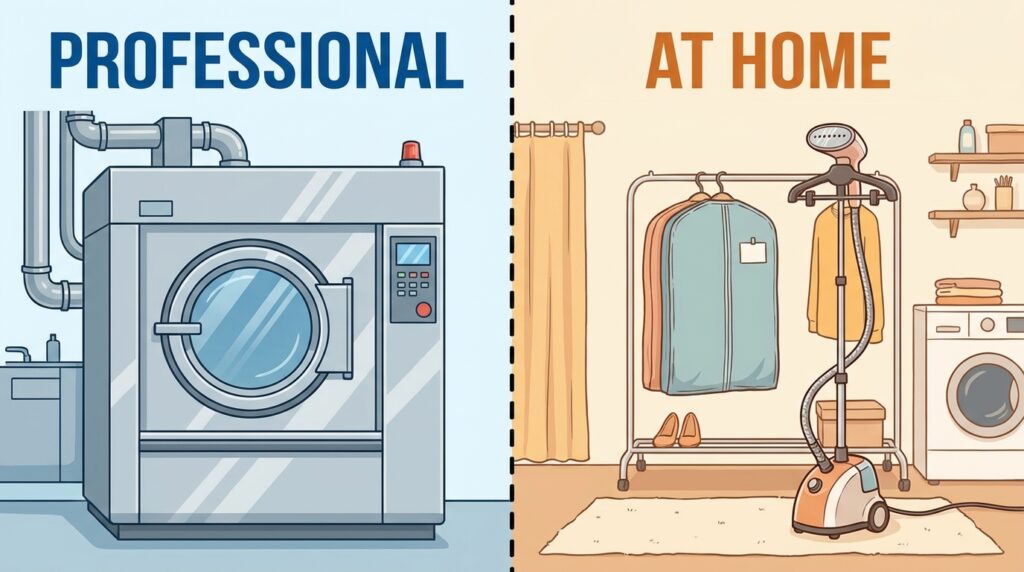
Before trying anything at home, it helps to know what commercial dry cleaning is actually doing to your clothes.
What is dry cleaning in simple terms? It’s a cleaning process that uses a liquid solvent instead of water to lift dirt, oils, and stains from fabric. The most common solvent used in professional facilities is perchloroethylene, often called “perc,” though hydrocarbon-based solvents are also used in some shops, as detailed on Wikipedia’s dry cleaning overview.
Because there’s no water involved, the process is gentler on fibers that would otherwise shrink, bleed color, or lose their shape when washed the normal way. That’s why silk, tailored wool, and heavily structured garments are usually labeled “dry clean only.”
At home, you’re not going to replicate industrial solvent cleaning, and that’s fine. Instead, the goal is to use steam, gentle spot treatment, and low-moisture methods that get clothes clean without the risks that come from tossing them in a washing machine.
It’s worth noting that professional solvent cleaning isn’t without its own tradeoffs. Perchloroethylene has drawn health and environmental scrutiny for years, and regulators have pushed the dry cleaning industry toward safer alternatives in residential areas. That’s part of why more people are looking for ways to reduce how often they need a solvent-based clean in the first place, leaning on home upkeep for the in-between stretches instead.
None of this means dry cleaners are unnecessary. It just means the average “dry clean only” garment spends most of its life needing simple maintenance rather than a full solvent treatment, and that maintenance is something almost anyone can handle with a bit of guidance.
Can You Actually Dry Clean Clothes at Home?

Short answer: yes, for most everyday maintenance. Long answer: it depends on the fabric, the stain, and how often the garment gets worn.
Home methods are great for:
- Freshening up clothes between professional cleanings
- Removing light odors, wrinkles, and surface dust
- Spot-treating small stains before they set in
- Keeping structured pieces like blazers looking sharp longer
Home methods are not a good fit for:
- Heavily soiled or stained garments
- Beaded, sequined, or delicate embellished pieces
- Suits with strict tailoring that needs professional pressing
- Anything with a care label that specifically warns against home treatment
If you’re mostly trying to stretch the time between actual dry cleaner visits, at-home care works well. If a garment has a deep stain or years of buildup, a professional is still the safer bet.
What You Need Before You Start
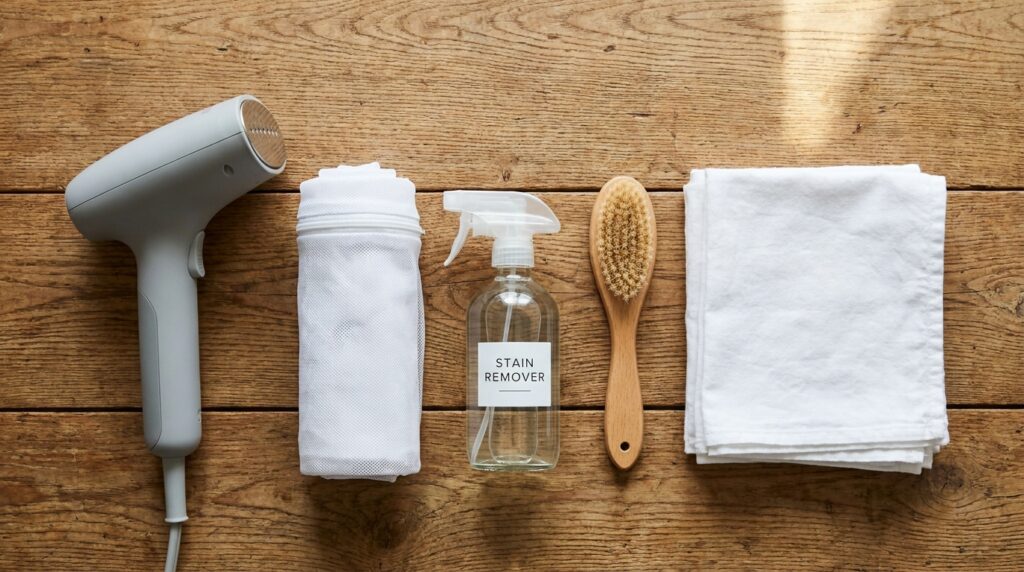
You don’t need a full kit to get decent results, but having a few basics on hand makes the process much smoother.
| Item | Why You Need It |
|---|---|
| Garment steamer or iron with steam setting | Loosens wrinkles and refreshes fibers |
| Mesh laundry bag | Protects delicate items if using a washing machine |
| White vinegar or mild fabric spray | Neutralizes odors without leaving residue |
| Soft-bristled brush | Lifts dust and light debris from wool and suiting |
| Clean white cloths | Used for blotting and spot treatment |
| Padded hangers | Helps garments hold their shape while drying |
Most of these items are things you probably already own, which is part of why this approach appeals to people who don’t want to buy a specialty kit.
Reading Care Labels the Right Way
Care labels look cryptic at first, but the symbols follow a pretty consistent logic once you know what to look for. In the United States, manufacturers are required to attach accurate care instructions to garments, so the label is a legally reliable starting point even before you consider any home method. A circle usually means dry cleaning is recommended. An X through that circle means avoid it entirely. Letters inside the circle, like P or F, refer to the type of solvent a professional cleaner would use, which isn’t something you need to worry about for home care.
A plain washtub symbol with an X through it is the one that matters most for this guide. That’s the label telling you a garment should never touch water, full stop, and steaming is your safest option.
Fiber content also matters as much as the symbol itself. A tag might say “dry clean only” simply because the manufacturer didn’t want to test every care method, even though the actual fabric, say a cotton-poly blend, would tolerate gentle washing just fine. This is where a small hidden-seam test becomes so useful. It tells you more about how a specific garment will react than the label alone sometimes does.
If a label lists multiple fiber types, treat the garment according to the most delicate fiber present. A blouse that’s 90 percent cotton and 10 percent silk should still be handled with silk-level caution, since that small percentage is often concentrated in trim or lining that shows damage first.
How to Dry Clean at Home Without a Kit
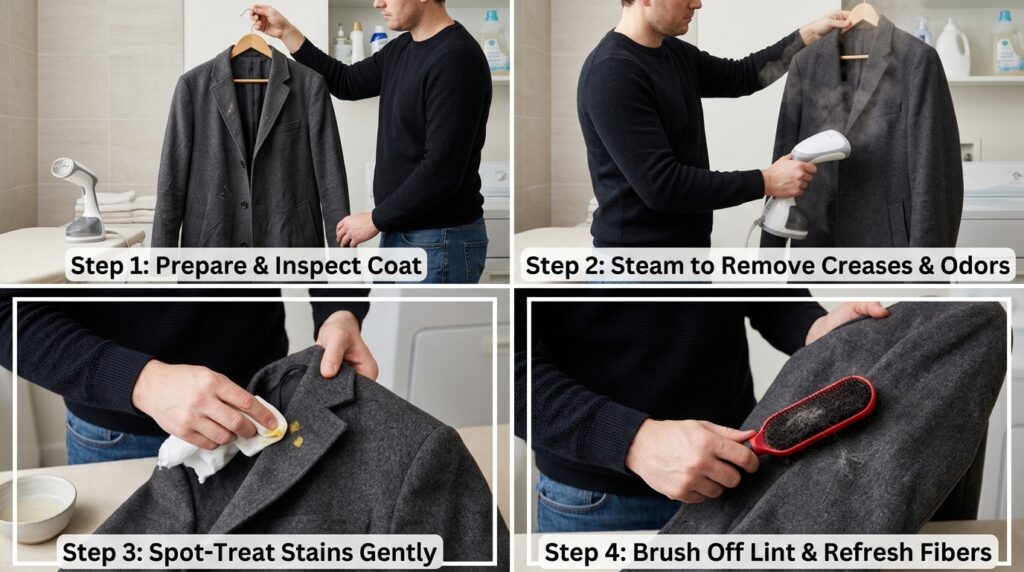
You don’t need to buy a boxed home dry cleaning kit to get solid results. Here’s a simple, no-kit routine that works for lightly soiled garments.
Step 1: Check the care label first. Some fabrics, like acetate or certain rayon blends, don’t respond well to steam or moisture. If the label says “dry clean only” with no exceptions, be extra cautious.
Step 2: Spot-treat any visible stains. Dab a small amount of diluted mild detergent onto a cloth, then gently blot the stained area. Never rub, since that can push the stain deeper into the fibers or spread it.
Step 3: Hang and steam the garment. Use a handheld steamer or an iron with a steam function held a few inches away from the fabric. Move it in slow, even passes to release wrinkles and freshen the fibers.
Step 4: Air it out. Hang the item somewhere with good airflow for a few hours. This helps release any trapped odors and lets the fabric fully dry before it goes back in the closet.
Step 5: Brush off any remaining lint or dust. A soft brush run in one direction removes surface debris that steam alone won’t lift.
This no-kit method won’t remove deep set-in stains, but for regular upkeep between professional visits, it does the job well.
How to Dry Clean at Home With a Steamer
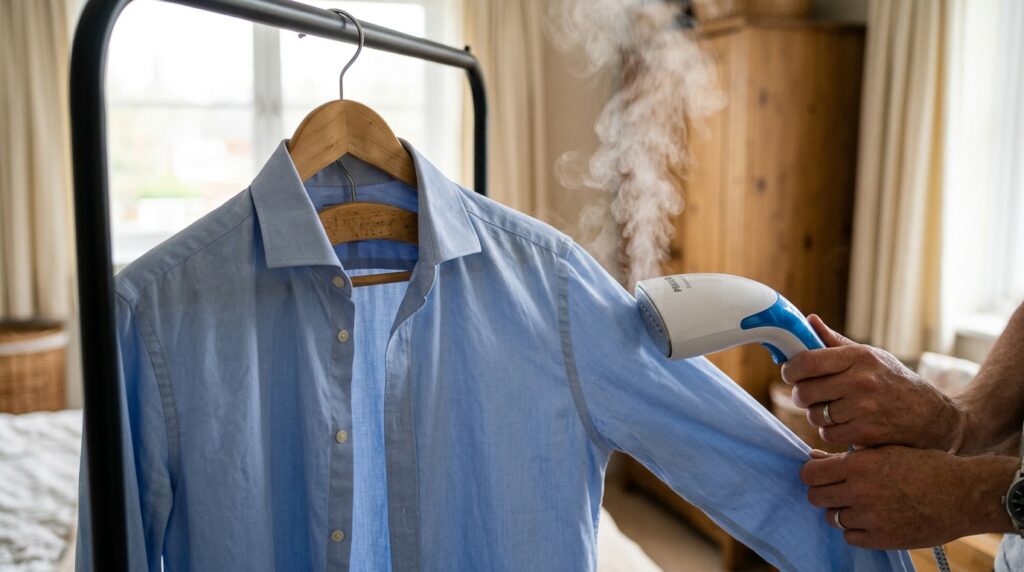
A garment steamer is honestly the most useful tool for this entire process, so it’s worth spending a bit more time on how to use one correctly.
Steam works because heat and moisture relax the fibers just enough to release wrinkles and lift surface odors, without soaking the fabric the way a wash cycle would.
Here’s how to dry clean at home with a steamer the right way:
- Fill the steamer with water and let it heat fully before starting.
- Hang the garment on a sturdy hanger, ideally on a door frame or shower rod.
- Pull the fabric slightly taut with your free hand as you steam.
- Keep the steamer head about two to three inches from the fabric. Direct contact can scorch delicate materials.
- Work top to bottom, focusing extra time on collars, cuffs, and seams where wrinkles concentrate.
- Let the garment hang for at least 20 minutes after steaming so it can dry completely before storage.
A steamer is particularly good for wool, linen, and structured cotton blends. It’s gentler than an iron and much faster than trying to hand-press every seam.
How to Dry Clean a Blazer at Home

Blazers take a beating from wear, especially around the collar, cuffs, and underarms, but they rarely need a full professional clean after every wear.
Here’s how to dry clean a blazer at home between visits to the cleaners:
- Brush it down first. Use a soft clothing brush to remove surface dust and lint before doing anything else.
- Spot-treat problem areas. Focus on the collar and cuffs, which pick up the most oil and grime. A small amount of diluted detergent on a cloth works well here.
- Steam the entire jacket. Pay close attention to the shoulders and lapels, since wrinkles there are the most noticeable.
- Address odor separately from wrinkles. A light mist of a fabric-safe odor neutralizer, followed by air drying, handles smells that steam alone won’t fully remove.
- Store it properly. Use a wide, shoulder-shaped hanger, not a wire one, to keep the jacket’s structure intact.
Blazers with structured shoulder padding and interfacing should never go in a washing machine, even on a gentle cycle. The padding can shift or clump permanently once it gets wet.
How to Dry Clean a Suit Jacket at Home
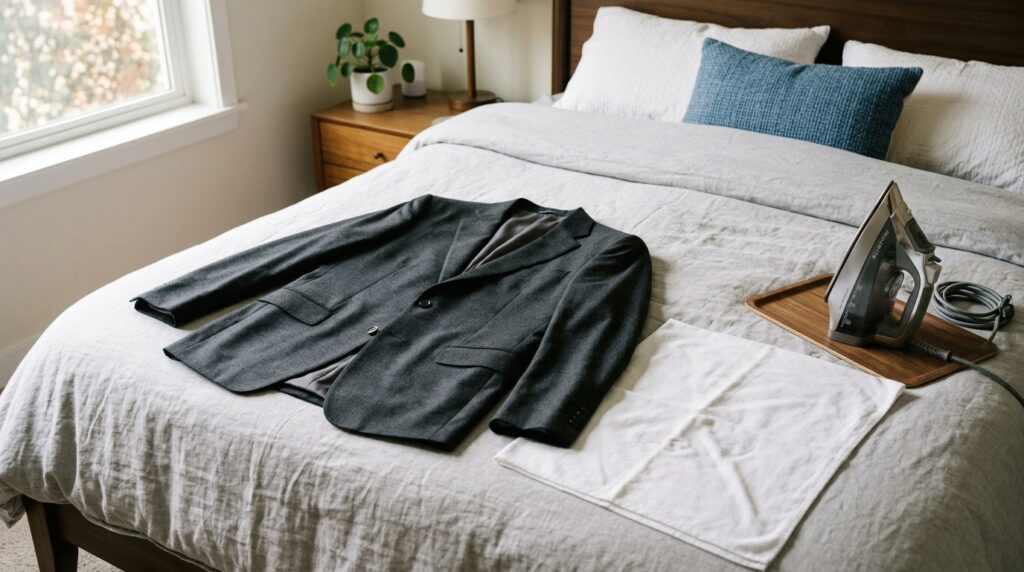
Suit jackets need a bit more care than a casual blazer because the tailoring is more precise and the fabric is often finer wool or a wool blend.
Learning how to dry clean a suit jacket at home mostly comes down to patience and avoiding shortcuts that mess with the fit.
Start by checking the pockets and removing anything left inside, since forgotten items can leave marks during steaming. Next, turn attention to the lining. A lot of odor actually builds up in the inner lining rather than the outer wool, so steam the inside as thoroughly as the outside.
For stains near the lapel or pocket flaps, use the same gentle blot-and-dab method described earlier rather than scrubbing. Suit wool is more prone to developing a shiny, worn patch if it’s rubbed too hard.
After steaming, let the jacket rest on a proper suit hanger for a full day before wearing it again. This gives the fibers time to settle back into shape and reduces the chance of new creases forming right away.
A few things to avoid entirely:
- Ironing directly on the fabric without a pressing cloth
- Using a washing machine, even on delicate cycle
- Storing it in a plastic garment bag long-term, which traps moisture and can cause mildew
Can You Dry Clean Clothes at Home With a Washing Machine?

This is where people run into the most trouble, so it deserves a careful answer.
How to dry clean at home with a washing machine only works safely for specific fabrics and specific settings, not everything labeled “dry clean only.”
Garments that can sometimes handle a gentle machine cycle include:
- Cotton and linen blends without structured lining
- Some polyester and synthetic blends
- Sturdy wool that isn’t tailored or padded
To do this safely:
- Turn the garment inside out and place it in a mesh laundry bag.
- Use cold water only, and select the delicate or hand-wash cycle.
- Choose a mild, pH-neutral detergent made for delicates.
- Skip the spin cycle if your machine allows it, or use the lowest spin setting available.
- Lay the item flat to dry rather than hanging it, which prevents stretching while it’s still wet.
Garments that should never go in a washing machine, regardless of the cycle:
- Structured blazers and suit jackets with shoulder padding
- Silk, especially printed or dyed silk that may bleed
- Anything with beading, sequins, or delicate trim
- Leather, suede, or fur trim
If there’s any doubt, do a small colorfastness test first. Dab a hidden seam with a damp cloth and check for color transfer before committing the whole garment to a wash cycle.
How to Dry Clean Silk at Home

Silk gets its own section because it’s the fabric people worry about most, and for good reason. It’s a natural protein fiber that reacts badly to heat, harsh rubbing, and strong detergents.
How to dry clean silk at home safely comes down to a few non-negotiable rules:
- Always use cool water, never warm or hot, if any moisture is involved at all.
- Test for colorfastness first. Wet a hidden seam and press a white cloth against it. If color transfers, skip washing entirely and stick to steam only.
- Steam on the lowest setting, holding the steamer slightly farther away than you would for cotton or wool.
- Never wring or twist silk, even when it’s just damp from steaming. Press excess moisture out gently with a towel instead.
- Avoid direct sunlight while drying, since UV exposure can fade silk’s natural sheen surprisingly fast.
For silk blouses and scarves with minimal staining, steaming alone often does the job without any water contact at all. Save actual washing, even hand washing, for silk that specifically has a care label confirming it’s safe for water.
If you do decide a silk piece can handle a gentle hand wash, use a mild, pH-neutral detergent made for delicates rather than regular laundry soap, which tends to be too harsh for protein fibers. Swirl the garment gently in cool water, avoid soaking it for more than a few minutes, and rinse thoroughly so no soap residue is left behind. Residue is one of the sneakier causes of silk looking dull over time, since it builds up invisibly wash after wash.
Drying matters just as much as washing. Lay the silk piece flat on a clean, dry towel, roll the towel up to press out excess moisture, then unroll it and reshape the garment by hand before letting it finish drying flat, away from direct sun or heating vents. Hanging wet silk can cause the fabric to stretch permanently under its own weight, which is an easy mistake to avoid once you know to watch for it.
Everyday Clothes You Can Safely Dry Clean at Home
Not every “dry clean only” tag means the item is fragile. A lot of manufacturers add that label defensively, even for fabrics that handle gentle home care just fine.
Clothes that generally respond well to the methods above include:
- Wool sweaters and cardigans
- Structured cotton blazers
- Polyester and rayon blend dresses
- Linen pants and shirts
- Silk scarves and lightweight blouses
Clothes that are safest left to professionals:
- Wedding gowns and formalwear with heavy embellishment
- Leather and suede
- Fur or faux fur trim
- Anything with a specific manufacturer warning against home cleaning
If a garment picked up a fresh, small stain like coffee or makeup rather than a full soil situation, treating it right away at home is usually more effective than waiting days for a cleaner appointment. Fast action matters more than the method in a lot of cases. If you’re dealing with a specific stubborn stain, a dedicated stain removal method for that particular mark will usually outperform a generic approach.
Mistakes That Ruin “Dry Clean Only” Garments
A lot of damage doesn’t happen because someone tried home cleaning. It happens because of small, avoidable mistakes during the process.
Common ones include:
- Ironing directly on delicate fabric instead of using a pressing cloth as a barrier
- Rubbing stains instead of blotting, which spreads the mark and can damage fibers
- Skipping the colorfastness test and discovering dye bleed too late
- Using hot water for anything remotely delicate
- Overloading a washing machine so garments get twisted and stretched during the cycle
- Storing damp clothes in plastic bags, which traps moisture and encourages mildew
Most of these mistakes come from rushing. Taking an extra five minutes to test a small area or read the care label saves a lot of regret later.
There’s also a timing mistake that doesn’t get talked about enough: waiting too long between the stain happening and treating it. A fresh coffee spill or makeup smudge is far easier to lift than the same stain after it’s had a full day to bond with the fibers. If you can’t do a full cleaning right away, at least blot the spot with a dry cloth and keep it from spreading until you have time to treat it properly.
Another overlooked issue is drying garments too close to a heat source. Placing a freshly steamed wool sweater near a radiator or heating vent to speed up drying can cause uneven shrinkage, even though the steaming itself was done correctly. Air drying at room temperature, away from direct heat, protects the work you already put in.
Expert Tips for Better Results
A few habits separate people who get consistently good results from people who end up disappointed.
- Deal with stains immediately. The longer a stain sits, the more likely it is to set permanently into the fibers.
- Keep a dedicated garment steamer. It’s a better investment than a one-time-use dry cleaning kit if you plan to do this regularly.
- Rotate garments instead of wearing the same piece daily. This reduces how often any single item needs deep cleaning.
- Store off-season clothes properly. Breathable garment bags, not sealed plastic, keep fabric in better shape long term.
- Know your fabric before you start. Wool, silk, and synthetic blends all respond differently to heat and moisture, so treat them according to their specific needs rather than a one-size-fits-all method.
Pros and Cons of Dry Cleaning at Home
| Pros | Cons |
|---|---|
| Saves money on frequent cleaner visits | Won’t remove deep, set-in stains |
| Faster than dropping off and waiting | Risk of damage if fabric isn’t checked first |
| Extends time between professional cleanings | Doesn’t replace solvent-based deep cleaning |
| Works well for maintenance and odor control | Not suitable for heavily embellished garments |
| Requires minimal equipment | Learning curve for delicate fabrics like silk |
Home methods work best as a supplement to occasional professional cleaning, not a full replacement for it, especially for garments you wear often or that see heavy use.
When to Skip the DIY Route and Visit a Professional
Home care has real limits, and knowing when to stop is just as important as knowing the techniques themselves.
Take a garment to a professional if:
- The stain is old, large, or unknown in origin
- The fabric has beading, sequins, or delicate lace trim
- It’s a formal piece you can’t risk damaging, like a wedding dress or tuxedo
- The care label explicitly warns against home cleaning methods
- You’ve already tried spot treatment and steaming without improvement
Professionals also have solvent-based systems that handle certain oil-based stains far better than anything available for home use. Since perc exposure carries documented health considerations for workers and nearby residents, some people also prefer to limit how often garments go through solvent cleaning and lean on home upkeep for routine maintenance instead. There’s no shame in leaning on professional expertise for the pieces that really matter.
There’s also a practical middle ground worth mentioning. Some garments don’t need a full professional clean, just a professional press. If a suit jacket has held up well but lost its crisp shape after months of wear, a pressing-only service is usually cheaper and faster than a full clean, and it can be the difference between a garment looking tired versus looking sharp again without any risk to the fabric.
Cost is often the deciding factor for people trying to figure out where to draw the line. Weigh the price of a professional clean against the value and irreplaceability of the garment. A budget blazer with a minor stain is a reasonable item to experiment on at home. A tailored suit you paid a lot for, or a sentimental piece, is worth the extra cost of professional care rather than risking a mistake you can’t undo.
Frequently Asked Questions
Is it safe to dry clean clothes at home every time instead of using a professional service?
For light maintenance, yes. But garments with tough stains, heavy soiling, or delicate embellishments still benefit from occasional professional cleaning, which uses solvent-based systems that home methods can’t fully replicate.
Can a regular iron replace a garment steamer for this process?
An iron with a steam setting can work in a pinch, but always use a pressing cloth as a barrier and keep the iron moving. Direct, static contact is more likely to scorch delicate fabric than a handheld steamer.
How often should “dry clean only” clothes actually be cleaned?
It depends on wear. Items worn against the skin, like blouses, may need attention every few wears, while outerwear like blazers and coats can often go much longer between cleanings if aired out and spot-treated regularly.
Does steaming alone actually kill germs and odors?
Steam at a high enough temperature does reduce surface bacteria and helps release trapped odors from fibers, though it isn’t a substitute for actual cleaning when a garment has visible soiling.
What’s the biggest risk when trying to dry clean at home for the first time?
Skipping the colorfastness test. Dye bleed and shrinkage are the two most common and hardest to reverse mistakes, and both are easily avoided by testing a hidden seam first.
Bringing It All Together
Most “dry clean only” clothes don’t need a trip to the cleaners every single time they’re worn. With a steamer, a little care, and an understanding of which fabrics tolerate what, you can keep blazers, silk pieces, and suits looking sharp between professional visits.
Start small. Pick one garment, test a hidden seam, and try the steaming method before moving on to anything more involved like a delicate machine wash. Once you see how much upkeep you can handle at home, you’ll likely find yourself reaching for the dry cleaner only for the pieces that truly need it.

