
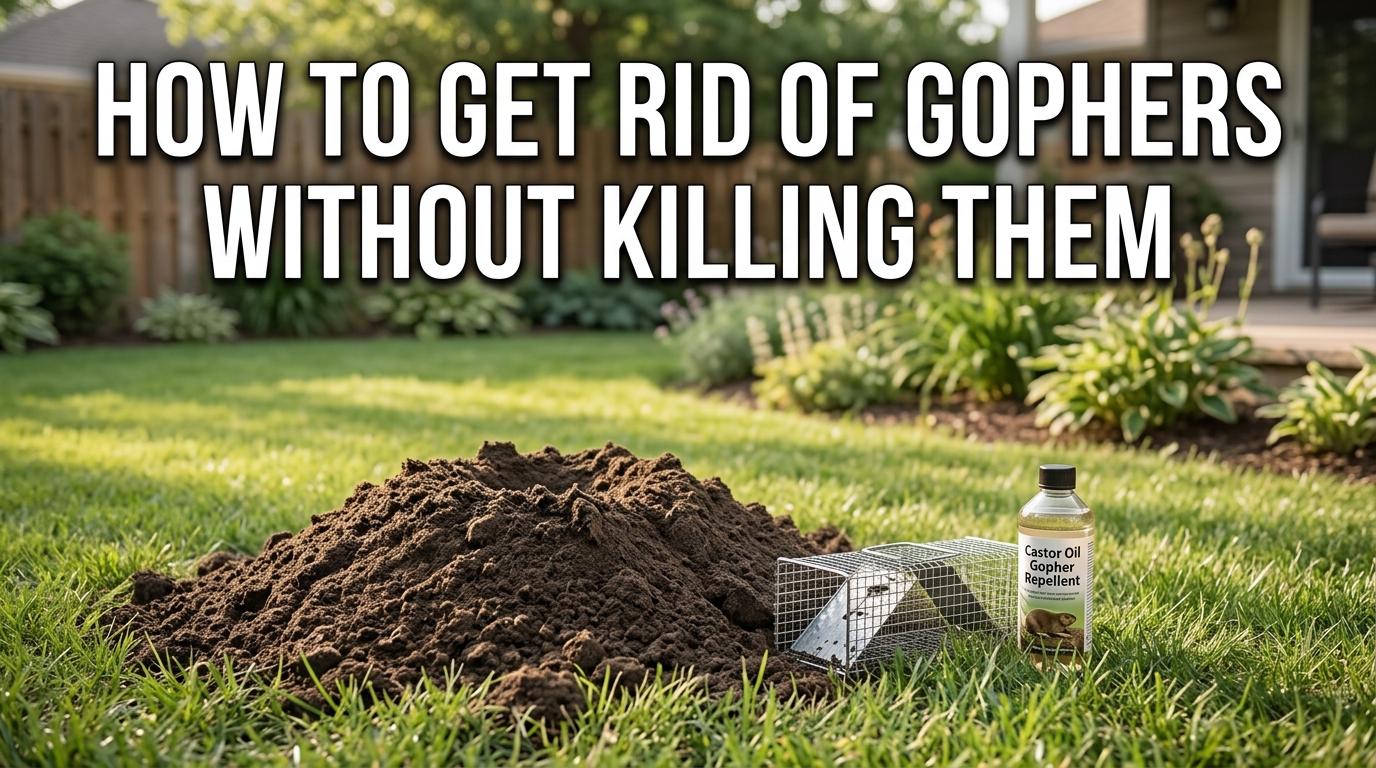
A single gopher can push up a dozen mounds in a week, chew through sprinkler lines, and pull an entire row of lettuce underground root-first before you even realize what’s happening. Figuring out how to get rid of gophers without killing them is entirely possible, and it usually comes down to three things: making the burrow unpleasant, giving the animal somewhere else to go, and blocking it from coming back.
Gophers aren’t aggressive, they don’t carry the same disease risks people associate with rats, and in a lot of states relocating or poisoning wildlife comes with its own restrictions. That’s part of why so many homeowners look for non-lethal options first, whether out of a preference for humane treatment or simply because trapping and exclusion tend to work just as well as anything more drastic.
This piece walks through the identification steps, repellents, live trapping, and long-term barriers that actually move gophers out of a yard instead of just frustrating you further.
How to Tell If You Actually Have Gophers
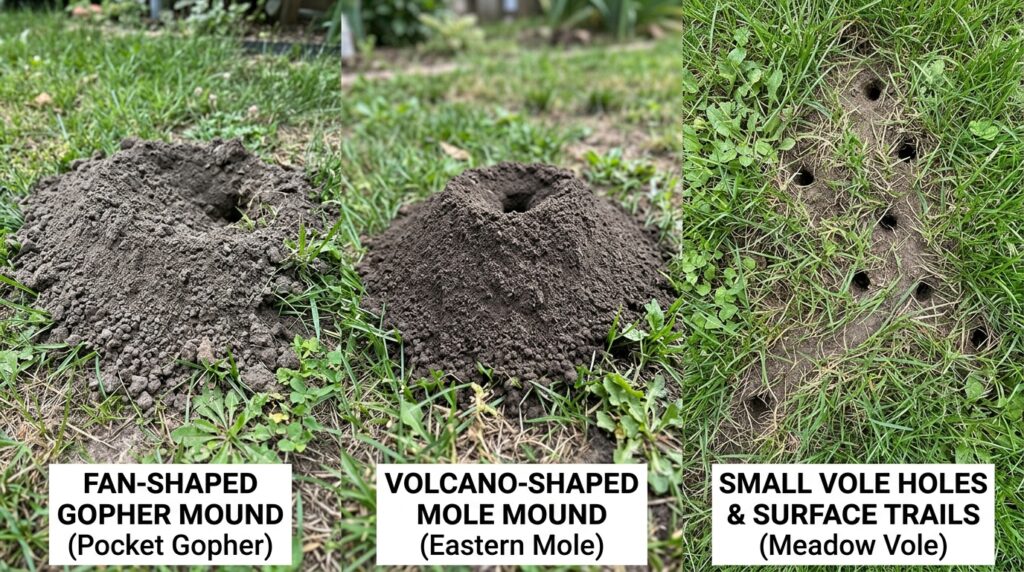
Before doing anything else, confirm what’s actually digging up the lawn. Gophers, moles, and voles get lumped together constantly, but the damage they leave behind looks different enough to tell apart once you know what to look for.
Gopher mounds are crescent- or fan-shaped, with the entrance plugged off to one side rather than in the center. Mole mounds, by contrast, tend to be more circular and volcano-shaped, since moles push dirt straight up through a single opening. Voles rarely mound soil at all; instead, they leave narrow surface trails and small holes connected by shallow runways through grass and mulch.
If you’re seeing fan-shaped mounds, chewed root vegetables, or plants that seem to vanish straight down into the soil, gophers are the likely culprit. Fresh, dark, crescent-shaped mounds of loose soil are the clearest sign of current gopher activity, since older mounds tend to dry out and flatten within a few days.
Why Humane Removal Actually Works
Gophers are territorial and solitary. A single burrow system usually houses just one adult, which means the goal isn’t wiping out a colony, it’s convincing one animal that this particular patch of ground isn’t worth defending anymore.
That territorial instinct is actually useful. Gophers invest a lot of energy digging and maintaining their tunnels, so when a burrow becomes consistently unpleasant, smelly, loud, or unproductive, most gophers will abandon it and dig a new one elsewhere rather than fight to stay. This is the entire logic behind repellents, sound devices, and exclusion barriers: none of them need to physically remove the animal if the environment does the work instead.
Locate the Main Burrow Before You Do Anything Else
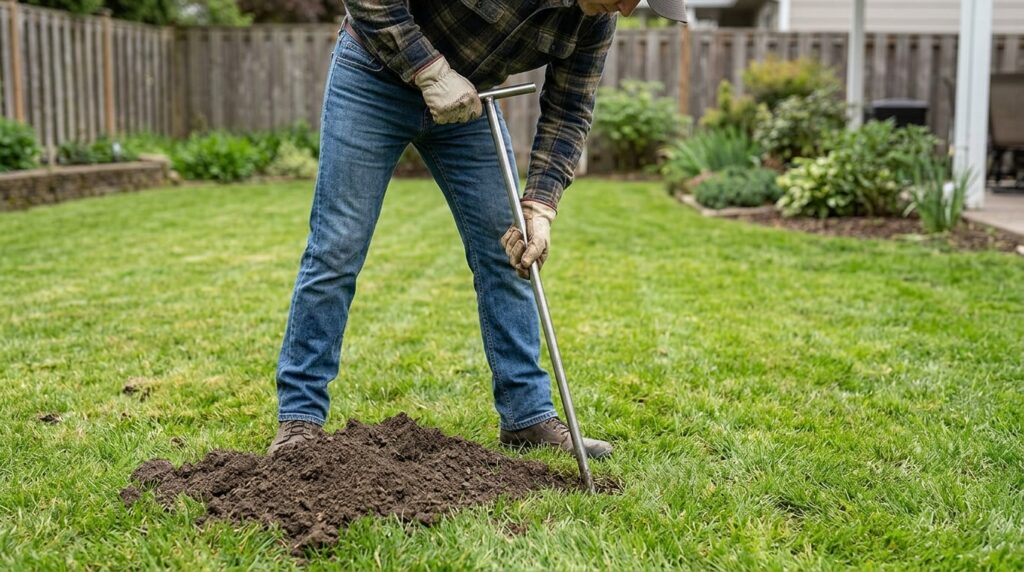
Every method on this list works better once you’ve found the main tunnel rather than a random lateral branch. Repellent poured into a dead-end side tunnel, or a trap set in the wrong spot, mostly just wastes product and time.
To find the main burrow:
- Look for the freshest, darkest mound with a visible soil plug off to one side.
- Push a probe (a metal rod, gopher-specific probe, or even a long screwdriver) into the ground about 8 to 12 inches from the plugged side of the mound.
- Feel for a sudden drop of a couple of inches, which indicates the probe has broken into the open tunnel below.
- Repeat a few inches over if the first attempt doesn’t hit it, since it can take a couple of tries even with practice.
Once you’ve located the tunnel, this becomes your access point for repellents, traps, or barrier work.
Repellents That Send Gophers Packing
Scent and sound repellents are the most common starting point for anyone trying to remove gophers without harming them, largely because they’re inexpensive, low effort, and don’t require touching the animal at all.
Castor Oil and Scent-Based Repellents
Castor oil is the most widely used gopher repellent, and it works by irritating the gopher’s digestive system without being lethal. Mixing roughly three parts castor oil with one part dish soap, diluted into water, and drenching it into the tunnel openings is a common homemade version that tends to outperform other scent-based options.
A few other scent deterrents people use with reasonable success:
- Peppermint oil on cotton balls placed directly into the tunnel entrance
- Used coffee grounds scattered around active mounds
- Predator scent, including used cat litter or pet waste placed near burrow openings
- Strongly scented dryer sheets tucked into the hole
Apply repellent starting at the mound closest to the house or garden bed you want protected, then work outward every couple of days toward the edge of the property. Starting the treated area from a distance and gradually expanding it toward an intended exit point encourages the gopher to move away rather than simply relocating to a different corner of the same yard.
Ultrasonic and Sound Repellents
Battery or solar-powered ultrasonic stakes emit vibrations and high-frequency sound that are irritating to gophers but inaudible to humans. They’re not a guaranteed fix on their own, but combined with scent repellents they add another layer of discomfort that pushes a gopher toward relocating.
Place stakes every 20 to 30 feet across the affected area, and expect to move them periodically since gophers can sometimes adjust to a stationary noise source over time.
Live Trapping and Relocating Gophers
When repellents alone aren’t cutting it, a humane box trap is the next step. Unlike lethal traps, these capture the gopher alive so it can be relocated rather than killed.
Steps for humane trapping:
- Locate the main tunnel using a probe, as described earlier.
- Open the tunnel slightly and set the live trap at the entrance, facing into the burrow.
- Bait the trap with fresh vegetables like carrots or lettuce, which gophers find hard to resist.
- Cover the opening loosely with soil or a board to keep the tunnel dark, since gophers avoid light.
- Check the trap at least once a day. Gophers can become stressed or dehydrated quickly if left too long, so frequent checks matter as much as the trap placement itself.
Before relocating a trapped gopher, check local regulations. Some states restrict or prohibit relocating wildlife to new areas, since it can spread the animal into someone else’s property or introduce it to unfamiliar terrain where it may struggle to survive. When relocation isn’t allowed, releasing the gopher into a rural or wooded area with permission from the landowner is typically the more compliant option.
Physical Barriers That Keep Gophers From Coming Back
Repelling or trapping a gopher solves the immediate problem, but without a physical barrier, a new gopher can move into the same vacant tunnel system within weeks. Exclusion is the closest thing to a permanent, non-lethal fix.
- Line the bottom and sides of raised garden beds with galvanized hardware cloth (half-inch mesh works well) before adding soil.
- For in-ground beds, dig a trench around the perimeter and bury wire mesh vertically at least 24 inches deep, since gophers tunnel below typical fence depth.
- Fold a few inches of the mesh outward at the top, angled away from the bed, to discourage digging attempts along the barrier’s edge.
- For prized trees or shrubs, wire baskets placed around the root ball at planting time protect roots without restricting growth much once the plant matures.
This kind of barrier takes more upfront effort than a bag of repellent, but it’s the difference between solving a recurring problem for a season versus solving it for good.
Protecting Your Garden Without Harming Wildlife
Vegetable gardens are usually where gopher damage stings the most, since root vegetables, bulbs, and tender seedlings are exactly what gophers prefer to eat. If you’re setting up a new vegetable garden from scratch, building in gopher protection from day one, rather than reacting after the fact, saves a lot of frustration down the line.
Raised beds lined with hardware cloth are the simplest fix for new gardens. For established in-ground beds, a combination of scent repellents around the perimeter and a buried mesh barrier along the edges usually keeps existing plantings safe while a longer-term exclusion project gets finished.
What Not to Do When Trying to Get Rid of Gophers Humanely
A few widely repeated tips actually cause more harm than good, or simply don’t work as advertised:
- Flooding tunnels with a hose: This rarely reaches the gopher, since the animal usually just moves deeper into the tunnel system or seals off the flooded section entirely.
- Mothballs: These contain naphthalene, which is a pesticide with restrictions on outdoor and soil use in many areas, and it poses a risk to pets and children who might dig them up.
- Chewing gum or other folk remedies: Popular online, but there’s no reliable evidence these actually deter or harm gophers in any meaningful way.
- Ignoring the problem entirely: Populations don’t grow indefinitely, but by the time they level off on their own, the damage to lawns, gardens, and irrigation lines is usually already done.
Expert Tips for Long-Term, Non-Lethal Gopher Control
- Treat every active mound you find, not just the largest one. A single gopher can maintain multiple lateral tunnels that look like separate problems.
- Reapply scent repellents after rain or heavy irrigation, since water dilutes and washes away most oil-based deterrents within days.
- Combine methods. Repellent alone might push a gopher a few feet over; repellent paired with a buried barrier tends to produce longer-lasting results.
- Keep garden beds weeded and free of overgrown ground cover, since dense vegetation and root systems are exactly what attract gophers to a yard in the first place.
- Encourage natural predators where possible. Owls, hawks, and even outdoor cats can help keep gopher populations naturally in check over time without any direct intervention from you.
Pros and Cons of Humane Gopher Removal
| Pros | Cons |
|---|---|
| No harm to the animal or risk to pets from poison | Often slower than lethal trapping or baiting |
| Lower risk of secondary poisoning to predators | Requires more frequent reapplication and monitoring |
| Works well combined with exclusion barriers | A relocated gopher may simply be replaced by a new one without barriers |
| No use of restricted rodenticides | Live trapping requires daily checks to avoid animal stress |
| Generally safer around children and gardens | Some methods, like sound repellents, have limited long-term effectiveness alone |
Frequently Asked Questions
How long does it take to get rid of a gopher with repellent alone?
Most scent-based repellents show results within a few days to two weeks, depending on how consistently they’re reapplied and how quickly rain or irrigation washes them away. Sandy or fast-draining soil usually requires more frequent treatment than heavier clay soil.
Will gophers come back after I remove one?
Yes, unless the burrow entrance is blocked or a barrier is installed, since an empty tunnel system is an easy, low-effort home for the next gopher that wanders through. Combining repellent or trapping with buried exclusion mesh is the most reliable way to prevent repeat visitors.
Is it legal to relocate a trapped gopher?
It depends on where you live. Some areas allow relocation to private land with the owner’s permission, while others restrict moving wildlife to prevent introducing animals into unfamiliar habitats. Checking local wildlife regulations before releasing a trapped gopher elsewhere is worth the few minutes it takes.
Can I use the same methods for moles and voles?
Some overlap exists, particularly with exclusion barriers and certain scent repellents, but moles are primarily insect eaters rather than plant eaters, so bait and food-based lures that work on gophers usually won’t attract moles at all. It’s worth confirming which animal you’re dealing with before choosing a method.
Do ultrasonic repellents actually work on gophers?
They can help as part of a combined approach, but used alone, results tend to be inconsistent, and some gophers appear to adjust to a stationary sound source over time. Pairing sound devices with scent repellents or physical barriers produces more reliable outcomes than relying on sound alone.
Bringing It All Together
Getting a gopher out of a yard without killing it comes down to patience more than any single trick. Identify the mound correctly, find the main tunnel, make the burrow unpleasant enough to abandon, and follow up with a barrier so the next gopher that wanders through doesn’t just move right in.
None of these steps require special equipment or professional intervention for most yards. A little consistency with repellent, a properly placed live trap when needed, and a buried mesh barrier around the areas that matter most will handle the vast majority of gopher problems without a single animal being harmed.

