
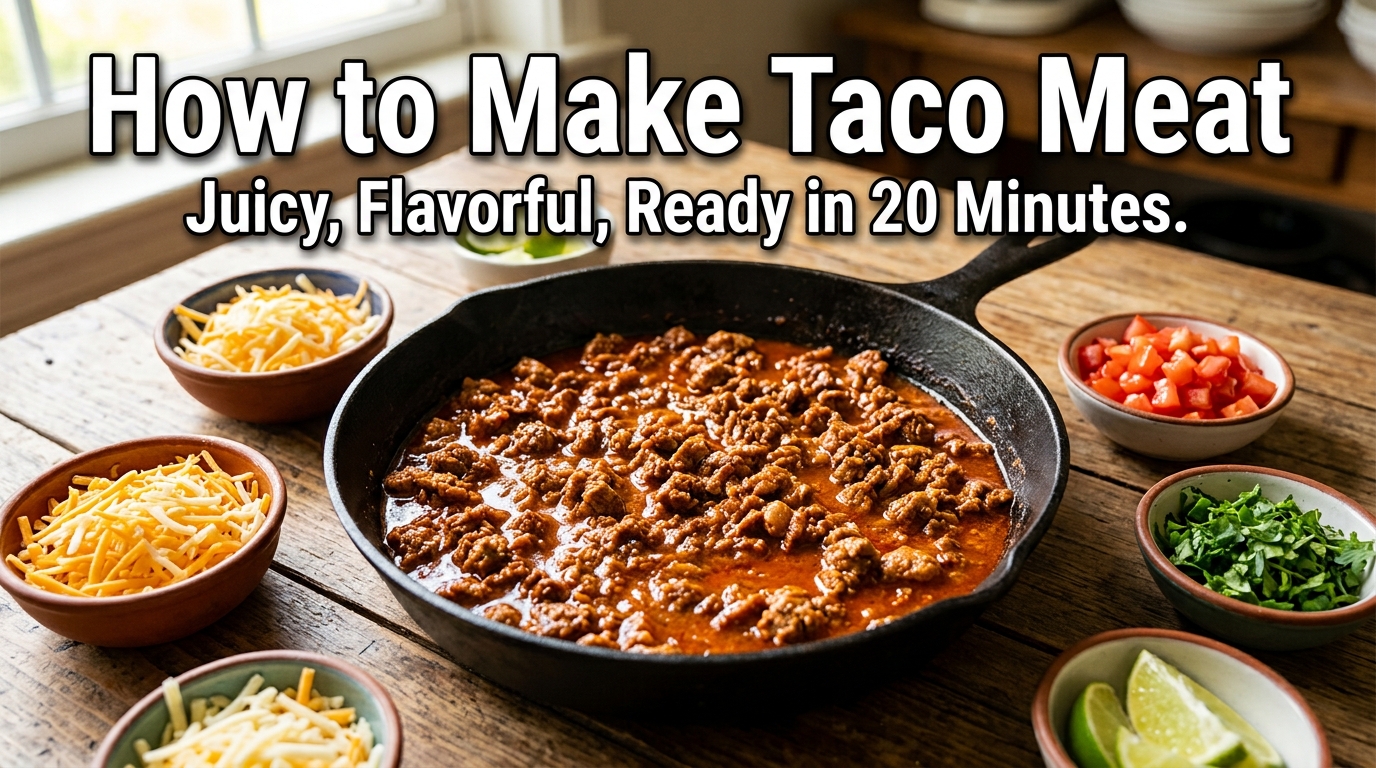
Taco night shouldn’t rely on a foil packet full of mystery seasoning. Once you know how to make taco meat from scratch, you’ll notice the difference immediately: bolder flavor, less sodium, and a texture that actually holds up in a shell instead of turning into wet crumbles.
The process is shorter than most people expect. A pound of ground beef, a handful of pantry spices, and about twenty minutes on the stove is really all it takes. The part that trips people up isn’t the cooking, it’s the small details: which fat ratio to buy, how long to simmer, and what actually keeps the meat moist instead of dry and grainy.
This breaks down every part of that process, from picking the right meat to storing leftovers safely.
What Goes Into Good Taco Meat
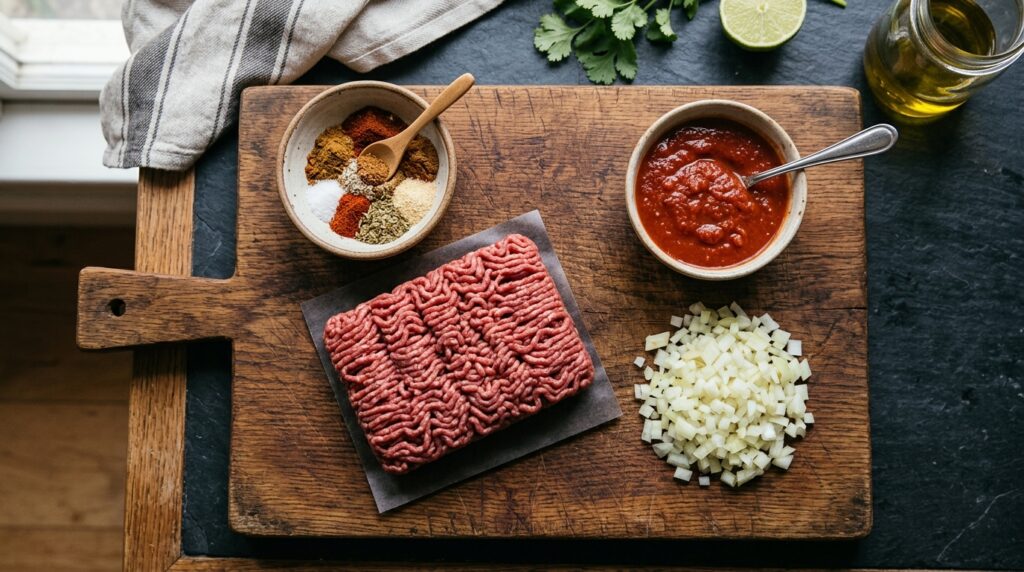
Before touching a stove, it helps to understand what separates forgettable taco meat from the kind people go back for seconds on.
Three things matter most:
- The right fat content in the beef, so it stays juicy instead of drying out in the pan
- A balanced spice blend, not just chili powder dumped in heavy-handed
- A liquid element (tomato sauce, broth, or water) that lets the seasoning cling to every crumble instead of sitting in the bottom of the pan
Skip any one of these and the meat still technically works, but it tastes flat or turns dry by the time it hits the tortilla.
Choosing the Right Ground Beef
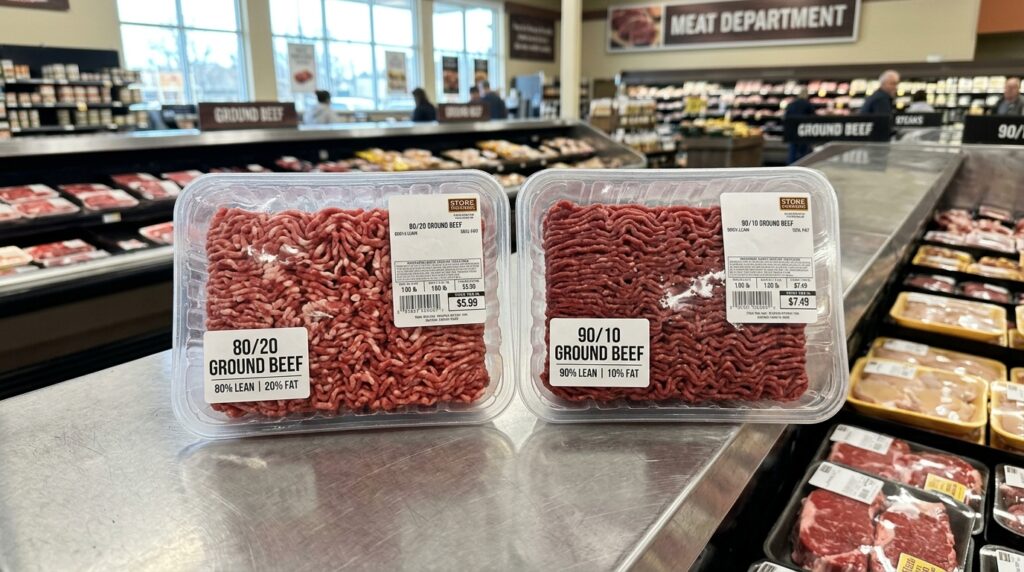
Not all ground beef behaves the same way in a hot pan, and this is where a lot of home cooks go wrong without realizing it.
Packages are labeled by their lean-to-fat ratio, like 80/20 or 90/10. The first number is the percentage of lean meat, the second is fat. For taco meat specifically, 80/20 is usually the better choice. The extra fat renders out as the beef cooks, basting the meat from the inside and preventing that dry, crumbly texture that ruins a taco.
If a leaner blend like 90/10 is all that’s available, it still works. Just add a tablespoon of oil to the pan before browning so the meat doesn’t seize up and turn tough.
| Ratio | Fat Content | Best For |
|---|---|---|
| 70/30 | High fat | Extra rich, needs draining |
| 80/20 | Balanced | Classic taco meat, juicy result |
| 90/10 | Lean | Lighter option, needs added oil |
How to Make Taco Meat Step by Step
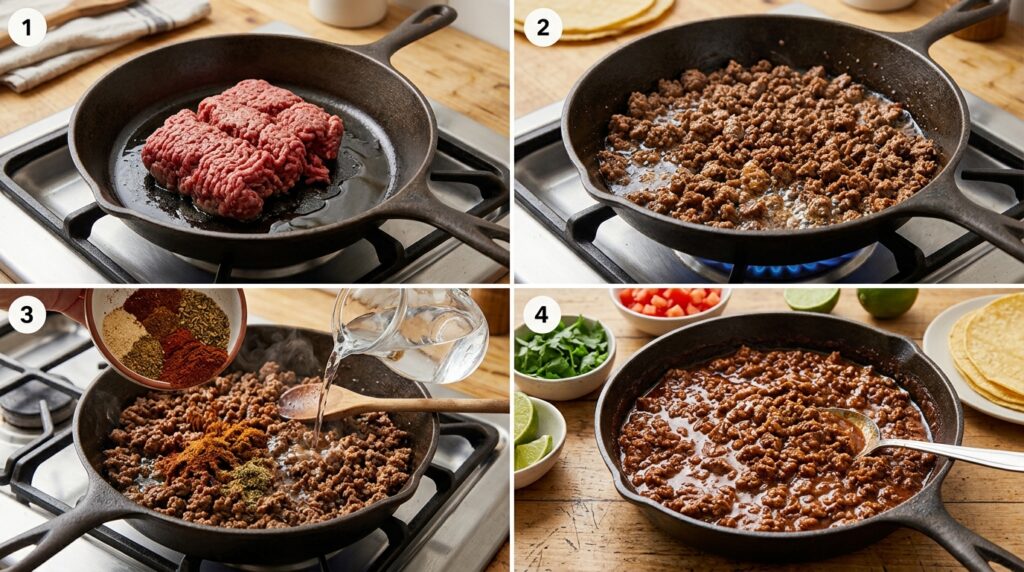
Here’s the actual process, broken into stages so nothing gets rushed or skipped.
Step 1: Prep the Aromatics
Dice half a small onion and mince two cloves of garlic. This isn’t strictly required, but it builds a flavor base that packaged seasoning mixes skip entirely. Sauté the onion in a splash of oil over medium heat for about three minutes until it softens, then add the garlic for thirty seconds more.
Step 2: Brown the Beef
Add one pound of ground beef directly to the same pan. Break it apart with a wooden spoon or spatula as it cooks, keeping the heat at medium-high so it browns instead of steaming. This usually takes six to eight minutes.
Avoid stirring constantly. Letting the meat sit undisturbed for thirty seconds at a time actually helps it develop better color and flavor.
Step 3: Drain If Needed
If using a fattier blend, tilt the pan and spoon off excess grease, or drain the meat in a colander for a few seconds. Leaner blends usually don’t need this step.
Step 4: Add the Seasoning
Stir in the spice blend along with a small amount of tomato sauce or water. This liquid does two things: it dissolves the spices so they coat every piece of meat evenly, and it keeps the mixture from drying out as it simmers.
Step 5: Simmer to Thicken
Reduce the heat to low and let everything simmer for five to seven minutes, stirring occasionally. The mixture should end up saucy but not soupy, thick enough to hold together inside a taco shell without falling apart.
If the pan still looks watery after the simmer, the same tricks used to thicken a pot of beef stew apply here too. A small flour or cornstarch slurry stirred in and simmered for another minute or two will pull everything together without changing the flavor.
Homemade Taco Seasoning Blend
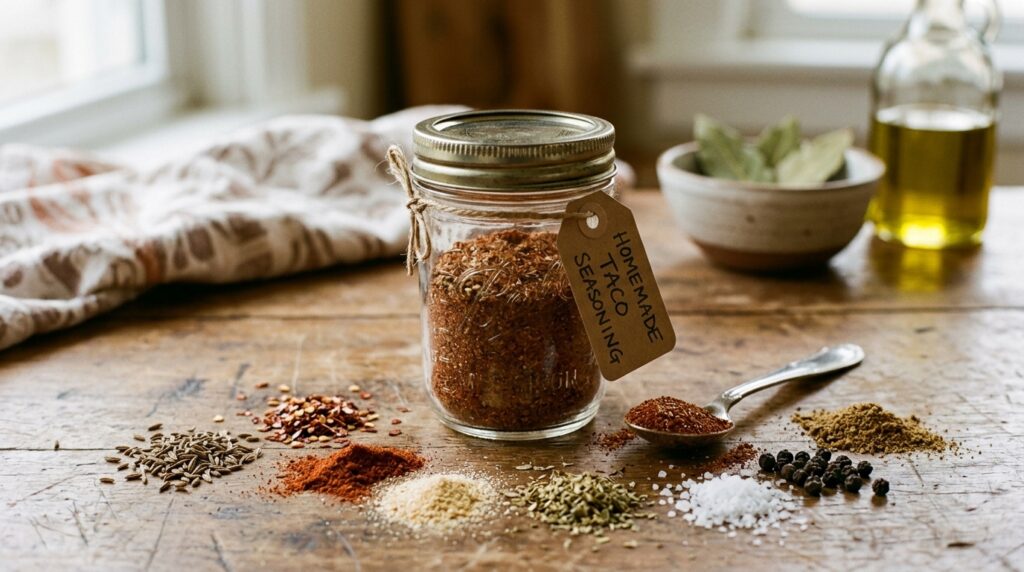
Store-bought packets work in a pinch, but mixing your own takes less than two minutes and cuts out unnecessary sodium and fillers. This blend is enough for one pound of meat.
| Spice | Amount |
|---|---|
| Chili powder | 1 tablespoon |
| Ground cumin | 1 teaspoon |
| Smoked paprika | 1 teaspoon |
| Garlic powder | 1/2 teaspoon |
| Onion powder | 1/2 teaspoon |
| Dried oregano | 1/2 teaspoon |
| Salt | 1/2 teaspoon |
| Black pepper | 1/4 teaspoon |
Cumin is worth calling out specifically since it does most of the heavy lifting in that classic “taco flavor” people recognize. Beyond taste, it’s also one of the more studied culinary spices for everyday cooking, with some research pointing to modest digestive and metabolic benefits when it’s part of a regular diet.
Triple the batch and store it in a sealed jar. It keeps well in the pantry for months and turns future taco nights into a five-minute task.
Ground Beef Substitutes That Still Work
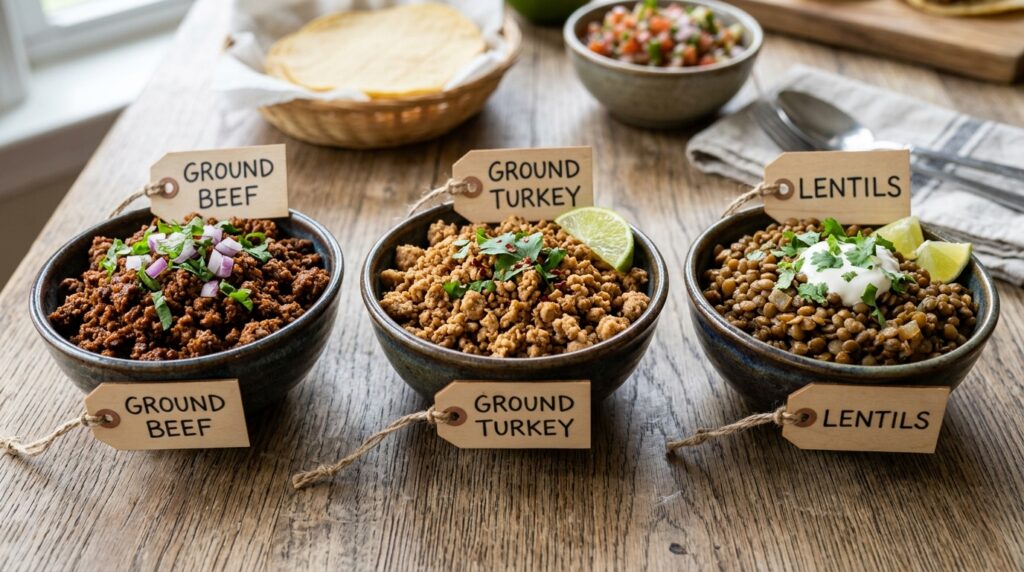
Not every household cooks with beef, and the same method adapts easily to other proteins.
- Ground turkey or chicken – Leaner and milder, so add an extra tablespoon of oil and a splash more liquid to prevent dryness
- Ground pork – Slightly sweeter flavor, works well with the same spice ratio
- Shredded rotisserie chicken – Skip the browning step and just toss the shredded meat with the seasoning and a little broth
- Lentils or crumbled tofu – A plant-based option that absorbs the seasoning well, especially with a bit of added smoked paprika for depth
The seasoning blend and simmering technique stay identical no matter which protein goes into the pan.
Common Mistakes That Ruin Taco Meat
A few small missteps show up again and again in home kitchens.
- Overcrowding the pan – This traps steam and prevents proper browning, leading to gray, mushy meat instead of caramelized crumbles
- Skipping the liquid – Dry seasoning alone tends to clump and burn instead of coating the meat evenly
- Overcooking after adding seasoning – Once the liquid is in, a hard simmer for too long can toughen the meat; keep the heat low
- Using pre-shredded cheese or wilted toppings – Not a meat issue, but it undercuts everything you just did right in the pan
Fixing these usually means the difference between taco meat that tastes homemade in a good way, and taco meat that tastes like it came from a packet regardless of what went into it.
Food Safety Tips for Cooking Ground Beef
Ground beef carries more surface area exposed to bacteria than a solid cut of meat, since the grinding process mixes everything together. That makes proper cooking temperature non-negotiable.
The safe minimum internal temperature for ground beef is 160°F, checked with a food thermometer inserted into the thickest part of the meat. Color alone isn’t a reliable indicator, since ground beef can turn brown before it’s actually reached a safe temperature, or stay slightly pink even when fully cooked.
A few habits that help:
- Keep raw ground beef refrigerated at 40°F or below until it’s ready to cook
- Wash hands, cutting boards, and utensils after handling raw meat
- Use a separate plate for raw meat versus the cooked, finished product
None of this changes how the recipe tastes, but it’s the part that keeps the meal actually safe to eat.
How to Store and Reheat Leftover Taco Meat
Taco meat holds up well as leftovers, which makes doubling the batch worth doing.
Once it’s cooked, let it cool briefly, then refrigerate within two hours in an airtight container. According to general leftover food safety guidance, cooked ground beef stays safe in the refrigerator for three to four days.
For longer storage, taco meat freezes exceptionally well:
- Cool completely before freezing to avoid ice crystals
- Store in a freezer bag with the air pressed out, flattened for faster thawing
- Use within two to three months for the best texture and flavor
- Thaw overnight in the refrigerator, then reheat on the stovetop with a splash of water or broth to loosen it back up
Reheated taco meat should reach 165°F throughout before serving.
Creative Ways to Use Taco Meat Beyond Tacos
Once a batch is made, it rarely has to stop at tacos.
- Taco salad – Serve over lettuce with beans, corn, and a light dressing
- Stuffed peppers – Mix with rice and bake inside halved bell peppers
- Nachos – Layer over chips with cheese and broil until bubbly
- Burrito bowls – Combine with rice, beans, and salsa for a quick meal-prep option
- Baked potatoes – Spoon over a split baked potato with sour cream and cheese
This versatility is part of why doubling the recipe makes sense. One cooking session can stretch across three or four different meals during the week.
Expert Tips for Restaurant-Style Flavor
A few extra touches separate home-cooked taco meat from something that tastes like it came from a taqueria.
- Toast the spices for thirty seconds in the dry pan before adding liquid; this wakes up their aroma noticeably
- Add a small squeeze of lime juice right at the end, off the heat, for brightness
- Use beef broth instead of water when thinning the sauce for a deeper, richer flavor
- Let the meat rest for two minutes off the heat before serving so the sauce thickens slightly and clings better to each bite
None of these steps add real time to the process, but they noticeably change the final result.
Homemade vs. Store-Bought Seasoning: Pros and Cons
| Homemade Seasoning | Store-Bought Packet | |
|---|---|---|
| Sodium control | Full control | Often high sodium |
| Cost per batch | Lower over time | Slightly higher per use |
| Prep time | 2 extra minutes | Zero prep |
| Flavor customization | Fully adjustable | Fixed formula |
| Convenience | Requires pantry stock | Grab and go |
Neither option is wrong. Busy weeknights are exactly when a packet earns its place, while homemade seasoning makes more sense for anyone cooking tacos regularly or managing sodium intake.
Frequently Asked Questions
What is the best ground beef ratio for taco meat?
80/20 is generally the best balance for taco meat, since the fat renders out during cooking and keeps the meat moist. Leaner blends like 90/10 work too, but benefit from a little added oil.
How long does it take to make taco meat from scratch?
Homemade taco meat typically takes 15 to 20 minutes total, including browning the beef and simmering it with seasoning.
Can taco meat be made ahead of time?
Yes. It reheats well and can be refrigerated for three to four days or frozen for two to three months, making it a practical option for meal prep.
Why is my taco meat dry instead of saucy?
This usually happens when too little liquid is added, or when the meat is simmered too long after the seasoning goes in. A splash of broth or tomato sauce and a shorter simmer time usually fixes it.
Is homemade taco seasoning healthier than packets?
It can be, mainly because it allows full control over sodium and eliminates preservatives or anti-caking agents that some packaged blends contain.
Bringing It All Together
Good taco meat comes down to a few repeatable choices: the right fat content, a spice blend that isn’t an afterthought, and enough liquid to keep everything moist through the simmer. Once that rhythm becomes familiar, a packet of store-bought seasoning starts to feel unnecessary.
Try it once with a homemade spice blend and a proper simmer, and taco night stops being a fallback meal and starts being one people actually look forward to.

