
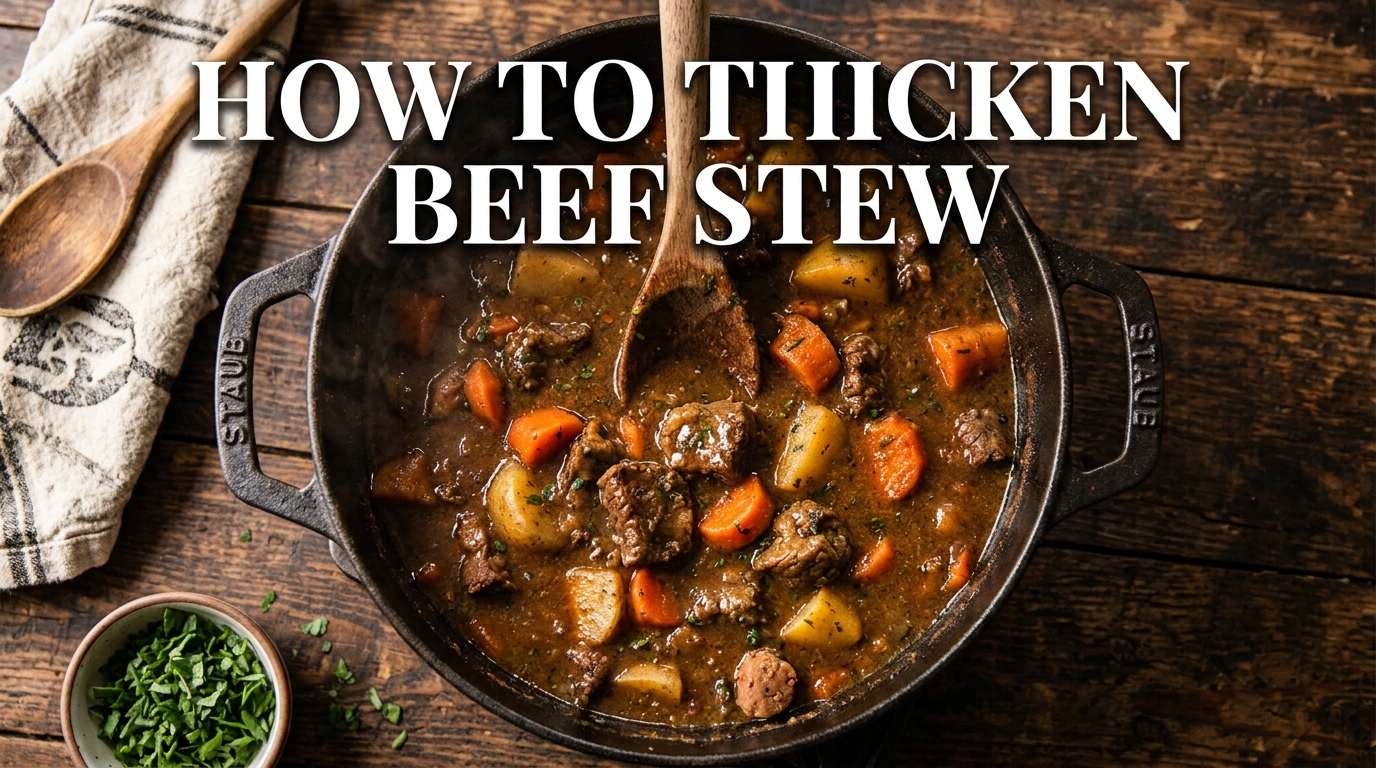
There’s a specific kind of disappointment that comes from lifting the lid on a pot of beef stew and finding soup instead. The meat is tender, the vegetables are perfect, but everything is just floating in thin, watery broth instead of clinging together the way it should.
If you’ve ever wondered how to thicken beef stew without ruining the flavor or texture, the good news is that it’s one of the easiest fixes in the kitchen. You don’t need a culinary degree, and you almost never need to start over. A few extra minutes and one of the methods below will turn a runny pot into something that coats the back of a spoon.
Why Beef Stew Turns Out Watery in the First Place
Before jumping into fixes, it helps to know why this happens. Stew is really just a balance between liquid and solids, and that balance can tip in the wrong direction for a few common reasons.
Sometimes there’s simply too much broth or stock added at the start. Other times the lid stays on the pot the entire cooking time, which traps steam and prevents any natural evaporation. Cuts of meat matter too — leaner cuts release less collagen than something like chuck roast, and that collagen is part of what gives a long-simmered stew its natural body.
Knowing the cause doesn’t just help you fix tonight’s pot. It helps you avoid the same problem next time, since a few of these methods can be built into the cooking process from the start rather than added as an emergency rescue.
Quick Fixes You Can Do Before You Even Start Cooking
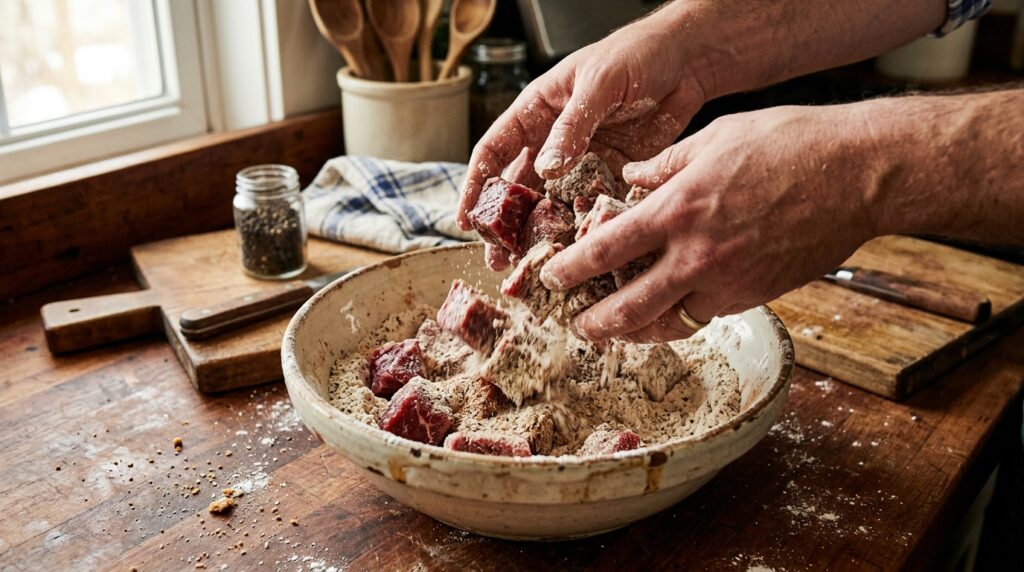
If you’re still in the early stages of a stew, a little prevention goes a long way. Coating your beef cubes in seasoned flour before searing is one of the oldest tricks in the book, and it works because that flour dissolves slowly into the broth as everything simmers, thickening it gradually instead of all at once.
Another simple habit is cutting back on the amount of liquid you add at the start. Most recipes are written generously, and it’s always easier to add a splash more stock later than to remove liquid from a pot that’s already too thin.
- Dredge beef cubes in flour before browning
- Use slightly less stock or water than the recipe calls for
- Keep the lid off, or slightly ajar, during at least part of the simmer
Make a Flour Slurry (The Fastest Fix)
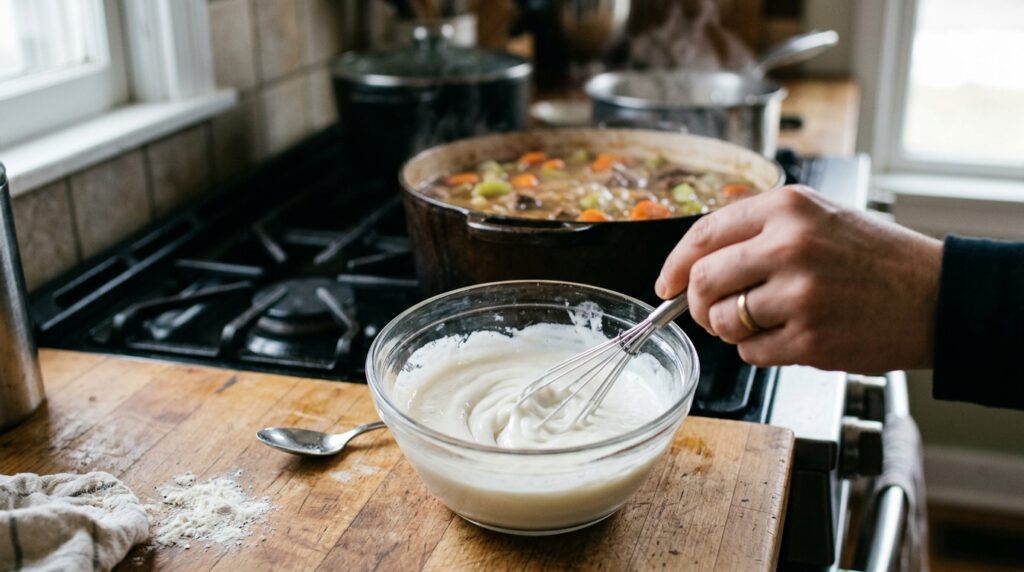
If your stew is already simmering and it’s clearly too thin, a flour slurry is usually the quickest rescue. Whisk together equal parts flour and cold water in a small bowl until completely smooth, with no lumps left behind.
Once that mixture is smooth, stir it slowly into the simmering pot and keep stirring for a minute or two. The stew will thicken almost immediately, though it’s worth letting it simmer for another five to ten minutes afterward so the raw flour taste cooks off completely.
This method is close to what many cooks describe when explaining how to thicken stew with a starch-based slurry, and it’s one of the most reliable options because it doesn’t require any special ingredients you wouldn’t already have in the pantry.
Try a Classic Roux
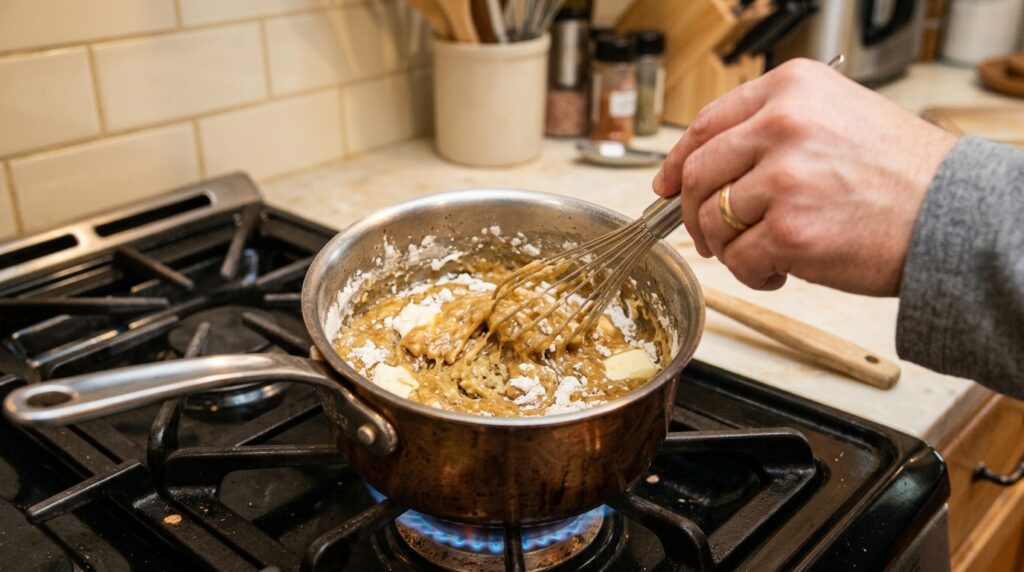
A roux takes a bit more attention than a slurry, but it adds a deeper, almost nutty flavor that a plain flour-and-water mixture can’t match. To make one, melt equal parts butter and flour together in a small saucepan over medium heat, stirring constantly until the mixture turns a light golden color and smells toasty rather than raw.
From there, whisk in a ladle or two of hot stew liquid until the roux is smooth, then pour that mixture back into the main pot and stir it through. Let everything simmer together for several minutes so the flavors fully combine.
This is the same base technique used in many French-style braises, and it’s part of why dishes like boeuf bourguignon end up so silky and rich rather than watery.
Use a Cornstarch Slurry for a Gluten-Free Option
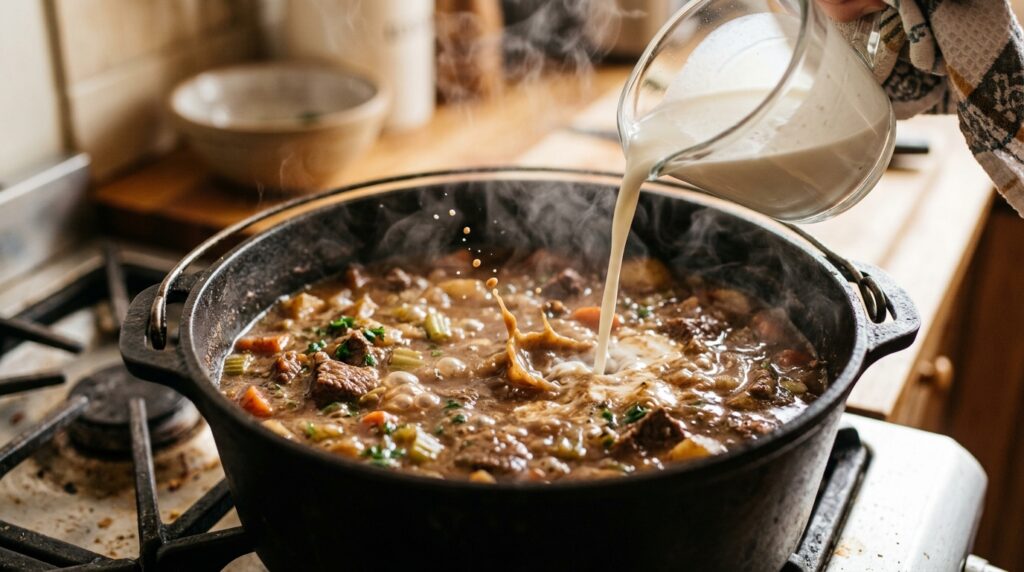
If flour isn’t an option in your kitchen, cornstarch works just as well and thickens even faster. Mix one tablespoon of cornstarch with two tablespoons of cold water, stir until fully dissolved, and add it to the simmering stew.
Unlike flour, cornstarch needs to reach a gentle boil to fully activate, so bring the pot up briefly before reducing the heat again. It also thickens with a slightly glossier finish compared to flour, which some cooks prefer for the way it makes the sauce look.
Arrowroot and tapioca starch are close substitutes if you want to experiment, and both behave in a similar way when mixed into a cold-water slurry first.
| Thickener | Texture Result | Best For |
|---|---|---|
| Flour slurry | Matte, hearty | Everyday stews |
| Roux | Silky, rich | French-style or slow braises |
| Cornstarch slurry | Glossy, light | Gluten-free stews |
| Mashed potato | Rustic, thick | One-pot comfort meals |
| Pureed vegetables | Smooth, hidden veggies | Family-friendly stews |
Add Starchy Vegetables Like Potatoes or Rice
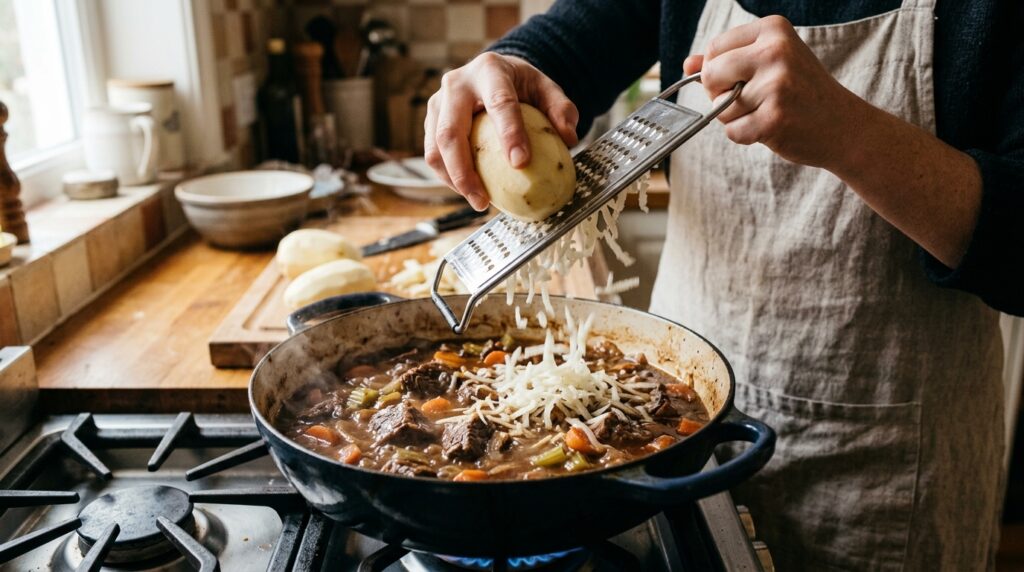
Potatoes aren’t just a topping for stew, they’re also a natural thickening agent. Grating a raw potato directly into the simmering pot releases starch as it cooks, gradually building body without changing the flavor much at all.
Rice works in a similar way. A few tablespoons of uncooked rice added partway through cooking will absorb liquid and release starch as it softens, though it does add a slightly different texture than potato.
This approach is popular because it multitasks. You’re not just fixing a texture problem, you’re also adding another hearty ingredient that makes the stew more filling.
Puree Some of the Stew Itself
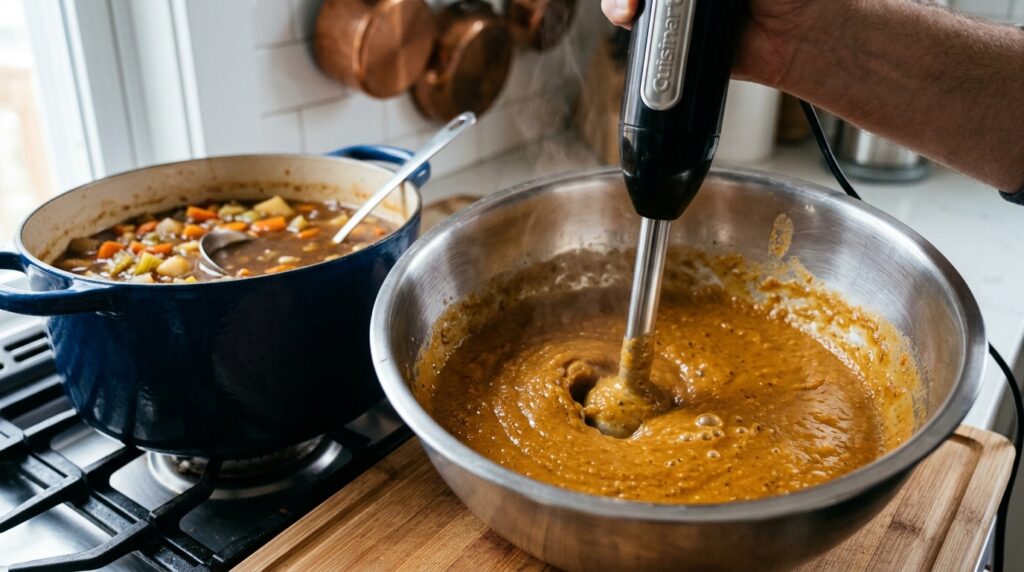
This is one of the least talked-about tricks, but it’s incredibly effective. Scoop out a cup or two of the cooked vegetables and some broth, blend it until smooth, and stir it back into the pot.
Because you’re using ingredients that are already in the stew, this method doesn’t change the flavor at all. It simply redistributes some of the solids into the liquid, thickening everything from the inside out.
It’s an especially good option if you’re cooking for picky eaters, since it can hide extra vegetables without anyone noticing a texture or flavor difference.
Let It Reduce on the Stove
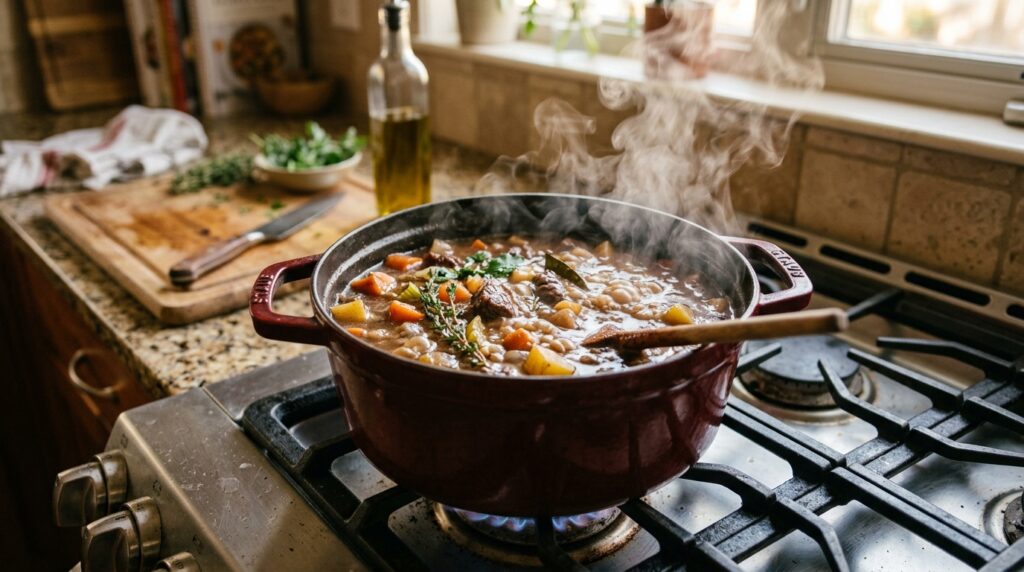
Sometimes the simplest fix is also the most overlooked. Removing the lid and letting the stew simmer uncovered allows excess liquid to evaporate naturally, concentrating both the flavor and the thickness at the same time.
This method takes longer than a slurry, usually twenty to forty minutes depending on how much extra liquid needs to cook off, but it doesn’t dilute the taste the way some thickeners can if added in excess. It’s a good choice when you have time to spare and want a deeper, more concentrated flavor.
Stirring occasionally during this process helps prevent the bottom from catching, especially once the stew starts to thicken and stick more easily to the pot.
Stir In Bread, Crackers, or Masa Harina
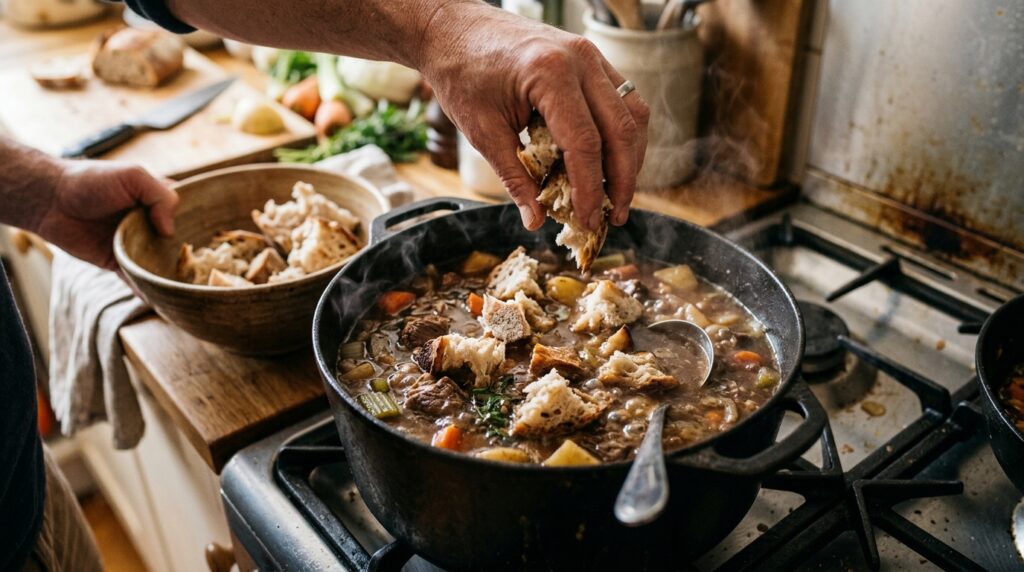
This is more of a rustic, old-fashioned trick, but it still works well in a pinch. A slice of bread torn into small pieces, or a handful of crushed crackers, can be stirred into the pot and will dissolve as it simmers, thickening the broth in the process.
Masa harina, the corn flour used in tortillas and tamales, is another option worth trying. It’s especially common in ways to thicken beef stew that lean toward Mexican-inspired flavors, since it adds a subtle corn flavor along with the added body.
Whichever option you choose, add it gradually and give it time to dissolve fully before deciding whether you need more.
Common Mistakes to Avoid When Thickening Stew
A few small missteps can undo an otherwise good fix. Here are the ones worth watching for:
- Adding dry flour or cornstarch directly to the pot. This almost always creates lumps that never fully dissolve.
- Adding too much at once. Stir in a little, wait a few minutes, then decide if more is needed.
- Skipping the simmer time after thickening. Flour especially needs a few extra minutes of cooking to lose its raw, pasty taste.
- Thickening before tasting for seasoning. Salt and acidity can shift once the texture changes, so taste again at the end.
Pros and cons worth knowing at a glance:
- Flour and roux: rich flavor, but not gluten-free
- Cornstarch: fast and gluten-free, but can turn slightly gummy if overused
- Vegetable purees and starchy vegetables: naturally flavorful, but take a little more prep time
- Reduction: deepens flavor, but requires patience
Storing and Reheating Leftover Thickened Stew
Once your stew reaches the right consistency, storage matters just as much as the cooking process. A properly thickened stew actually holds up better in the fridge than a thin one, since the starches help keep everything from separating as it cools.
Store leftovers in an airtight container and use them within three to four days for the best texture and flavor. If you’re unsure about timing for other leftover staples in your fridge, it helps to get a general sense of how long cooked leftovers typically last before quality starts to drop, since the same basic rules of refrigerator storage apply across most cooked dishes.
When reheating, add a splash of broth or water if the stew has thickened too much overnight, since starches continue to absorb liquid even after the pot cools.
Expert Tips for a Better Stew Every Time
A few habits separate an average pot of stew from a genuinely great one:
- Brown the meat in batches instead of crowding the pot, since crowding causes steaming instead of searing and affects both flavor and how much liquid ends up in the pot.
- Add thickeners gradually and always taste before adding more.
- Let the stew rest for ten minutes off the heat before serving. It continues to thicken slightly as it cools.
- Keep a small stash of cornstarch or flour specifically for last-minute thickening emergencies.
Frequently Asked Questions
Does flour or cornstarch thicken beef stew better?
Both work well, but they behave differently. Flour creates a heartier, slightly matte texture and pairs well with long-simmered stews, while cornstarch thickens faster and gives a glossier finish. Cornstarch is also the better choice if you need a gluten-free option.
Can you thicken beef stew after it’s already finished cooking?
Yes. A slurry made from flour or cornstarch and cold water can be stirred into a finished pot of stew even after the meat and vegetables are fully cooked. Just bring the pot back to a gentle simmer for a few minutes so the starch fully activates.
Why is my stew still watery after adding cornstarch?
This usually means the mixture never reached a proper simmer after being added, since cornstarch needs heat to activate fully. It can also mean too little was used for the amount of liquid in the pot, so adding a bit more slurry and letting it simmer again usually solves it.
Is it better to thicken stew with potatoes instead of flour?
Potatoes are a great option if you want a gluten-free, naturally flavorful thickener, and they add bulk to the dish at the same time. Flour and roux tend to give a smoother, more classic gravy-like texture, so the choice often comes down to personal preference.
How much cornstarch do I need to thicken a pot of stew?
A general starting point is one tablespoon of cornstarch mixed with two tablespoons of cold water for every two cups of stew liquid. Add it gradually and give it a few minutes to fully activate before adding more.
Final Thoughts
Watery stew is one of the easiest kitchen problems to fix, and there’s no single right answer for how to do it. A quick flour or cornstarch slurry solves the problem in minutes, while a roux, pureed vegetables, or a slow reduction can add even more depth if you have a little extra time. Once you understand a few of these techniques, a runny pot never has to mean a ruined dinner again.
Try one of these methods the next time your stew turns out thinner than expected, and keep a mental note of which one fits your schedule and taste best.

