
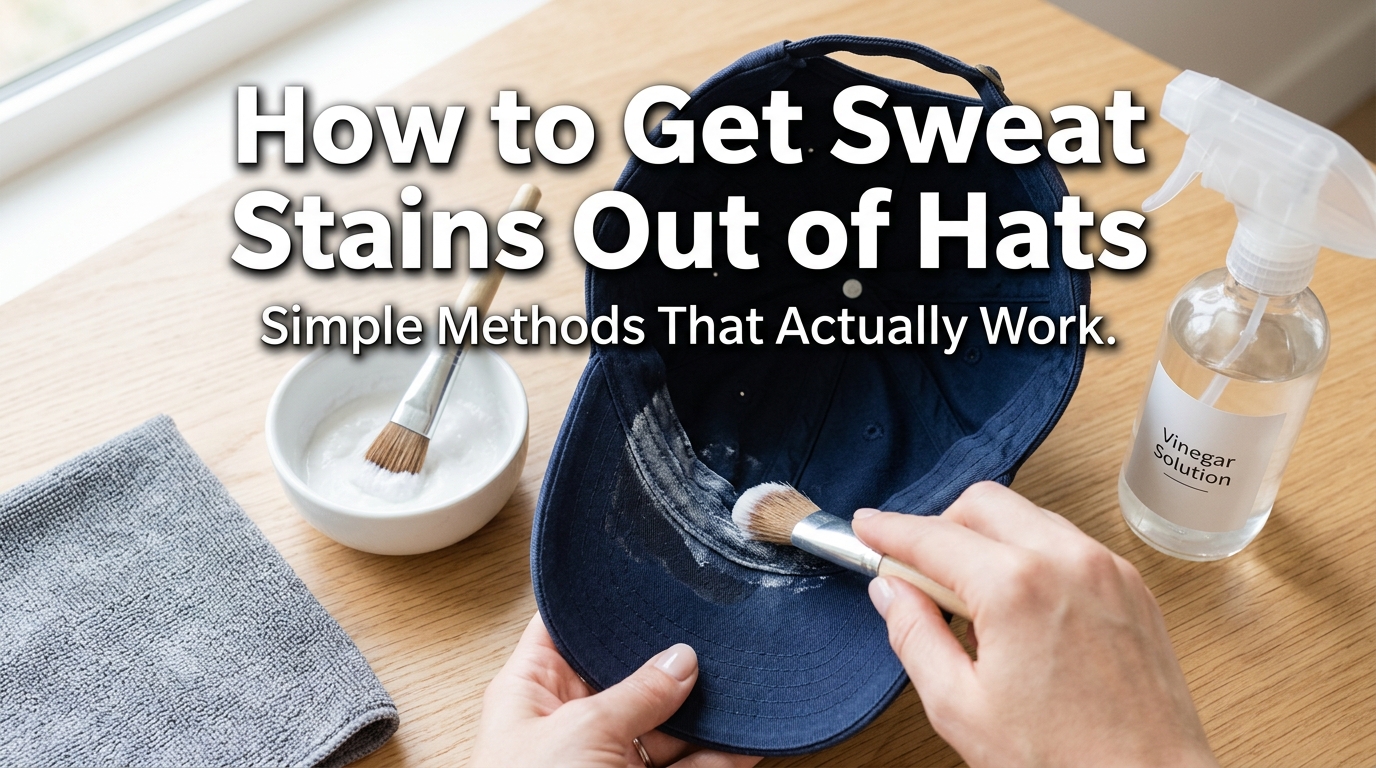
That salty white ring around the brim, or the yellowed patch soaked into the sweatband, is one of the most common reasons a favorite hat ends up shoved in a drawer instead of worn. Knowing how to get sweat stains out of hats comes down to two things: figuring out what the hat is made of, and matching the right cleaner to the type of stain sitting in the fabric.
Most people reach for whatever’s under the sink and hope for the best. That’s how good hats get ruined, either by shrinking in hot water or fading from the wrong bleach. The methods below are organized by material and stain type, so nothing gets guessed at.
Why Hats Stain So Easily
A hat sits closer to the skin than almost any other piece of clothing, which is exactly why it stains faster than a t-shirt or jacket.
Sweat itself doesn’t carry much color. The discoloration comes from a mix of body oils, salt, and skin residue that soaks into the fabric and then oxidizes over time, turning from a faint mark into a stubborn yellow or brown ring. Hair products, sunscreen, and makeup add to the buildup, especially along the front brim and inner band.
That’s also why sweat stains rarely respond to a quick rinse. By the time they’re visible, the residue has usually had days or weeks to set into the fibers.
Check the Material Before You Clean Anything
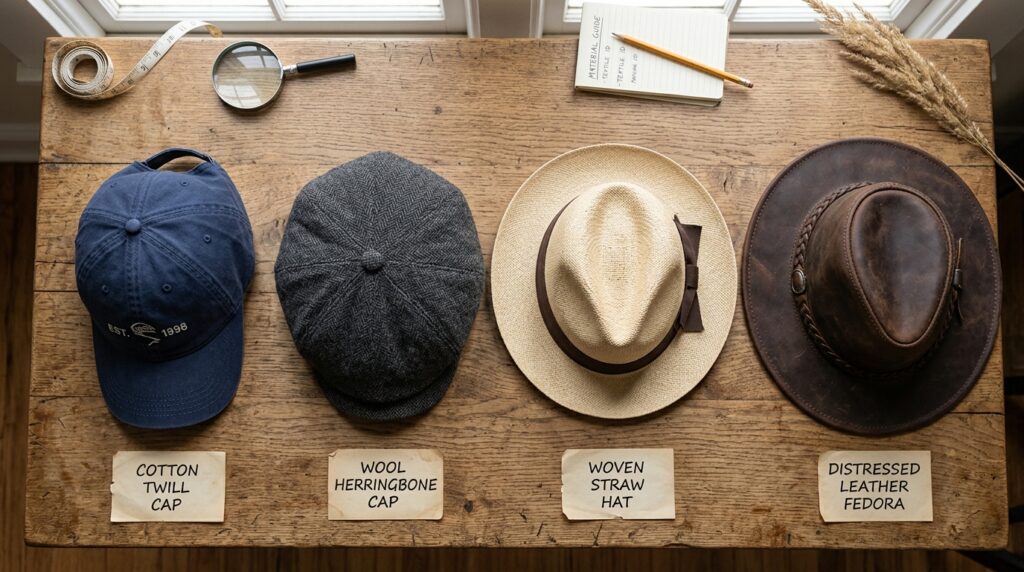
This is the step most people skip, and it’s the one that determines whether a hat comes out clean or comes out ruined.
| Material | Water Safe? | Best Approach |
|---|---|---|
| Cotton or polyester cap | Yes | Hand wash or gentle machine wash |
| Wool cap | Limited | Spot clean only, avoid soaking |
| Straw hat | No | Dry brushing and light spot treatment |
| Leather hat | No | Wipe with a barely damp cloth |
| Structured cap with cardboard brim | No | Spot clean the fabric only, keep the brim dry |
If there’s a care tag inside the hat, that’s the first thing to check. Without one, a good rule of thumb is that a tightly woven cotton or polyester cap can usually handle water, while anything with a stiff brim, natural fibers like straw, or a leather sweatband needs a gentler touch.
Identify the Type of Stain First
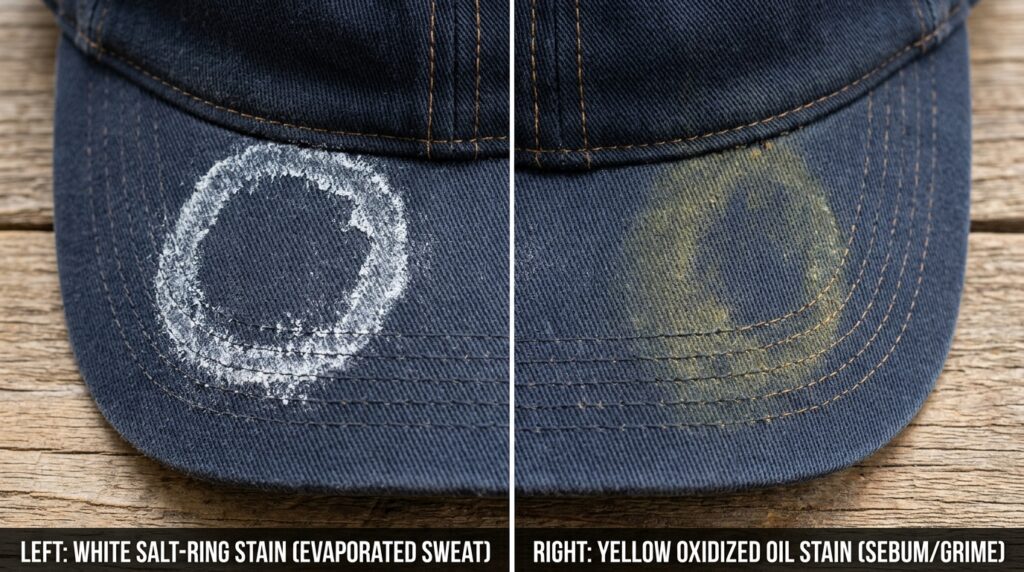
Not every sweat stain responds to the same cleaner, and using the wrong one can actually make the discoloration worse.
- A chalky white ring is usually dried salt and mineral residue. A mild acid like white vinegar breaks this down easily.
- A yellow or brownish patch is oxidized body oil, and it needs an oxidizer like hydrogen peroxide or oxygen bleach to lift.
- A darker, greasy stain often comes from hair products or sunscreen mixing with sweat, and usually needs a dish soap pretreatment before anything else.
Skipping this step is why some people scrub for twenty minutes with the wrong product and barely see a difference.
How to Clean Sweat Stains on Cotton and Polyester Caps
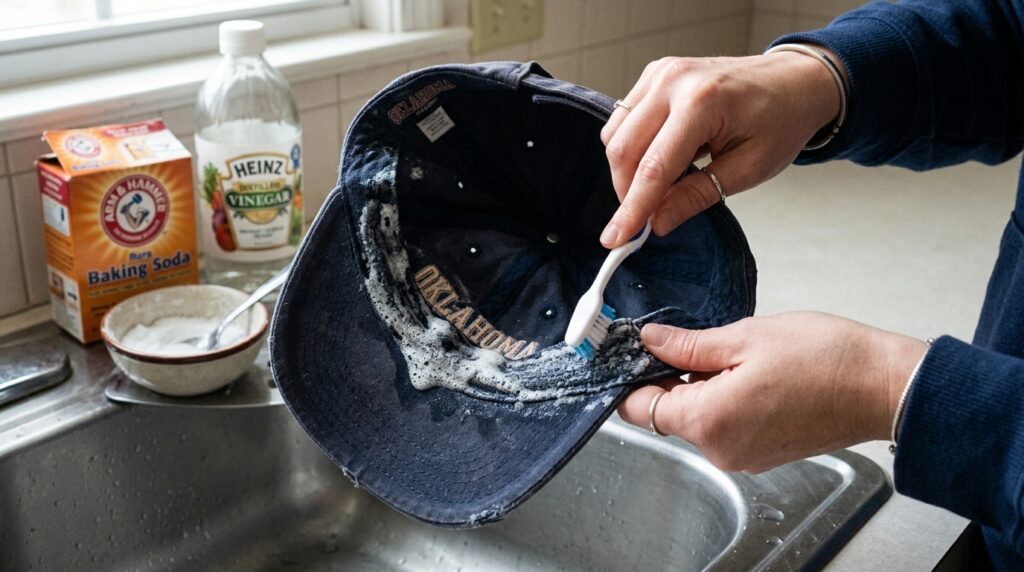
These are the most common hat materials, and also the most forgiving to clean.
Step 1: Do a Colorfastness Test
Dab a small amount of soapy water on a hidden part of the hat, like the underside of the brim. Press with a cloth for a few seconds and check if any color transfers. If it doesn’t, it’s safe to move forward.
Step 2: Make a Cleaning Paste
Mix baking soda with a small amount of water until it forms a thick paste. Apply it directly to the stained area, focusing on the sweatband and the inside of the brim, then add a few drops of white vinegar and let it fizz slightly before scrubbing.
A soft-bristled brush or an old toothbrush works well here. Scrub gently in small circles rather than pressing hard, since aggressive scrubbing can wear down the fabric over time. This paste-and-vinegar method is one of the more reliable ways to get sweat stains out of hats without needing a full wash.
Step 3: Treat Stubborn Yellow Stains
For stains that don’t lift with baking soda alone, mix equal parts hydrogen peroxide and warm water, dip a clean brush into the solution, and scrub directly on the yellowed area. Hydrogen peroxide works as an oxidizer, which makes it more effective on set-in oil stains than vinegar alone.
Skip this step on dark or colored hats, since peroxide can lighten fabric dye.
Step 4: Rinse and Air Dry
Rinse thoroughly with cool water to remove all traces of the paste, then reshape the hat by hand and let it air dry away from direct sunlight or heat. Placing it on a bowl or a clean jar while it dries helps it hold its shape.
Machine Washing: When It’s Actually Safe
A washing machine isn’t the first choice for most hats, but it works for sturdy, colorfast cotton or twill caps without cardboard in the brim.
- Place the hat inside a mesh laundry bag or a dedicated cap washer frame to protect its shape
- Use cold water and a gentle cycle with mild detergent
- Skip the dryer entirely and let it air dry on a flat surface or cap form
Structured caps with a stiff cardboard brim should never go in the washing machine, since the cardboard warps and softens permanently once it’s wet.
Cleaning Wool Caps Without Damaging Them
Wool holds its shape and warmth well, but it’s also one of the more delicate materials when it comes to moisture and heat.
Use a mild detergent formulated for wool, diluted in cool water, and apply it with a soft cloth rather than soaking the entire hat. Focus on the stained areas only, blotting instead of scrubbing, since wool fibers can felt and shrink permanently if agitated too much while wet.
Let the hat air dry flat, reshaping it gently by hand as it dries. Avoid hanging a wet wool cap, since the weight of the water can pull it out of shape.
Straw and Leather Hats Need a Different Approach
Both of these materials react badly to soaking, so the process looks very different from a cotton cap.
For straw hats, start with a dry, soft brush to lift away loose dirt and residue before adding any moisture. For actual stains, a barely damp cloth with a small amount of dish soap works best, wiping gently rather than scrubbing, since straw fibers can crack or fray when handled roughly while wet.
Leather hats and leather sweatbands should only ever be wiped, never soaked. A cloth dampened with water and a drop of mild soap, followed immediately by a dry cloth to remove excess moisture, keeps the leather from cracking or drying out. A small amount of leather conditioner afterward helps restore flexibility once the area is fully dry.
The Science Behind Why Some Cleaners Work Better
Sweat stains fall into a category laundry specialists call protein-based stains, and they behave differently than something like grass or grease.
Protein-based residue tends to bond tightly with fabric fibers as it dries, which is why fresh sweat rinses out easily but old, set-in stains resist plain water. Enzyme-based cleaners break down that protein-based stain at a molecular level, which is part of why laundry detergents formulated with enzymes tend to outperform basic soap on hat sweatbands specifically.
This is also why heat matters so much. Hot water and machine drying can permanently set a protein stain by cooking the residue into the fibers, turning a stain that could have been lifted into one that’s there for good.
Common Mistakes That Make Sweat Stains Worse
A handful of habits show up again and again as the reason a stain gets harder to remove instead of easier.
- Using hot water – This sets protein stains permanently instead of loosening them
- Machine drying a stained hat before it’s fully clean – Heat locks in whatever residue is left behind
- Using chlorine bleach on yellow stains – It reacts with the proteins in sweat and can turn the area darker
- Skipping the colorfastness test – This is how caps end up with faded patches or color bleeding
- Scrubbing too aggressively – This wears down fabric and can distort a structured brim
Avoiding these five habits solves more stain problems than any specific cleaning product does.
How to Prevent Sweat Stains From Coming Back
Cleaning a hat once is easy. Keeping it clean is the harder part, but a few habits make a real difference.
- Rotate between two or three hats instead of wearing the same one daily, giving sweat and oils time to dry out fully between uses
- Wipe the sweatband with a damp cloth after heavy sweating, rather than waiting for a full wash later
- Use a fabric protector spray designed to repel sweat and oil before wearing a new hat for the first time
- Store hats upside down or on a hat rack instead of crushed in a drawer, which helps them air out between wears
None of these steps take more than a minute, but they add months, sometimes years, to how long a hat stays presentable.
Expert Tips for Better Results
A few small adjustments separate a hat that looks brand new again from one that’s just slightly less stained.
- Treat stains as soon as they’re noticed, since fresh residue lifts far more easily than something that’s had weeks to oxidize
- Test any new product on a hidden spot first, even ones marketed as safe for all fabrics
- Reshape the hat while it’s still slightly damp, since fabric holds a new shape more easily before it fully dries
- Keep a soft-bristled brush dedicated to hat cleaning, since stiffer brushes can wear down delicate weaves over time
These small habits are part of what separates a properly cleaned baseball cap from one that just looks slightly less dirty for a week.
Homemade vs. Commercial Cleaners: Pros and Cons
| Homemade Solutions | Commercial Stain Removers | |
|---|---|---|
| Cost | Very low | Moderate |
| Ingredients on hand | Usually yes | Requires purchase |
| Strength on set-in stains | Moderate | Often stronger |
| Risk to delicate fabrics | Lower if diluted properly | Varies by product |
| Convenience | Requires mixing | Ready to use |
Homemade methods work well for regular maintenance and lighter stains. Commercial enzyme-based sprays tend to perform better on stains that have been sitting for months, particularly on hats that have already been through several failed cleaning attempts.
Frequently Asked Questions
What removes sweat stains from a hat the fastest?
A hydrogen peroxide and water solution tends to work fastest on yellow, oxidized stains, while a vinegar and baking soda paste works well on fresh white salt rings without needing much wait time.
Can you put a hat in the washing machine?
Sturdy cotton or twill caps without a cardboard brim can usually handle a gentle cold-water cycle inside a mesh bag. Structured caps with stiff brims, wool, straw, and leather hats should be spot cleaned instead.
Why do sweat stains turn yellow over time?
The discoloration comes from body oils and salts oxidizing as they sit in the fabric, which is a slow chemical reaction that deepens the color the longer the stain goes untreated.
Is hydrogen peroxide safe for all hats?
It works well on white or light-colored hats but should be avoided on dark or colored fabric, since it can fade dye and leave a lighter patch behind.
How often should hats be cleaned to prevent stains?
Wiping the sweatband after heavy use and doing a full clean every few weeks, depending on how often the hat is worn, usually keeps stains from setting in permanently.
Keeping Hats Looking New Longer
Sweat stains are almost never a reason to throw a hat away. The right combination of material knowledge, the correct cleaner for the type of stain, and a little patience handles most of them without any special equipment.
The real difference between a hat that stays wearable for years and one that ends up in the back of a closet usually comes down to catching stains early and treating them with the right method the first time.

