

Somebody grabbed the wrong marker. Maybe it was a toddler decorating the hallway wall, maybe it was you labeling a box and missing the tape entirely. Either way, that bold black line staring back at you feels a lot more permanent than it actually is.
Learning how to remove permanent marker comes down to matching the right solvent to the right surface, since fabric, plastic, wood, and skin all react differently to the same products. Once you know which combination works where, most marks come off in a few minutes with things already sitting in your bathroom cabinet.
Why Permanent Marker Is So Stubborn
Permanent marker ink is built to resist water and fading, which is exactly what makes it useful for labeling and exactly what makes it a headache to clean. The pigment sits in a base of alcohol and resin designed to bond tightly to whatever surface it touches.
That bond is chemical, not just visual, so plain soap and water usually can’t break it apart. What actually works is a solvent that dissolves the resin holding the pigment in place, which is why alcohol-based products show up again and again in the methods below.
Speed matters too. A fresh mark on any surface is easier to lift than one that’s had days to set in, so treat stains as soon as you notice them whenever possible.
How to Remove Permanent Marker From Clothes
Fabric is one of the trickiest surfaces because the ink can work its way into individual fibers. Still, most cotton and polyester blends respond well to a simple alcohol treatment.
Start by placing the stained area face down on a folded paper towel. This gives the ink somewhere to transfer as you work instead of pushing it deeper into the weave.
- Dip a cotton ball or clean cloth in rubbing alcohol.
- Dab the back of the stain, working from the outer edge inward.
- Swap in a fresh paper towel underneath as the ink transfers.
- Once the mark fades, rinse the area with cool water.
- Hand wash with regular detergent before running it through the machine.
If the fabric can’t handle alcohol, such as leather or delicate synthetics, a gentler approach using white vinegar and detergent works nearly as well without the risk of discoloration. Soak a cloth in vinegar, dab gently, and rinse thoroughly before laundering as usual.
Getting Permanent Marker Out of Colored Clothes

The one thing to watch on colored fabric is bleeding, since alcohol can sometimes lift dye along with the ink. Always test a hidden seam or inside hem first.
If the color holds up, follow the same alcohol dabbing method above but keep sessions shorter, checking every thirty seconds instead of letting the alcohol sit. Rinse promptly once the marker lifts to avoid any fading around the treated spot.
For particularly saturated permanent marker stains on darker garments, a mix of dish soap and a few drops of white vinegar applied before washing can loosen what the alcohol leaves behind.
How to Remove Permanent Marker From Skin
An accidental mark on skin looks alarming, but it’s rarely a big deal. Permanent marker only sits on the surface layer, so it fades naturally within a couple of days even without any treatment at all.
If you’d rather speed things up, several gentle options work well:
- Rub a cotton ball soaked in rubbing alcohol or hand sanitizer over the area, then rinse.
- Try baby oil, coconut oil, or olive oil for sensitive skin that reacts poorly to alcohol.
- Mix a small amount of sea salt with warm water for a light exfoliating scrub.
- Use whitening toothpaste in gentle circular motions, then rinse well.
A breakdown of skin-safe marker removal methods points out that these approaches can take a few repeated applications, so patience matters more than aggressive scrubbing. Avoid harsh rubbing that could irritate skin, and skip anything containing bleach.
Quick tip: Moisturize afterward, especially if you used alcohol, since it can dry out skin with repeated use.
How to Remove Permanent Marker From Whiteboard Surfaces
Grabbing a permanent marker instead of a dry erase one on a whiteboard is an easy mistake, and thankfully an easy fix. The whiteboard’s glossy surface doesn’t let ink bond the way porous materials do.
The most reliable trick is almost counterintuitive: trace directly over the permanent marker lines with a regular dry erase marker, then immediately wipe with a cloth. The solvent in the dry erase ink reactivates the permanent marker underneath, lifting both away together.
If that doesn’t fully clear it, rubbing alcohol applied to a soft cloth handles the rest. Wipe in one direction rather than circles to avoid smearing residue across a clean section of the board.
How to Remove Permanent Marker From Plastic
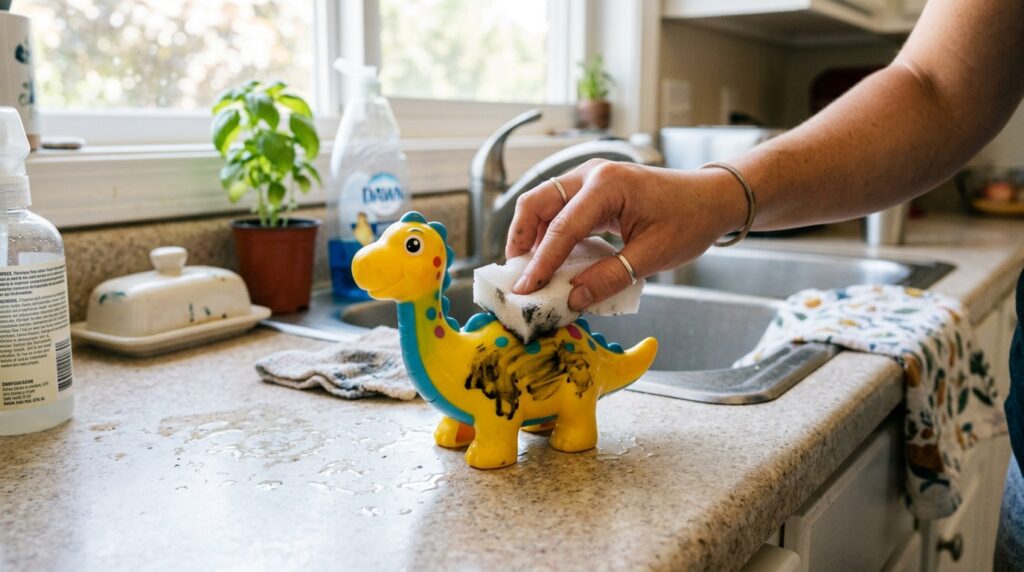
Plastic toys, storage bins, and appliances are common casualties of permanent marker mishaps, but they’re also some of the easier surfaces to treat since most plastics resist staining better than fabric does.
A dry erase marker traced over the stain works here too, the same way it does on whiteboards. For tougher marks, rubbing alcohol on a cloth or a melamine foam sponge (the kind sold as an all-purpose eraser) usually finishes the job.
Test any solvent on a hidden spot first, since some colored or textured plastics can lose their finish with repeated scrubbing.
| Method | Best For | Notes |
|---|---|---|
| Dry erase marker trace | Smooth, glossy plastic | Fast and low-risk |
| Rubbing alcohol | Most hard plastics | Test first on textured surfaces |
| Melamine foam sponge | Stubborn, set-in marks | Use light pressure |
How to Remove Permanent Marker From Wood
Wood is the one surface where you want to slow down, since the same porous grain that makes wood furniture beautiful also lets ink and cleaning products soak in deeper than on other materials.
Rubbing alcohol still works, but apply it sparingly with a soft cloth rather than saturating the area. Dab rather than rub, and check progress frequently so you don’t strip the finish underneath.
For finished or varnished wood, non-gel toothpaste is a gentler alternative. A guide covering wood-safe marker removal also mentions peanut butter as an unexpected option, since its oils can help loosen ink without damaging the wood’s seal. Apply, let it sit for a couple of minutes, then wipe with a damp cloth.
Avoid acetone-based products on wood entirely. Acetone can eat through varnish and finish, leaving a dull patch that’s harder to fix than the original stain.
How to Remove Permanent Marker From Walls
Painted walls fall somewhere between wood and plastic in terms of how careful you need to be. Flat and matte paint finishes are more porous and prone to smudging than satin or semi-gloss.
For most painted walls, non-gel toothpaste applied with a soft cloth works surprisingly well. Rub gently in small circles, then wipe clean with a damp cloth. A melamine foam sponge is another solid option, though it should be used with a light touch since aggressive scrubbing can dull or remove paint along with the ink.
Rubbing alcohol also works on walls, particularly for glossier finishes that hold up better to solvents. Always test in a hidden corner first, since paint types react differently and you don’t want to trade a marker stain for a bald patch of missing paint.
How to Remove Permanent Marker From Paper
Paper seems like a lost cause since the fibers absorb ink almost instantly, but there’s still a method that can salvage a marked-up book page or important document.
Nail polish remover, applied carefully with a cotton swab rather than saturating the page, can lift permanent marker off paper without tearing through the sheet. Work in small dabs, blotting rather than rubbing, and replace the swab often so you’re not reapplying dissolved ink back onto the page.
This won’t work miracles on heavily inked areas, but for a stray mark or two, it’s often enough to make a page presentable again.
How to Remove Permanent Marker From Laptop Screen

Screens are the surface where caution matters most, since the wrong product can permanently damage the coating that makes text and colors look sharp. Always power off the device before cleaning.
The safest starting point is a soft, barely damp microfiber cloth. If that doesn’t lift the mark, mix one part isopropyl rubbing alcohol with two parts water in a small container, dampen a microfiber cloth with the mixture, and wipe gently in one direction.
An isopropyl alcohol and water ratio recommended for screen cleaning keeps the solution mild enough to protect anti-glare coatings while still dissolving the ink. The same dry erase marker trick used on whiteboards also works on many laptop screens, since the surfaces share a similar glossy coating.
Never use acetone, ammonia-based glass cleaner, or abrasive sponges on a screen. These can strip protective coatings permanently, which is a far more expensive problem than the original marker stain.
Expert Tip: Layer Your Approach
Don’t reach for the strongest solvent first. Professional cleaners typically start with the gentlest option that could plausibly work, water, then a mild solvent, then something stronger only if needed. Jumping straight to acetone or heavy scrubbing on a surface that only needed rubbing alcohol often causes more damage than the original stain.
Testing on a hidden spot takes an extra thirty seconds and can save an entire piece of furniture, clothing item, or electronic screen from unnecessary damage.
Pros and Cons of Common Removal Methods
| Method | Pros | Cons |
|---|---|---|
| Rubbing alcohol | Cheap, widely effective, fast-acting | Can fade some dyed fabrics and finishes |
| Dry erase marker trace | Gentle, works on glossy surfaces | Doesn’t work on porous materials like wood or paper |
| Non-gel toothpaste | Mild, safe on paint and wood | Slower, may need repeat applications |
| Nail polish remover | Effective on paper and glass | Too harsh for skin, plastic, or finished wood |
| Melamine foam sponge | Great for stubborn residue | Abrasive; can dull glossy finishes with pressure |
Frequently Asked Questions
Does rubbing alcohol work on every surface?
No. Rubbing alcohol is effective on most hard, non-porous surfaces and many fabrics, but it can damage wood finishes, some plastics, and dyed clothing if used too aggressively. Always test a small hidden area first.
Can permanent marker actually be removed from skin, or does it just fade?
Both. Permanent marker naturally fades from skin within two to three days since it only sits on the surface layer. Methods like rubbing alcohol, oils, or toothpaste simply speed up that process rather than performing a deep chemical removal.
What’s the safest method for a laptop or phone screen?
A barely damp microfiber cloth is the safest first attempt. If that doesn’t work, a diluted mix of one part isopropyl alcohol to two parts water applied to the cloth, not directly to the screen, is generally considered safe for most glass and coated screens.
Why does a dry erase marker remove permanent marker?
Dry erase ink contains a solvent that re-dissolves the oils in permanent marker ink when traced over it. Wiping both away together lifts the stain without needing a separate cleaning product.
Is it possible to remove permanent marker from wood without damaging the finish?
Yes, as long as you avoid acetone and work gently. Rubbing alcohol applied sparingly, or non-gel toothpaste left on for a couple of minutes, are the gentler options that tend to protect varnish and sealant better than harsher solvents.
Final Thoughts
Most permanent marker mishaps aren’t actually permanent once you know which solvent matches which surface. Fabric responds to alcohol or vinegar, skin fades on its own or with gentle oils, and hard surfaces like plastic and whiteboards often clear up with nothing more than a dry erase marker trick.
The one rule that applies everywhere is patience: test a small spot, use the gentlest method first, and work in dabs rather than aggressive scrubbing. A little care up front saves you from turning a marker stain into a bigger cleanup problem.

