
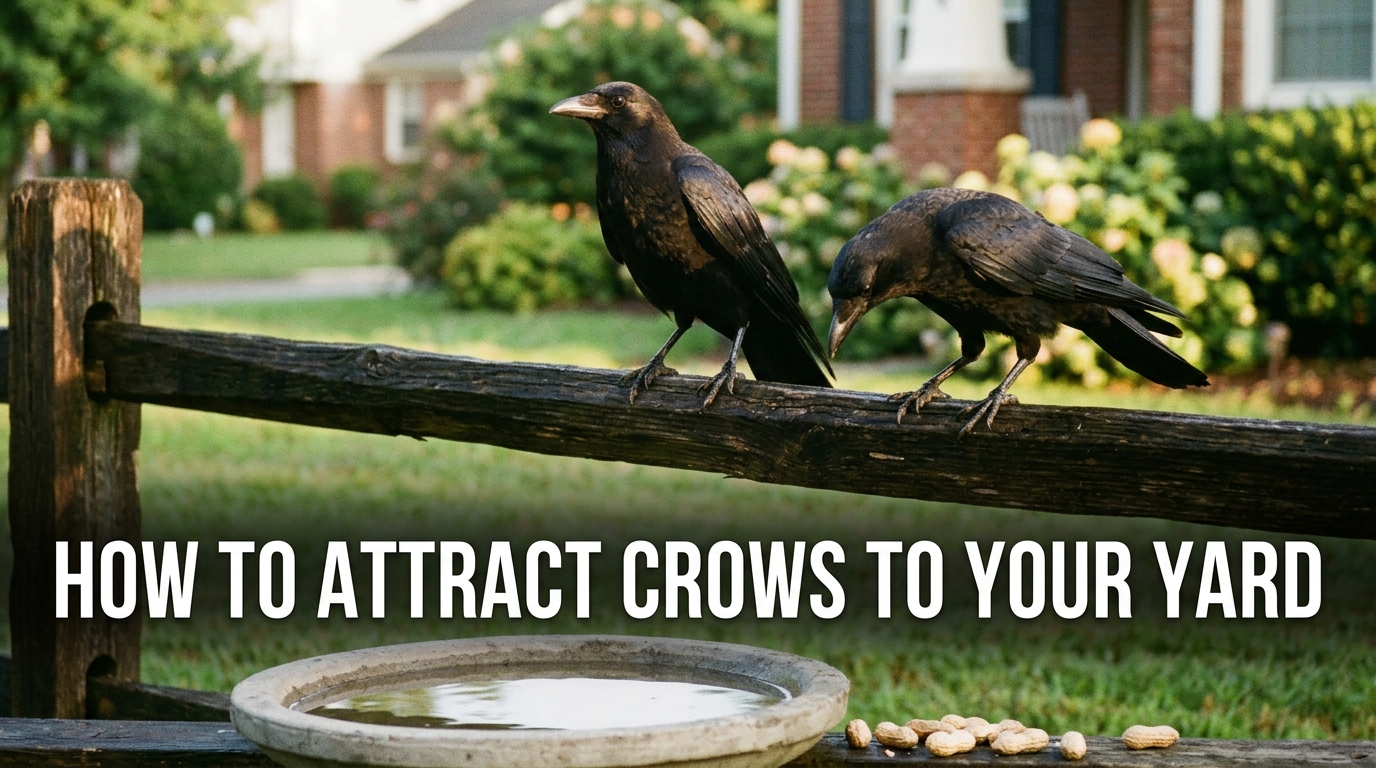
Most backyard birding advice is built around finches, cardinals, and hummingbirds. Crows rarely get mentioned, yet they’re some of the most intelligent, curious, and genuinely rewarding birds to have visit regularly. If you’re wondering how to attract crows without a specialty feeder or elaborate setup, the process is simpler than most people expect, and it starts with understanding what these birds actually want from a yard.
Why Crows Are Worth Inviting Into Your Yard
Crows belong to the corvid family, the same group as jays and magpies, and they’re widely recognized as some of the smartest birds in North America. They live in tight-knit family groups, remember individual human faces, and problem-solve in ways most songbirds simply can’t.
Beyond the novelty of watching intelligent behavior up close, crows are surprisingly useful neighbors. A single family can work through thousands of grubs, caterpillars, and other yard pests over a season, which makes them a quiet form of natural pest control most homeowners never think to invite in.
What Crows Actually Look For in a Yard
Before setting anything out, it helps to think like a crow for a minute. Crows don’t usually visit standard bird feeders, but they will show up reliably if a yard offers a mix of open space, nearby trees, and consistent food. That combination of visibility and cover is really the whole strategy in a nutshell.
Open Ground With Nearby Cover
Crows feel safest when they can see potential threats coming, which is why they tend to feed in open areas near trees or fences rather than tucked into dense shrubs. A lawn edge near mature trees is close to ideal.
A Reliable Food Routine
Crows are creatures of habit. Once they learn that a specific spot reliably has food at a certain time, they’ll return, and they’ll often bring family members along.
Access to Fresh Water
Like most backyard birds, crows need water for drinking and bathing, but their larger size means a tiny songbird bath won’t cut it.
The Best Foods for Attracting Crows
Food is the single biggest factor in getting crows to notice a yard in the first place. The good news is that crows are opportunistic eaters, so the list of acceptable options is long.
- Unsalted peanuts, still in the shell
- Cracked corn and sunflower seeds
- Suet or leftover fat trimmings
- Cooked or raw eggs
- Table scraps like pasta, rice, or bread softened in water
- Unsalted popcorn or crackers in small amounts
Peanuts in the shell tend to work best as a starting point, since they’re highly visible, easy for crows to notice from a distance, and provide a bit of foraging stimulation that these curious birds seem to enjoy.
Setting Up a Feeding Spot Crows Will Actually Use
Where and how food is placed matters almost as much as what’s offered.
Feed on the Ground or a Wide Platform
Crows are ground feeders by nature and are too large and cautious to comfortably use hanging tube feeders. A flat platform feeder or simply a cleared patch of lawn works better.
Start Small and Stay Consistent
Putting out a modest, predictable amount of food in the same spot each day builds trust faster than one large offering that isn’t repeated. Crows often watch from a distance for several days before approaching.
Keep the Area Clean
Leftover food that molds or attracts insects will actually drive crows away rather than keep them coming back. Removing uneaten scraps after a few hours, especially in warm weather, keeps the spot appealing.
Why a Bird Bath Matters More Than People Expect
Water plays a bigger role in attracting crows than most guides give it credit for. Crows use water not just for drinking but for bathing, feather maintenance, and even softening dry food before eating it.
Because crows are noticeably larger than typical backyard songbirds, a small, shallow dish is often more effective than a decorative bird bath designed for finches. A wide, sturdy basin, or even a large plant saucer filled with a couple of inches of water, tends to work well. Refreshing the water daily prevents buildup and keeps the spot sanitary for every bird using it.
Giving Crows a Safe Place to Roost
Food and water get crows into a yard, but a place to rest and watch is what keeps them coming back regularly. Crows prefer horizontal perches like fence tops, utility wires, and wide tree branches rather than small vertical perches built for songbirds.
If a yard doesn’t already have mature trees, even a tall pole with a horizontal crossbar can serve as an improvised roosting spot. Positioning it somewhere visible from a window turns feeding time into an easy way to observe these birds up close, which is part of the appeal for a lot of people who get into this hobby in the first place.
What to Avoid When Trying to Attract Crows
A few common mistakes can undo an otherwise solid setup.
- Loud, sudden noises. Slamming doors, wind chimes, and startling movements near the feeding area make crows cautious and less likely to return.
- Salty or sugary processed foods. These aren’t good for crows and can discourage repeat visits over time.
- Toxic foods. Chocolate, caffeine, avocado, and anything heavily seasoned should be kept away from any feeding area.
- Inconsistent feeding. Crows respond to routine, and an on-and-off feeding schedule slows down the trust-building process considerably.
Things to Consider Before You Start
Attracting crows isn’t without a few trade-offs, and it’s worth knowing them upfront.
| Consideration | What to Expect |
|---|---|
| Noise | Crows can be vocal, especially in groups |
| Mess | They may scatter food, trash, or shells nearby |
| Droppings | More birds visiting means more cleanup around feeding spots |
| Pest control | In exchange, they’ll clear out grubs, caterpillars, and other yard pests |
| Intelligence | They’re one of the more interactive and engaging birds to observe |
For most people who enjoy backyard wildlife, the trade-offs are minor compared to the payoff of watching a genuinely intelligent animal decide your yard is worth visiting regularly.
Expert Tips for Faster Results
- Place food near, but not directly under, dense cover so crows have both visibility and an escape route.
- Avoid changing the feeding spot often. Crows return to locations they’ve already learned are safe.
- If crows seem hesitant at first, resist the urge to approach the feeding area while they’re nearby. Distance and patience matter early on.
- Once a small group starts visiting regularly, they’ll often return year after year and may even bring their young the following season.
Frequently Asked Questions
How long does it take to attract crows to a yard?
It varies, but most people start seeing consistent visits within a couple of weeks of setting out food and water in the same spot daily. Some crows may take longer, especially in areas where they’re less used to humans.
Do crows remember people who feed them?
Yes. Crows are known for recognizing individual human faces and can remember people who have fed them, or bothered them, for years.
What foods should never be given to crows?
Avoid chocolate, caffeine, avocado, and heavily salted or sugary processed foods, as these can be harmful to crows and most other birds.
Will attracting crows scare away other backyard birds?
Not necessarily. Crows tend to feed on the ground in open areas, while smaller songbirds typically use elevated feeders, so the two often coexist without much conflict.
Is it legal to feed crows in the United States?
Feeding wild crows is generally legal, though local ordinances can vary by city or neighborhood, so it’s worth checking any local wildlife feeding rules before setting up a permanent feeding station.
Bringing It All Together
Crows aren’t difficult to attract once the basics are in place: reliable food, accessible water, safe cover, and a bit of patience while trust builds. Unlike smaller songbirds that come and go quickly, crows tend to settle in as long-term, recognizable visitors once they decide a yard is worth the trip.
Start with something as simple as a handful of peanuts in the shell and a shallow water dish in the same spot each morning, then let consistency do the rest of the work.

