

Knowing when to plant grass seed in NC comes down to one simple rule: match your planting window to your grass type. Cool-season grasses like tall fescue go in the ground from mid-August through mid-October, while warm-season grasses like Bermuda and centipede are seeded from late March through July. Because the state stretches from cool mountain valleys to warm coastal plains, the exact week also shifts depending on where you live, and getting that timing right is the single biggest factor in whether your new lawn actually takes hold.
This guide breaks down planting windows by grass type and by region, along with the soil prep, seeding rates, and common mistakes that determine whether your lawn establishes well before the next stressful season arrives.
Best Planting Windows by Grass Type
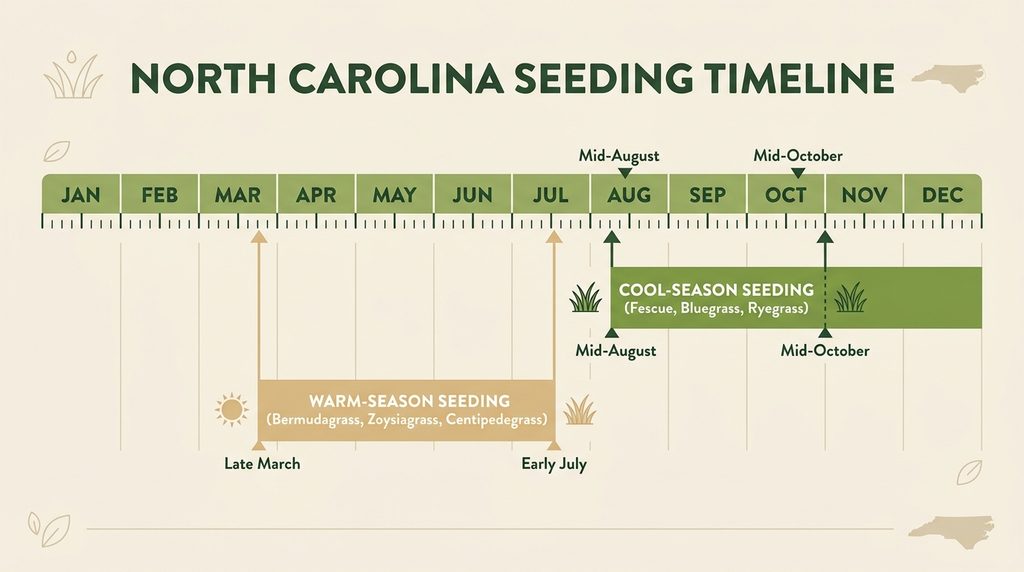
Before getting into regional detail, here is the general timing breakdown most homeowners need.
| Grass Type | Category | Best Planting Window |
|---|---|---|
| Tall fescue | Cool-season | Mid-August to mid-October |
| Kentucky bluegrass mixes | Cool-season | Mid-August to mid-October |
| Bermuda grass | Warm-season | Late March to early July |
| Centipede grass | Warm-season | March to July |
| Zoysia grass | Warm-season | March to July |
Cool-season grasses dominate the mountains and much of the piedmont, while warm-season grasses perform better farther east and south. If you are unsure which category your lawn falls into, the region breakdown below will help narrow it down.
Why Grass Type Determines Everything
The reason timing varies so much comes down to how each grass grows. Cool-season grasses such as tall fescue thrive in cooler air and soil, growing most actively in spring and fall while slowing down in summer heat. Specialists at North Carolina State University Extension note that cool-season grasses are best seeded from mid-August to early October, since seeding beyond these dates increases the risk of failure from winter injury, and spring seedings are often unsatisfactory because the roots do not have time to establish before summer heat and drought arrive.
Warm-season grasses work the opposite way. Bermuda, centipede, and zoysia grow fastest in the heat of summer and go dormant at the first hard frost, so they need warm soil to germinate and a long stretch of warm weather afterward to establish strong roots before winter. Extension guidance places the seeding window for warm-season grasses between roughly March 1 and July 1, depending on species and location within the state.
Understanding NC’s Three Growing Regions
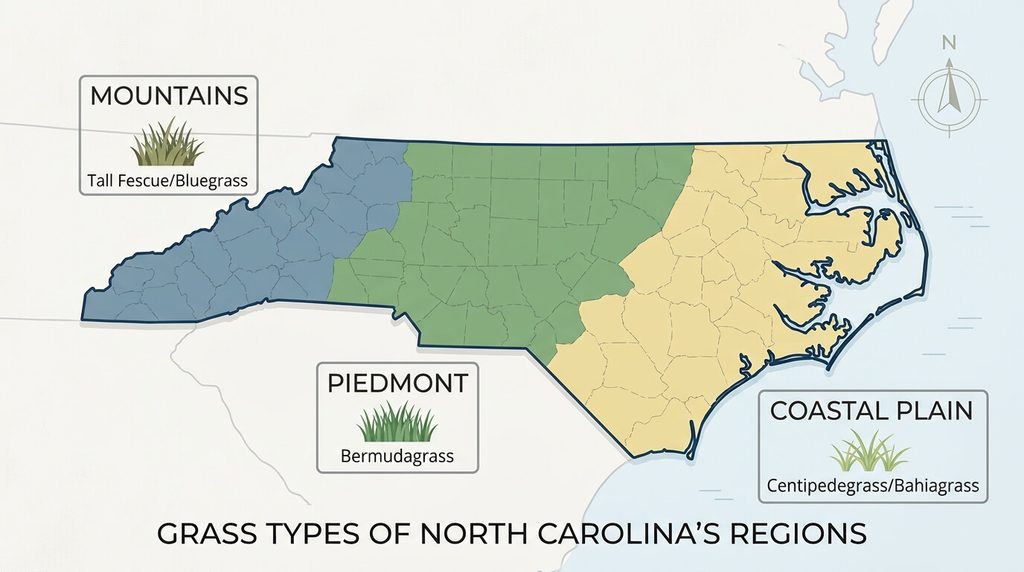
The state is generally divided into three regions for lawn purposes: the mountains, the piedmont, and the coastal plain. Each region has a different climate that shapes not just timing but which grasses actually perform well there in the first place.
- Mountains: Cooler temperatures year-round make this region almost exclusively cool-season territory, with tall fescue and Kentucky bluegrass as the dominant choices.
- Piedmont: A transition zone where both cool-season and warm-season grasses are grown, though tall fescue remains the most common lawn grass overall.
- Coastal Plain: Warmer, more humid conditions favor warm-season grasses like centipede, Bermuda, and St. Augustine, alongside tall fescue on heavier soils.
Because of this range, a single statewide planting date does not exist. Instead, homeowners need to combine grass type with regional climate to land on the right week.
When to Plant Grass Seed in Western NC
Western NC, including the mountains around Boone and the foothills, relies almost entirely on cool-season grasses. Extension agents in the region confirm that in this part of the state, cool season grasses, mostly fescue, are the primary lawn grasses, while warm-season grasses such as Bermuda and zoysia are rarely used because the climate does not suit them well.
The recommended fall seeding window here runs from mid-August through September, with some guidance suggesting seed should go out by mid-September for the best results before cooler mountain nights slow germination. Since NC State’s regional table lists mountain seeding for tall fescue and Kentucky bluegrass at mid-August through the first of September, aiming for the earlier half of that window is generally safer at higher elevations.
When to Plant Grass Seed in Eastern NC
Eastern NC, covering the sandhills and coastal plain, runs on a different clock. Warmer soil and a longer growing season push the ideal fall seeding window for cool-season grasses like tall fescue slightly later than the rest of the state, generally from mid-September through mid-October.
This region is also where warm-season grasses genuinely thrive. Centipede, Bermuda, and St. Augustine are common lawn choices here since these grasses perform better farther east and south in the state, and the extended warm season gives them plenty of time to establish after a spring or early summer planting.
When to Plant Grass Seed in the Piedmont (Charlotte and Raleigh)
Homeowners searching for when to plant grass seed in Charlotte NC or when to plant grass seed in Raleigh NC are both working within the piedmont region, which sits squarely in the middle of the state’s climate range. For cool-season lawns, the ideal fall window in this region runs from roughly September 1 through September 15, giving grass enough time to establish strong roots before the first hard frost.
Piedmont lawns are also where the choice between cool-season and warm-season grass becomes more of a genuine decision, since both categories can perform well depending on the specific yard’s sun exposure and soil type. If you are seeding a warm-season lawn in this region, the window generally runs from April through July, matching the broader statewide guidance for Bermuda and centipede.
When to Plant Grass Seed in Asheville NC
Asheville sits within the mountain region, which means the same cool-season timing applies here as elsewhere in western NC. The average first fall frost in the Asheville area typically arrives in late October, but grass seed should go into the ground well before that, ideally by mid-September, so the young turf has enough time to root before nights turn consistently cold.
Because Asheville’s elevation keeps summers milder than the rest of the state, homeowners here have a genuine advantage with cool-season grasses that struggle in hotter regions. Warm-season grasses are rarely a practical choice in this part of the state due to the shorter, cooler growing season.
When to Plant Bermuda Grass Seed in NC
Bermuda grass is one of the most popular warm-season options across the piedmont and coastal plain, prized for its drought tolerance and fast recovery from wear. According to NC State’s regional planting table, Bermuda seed should generally go down between April and July, depending on location within the state, with earlier dates in this range typically producing the best establishment before summer heat peaks.
Soil temperature matters more than the calendar for Bermuda specifically, since this grass needs consistently warm soil to germinate reliably. Waiting until nighttime temperatures are reliably staying above the mid-60s gives Bermuda seed the best shot at fast, even germination.
When to Plant Centipede Grass Seed in NC
Centipede grass is often called a low-maintenance option because it needs little fertilizer and infrequent mowing once established, making it popular in the piedmont and coastal plain. NC State Extension’s planting guidance places centipede seeding from March through July across both the piedmont and coastal plain regions, though gardeners should expect a slower establishment process than other warm-season grasses.
One important note about centipede: it is slow to establish and may take two to three years to fully fill in when seeded, so patience matters more with this grass than with faster-spreading options like Bermuda. Centipede also prefers more acidic soil, so a soil test before planting helps avoid over-liming a bed meant for this particular grass.
Step-by-Step: How to Plant Grass Seed in NC
Once you have identified the right window for your grass type and region, the planting process itself follows a fairly consistent set of steps.
- Test your soil first. A soil test through your local Cooperative Extension office tells you exactly what pH and nutrient adjustments your lawn needs before planting.
- Prepare the seedbed. Remove debris, loosen compacted soil, and rake the area smooth so soil particles are no larger than marble-sized.
- Apply starter fertilizer and lime as needed. Base amounts on your soil test results rather than guessing, since over-fertilizing can do more harm than good.
- Spread seed at the correct rate. Tall fescue is generally seeded at 5 to 6 pounds per 1,000 square feet, while Bermuda and centipede use much lower rates, often under 2 pounds per 1,000 square feet.
- Lightly rake and roll the area. This ensures good seed-to-soil contact, which is critical for consistent germination.
- Mulch with weed-free straw. A thin, even layer helps retain moisture and reduce surface crusting while seedlings establish.
- Water lightly and frequently at first. Keep the top layer of soil consistently moist, watering lightly two to three times a day until germination, then gradually reduce frequency while increasing duration.
Common Mistakes to Avoid When Seeding NC Lawns
Even experienced homeowners run into a handful of avoidable problems that hurt lawn establishment.
- Seeding cool-season grass in spring instead of fall. Spring-seeded fescue often struggles once summer heat and drought arrive before the roots are established.
- Seeding warm-season grass too early. Cold soil delays or prevents germination entirely, wasting both seed and time.
- Ignoring regional differences. Using a single statewide date instead of adjusting for your specific region can mean seeding two to four weeks off from the ideal window.
- Skipping the soil test. Guessing at fertilizer and lime needs often leads to poor establishment or wasted product.
- Overwatering or underwatering after seeding. Both extremes stress new seedlings, so consistent light moisture matters more than heavy, infrequent watering.
- Applying herbicide too soon after seeding. Most preemergence and many postemergence herbicides can damage or kill young grass seedlings if applied before the turf is established.
Cool-Season vs Warm-Season Grass: Which Is Right for Your Lawn
Choosing between grass types affects not just when you plant, but how your lawn looks and performs throughout the year.
| Feature | Cool-Season Grass (Fescue) | Warm-Season Grass (Bermuda, Centipede) |
|---|---|---|
| Best region | Mountains, most of piedmont | Coastal plain, southern piedmont |
| Peak growth season | Spring and fall | Summer |
| Winter appearance | Stays green through most of winter | Goes dormant and turns brown |
| Drought tolerance | Moderate | High, especially Bermuda |
| Shade tolerance | Better | Generally poor |
| Seeding window | Mid-August to mid-October | March to July |
Neither type is universally better. Your choice should reflect your region, how much sun your yard gets, and whether you prioritize winter green color or summer heat tolerance.
How to Tell If Soil Temperature Is Right for Planting
Relying only on the calendar can lead to timing mistakes, especially in a year with an unusually warm or cool season. A simple soil thermometer, inserted two inches deep, gives a far more reliable read on whether conditions are actually right.
Cool-season grasses germinate best once soil temperatures fall consistently below the mid-60s and above roughly 60°F for tall fescue specifically, which typically lines up with the late summer and early fall planting window. Warm-season grasses need the opposite, generally requiring soil temperatures in the mid-60s or warmer, with faster germination once soil reaches the 70s. Checking soil temperature over several consecutive days, rather than relying on a single reading, gives a more accurate picture of whether it is truly time to plant.
Watering and Care After Seeding
New grass seed needs consistent moisture to germinate and establish, regardless of grass type or region. For the first one to three weeks, light, frequent watering, sometimes two to three times daily in hot or windy conditions, keeps the top inch of soil from drying out.
Once seedlings emerge and begin developing roots, gradually shift to less frequent but deeper watering to encourage the roots to grow downward rather than staying near the surface. After the lawn has been mowed two to three times, it is generally considered established and can move to a standard watering schedule of about one inch per week, adjusted for rainfall.
If you are planning a broader yard refresh alongside your new lawn, it helps to map out the whole space before planting season arrives. Homeowners tackling how to start a vegetable garden alongside a lawn project often find it easier to coordinate soil testing and bed prep for both areas at once, since many of the same principles around soil quality apply to both.
Frequently Asked Questions
What is the best month to plant grass seed in NC?
For most cool-season lawns, September is generally the strongest month statewide, though mountain regions often do better seeding by mid-August and coastal areas can extend into early October.
Can I plant grass seed in NC in the spring?
Spring seeding is possible but generally less reliable for cool-season grasses like fescue, since young roots often do not have enough time to establish before summer heat arrives; warm-season grasses like Bermuda and centipede, however, are typically seeded in spring through early summer.
How long does it take grass seed to grow in NC?
Germination timing varies by species, with tall fescue typically sprouting in 10 to 21 days and Bermuda grass taking a similar range depending on soil temperature and moisture, though full establishment into a mature, mowable lawn takes several additional weeks.
Is it too late to plant grass seed in October in NC?
For cool-season grasses, planting in early to mid-October can still work in the piedmont and coastal plain, though the margin for error narrows and results become less reliable the further into the month you go, especially in cooler regions.
Do I need to water grass seed every day in NC?
Yes, during the germination period new seed generally needs light watering once or twice daily to keep the top layer of soil consistently moist, then a gradual reduction in frequency once seedlings are established.
What grass grows best in North Carolina’s heat and humidity?
Warm-season grasses like Bermuda, centipede, and zoysia handle NC’s hot, humid summers well, while tall fescue, though a cool-season grass, remains a popular statewide choice because of its strong heat tolerance compared to other cool-season options.
Can I mix cool-season and warm-season grass seed in the same lawn?
This is generally not recommended, since the two types have opposite growth cycles and different mowing, watering, and fertilizing needs, which makes maintaining a mixed lawn far more complicated than choosing one type suited to your region.
Final Thoughts and Next Steps
Getting the timing right for when to plant grass seed in NC comes down to two questions: what type of grass are you planting, and which part of the state do you live in. Cool-season fescue lawns do best seeded from mid-August through mid-October depending on region, while warm-season grasses like Bermuda and centipede need the warmer soil of late March through July to establish properly.
Whichever window applies to your yard, a soil test and proper bed prep beforehand will do more for your results than any single planting date. If your lawn project is part of a larger seasonal cleanup, our guide to how to winterize your garden covers the other fall tasks worth tackling around the same time as a cool-season seeding.
This article offers general planting guidance for home lawns. Actual frost dates, soil conditions, and grass performance vary by year and specific location, so consider a local soil test and consult your county Cooperative Extension office for site-specific recommendations.

