
Most homes don’t have a storage problem. They have a storage planning problem. The average American household holds around 300,000 items, according to research cited by the Los Angeles Times, and roughly a quarter of people with two-car garages can’t fit a single car inside. That’s not a shortage of square footage. That’s stuff spreading into every gap it can find.
The good news? You probably already own the space you need. It’s just hiding behind bad habits, awkward furniture and closets that were designed in 1987 and never touched since.
Start by Auditing What You Actually Own
Before buying a single bin, empty one area completely, whether you’re tackling a closet, cabinet, or bathroom storage area. Not the whole house. One closet, one cabinet, one drawer. Pull everything out and sort it into three piles: keep, donate, toss.
People consistently underestimate how much duplicate stuff they own. Three can openers. Eleven reusable shopping bags. A drawer of chargers for phones nobody in the house has used since 2016. Getting rid of the excess costs nothing and frees up more room than most organizing products ever will.
One useful rule: if you haven’t touched it in 12 months and it isn’t seasonal, sentimental or legally important, it goes.
Be Honest About Sentimental Items
Boxes of keepsakes tend to multiply quietly in basements. Instead of storing six boxes, pick one sturdy container per person and cap it there. Photograph bulky items, like a child’s oversized art project, and keep the image rather than the object.
Go Vertical Before You Go Wide

Floor space is expensive. Wall space is usually free. Yet most homes stop using their walls at eye level, leaving two or three feet of dead air above every shelf and cabinet.
Some easy wins:
- Add a second shelf above the existing one in linen and coat closets. A basic wire or wood shelf costs under $40 and instantly doubles capacity.
- Use the backs of doors. Over-the-door racks work for shoes, cleaning supplies, pantry snacks and gift wrap.
- Hang pots, tools and bikes. A pegboard in the garage or utility room keeps things visible and off the floor.
- Stack risers inside cabinets so plates and mugs occupy the full height rather than the bottom four inches.
- Toe-kick drawers under kitchen cabinets are another overlooked option. They add three to five inches of hidden depth that’s perfect for baking sheets and placemats.
Rethink the Bedroom Wardrobe
Closets and wardrobes hold the largest share of household belongings in most homes, and keeping the bedroom organized and comfortable starts with using that storage efficiently. Clothes get shoved onto one rail, shoes pile on the floor, and the top shelf becomes a junk graveyard.
A proper fit-out changes the math. Double-hanging rails alone can nearly double what a standard reach-in closet holds, since most shirts and folded trousers only need 40 inches of vertical space, not the 80 a single rail wastes.
If you’re refreshing an existing wardrobe rather than rebuilding, replacing the fronts is the fastest upgrade and can help the storage area better match your interior design style. Quality MDF wardrobe doors give you a clean, paintable surface that resists warping better than solid timber in rooms with humidity swings, and sliding versions eliminate the two to three feet of floor clearance hinged doors demand. In a small bedroom, that recovered floor space matters.
Zone the Interior
Divide the wardrobe by use, not by garment type. Daily items sit between hip and shoulder height. Weekend and occasion wear goes higher. Off-season pieces get vacuum bagged and stored on the top shelf or under the bed. You’ll spend less time hunting and more time actually getting dressed.
Turn Furniture Into Storage
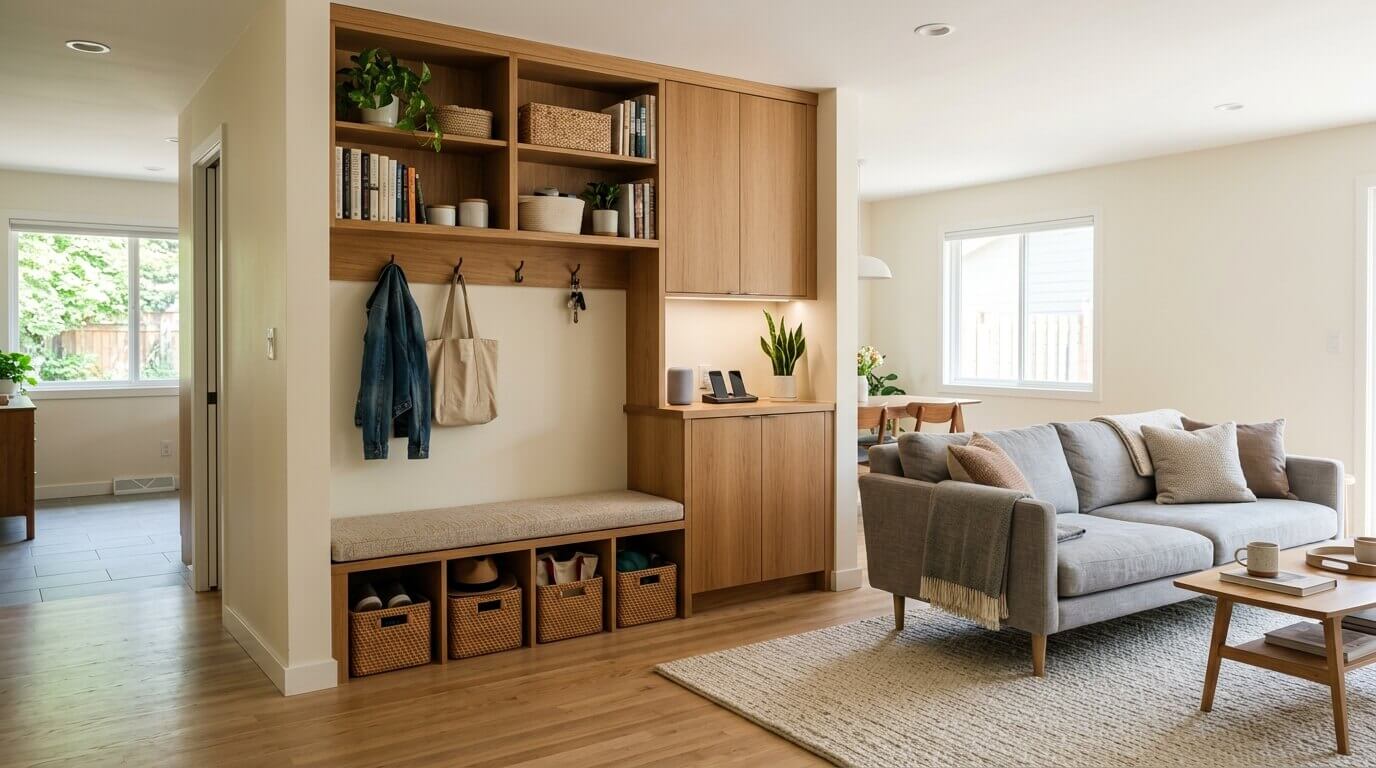
Every piece of furniture in a small home should earn its place twice. Ottomans with hinged lids swallow blankets and board games. Bed frames with built-in drawers replace an entire dresser. A hallway bench with cubbies underneath handles shoes, mail and dog leashes in one move.
Stairs are the biggest missed opportunity in two-story homes. The triangular void underneath can become pull-out drawers, a small office nook or a pantry extension. Custom work here runs a few thousand dollars, but it typically adds 15 to 25 cubic feet of usable space without altering the home’s footprint.
Keep It From Sliding Backward
Organizing is easy. Staying organized is the hard part. Two habits do most of the heavy lifting.
- Label things. Not for style points, but because nobody puts an item back correctly if they’re guessing where it goes.
- Adopt a one-in-one-out rule. Use it for categories that tend to balloon: shoes, mugs, kids’ toys, water bottles.
Do that weekly and you’ll never need another full-day purge.
Your home probably has more room than you think. It’s just a matter of claiming it.

