
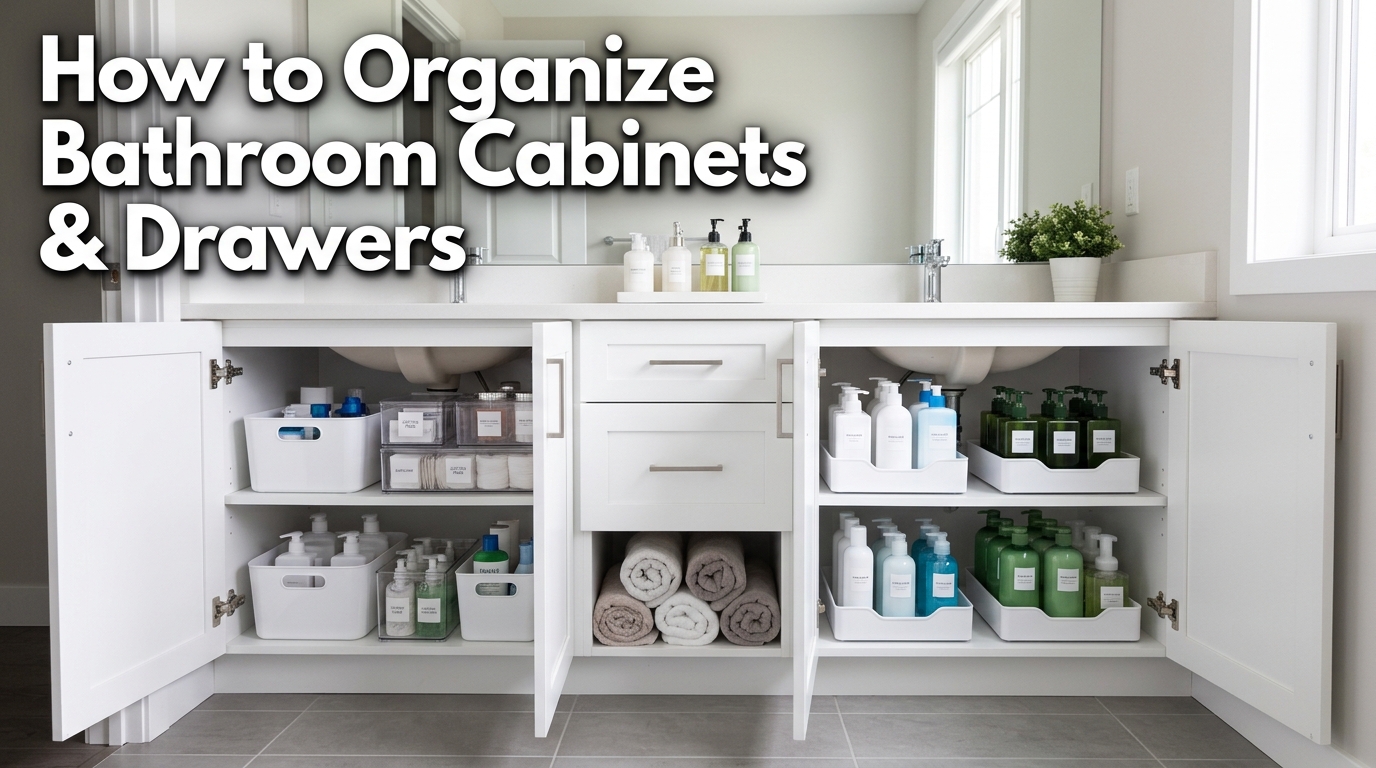
You open the bathroom cabinet to grab your toothpaste — and a pile of half-empty bottles, mystery medications, and tangled hair ties tumbles out. Sound familiar?
A disorganized bathroom doesn’t just feel chaotic. It costs you time every single morning. The good news? You don’t need a bathroom renovation to fix it. With the right strategy, a few smart products, and about an afternoon of your time, your bathroom cabinets and drawers can go from chaotic to completely under control.
This guide walks you through everything — step by step, no fluff, no complicated systems.
Why Bathroom Organization Matters More Than You Think
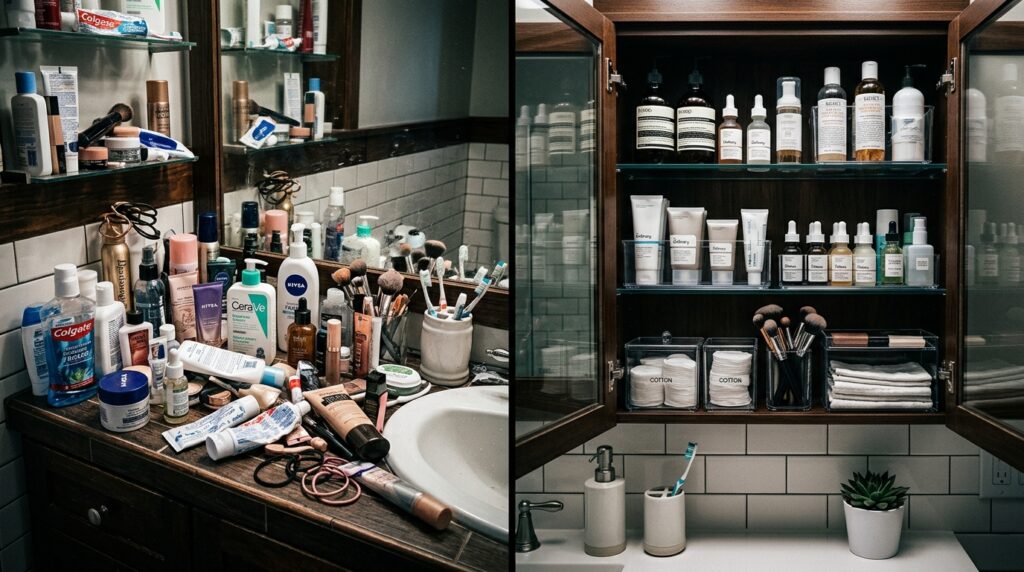
Most people underestimate how much a cluttered bathroom affects their daily routine. According to research on household stress and clutter, disorganized living spaces are directly linked to elevated cortisol levels — the stress hormone.
That morning rush to find your face wash or a hair clip? It adds up. A well-organized bathroom saves you an estimated 15–20 minutes every week — time better spent on things you actually enjoy.
Beyond time savings, good organization also:
- Reduces waste by making it easy to see what you have before buying duplicates
- Extends product life by storing items properly
- Creates a calming environment that helps you start the day right
- Makes cleaning much faster since surfaces are clutter-free
Let’s get into it.
Step 1 — Declutter Before You Organize Anything
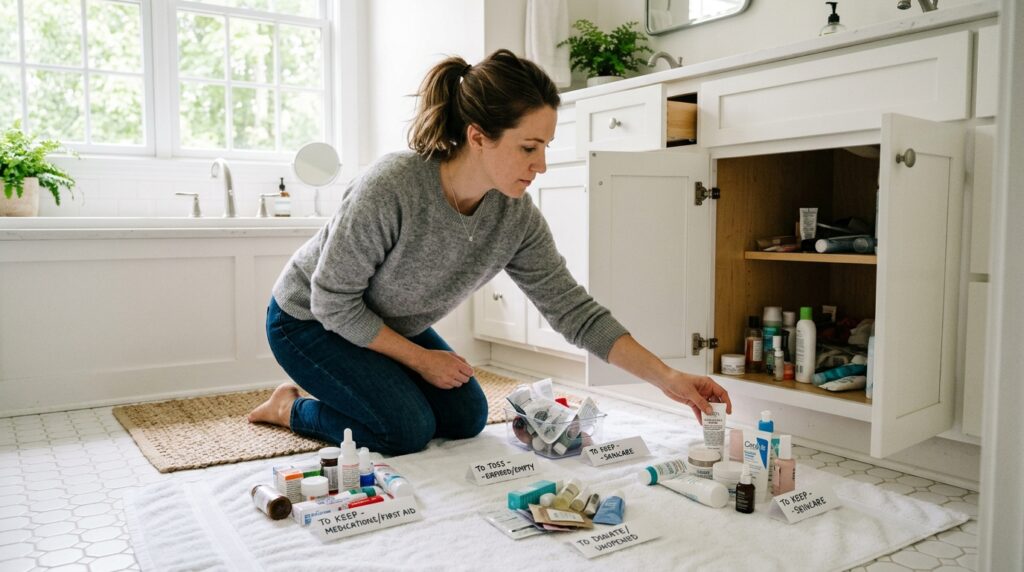
This is the step most people skip — and it’s also the most important one.
No organizing system in the world can save a cabinet stuffed with things you don’t actually need. Before you buy a single bin or shelf riser, pull everything out.
How to Declutter Your Bathroom Cabinet in 4 Steps
Step 1: Empty the entire cabinet or drawer. Don’t organize around things — take it all out and start with a blank slate.
Step 2: Check expiration dates. Medications, sunscreens, and even skincare products expire. The FDA recommends disposing of expired medications through take-back programs or following specific disposal guidelines.
Step 3: Toss the obvious stuff. Empty bottles, broken tools, products you’ve never liked — they go. If it’s been sitting untouched for over a year, it’s likely not coming back.
Step 4: Sort what’s left into categories. Skincare, hair care, oral care, medications, first aid, everyday essentials. You’ll use these categories to design your storage layout.
Expert Tip: Don’t just wipe and restock. Once the cabinet is empty, clean the interior with a damp cloth and let it dry fully before putting anything back. It makes the whole space feel fresh.
Step 2 — Categorize Your Products Like a Pro
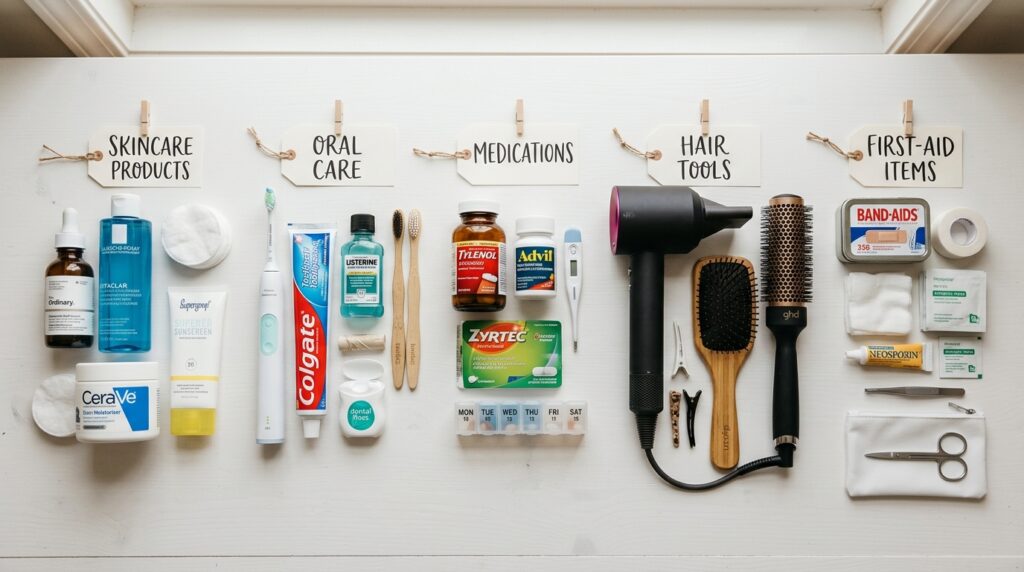
Once everything is out and decluttered, grouping your items by category is the key to creating an organized system that actually stays organized.
Here are the most common categories for a bathroom cabinet or drawer:
| Category | What Goes Here |
|---|---|
| Daily Essentials | Toothbrush, toothpaste, face wash, deodorant |
| Skincare | Moisturizers, serums, toners, SPF |
| Hair Care | Shampoo, conditioner, styling products, accessories |
| Oral Care | Floss, mouthwash, spare toothbrushes, whitening strips |
| First Aid | Bandages, antiseptic, tweezers, thermometer |
| Medications | Prescriptions, vitamins, OTC medicines |
| Makeup/Tools | Foundation, mascara, brushes, hair dryer, straightener |
The rule here is simple: things you use daily should be the easiest to reach. Items used weekly or occasionally can go further back or higher up.
Step 3 — Measure Your Space Before Buying Anything
This is where most people waste money. They buy organizers that look good in photos — then discover they don’t fit their actual cabinet.
Before you shop, grab a tape measure and note:
- Interior width, depth, and height of the cabinet
- Height of each shelf (if there are adjustable shelves)
- Location of any pipes or obstacles (especially under-sink cabinets)
- Drawer dimensions — width, depth, and interior height
Write these numbers down. Take photos. This is the secret weapon that stops you from making three frustrated return trips.
Best Way to Organize Bathroom Cabinets — By Cabinet Type
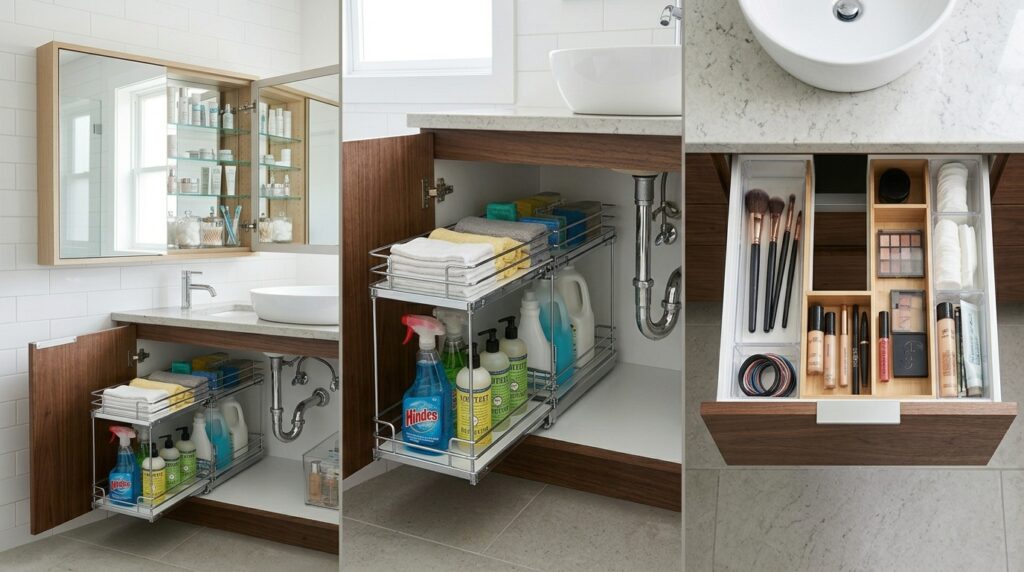
Not all bathroom cabinets are the same. The best approach depends on the type of cabinet you’re dealing with. Here’s a breakdown:
How to Organize a Medicine Cabinet
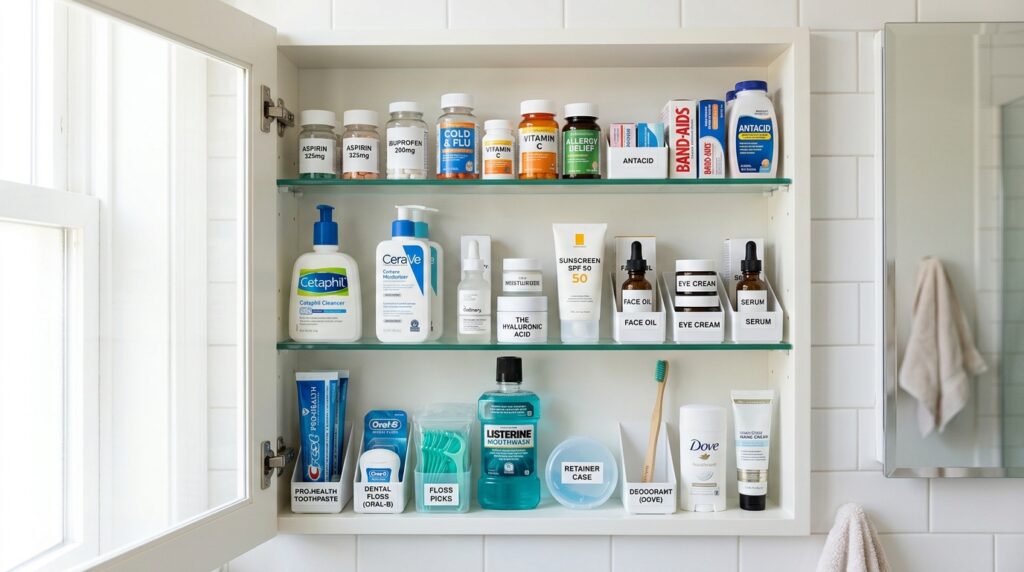
The medicine cabinet is usually the most visible storage in a bathroom. It’s right above the sink — so it needs to stay tidy.
Organizing tips:
- Top shelf: medications and first-aid items (out of reach of children, but accessible for adults)
- Middle shelf: skincare and daily-use items
- Bottom shelf: oral care — toothpaste, floss, mouthwash
Use small clear acrylic organizers to separate items on each shelf. They’re easy to see through and even easier to clean.
Avoid overcrowding. The medicine cabinet gets opened dozens of times a day — it should be simple to navigate at a glance.
How to Organize Bathroom Cabinets Without Drawers
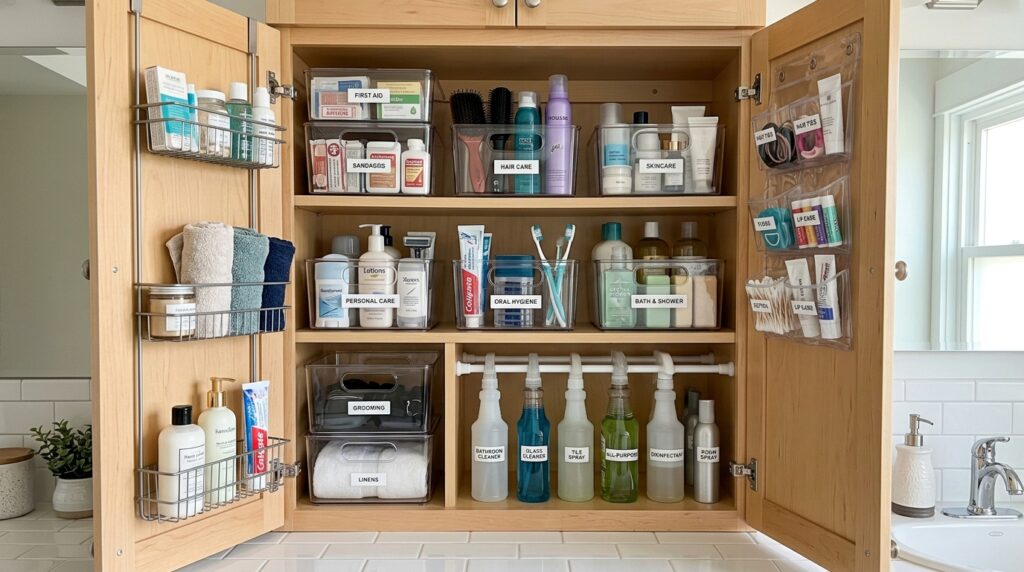
No drawers? No problem. Plenty of bathrooms have cabinets with only shelves — and with the right approach, shelves can be just as effective.
Top solutions:
- Stackable bins — Group items by category and stack them to use vertical space efficiently
- Lazy Susans (turntables) — Perfect for corners and deep shelves; spin to access items in the back without digging
- Over-door organizers — The back of cabinet doors is often completely wasted space. A door-mounted organizer adds instant, easy-access storage
- Shelf risers — Create two levels of storage on a single shelf, doubling your capacity
- Small labeled baskets — Wicker or acrylic baskets keep like items together and look polished
The key with drawer-free cabinets is vertical thinking. Most people only use the bottom 12 inches of a cabinet. Go up.
How to Organize Deep Bathroom Cabinets
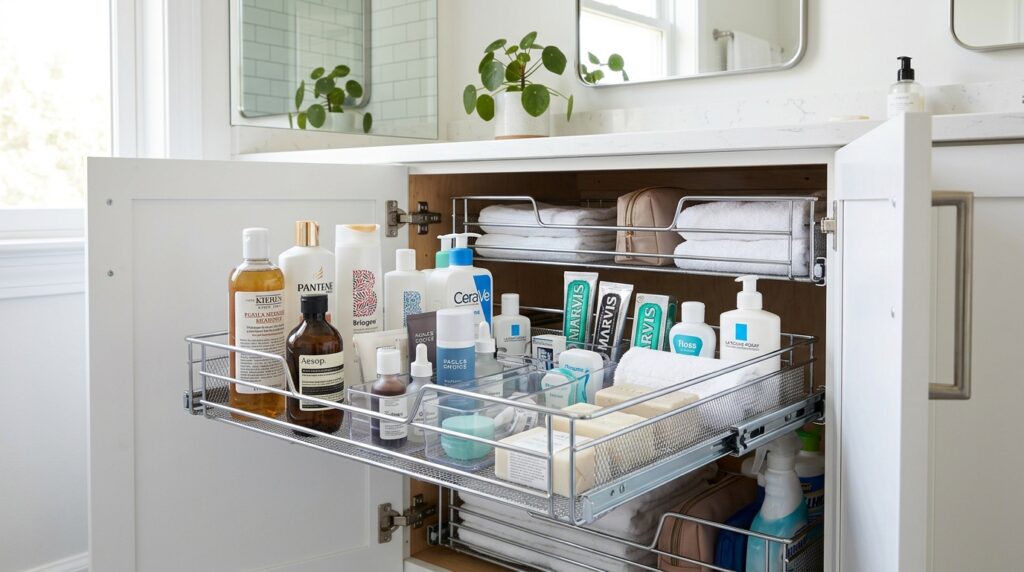
Deep cabinets are a blessing and a curse. They offer tons of storage — but everything you need is always in the back, buried under things you don’t.
The solution is to eliminate the “dig and search” problem by making the back of the cabinet just as accessible as the front.
Best strategies for deep cabinets:
- Pull-out cabinet organizers — These slide out like a drawer, giving full access to the back. Stackable pull-out shelves are widely available and easy to install
- Use clear bins with labels — When items are in labeled clear containers, you can see what’s in the back without pulling everything out
- Lazy Susans — Especially effective in deep corner cabinets. One spin brings everything to the front
- Tiered shelf organizers — These create stadium-style storage so items at the back are elevated and visible
- Zone the depth — Front zone for daily use, back zone for backstock and rarely used items
Expert Tip: For deep cabinets, color-code your bins. Assign a color per category (blue for first aid, white for skincare, etc.). You’ll find what you need at a glance even when things shift around.
How to Organize the Bathroom Cabinet Under the Sink
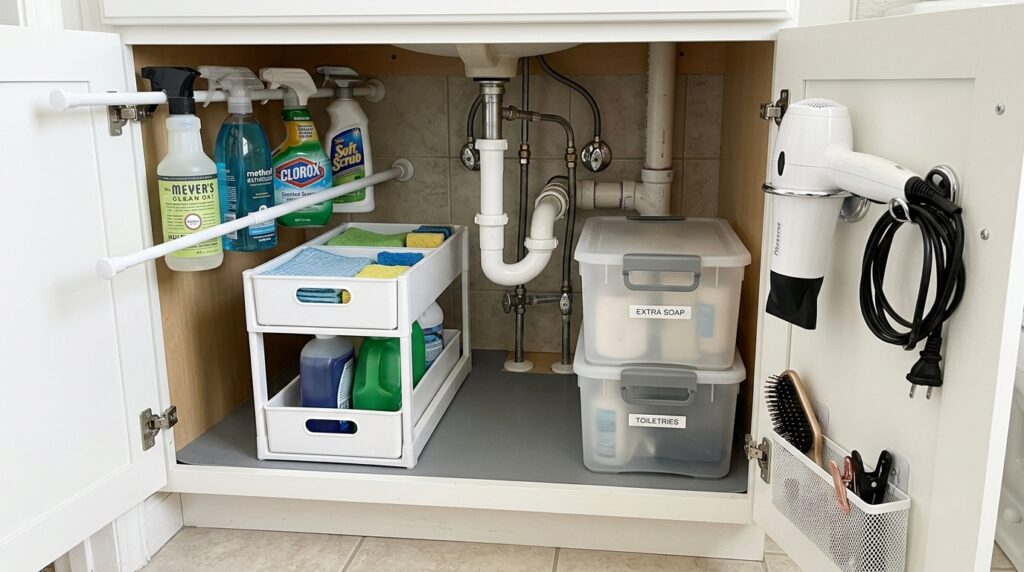
The under-sink cabinet is arguably the hardest area to organize in any bathroom. There are pipes in the way. The space is awkward. Things get shoved in and forgotten.
But it’s also one of the biggest opportunities for storage if you work with the space instead of against it.
Work Around the Pipes
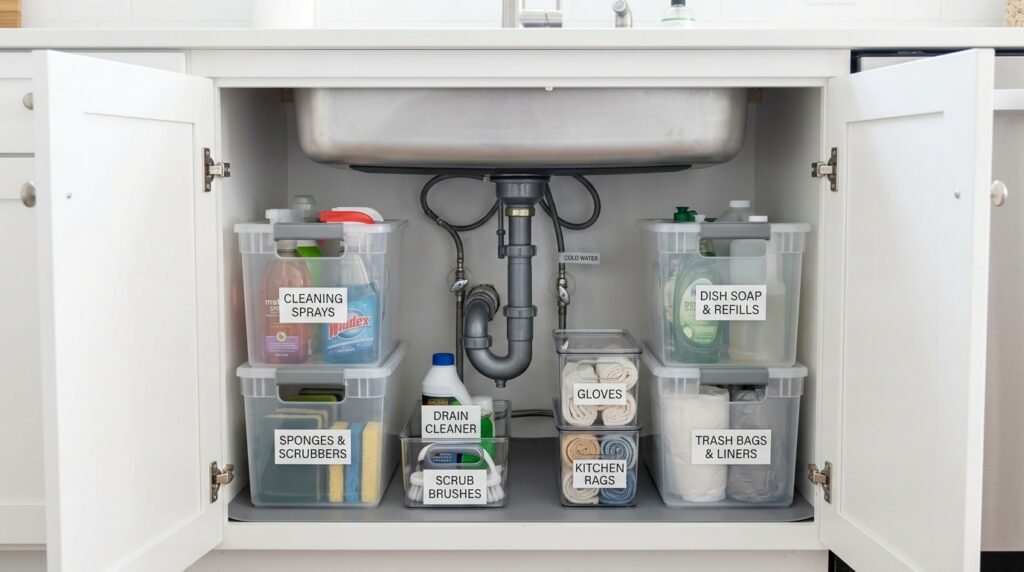
The drainpipe runs down the center of most under-sink cabinets. This means you have two usable zones: left and right of the pipe.
Use this to your advantage by designating each side for a different category:
- Left side: Hair care products, tools, and styling accessories
- Right side: Cleaning supplies, spare soap, toilet paper backstock
This natural division prevents the pile-it-all-in chaos that makes under-sink spaces so frustrating.
Best Products to Organize Under the Sink
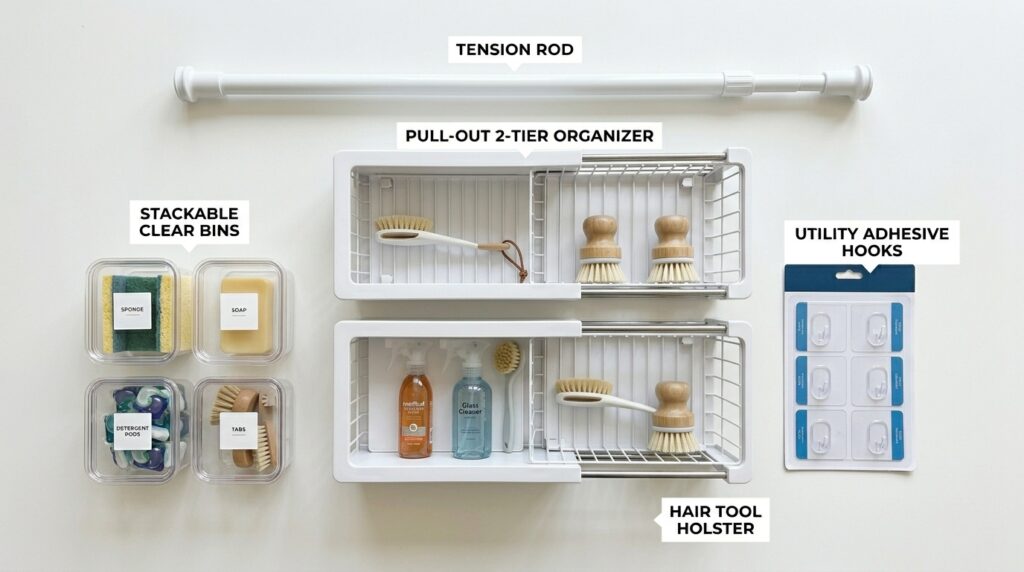
Here are the products that make the biggest difference:
| Product | Best For | Why It Works |
|---|---|---|
| Tension rod | Hanging spray bottles | Keeps bottles off floor, maximizes vertical space |
| Pull-out two-tier shelf | Daily products | Slides forward for full access, uses full depth |
| Stackable clear bins | Category grouping | See-through, stackable, easy to label |
| Door-mounted pouches | Small tools & accessories | Uses otherwise wasted door space |
| Hair tool holder | Dryer, curling iron | Heat-safe storage for tools in use |
| Small turntable (Lazy Susan) | Cleaning products | Spins to access items in corners |
A simple tension rod installed horizontally under the cabinet lets you hang spray bottle handles over it — freeing up the entire cabinet floor for other storage.
What to Store Under the Sink (and What to Move Out)
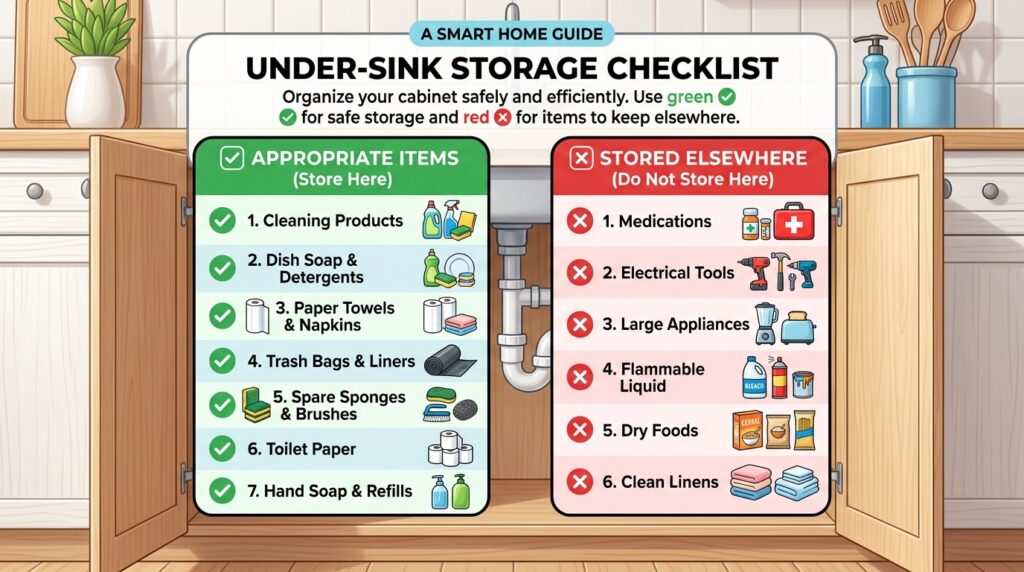
Not everything belongs under the sink. Moisture, temperature fluctuations, and proximity to pipes mean some products shouldn’t live there.
Good under-sink items:
- Cleaning products and sponges
- Toilet paper and paper towel backup supply
- Spare soap bars and shampoo bottles
- Plunger and brush
Move these elsewhere:
- Medications (moisture and heat damage them — store in a cool, dry place)
- Electrical hair tools (when stored under the sink, make sure they’re fully cooled and dry first)
- Skincare products (humidity affects some formulas)
How to Organize Bathroom Drawers
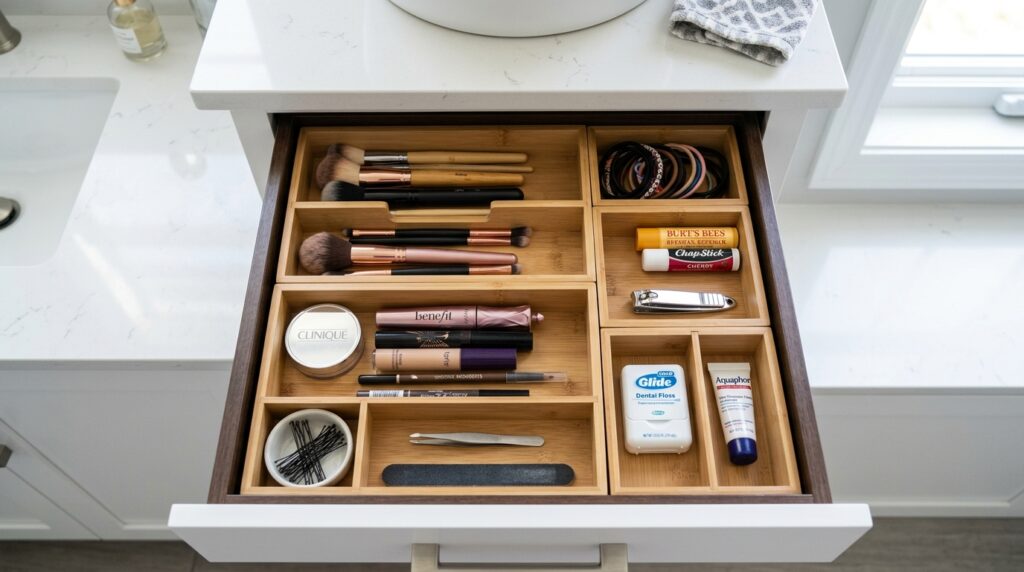
Drawers are the most satisfying area to organize — when done right, they stay organized longer than open shelving. The secret is drawer dividers.
Choose the Right Drawer Dividers
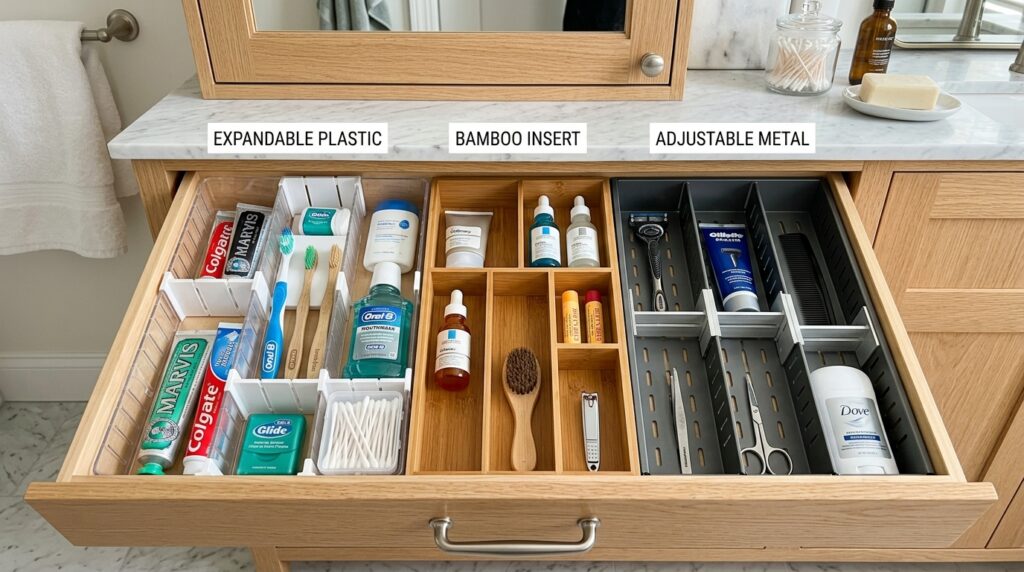
Not all dividers are equal. Here’s how to pick:
- Adjustable expandable dividers: Best for custom layouts. They expand to fit any drawer width. Great if you have odd-sized drawers.
- Pre-made bamboo inserts: Stylish and eco-friendly. Best for standard drawer sizes. Bamboo drawer organizers are popular for a clean aesthetic.
- Clear acrylic compartments: Best for makeup and skincare. You can see everything at a glance and they look polished.
- Foam drawer liners with cut-outs: Great for tools like razors, nail clippers, or tweezers where you want custom-shaped slots.
Measure your drawer before purchasing any insert.
Organize Your Drawers by Priority Level
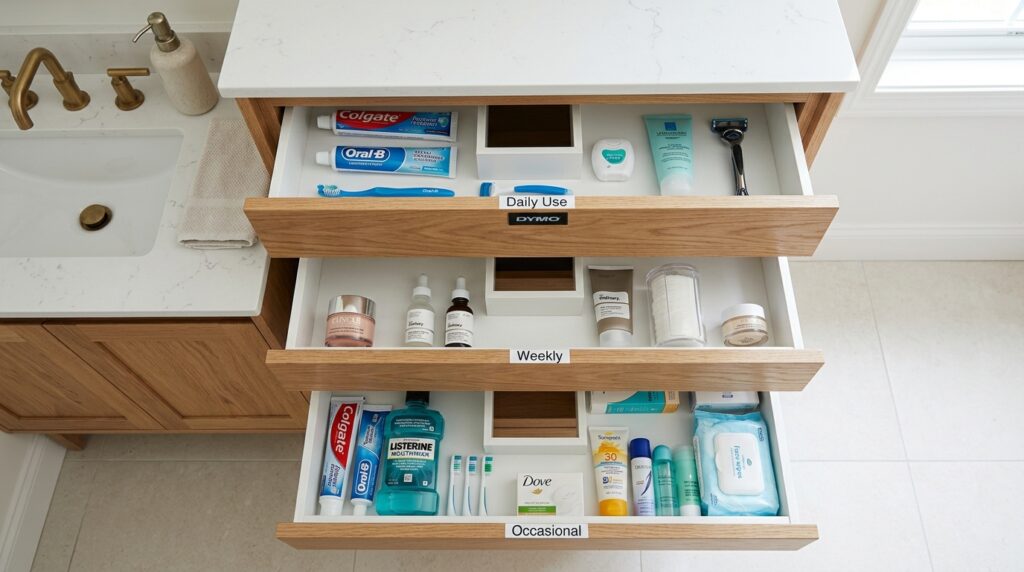
Think of your drawers in tiers:
- Top/most accessible drawer: Daily use items — toothbrush, toothpaste, face wash, deodorant, razor
- Middle drawer: Weekly or semi-regular items — makeup, hair accessories, extra skincare
- Bottom or deeper drawers: Backup products, seasonal items, first-aid extras
This priority system means the things you reach for every morning are always at your fingertips — no digging, no rearranging.
Tips to Keep Bathroom Drawers Organized Long-Term
The biggest challenge with drawers isn’t organizing them — it’s keeping them that way. A few habits make all the difference:
- Put things back in the same spot, every time. Sounds obvious, but this one habit prevents almost all drift.
- Do a monthly 5-minute reset. Once a month, take 5 minutes to return items to their zones and discard anything empty.
- Label everything. Labels eliminate the “where does this go?” question for everyone in the house.
- Don’t overfill. If a drawer is crammed, things won’t go back neatly. Leave breathing room.
Bathroom Cabinet Organizer Products Worth Buying
You don’t need to spend a fortune. But investing in a few quality organizers makes the whole system click. Here are categories worth spending on:
Under-Sink Organization Products
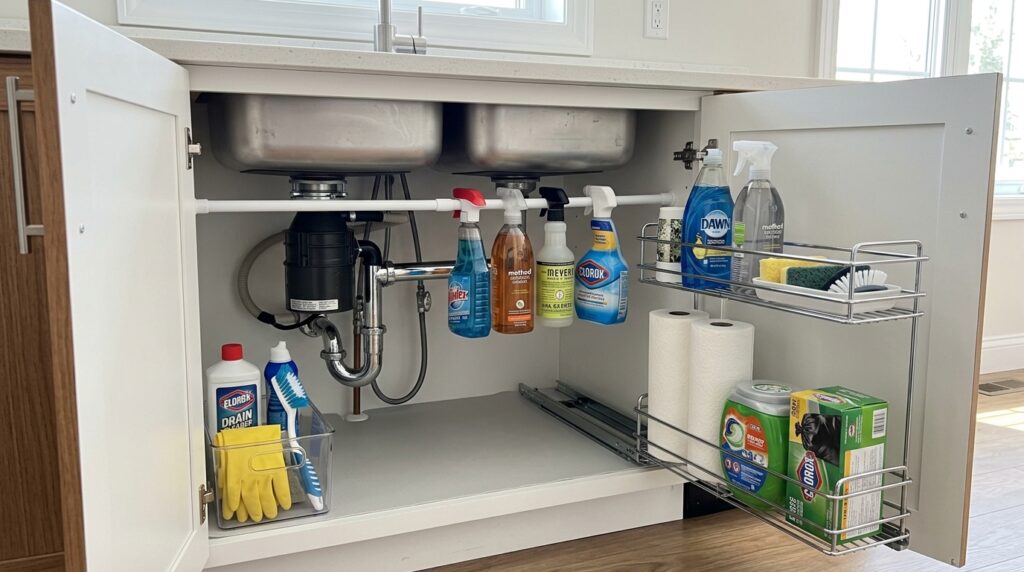
- Pull-out cabinet organizers — the single biggest game-changer for under-sink storage
- Stackable clear bins for grouping supplies
- Adhesive hooks inside the cabinet doors for hanging tools or small bags
- A small tension rod for spray bottles
Shelf and Cabinet Organizers
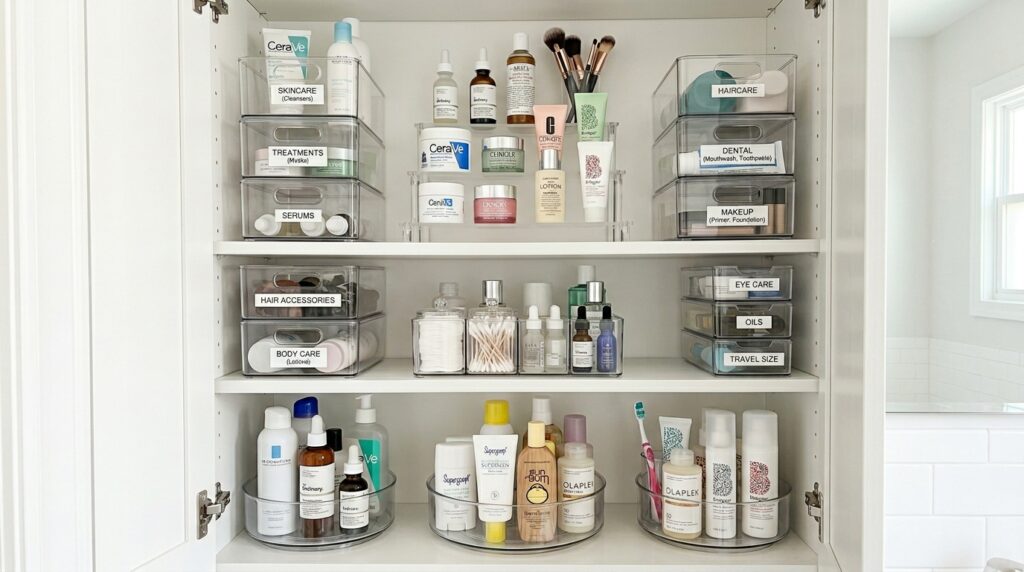
- Shelf risers to create two levels on a single shelf
- Lazy Susans for corners, deep cabinets, and under-sink spaces
- Clear stackable bins in multiple sizes for every cabinet type
- Over-door organizers to maximize unused door space
Drawer Organization Products
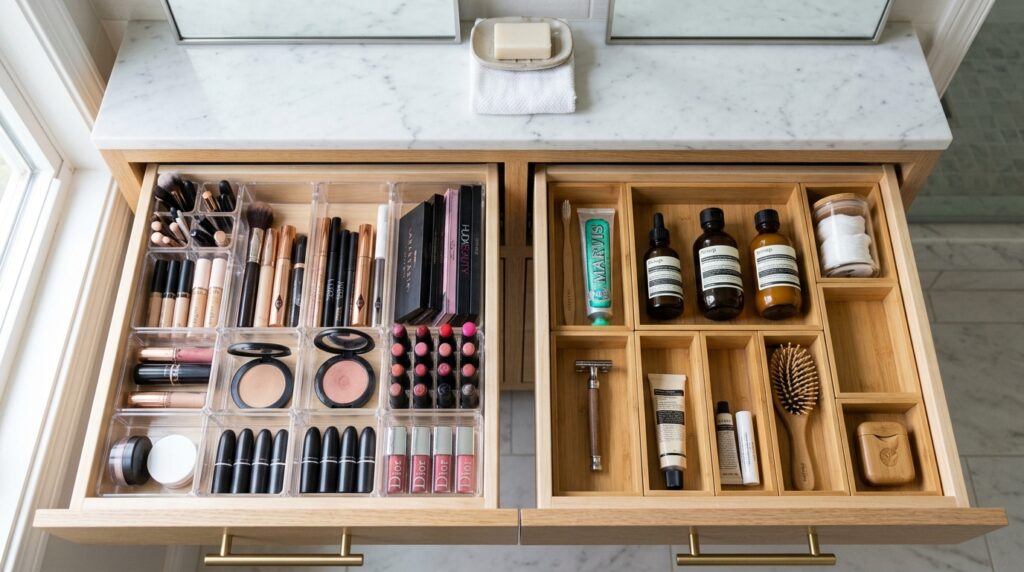
- Expandable drawer dividers for custom configurations
- Pre-made acrylic or bamboo inserts for standard drawers
- Small labeled containers for hair ties, bobby pins, and small accessories
- Velvet-lined compartments for jewelry or delicate items
Small Bathroom Storage Hacks That Actually Work
Small bathrooms present unique challenges. When you’re working with limited space, you have to get creative.
Use the Inside of Cabinet Doors
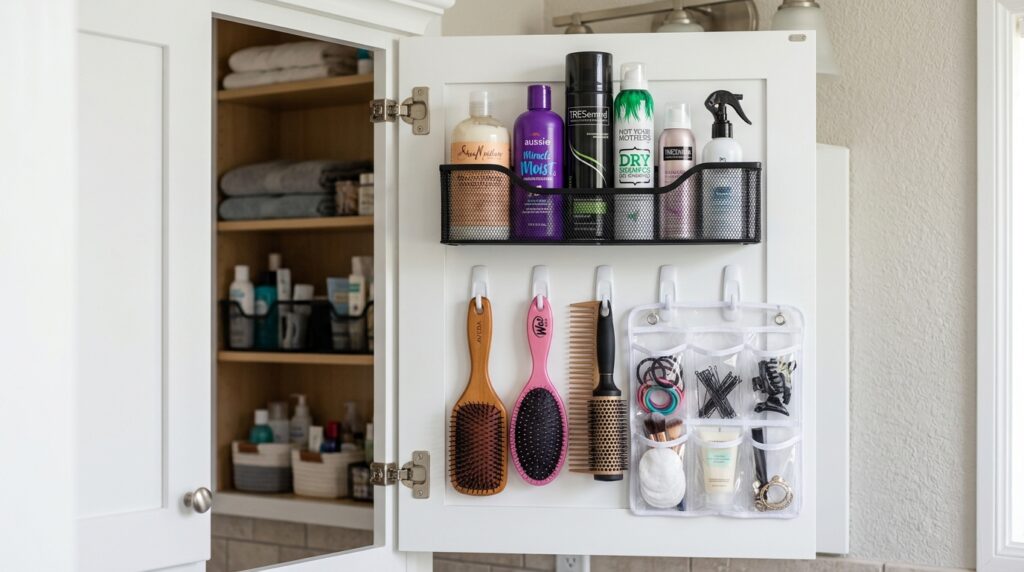
The interior side of cabinet doors is often completely unused — and it’s valuable real estate.
Options include:
- Adhesive hooks for hanging tools, bags, or curling iron cords
- Door-mounted spice racks repurposed for nail polish or small skincare bottles
- Clear pocket organizers for flat items like masks, packets, or thin tools
- Magnetic strips for bobby pins, nail clippers, and small metal tools
Go Vertical with Wall-Mounted Options
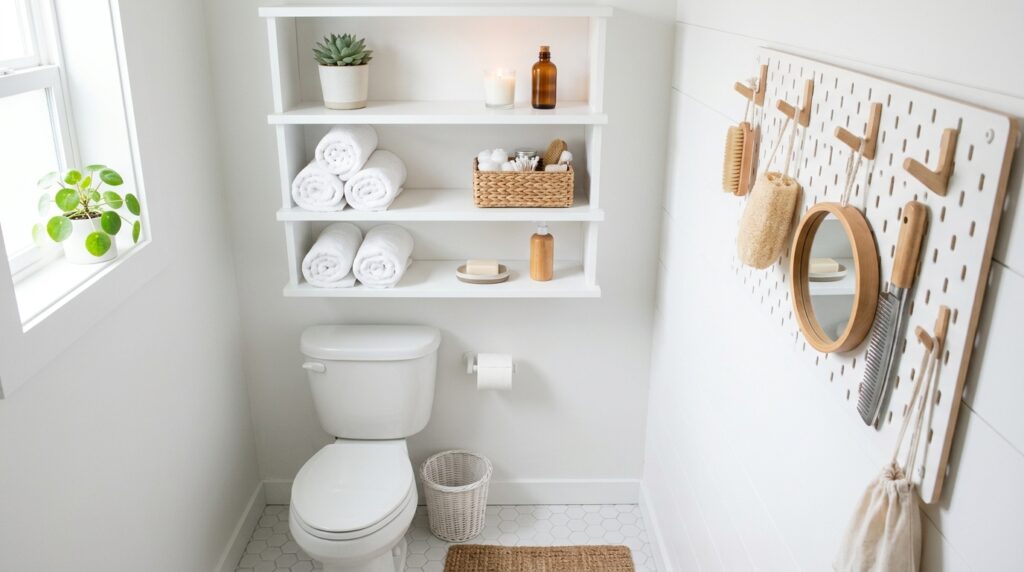
When floor and cabinet space runs out, go up. Wall-mounted shelves above the toilet are one of the most underused storage opportunities in a bathroom.
Other vertical options:
- Pegboards for hanging tools and accessories
- Magnetic side panels on the exterior of cabinets
- Floating shelves above vanity counters for decorative and functional storage
Repurpose Unexpected Items as Organizers
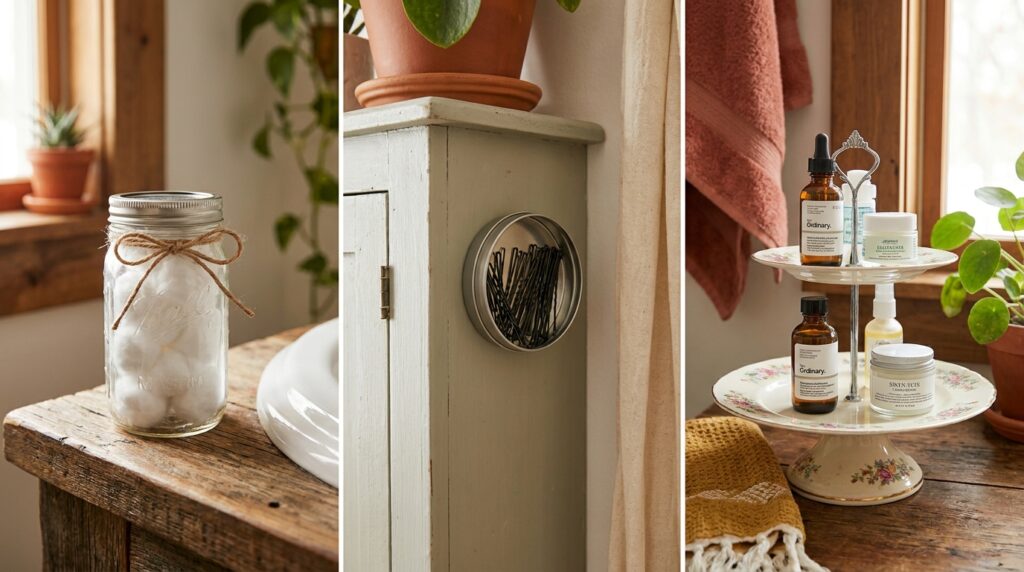
Sometimes the best organizers aren’t sold as organizers at all:
- Mason jars — Perfect for cotton balls, Q-tips, or makeup brushes on the counter
- Drawer ice cube trays — Great for bobby pins, earrings, and small makeup items
- Magazine files — Surprisingly effective for storing blow dryers, flat irons, or tall bottles upright
- Stacked cake stands — A stylish way to display and access skincare products on the counter
- Shower caddies on shelves — Portable and easy to organize by person if you share a bathroom
Expert Tips for Long-Term Bathroom Organization
Getting organized is only half the battle. Staying organized is the real work — and these expert-backed habits make it sustainable.
1. One in, one out rule. Every time you bring a new product into the bathroom, a similar product should be used up or discarded. This prevents the cabinet from quietly filling back up.
2. Do a quarterly purge. Schedule four times a year to check expiration dates, discard empties, and re-evaluate what’s in your cabinet. It takes 15 minutes and prevents major declutters.
3. Label everything. Labels reduce decision fatigue and help every member of a household return items to the right place. Even simple masking tape and a marker works.
4. Shop your stash before buying. Before purchasing products, check what you already have. According to consumer research on household waste, significant household spending goes toward replacing items people already own but couldn’t find.
5. Organize by person, not just category. If multiple people share a bathroom, designating a specific bin or shelf section per person eliminates the “where did my stuff go?” problem entirely.
6. Keep counters clear. The counter is not storage. Limit what lives permanently on the counter to 3–5 items max. Everything else goes inside.
Common Bathroom Organization Mistakes to Avoid
Even with the best intentions, some mistakes consistently derail bathroom organization efforts. Here are the most common ones:
Mistake 1: Organizing before decluttering. You can’t organize clutter. Always declutter first, then organize what’s left.
Mistake 2: Buying organizers before measuring. A bin that’s half an inch too wide for your shelf is useless. Measure twice, buy once.
Mistake 3: Mixing categories. Skincare shouldn’t share a bin with medications. Keep categories separate so restocking and finding items is effortless.
Mistake 4: Not labeling. Labels aren’t just aesthetic — they’re functional. Without them, things drift back to random spots within weeks.
Mistake 5: Optimizing for looks over function. A beautifully photographed organization system that doesn’t suit your actual habits won’t stay organized. Optimize for how you live, not how it looks on a shelf.
Mistake 6: Ignoring the back of the cabinet. Most people stack items at the front and ignore the rest. Use the full depth of your cabinets with pull-outs, turntables, and labeled zones.
Room-by-Room Bathroom Organization Plan
If you want to tackle your bathroom systematically, here’s a simple weekend plan:
| Day/Session | Area to Tackle | Time Estimate |
|---|---|---|
| Saturday Morning | Declutter entire bathroom | 1–2 hours |
| Saturday Afternoon | Organize medicine cabinet + drawers | 1 hour |
| Sunday Morning | Under-sink cabinet + deep cabinets | 1–2 hours |
| Sunday Afternoon | Countertop + finishing touches + labels | 30–45 minutes |
Breaking it into sessions prevents burnout and gives you time to measure, shop for any needed organizers, and reassess the layout before committing.
FAQs
How do I organize a bathroom cabinet with very little space?
Focus on vertical storage and door space. Use stackable bins, shelf risers, and over-door organizers. Only keep daily-use items in the cabinet — move backup supplies elsewhere. Every inch of vertical space counts.
What’s the best way to organize bathroom cabinets when you share with someone?
Assign each person a dedicated zone, shelf, or color-coded bin. This eliminates overlap, confusion, and the daily frustration of mixed-up products. You can also use a side-by-side layout with labeled sections.
How do I organize bathroom cabinets without drawers?
Use stackable clear bins, Lazy Susans, over-door organizers, and shelf risers to compensate for the lack of drawers. Drawer organizers inside bins can mimic a drawer-like system even on open shelves.
How often should I reorganize my bathroom cabinets?
A full reorganization once or twice a year is usually enough. Do a lighter quarterly check-in to clear expired products and put things back in order. A 5-minute weekly reset keeps things from getting out of hand between bigger sessions.
Is it worth buying expensive bathroom organizers?
Not always. Some of the most effective organizers — tension rods, acrylic bins, lazy Susans — are very affordable. Focus on function first. Spend more on pull-out drawer systems for under-sink cabinets, where they make the biggest practical difference.
Final Thoughts — Your Bathroom Can Work for You
Here’s the truth: organizing your bathroom cabinets and drawers doesn’t have to be a weekend-long project you keep putting off. It starts with one drawer, one cabinet, one small decision to declutter before you organize.
Whether you’re dealing with a cramped under-sink cabinet full of pipes, a set of deep shelves that swallow everything, or just a messy drawer that drives you crazy every morning — the strategies in this guide will work for you.
Start small. Start today.
Pull open one drawer. Take everything out. Toss what you don’t need. Put back what you do — in an order that makes sense for how you actually live.
That’s it. One drawer at a time, your bathroom can go from chaos to completely under control.
Ready to start? Pick the section most relevant to your bathroom — whether that’s the under-sink cabinet, deep shelving, or drawers without dividers — and tackle it this weekend. The difference it makes in your daily routine is immediate.

