
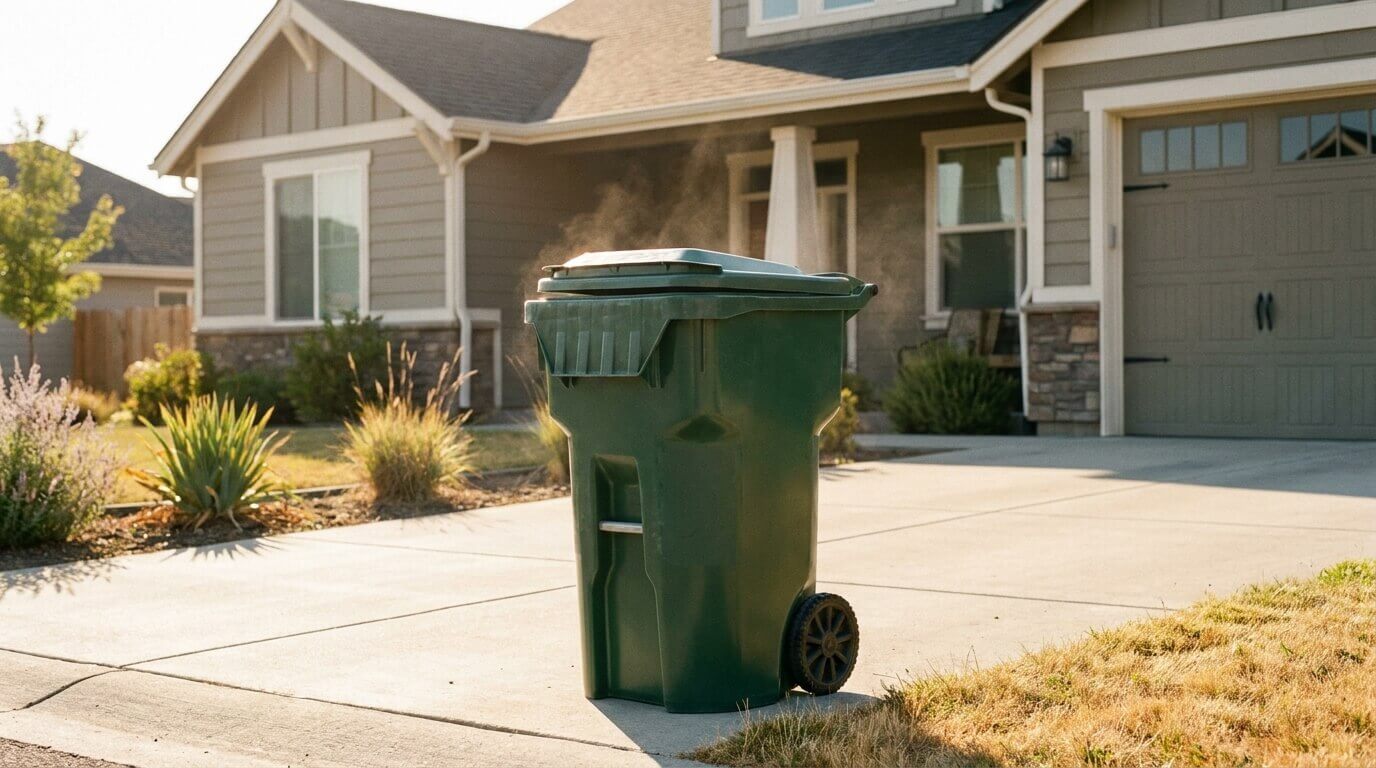
How to stop trash cans from smelling in summer starts with understanding why the odor gets worse in hot weather. Trash cans smell in summer because heat accelerates bacterial growth in liquid waste trapped at the bottom of the bin. To stop the odor, bag and drain wet waste, wash the can with a vinegar or bleach solution every two to four weeks, dry it completely in the sun, add a deodorizing layer of baking soda or cat litter, and keep the bin shaded to keep interior temperatures low.
Summer turns an ordinary garbage can into a slow cooker. Once the temperature climbs past 80°F, the bacteria feeding on food scraps multiply fast, releasing the sulfur compounds and ammonia that make a bin smell sour from twenty feet away. The good news: the problem is mechanical, not mysterious. Remove the moisture, kill the bacteria, and control the heat, and the smell disappears.
Why Do Trash Cans Smell Worse in Summer?

Three things change when the weather warms up.
- Bacterial growth doubles. Odor-causing bacteria reproduce roughly twice as fast for every 18°F rise in temperature. A bin that smelled fine in March becomes unbearable in July with the same contents.
- Liquid pools at the bottom. Melted ice, condensation, spilled drinks, and leaking bags create a layer of “garbage juice” that never dries out in a closed can.
- Sun-heated plastic holds odor. Polyethylene bins absorb odor molecules into their surface when hot, so the can keeps smelling even after you empty it.
Step 1: Empty and Rinse the Bin
Start with an empty can on trash day. Spray out loose debris with a hose, then tip the can to drain. Don’t skip this — washing a bin with debris still inside just spreads the residue around.
Step 2: Deep Clean With Vinegar or Bleach
Pick one of these two solutions:
- Vinegar method (pet- and kid-safe): Mix one part white vinegar to one part hot water. Add a squirt of dish soap to cut grease.
- Bleach method (strongest disinfectant): Mix 1/2 cup bleach per gallon of water. Never combine bleach with vinegar or ammonia products.
Pour about a gallon into the bin, scrub the walls and lid with a long-handled brush, and pay attention to the bottom rim and the underside of the lid, where residue collects. Let the solution sit for 10 minutes before dumping it.
Step 3: Dry It Completely in the Sun
This is the step most people skip, and it matters most. Bacteria need moisture. Flip the can upside down on the driveway for two to three hours on a sunny day. UV light adds a second round of disinfection for free.
Step 4: Build an Odor Barrier
Once the bin is bone dry, create a layer that absorbs moisture and odor between collections:
- Sprinkle a half-inch of baking soda across the bottom
- Or pour in a thin layer of clay cat litter, which absorbs liquid better
- Add a few sheets of newspaper to soak up leaks from torn bags
- Drop in a dryer sheet or a cotton pad with 10 drops of tea tree or eucalyptus oil under the lid
Replace the barrier every two weeks in peak summer.
Step 5: Change What Goes In the Can
Most summer odor traces back to a handful of items, especially food waste that sits in warm garbage cans.
Handle them differently:
- Double-bag meat, seafood, and dairy, or freeze them until collection day
- Drain liquids into the sink before bagging anything wet
- Rinse recyclables — sticky soda cans attract flies and ants
- Compost or bag produce scraps separately; melon rinds and citrus ferment quickly in heat
Step 6: Get the Bin Out of Direct Sun
Interior bin temperatures can run 20 to 30 degrees hotter than the air when a dark plastic can sits in full afternoon sun. Moving it to the shaded north side of the house makes a measurable difference. A storage shed for garbage cans goes further, keeping the bin cool, blocking rain from filling it with standing water, and containing odor behind a closed door. A simple lattice screen, a carport corner, or a lean-to along the fence line all work if a dedicated enclosure isn’t in the budget.
How Often Should You Clean a Trash Can in Summer?
| Household type | Cleaning frequency |
|---|---|
| Single or couple, mostly dry waste | Every 4 weeks |
| Family with kids, regular food scraps | Every 2 weeks |
| Homes with pets, diapers, or seafood waste | Weekly rinse, deep clean every 2 weeks |
What Kills the Smell Fastest?
If you need the odor gone today, the fastest fix is a bleach rinse followed by drying in full sun. Vinegar neutralizes odor but works more slowly. Air fresheners and scented bags only mask the problem and often make the smell worse by layering perfume over sulfur compounds.
Keep Pests Out at the Same Time
Odor control and pest control overlap. A tight-fitting lid, a bungee cord across the top, and a clean rim eliminate the scent trail that draws flies, raccoons, and ants. Sprinkle borax or diatomaceous earth around the base of the can to stop maggots from developing in spilled residue.
Clean the bin, dry it thoroughly, block the moisture, and shade it — these steps can also help reduce flies around your garbage can through the hottest weeks of the year.

