
Key Takeaways
- A well-planned driveway supports safe access, controlled drainage, and a welcoming first impression.
- Soil, slope, runoff, traffic, and local weather affect long-term performance.
- Planning the base, edges, drainage, and snow storage before installation can prevent common problems.
- The right surface depends on the property’s use, maintenance needs, and design goals.
- Borders, lighting, and edge markers can improve everyday function and curb appeal.
Driveway planning involves more than choosing an attractive surface. A driveway manages daily traffic, channels water, supports pedestrians, and frames one of the most visible parts of a home. Whether replacing an existing driveway or building a new one, early decisions about grading and materials can make the space easier to use year-round.
Homeowners considering driveway pavers or another surface should first evaluate how water moves across the property, how the soil behaves, and what types of vehicles will use the area.
A properly planned driveway can help reduce drainage issues, improve access, and create a welcoming entrance. Maintenance, weather exposure, and long-term durability should also influence material selection.
Why Driveway Planning Starts Below the Surface
The visible surface is only one part of a driveway system. Beneath it are the prepared subgrade, aggregate base, bedding materials where applicable, joints, and edge support. Each layer helps keep the surface stable under vehicle loads and changing weather conditions.
Weak, saturated, or poorly prepared soil can contribute to uneven settling, ruts, and edge movement. The required base depends on soil type, slope, local freeze-thaw conditions, drainage needs, and expected vehicle weight.
Before choosing colors or borders, ask a contractor how the existing material will be removed, how the soil will be evaluated, how the base will be compacted, and where water will flow after heavy rain. A broader pre-construction site planning review can also help identify grading, access, and drainage concerns before work begins.
Check the Site Before Choosing Materials
A property review can reveal problems that need attention before construction. If possible, inspect the site during or soon after rainfall. Consider the roofline, garage, sidewalks, landscaping, and street connection.
- Observe where rainwater flows and collects.
- Identify low spots near the garage, walkway, street, or foundation.
- Check whether downspouts discharge across the driveway.
- Consider whether clay or slow-draining soil may retain water.
- Measure driveway width, turning space, parking needs, and slope.
- Confirm local requirements for permits, curb cuts, drainage, and snow storage.
Build Drainage Into the Design
Drainage should be intentional. The driveway should generally direct water away from structures without sending runoff toward a garage entrance, low walkway, or neighboring property. Depending on the layout, a planned slope, swale, channel drain, or landscaped area may help manage water.
Where conditions allow, water can pass through porous surfaces or open joints into specially designed aggregate layers. Permeable paving is not suitable for every property. Soil drainage, groundwater conditions, slope, local rules, and maintenance requirements should all be considered.
Downspouts also need attention. Concentrated roof runoff can create puddles, wash soil toward the pavement, or freeze in pedestrian areas. Directing water to an appropriate drainage point or planted area may reduce these problems.
Choose a Surface for Real-World Use
No driveway material is ideal for every home. Concrete, asphalt, natural stone, and interlocking pavers differ in appearance, installation, repair, and maintenance requirements. The practical choice is the one that suits the property and household’s everyday needs.
Questions to Ask Before Selecting a Surface
- How many vehicles will use the driveway daily?
- Will it support delivery vehicles, trailers, or recreational vehicles?
- Does the area experience freezing temperatures and repeated thawing?
- Are oil spills, mud, road salt, or leaf litter common?
- How much seasonal maintenance is realistic?
- Will future repairs need to match the original installation?
Concrete offers a clean, continuous appearance, but repairs may remain visible. Asphalt provides a dark surface and requires periodic care. Natural stone creates a distinctive look but needs a suitable base and careful installation. Interlocking pavers allow individual units to be lifted and reset for localized repairs, provided the underlying base remains sound.
Plan for Winter Before the First Snow
Winter planning can make snow removal safer and help protect the driveway. Before snowfall, mark the edges so homeowners and plow operators can see the limits of the paved area. Keep snow piles away from drains, sidewalks, mailbox areas, and garage doors.
Use shovels, plow equipment, and deicers suitable for the selected surface, following product directions. Practical snow-removal measures for clearing entrances and sightlines can also help maintain safe access near the street.
After winter, inspect for chipped edges, loose pavers, open joints, cracks, or settled sections.
Use Design Details That Improve Function
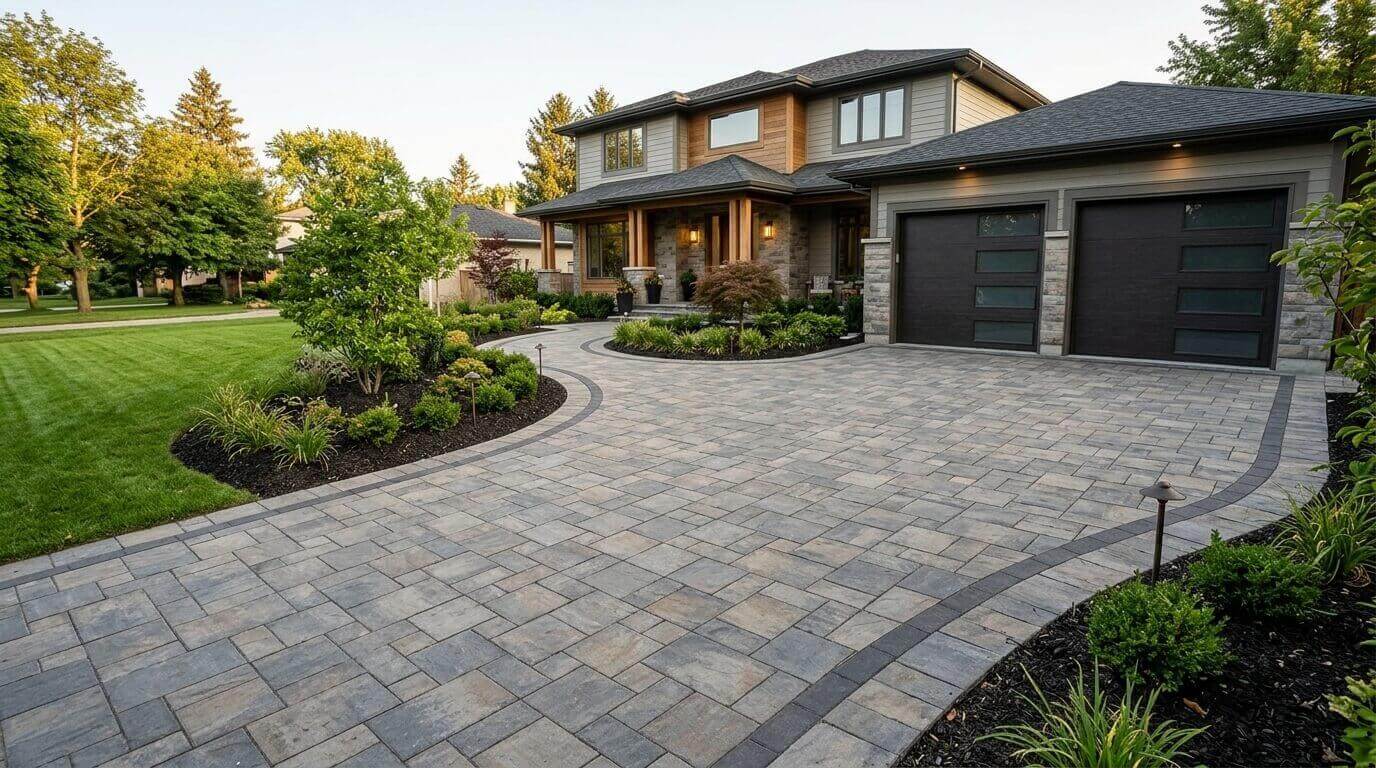
Thoughtful visual details can make a driveway easier to navigate. Contrasting borders can define the edges, while banding near parking areas can create visual organization. Choose textures that suit the local climate and provide comfortable traction for pedestrians.
- Coordinate the driveway with the home’s siding, trim, roof, walkways, and landscaping.
- Add low-voltage lighting near turns, steps, and garage entrances.
- Leave enough space for vehicle doors to open without blocking a walkway.
- Protect edges with suitable restraints and avoid planting layouts that crowd the driving surface.
Avoid Common Driveway Planning Mistakes
Many driveway problems begin before installation. Avoid choosing a surface based only on color, skipping drainage checks, using an inadequate base, or ignoring the grade between the house and street. Plan snow storage, keep roof runoff from draining onto the pavement, and review examples of a contractor’s completed work.
Create a Practical Project Checklist
- Set a realistic budget that includes preparation and drainage.
- Measure the space and note access limitations.
- Record pooling, cracking, unsafe edges, and other existing problems.
- Select a surface based on traffic, climate, and maintenance needs.
- Plan lighting, borders, landscaping, drainage, and snow storage.
- Request a written scope covering base preparation, cleanup, and maintenance guidance.
- Confirm permit, property-line, and local drainage requirements.
Maintenance That Protects the Investment
Seasonal care helps identify small issues early. Sweep away leaves and debris, clear drainage channels, promptly address oil spills, and inspect edges after snow removal. Watch for uneven areas, loose sections, and open joints. Use sealers or treatments only when they are appropriate for the chosen material.
For asphalt surfaces, following suitable asphalt driveway maintenance practices can help homeowners spot cracks, drainage problems, and other signs of deterioration before they worsen.
Common Questions Homeowners Ask
What Should Be Planned First: Appearance or Drainage?
Drainage and site performance should come first. Once the layout, grading, and base plan are sound, colors, patterns, borders, and lighting can refine the design.
Are Permeable Driveways Suitable for Every Property?
No. Suitability depends on soil, groundwater, slope, rainfall, maintenance, and local requirements. A site-specific review is important before choosing this approach.
When Should a Homeowner Hire a Professional?
Professional input is especially valuable for steep sites, poor soil, drainage problems, large driveways, complex grading, and projects near foundations, retaining walls, or property lines.
Conclusion
A successful driveway balances strength, drainage, safety, maintenance, and style. By evaluating the site before choosing a surface, homeowners can create an entrance that looks polished, handles everyday use, and remains manageable through changing seasons.

