
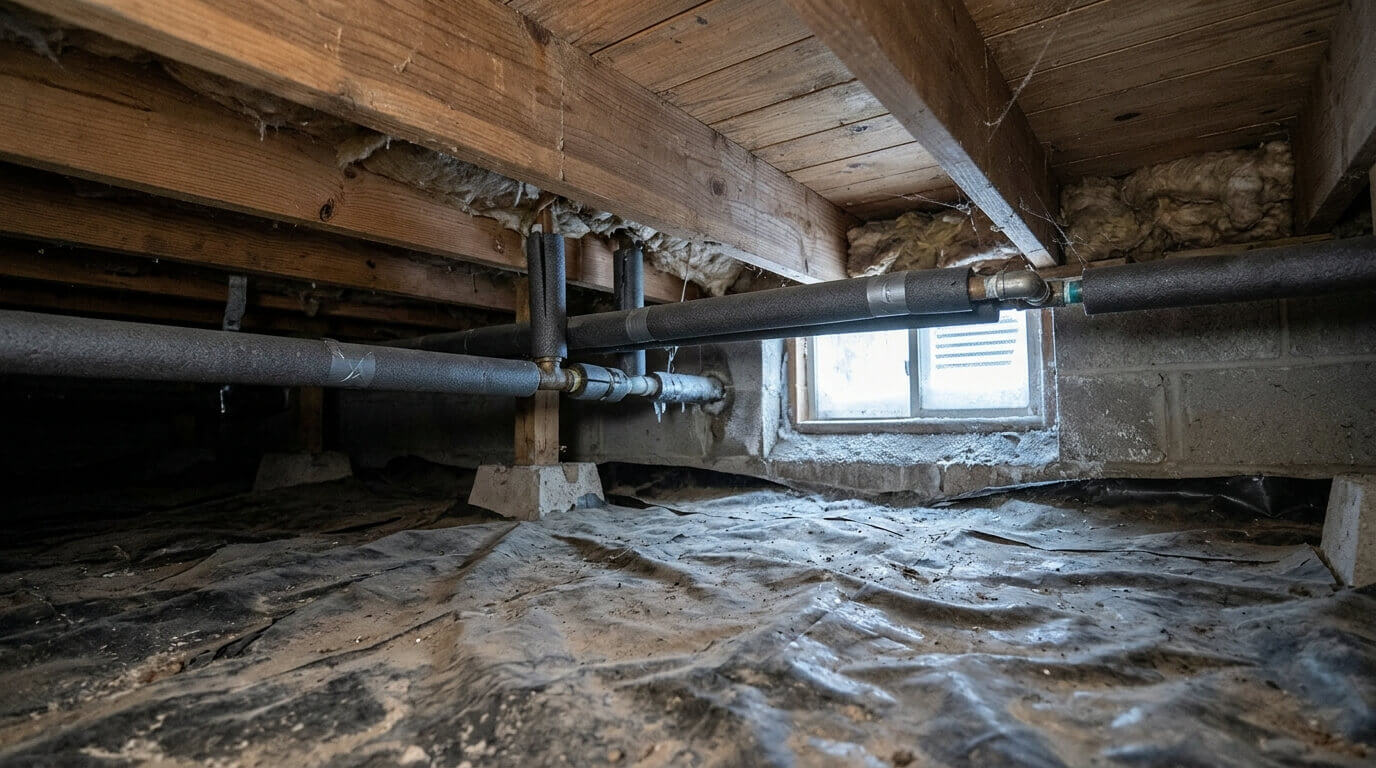
Charlotte winters can shift quickly from a mild afternoon to an overnight freeze, leaving exposed plumbing in crawl spaces, garages, and exterior walls at risk. Homeowners who notice drips, corrosion, or low pressure before cold weather arrives may benefit from contacting a pipe leak repair plumber in Charlotte before a small weakness becomes a damaging leak. Preparation matters because frozen water expands inside a pipe, placing pressure on the pipe itself as well as fittings and valves. Damage is not always obvious while the line is frozen. A cracked section may begin leaking only after temperatures rise and normal water flow returns.
Why Sudden Freezes Cause Plumbing Damage
A short cold snap can be enough to freeze water lines that sit outside the heated portion of a Charlotte home. Crawl spaces are especially important to inspect in this area, along with pipes near foundation openings, drafty garage walls, and outdoor faucets. Even if a pipe looks fine early in the morning, a weak fitting can begin dripping later as the ice melts and water pressure returns.
Where Charlotte Pipes Commonly Freeze
Pipes do not have to be fully outdoors to face freezing temperatures. Focus attention on areas where cold air can move freely around plumbing or where insulation is missing, wet, or damaged.
- Vented crawl spaces beneath the home
- Unheated garages and utility rooms
- Attics, unfinished bonus rooms, and exterior walls
- Kitchen and bathroom cabinets along outside walls
- Outdoor faucets, hose connections, and outdoor kitchens
- Irrigation lines and backflow prevention assemblies
- Water lines near doors, vents, or foundation gaps
The EPA advises homeowners to insulate water lines along exterior walls and drain outdoor spigots before freezing temperatures arrive. These measures are part of practical seasonal plumbing steps that can reduce winter plumbing risks.
Warning Signs to Check Before Winter
Inspect visible plumbing before adding pipe insulation or closing an access panel. Insulation can slow heat loss, but it cannot repair a failed fitting, an active leak, or a cracked pipe. Watch for these signs:
- Water stains below pipes, cabinets, ceilings, or floors
- Green corrosion, rust, or white mineral buildup around joints
- Damp insulation in a crawl space or utility area
- Dripping outdoor faucets or hose bibs
- Reduced pressure at more than one fixture
- Recurring pinhole leaks or previous repair couplings
- Dripping sounds inside walls
- A water meter that moves while all fixtures are off
A Pre-Freeze Plumbing Checklist
Several Days Before a Freeze
- Locate the main water shutoff valve and make sure household members know where it is.
- Disconnect garden hoses so trapped water does not remain at the outdoor faucet.
- Check exterior faucets for drips, cracks, and loose connections.
- Inspect accessible pipes for missing insulation or existing leaks.
- Seal manageable air gaps around accessible pipe penetrations.
- Confirm that the home heating system is operating properly.
The Day Before a Freeze
- Keep indoor temperatures steady, including overnight.
- Close garage doors when water lines run through or beside the garage.
- Open cabinet doors beneath sinks served by vulnerable exterior-wall plumbing.
- Protect approved outdoor plumbing covers and backflow devices.
- Allow a small stream of water at a vulnerable faucet when prolonged freezing conditions make it appropriate.
Safe Do-It-Yourself Preparation Steps
Many preventive tasks are simple, provided the pipes are sound and easy to reach. Homeowners can generally remove hoses, reposition stored items away from plumbing, replace loose insulation on dry, undamaged pipes, and keep sink cabinets open during severe cold. Use additional caution when draining irrigation, installing heat tape, opening walls, replacing pipe sections, or thawing plumbing that is not clearly visible. Never use a torch, charcoal grill, fuel-burning heater, or other open flame to thaw a pipe. These methods can create a fire hazard, damage plumbing, or introduce dangerous fumes indoors.
When to Call a Licensed Plumber
Professional service is the safer choice when there is an active leak, a visibly split or bulging pipe, a frozen line behind a wall or ceiling, or water near electrical equipment. Call for help as well if several fixtures lose pressure, the main shutoff will not operate, or the same section of pipe has leaked more than once. Before authorizing a larger repair, ask for a written explanation of the damaged area, recommended pipe material, needed access work, testing, cleanup, and any permit requirements. Repeated failures may indicate that a more durable repair is needed instead of another temporary patch.
What to Do During a Freeze
- Open the affected faucet slightly if flow has slowed or stopped.
- Check other fixtures to determine whether the problem is isolated.
- Keep the indoor heat steady and open nearby cabinet doors.
- Use gentle indirect heat only if the frozen section is visible and accessible.
- Turn off the main water valve as soon as a pipe bursts.
- Avoid wet areas around outlets, appliances, or electrical panels.
- Contact a licensed plumber if the pipe cannot be safely thawed or repaired.
What to Check After Temperatures Rise
Thawing can reveal damage that was hidden while a pipe remained frozen. Inspect cabinets, floors, ceilings, crawl spaces, walls, insulation, exterior faucets, and irrigation connections for new moisture. Check water pressure at several fixtures, listen for dripping, and watch the water meter with fixtures turned off. Dry wet materials promptly to limit moisture damage. Municipal water guidance from outside the Charlotte area, such as Nashville’s, also emphasizes protecting exposed pipes, maintaining consistent indoor heat, and knowing how to shut off the water supply before an emergency occurs. These cold-weather plumbing preparation steps are useful reminders for Charlotte households facing sudden freezes.
Common Questions About Frozen Pipes
Can Pipe Insulation Prevent Every Freeze?
No. Insulation slows heat loss, but it does not create heat. Long periods of cold, air leaks, power outages, and plumbing defects can still lead to frozen pipes.
Is a Frozen Pipe Always Burst?
No. A frozen pipe may remain intact, but reduced flow should be treated as an early warning. Cracks can appear as pressure builds or when the line thaws.
Should Outdoor Faucets Be Covered?
Covers can add protection, but disconnecting hoses and addressing leaks first are more important. A leaking outdoor faucet should be repaired before winter weather arrives.
Final Takeaway
For Charlotte homeowners, preparing plumbing systems before winter temperatures arrive is an important part of protecting the property. A brief inspection can help identify small leaks, worn pipe connections, and areas where cold air may reach exposed plumbing. Addressing these concerns early, adding insulation to vulnerable pipes, and checking that the main water shutoff valve works properly can help reduce the risk of frozen or burst pipes. Homeowners should also pay attention to pipes in crawl spaces, garages, basements, and exterior walls, as these areas may be more exposed to cold conditions. During particularly cold nights, maintaining consistent indoor temperatures and allowing warm air to circulate through vulnerable plumbing can provide additional protection. Taking these preventive steps before a freeze can help limit unexpected plumbing repairs, water damage, and disruptions to daily household activities.

