
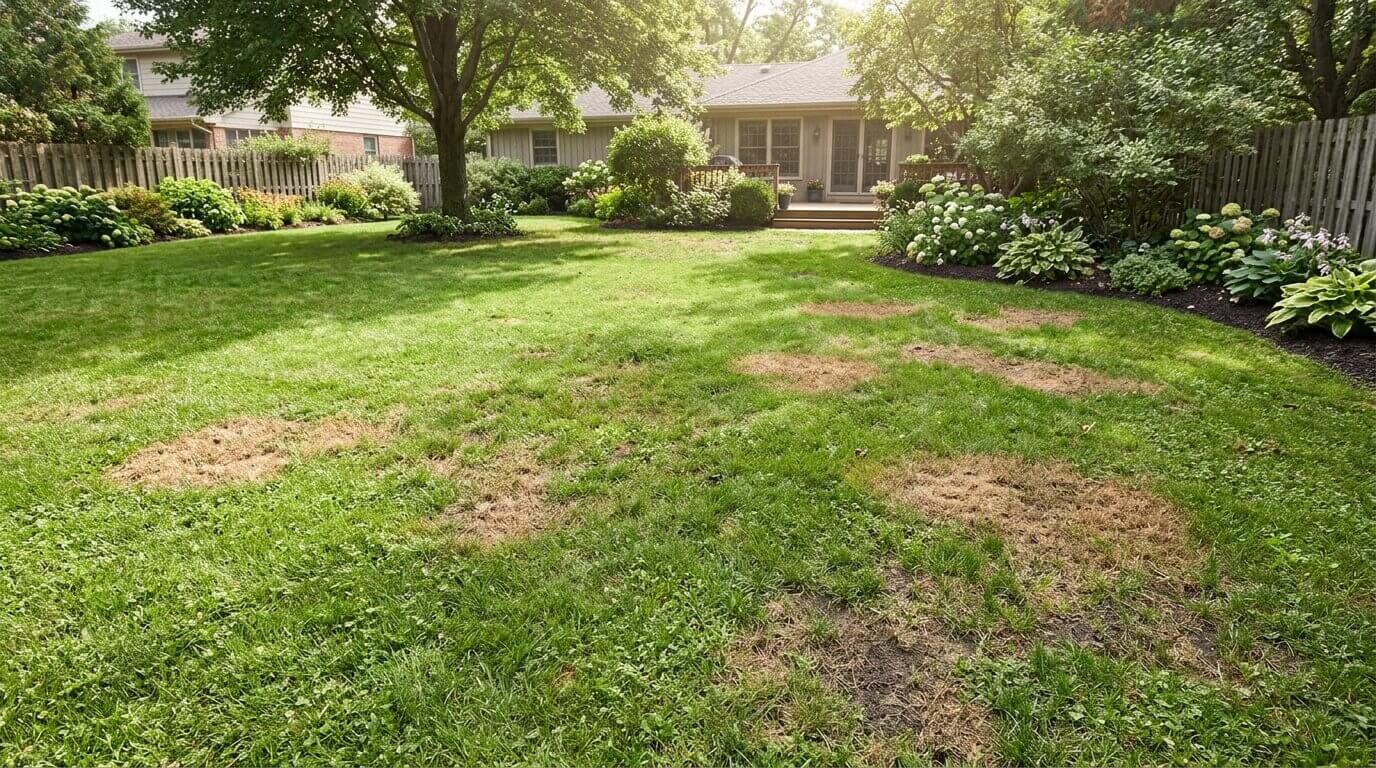
Key Takeaways
- Brown grass does not automatically mean your lawn needs more water.
- Insects, disease, irrigation problems, compacted soil, nutrient issues, and chemical injury can create similar symptoms.
- The location, pattern, and pace of damage provide useful diagnostic clues.
- Applying fertilizer, insecticides, or fungicides before identifying the issue can cause stress and waste money.
- A simple inspection can help you choose a sensible next step.
Brown grass can develop for several reasons, including drought, excessive watering, pests, disease, and soil problems. When a lawn develops brown patches, turning on the sprinklers may seem like the easiest solution. However, that approach can backfire when the actual cause is poor drainage, insect activity, or soil stress. Before choosing a lawn treatment, identify the underlying problem rather than relying on a general treatment.
The most useful rule is simple: diagnose first, then treat. A brown patch is a symptom, not a diagnosis. Looking closely at the grass blades, roots, soil moisture, irrigation pattern, and edges of the damaged area can reveal more than color alone.
Why Brown Grass Needs a Closer Look
Florida lawns face intense sun, heat, heavy rain, sandy soils, and long growing seasons. Those conditions can stress turf in different ways. Dry, dull grass may point to inadequate irrigation, but chinch bugs can cause similar browning in sunny St. Augustine grass. Excess water can weaken roots and increase the likelihood of fungal disease. Fertilizer applied at the wrong rate or time may also worsen an already stressed lawn.
Common Causes of Brown Patches
- Drought stress: Grass may look gray-green before turning brown, especially in areas missed by sprinklers.
- Overwatering: Persistently wet soil reduces the oxygen available to roots and can promote disease activity.
- Chinch bugs: These insects are a common concern in sunny St. Augustine grass and can resemble drought damage.
- Sod webworms or armyworms: Caterpillar feeding can leave ragged blades and thinning turf.
- Fungal disease: Some diseases form expanding patches during periods that favor fungal growth.
- Compaction and thatch: Dense soil or a thick organic layer can limit the movement of water, air, and nutrients to roots.
- Nutrient or chemical injury: Uneven fertilizer application, herbicide drift, pet urine, and spilled products can cause localized damage.
What Patch Patterns Can Tell You
Patterns cannot confirm a problem on their own, but they can help identify patchy lawn and drainage problems and narrow down the possibilities. Damage near a sidewalk, driveway, or south-facing wall may be due to reflected heat, runoff, or poor irrigation coverage. A patch that follows a sprinkler zone suggests checking the system first. Small, scattered thin areas can indicate insect feeding, root stress, or poor nutrition. Circular or ringed patches may be disease-related, while rapidly expanding damage deserves prompt inspection.
How to Check for Lawn Pests
- Start at the border between healthy turf and damaged turf, where active pests are more likely to be found.
- Part the grass blades near the soil line and look for insects, caterpillars, droppings, or chewed foliage.
- Check whether the turf feels loose or lifts easily, which can indicate root or insect damage.
- Notice whether birds are repeatedly feeding in the same area. This can be a clue, though it does not prove an infestation.
- Confirm the pest before applying an insecticide, as unnecessary treatments can harm beneficial insects and fail to address the real problem.
Signs of Lawn Disease
Fungal problems are more likely when grass remains damp for long periods, particularly with late-day irrigation, excessive rainfall, poor airflow, or overfertilization. In Florida, large patch disease can create round areas that enlarge over time, sometimes with darker or orange-toned borders. It is especially troublesome in St. Augustinegrass and zoysiagrass during cooler, damp conditions.
Other root-related diseases can produce irregular yellowing, thinning, and weak turf that does not respond as expected to watering. Avoid trying to force recovery with heavy nitrogen. Instead, reduce excess moisture, mow at an appropriate height with a sharp blade, and avoid spreading disease by mowing affected sections last.
Soil, Water, and Drainage Problems
Many Florida landscapes have sandy soil that drains quickly and may not retain nutrients well. At the same time, compacted spots can prevent water from entering the root zone even when the surface looks wet. Check for blocked sprinkler heads, uneven spray patterns, dry slopes, standing water, and heavy thatch. Small straight-sided cups placed around a sprinkler zone can help show whether irrigation is reaching the lawn evenly.
Where compaction is confirmed, core aeration may improve the movement of air and water into the soil. It is not a cure for every brown patch, but it can be useful when roots are struggling in dense soil.
A Simple Lawn Inspection Process
- Map the damage: Take photos and note where browning began.
- Review recent changes: Consider rainfall, irrigation, mowing, fertilizer, herbicide, and foot traffic.
- Inspect the blades: Look for chewing, spots, torn tips, or unusual discoloration.
- Check the soil: Feel whether it is dry, soggy, or unusually hard.
- Examine the roots: Healthy turf should be anchored firmly with active-looking roots.
- Choose the least aggressive correction: Fix watering or mowing errors before applying a pesticide.
Common Mistakes to Avoid
- Watering more without first checking moisture below the surface.
- Applying weed-and-feed products to stressed turf.
- Using insecticide when disease or irrigation is the likely cause.
- Scalping warm-season grass during hot weather.
- Ignoring dull mower blades that tear rather than cleanly cut grass.
- Applying heavy fertilizer in an attempt to make damaged turf recover immediately.
When to Seek Professional Help
Professional evaluation makes sense when patches are spreading, damage returns after basic corrections, a large area is affected, or the symptoms remain unclear. Ask what evidence supports the diagnosis, what treatment is proposed, and how the lawn will be monitored afterward. Always follow pesticide label directions and keep children and pets off treated areas for the stated re-entry period.
Frequently Asked Questions
Does brown grass always need more water?
No. Brown grass can result from drought, pests, disease, compacted soil, poor drainage, or chemical injury. More water can worsen some of those problems.
How can chinch bug damage be identified?
Look for yellowing or browning in sunny St. Augustine grass, then inspect the transition between healthy and damaged grass for active insects.
Can overwatering cause brown patches?
Yes. Constantly wet soil can stress roots and create conditions that favor certain diseases.
Should fertilizer be applied to brown grass?
Only after identifying a nutrient need. Fertilizer will not correct insect damage, disease, poor drainage, or uneven irrigation.
How long will damaged grass take to recover?
Recovery depends on the turf type, weather, growing season, and severity of the damage. Minor stress may improve within weeks, while serious root loss or disease can take much longer to resolve.
Final Thoughts
Brown patches are valuable clues when homeowners slow down and inspect them carefully. Consistent mowing, measured watering, healthy soil practices, and proper yard debris removal can help maintain healthier turf and reduce avoidable lawn problems.

