
Key Takeaways
- Test water hardness before deciding that a softener is necessary.
- Match capacity to household water use, hardness level, and peak demand.
- Demand-initiated regeneration can reduce unnecessary water and salt use.
- Salt-based softeners remove hardness minerals, while salt-free conditioners generally focus on scale control.
- Keep the brine tank, drain line, and settings checked throughout the year.
- Review local plumbing and wastewater requirements before installation.
Water softener maintenance starts with identifying mineral buildup on faucets, cloudy glassware, and stubborn soap film before choosing a suitable treatment system. Before buying equipment, it helps to determine whether hardness is the actual issue, then choose a system that fits the home rather than simply choosing the largest available model.
Proper system installation requires suitable plumbing connections, drain routing, bypass valves, and correct equipment settings. The original water softener installation in Orem Utah resource provides further installation information. A well-selected unit can reduce scale-related chores while avoiding unnecessary salt use and water regeneration.
Start With A Hard-Water Check
Water hardness refers mainly to dissolved calcium and magnesium. These minerals are not inherently a health concern, but they can cause scale buildup in plumbing fixtures, water heaters, dishwashers, and showerheads. Homeowners on a public supply can request hardness information from their water provider, while households with private wells should use a reliable test kit or certified laboratory before selecting treatment.
Hardness may be reported in grains per gallon or milligrams per liter. The number matters because a softener must be programmed for the water it actually receives. Guessing can lead to a unit that regenerates too often, uses too much salt, or fails to keep up with demand.
Recognize Common Hard-Water Signs
Scale is often easiest to notice where water evaporates or is heated. Watch for white deposits around faucets, reduced flow through aerators, spots on dishes, soap that is difficult to rinse, dry-feeling skin after bathing, and buildup inside hot-water appliances. These clues are useful, but they are not a substitute for testing because staining, sediment, iron, and cleaning-product residue can cause similar problems. Understanding hard water plumbing damage can help identify the effects of mineral buildup.
Compare Treatment Options
Salt-Based Ion-Exchange Softeners
A conventional softener uses resin to exchange calcium and magnesium ions for sodium or potassium ions. Eventually, the resin needs to be regenerated with brine and rinse water. The calcium and magnesium removal process can help reduce scale, but it also makes efficiency an important buying factor because regeneration consumes both water and salt.
Salt-Free Conditioners
Salt-free products are often marketed for scale control. They do not generally remove hardness minerals in the same way as ion-exchange softeners, so homeowners should not expect the same effect on soap lather, water feel, or hardness test results. They may be worth comparing when a household wants to limit brine discharge or does not need full softening.
Point-Of-Use Filtration
An under-sink filter serves a different purpose from a whole-house softener. It may be appropriate for a specific drinking-water concern at one faucet, but it should be chosen based on the contaminant of concern and verified performance claims. A softener alone should not be assumed to remove every taste, odor, metal, microorganism, or emerging contaminant.
Choose The Right Size
Correct sizing balances daily water use, the home’s peak flow needs, and tested hardness. Consider how many people live in the home, how often laundry and dishwashing run, whether multiple showers operate at once, and whether irrigation or outdoor faucets will remain untreated. A small unit may regenerate too frequently, while an oversized unit can cost more upfront and may not provide better results.
Ask the installer to explain usable capacity, not just a large number printed on a sales brochure. Also ask whether the control valve can adjust its regeneration schedule as household use changes during holidays, vacations, or seasonal routines.
Prioritize Water And Salt Efficiency
Look for demand-initiated regeneration rather than a timer that regenerates on the same calendar schedule regardless of water use. A metered system tracks water consumption and can delay regeneration until the resin has actually treated a set amount of water. For example, a family away for a long weekend should not need the same regeneration schedule as a full house using water every day.
Compare the gallons used per regeneration, the salt used per cycle, the expected annual operating costs, and the availability of replacement parts. Verify whether the equipment has third-party testing or certification relevant to its claims. Efficient settings are especially valuable in a dry climate where wasting treated water adds little benefit.
Plan Installation And Maintenance
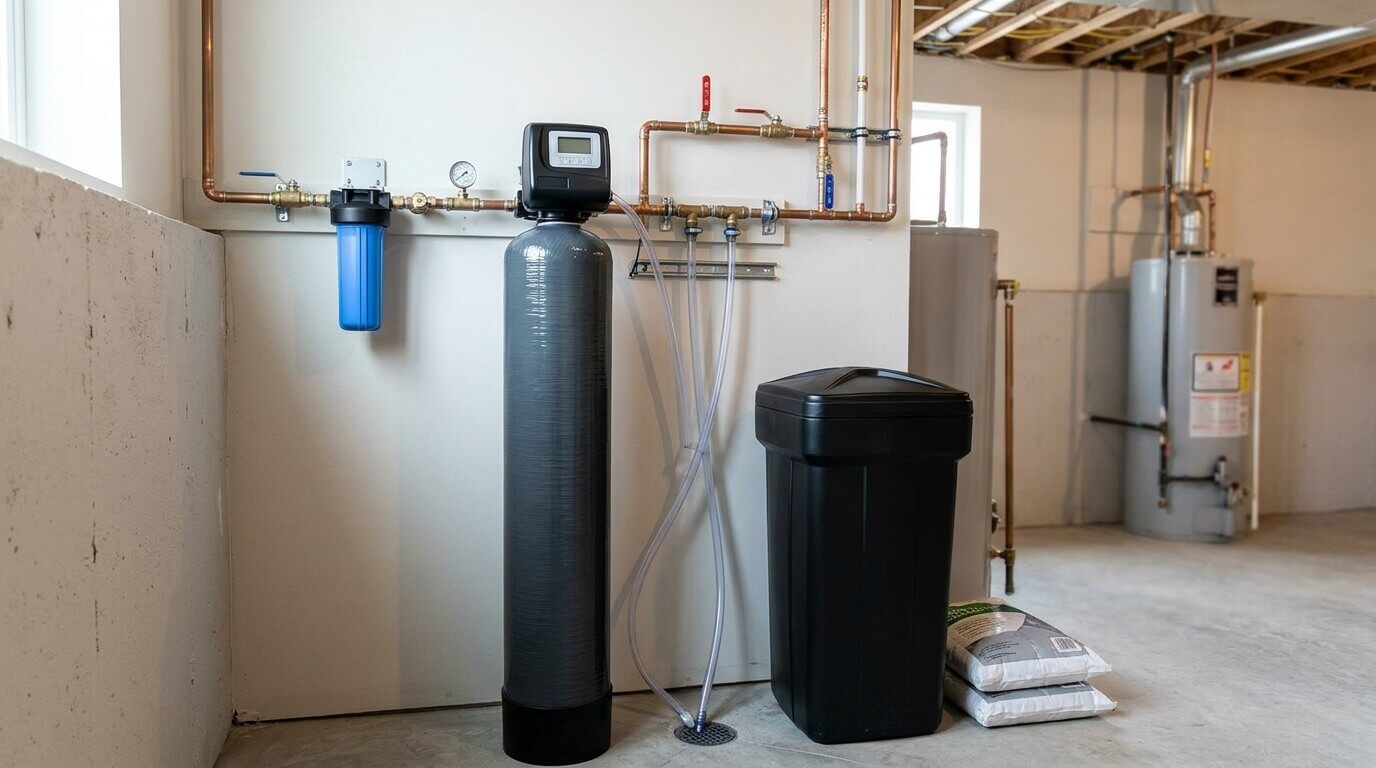
A softener needs an accessible indoor location, a main-water connection, a suitable drain arrangement, and enough room for salt loading and service. A bypass valve is important because it allows water service to continue during maintenance. Drain lines must be installed according to plumbing requirements and manufacturer instructions, so homeowners should confirm local rules before purchase.
Monthly checks can prevent common failures and help identify plumbing problems before they become emergencies, as explained in this guide to preventing plumbing emergencies. Keep enough salt in the brine tank, look for hardened salt bridges, inspect for leaks, and notice whether the water level appears unusual. At least once a year, review the hardness setting, inspect the drain line and bypass valve, and clean the brine tank as recommended by the manufacturer.
Consider Drinking-Water Needs
When sodium chloride is used for regeneration, softened water contains added sodium. Households managing sodium-sensitive health conditions should ask a clinician whether softened water is appropriate for drinking. Many homeowners choose to leave a cold-water kitchen tap untreated for cooking and drinking, or they consider potassium chloride if their equipment supports it.
The effects of home water softening on sodium and wastewater are also worth considering when deciding which fixtures need treatment. Toilets, hose bibs, and irrigation connections usually do not need softened water, which can reduce demand on the system. Managing household water usage also helps limit unnecessary water consumption.
Use A Buyer Checklist
- Complete a hardness test or obtain current utility information.
- Identify whether the goal is true softening, scale control, filtration, or several separate needs.
- Match system capacity and flow rate to the household.
- Compare regeneration water use and salt use.
- Confirm drain, power, bypass, and service-clearance requirements.
- Check local plumbing and discharge rules.
- Write down maintenance tasks and keep the owner’s manual available.
Conclusion
The best water-treatment choice starts with tested water and a specific goal. By selecting the right capacity, using demand-based regeneration, treating only the fixtures that need it, and keeping up with maintenance, homeowners can manage hard-water problems without using more salt or water than necessary.

