
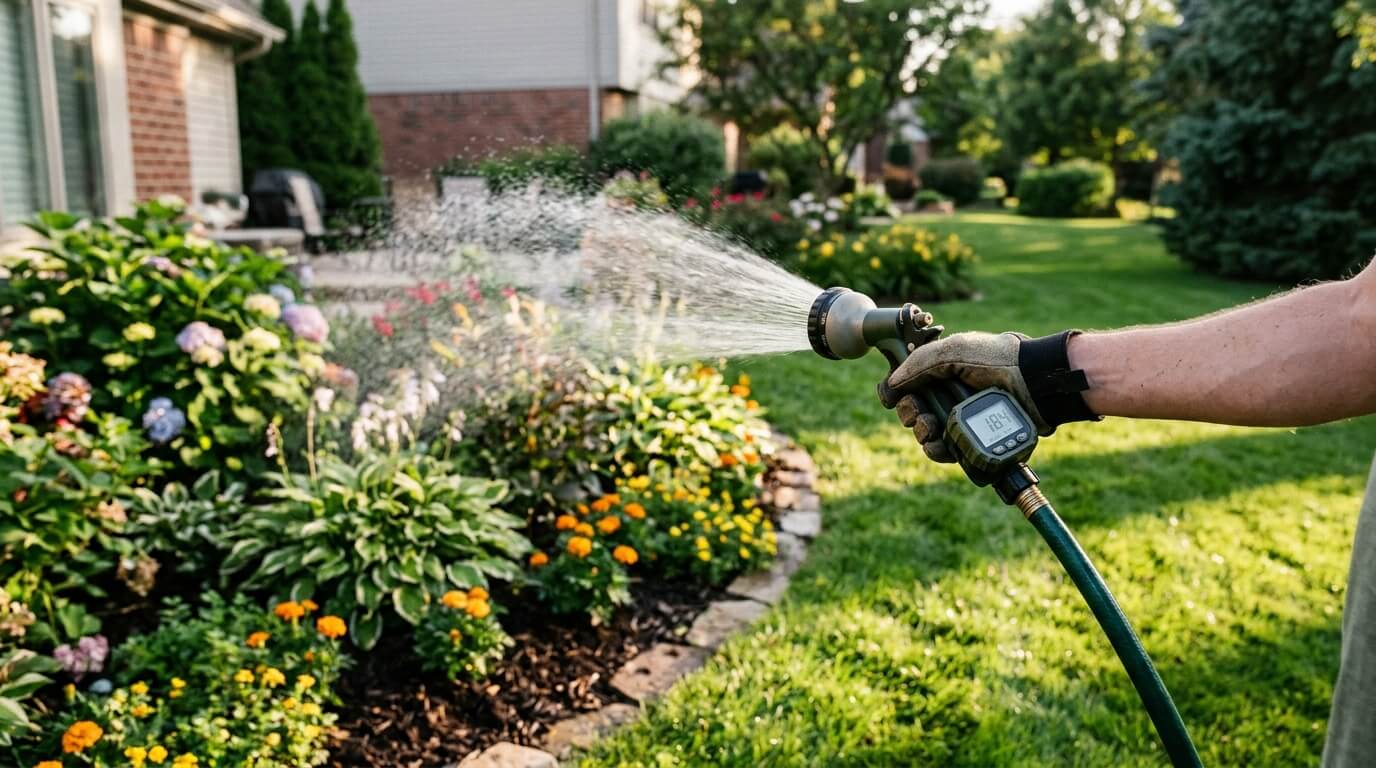
Proper watering practices are crucial for a healthy garden, but many gardeners over-irrigate their plants. Some areas receive excessive water, while others do not get enough. This usually happens when people estimate watering time instead of measuring garden water usage. With a few adjustments to watering habits and the right equipment, you can maintain healthy plants, keep your lawn in good condition, and reduce unnecessary water consumption.
Why You Should Monitor Garden Water Usage
Different plants have different watering needs. Flowers, vegetables, shrubs, and lawns require varying amounts of water. Other factors, such as soil type, sunlight, temperature, and rainfall, also influence how quickly the soil dries.
Tracking water consumption helps you understand how much water your garden receives. It also makes it easier to identify waste and adjust your watering routine. Understanding outdoor water management and home water efficiency can also help you make better irrigation decisions.
How a Water Flow Meter Helps With Garden Irrigation
Several gallons of water can flow through a garden hose in just a few minutes. Without a measuring device, it can be difficult to determine how much water is used during each watering session.
A water flow meter helps gardeners monitor water moving through their hoses. Depending on the model, it can measure flow rate and total water consumption. This information is useful when watering lawns, flower beds, vegetable patches, and other outdoor plants.
For example, a hose delivering 2 gallons per minute will use approximately 30 gallons in 15 minutes. Digital displays on some meters make readings easier to check, while other models offer additional monitoring features.
Before selecting a meter, check its hose compatibility, measurement units, and supported flow range to ensure it works with your existing watering equipment.
Understanding Water Flow Rate
Water flow rate measures how quickly water moves through a hose. It is usually measured in gallons per minute (GPM) or liters per minute (LPM).
Flow rate and watering time determine total water consumption. A hose with a higher flow rate uses more water during the same period than one with a lower flow rate.
Measuring flow rate makes it easier to compare watering sessions and adjust the duration according to garden requirements. Hose length, attachments, and water pressure can also influence flow. Results may differ between a sprinkler and a standard hose nozzle.
Choosing the Best Watering Wand for Your Garden
Using the best watering wands makes it easier to reach different parts of a garden. Although a regular hose works for larger areas, reaching hanging baskets, raised beds, and plants behind shrubs can be difficult.
A suitable watering wand provides better control and helps direct water toward individual plants without stretching across garden beds or lifting heavy pots.
Here are some characteristics to consider when choosing one:
- Adjustable Spray Patterns: Different spray settings help accommodate various plants and watering requirements.
- Suitable Length: A longer wand makes it easier to reach hanging baskets and distant plants.
- Flow Control: Adjustable flow helps regulate the amount of water delivered.
- Comfortable Handle: An ergonomic handle makes watering easier during longer sessions.
How to Check Whether Your Lawn Gets Enough Water
A lawn may appear evenly green from a distance, but some areas can receive more water than others. Sprinkler direction, placement, and spray coverage can create uneven watering.
A simple container test can help identify these differences. Place several empty, straight-sided containers across your lawn. Run the sprinkler for approximately 15 minutes and compare the amount of water collected in each container.
If some containers collect more water than others, adjust the sprinkler position or spray direction to improve coverage.
It is also useful to check soil moisture. A small garden trowel can help you inspect how deeply water has penetrated the soil. This is particularly helpful when maintaining lawns during hot and dry conditions. For additional lawn maintenance guidance, see these lawn and drainage improvement tips.
Using Garden Watering Tools Together
Different watering tools serve different purposes. A water flow meter measures consumption, a watering wand provides control when watering individual plants, and an irrigation timer helps manage watering schedules.
Using these tools together can make outdoor maintenance more organized. For example, a flow meter can track water consumption while a watering wand helps distribute water across different garden areas.
Automatic schedules should not be followed without considering weather conditions and soil moisture. Adjust watering times when rainfall or changing temperatures affect plant requirements. For seasonal irrigation maintenance, these garden irrigation winterizing tips can also help protect outdoor watering equipment.
Conclusion
Effective garden irrigation means delivering the right amount of water in the right way. Measuring hose usage, testing sprinkler coverage, and selecting suitable watering equipment can improve outdoor watering practices.
A water flow meter provides useful information about consumption, while a watering wand makes it easier to reach plants and regulate water delivery. Regularly monitoring lawn and garden conditions can help maintain healthy plants while reducing unnecessary water use.

