
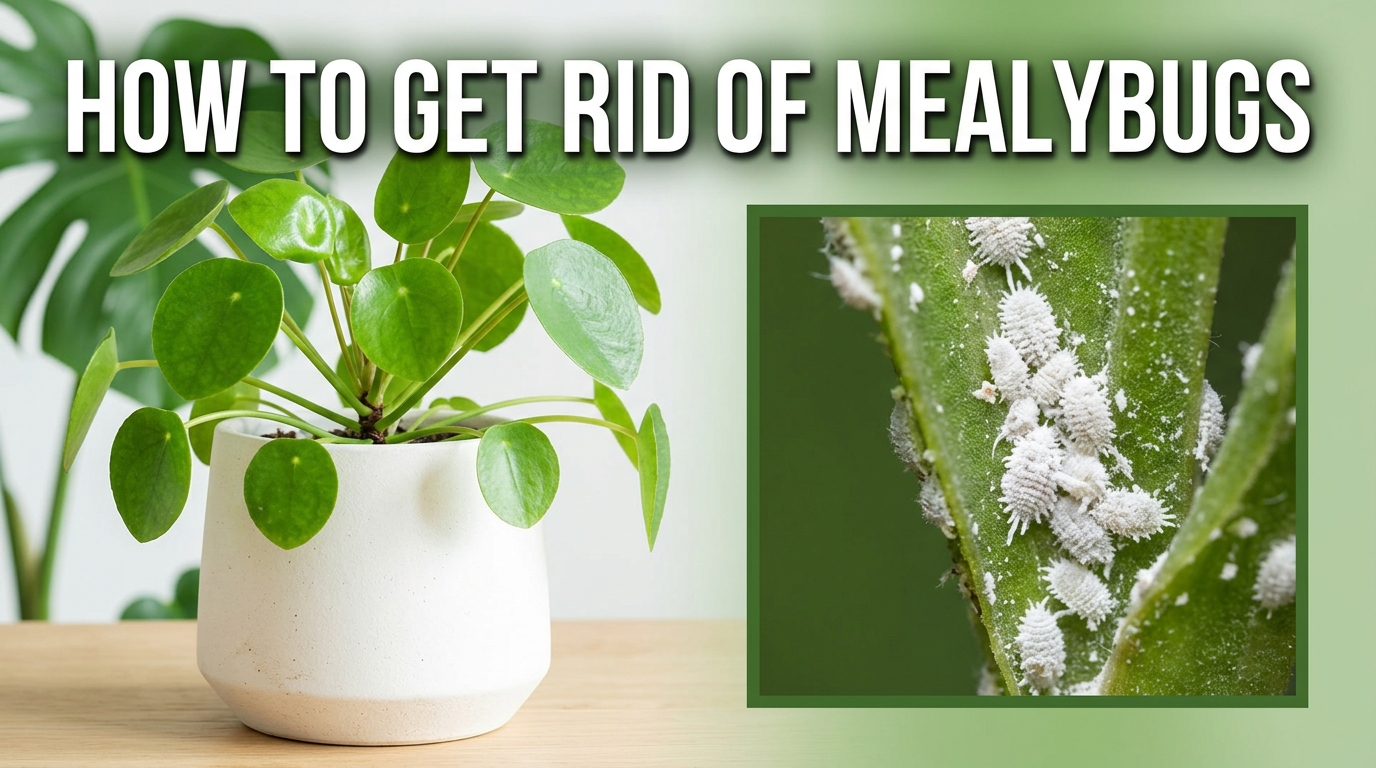
You spot a little white fuzz tucked into a leaf joint and tell yourself it’s just dust. A week later there’s more of it, and your plant’s new growth looks sticky and stunted. That fuzz is almost never dust. It’s mealybugs, and if you want to learn how to get rid of mealybugs before they spread to every pot on your windowsill, the next few sections walk through exactly what works and what wastes your time.
What Mealybugs Actually Are
Mealybugs are small, soft-bodied insects that cluster in leaf joints, along stems, and on the undersides of leaves. They cover themselves in a white, waxy coating that looks like cotton or flour, which is exactly why people mistake them for dust or mold at first glance.
They feed by piercing plant tissue and sucking out sap, which weakens the plant over time. Left alone, a small colony can multiply into a full infestation within a few weeks, especially indoors where there aren’t any natural predators keeping their numbers down.
They also excrete a sticky substance called honeydew. That residue attracts ants and encourages a black fungus called sooty mold to grow on leaves, which blocks light and makes the whole plant look dull and unhealthy.
Signs Your Plant Has a Mealybug Problem
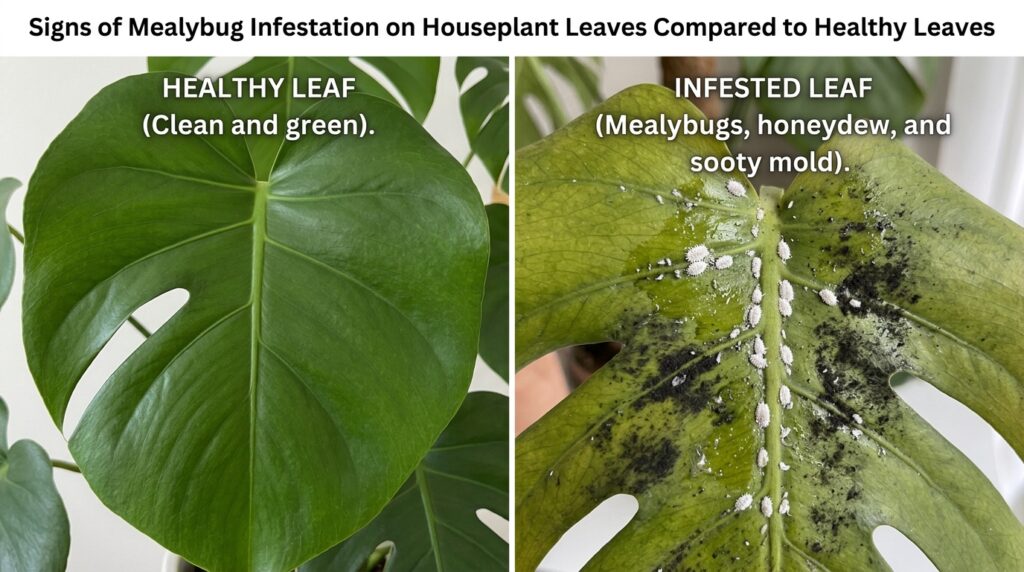
Before jumping into treatment, it helps to confirm what you’re actually dealing with. Mealybugs share a few traits with scale insects and woolly aphids, so a quick check saves you from using the wrong approach.
Look for these signs:
- Small cottony white clumps in leaf axils, along stems, or under leaves
- Sticky, shiny residue (honeydew) on leaves or nearby surfaces
- Black sooty mold forming on top of the honeydew
- Yellowing leaves, curling foliage, or slowed growth
- Ants trailing up and down the stem, since they farm mealybugs for the honeydew
If you gently touch the white fuzz and it smears rather than staying put like dust, that’s a strong indicator you’re looking at a live colony rather than debris.
How to Get Rid of Mealybugs Step by Step
This is the part most people are actually here for. The process below works for the vast majority of houseplant infestations, and it’s built around consistency rather than a single miracle spray.
Step 1: Isolate the Plant Right Away
Move the infested plant away from your other houseplants the moment you spot mealybugs. They spread easily by crawling from pot to pot or hitching a ride when leaves touch, so isolation is the single fastest way to stop the problem from becoming a house-wide infestation.
Keep the plant in a separate room, or at minimum several feet away from anything else, until you’ve confirmed the colony is gone.
Step 2: Wipe Visible Bugs With Alcohol
Dip a cotton swab or cotton ball in 70% isopropyl alcohol and dab it directly onto each mealybug you can see. The alcohol dissolves their waxy coating and kills them on contact, and it’s still one of the most reliable spot treatments for light infestations, a point echoed by extension horticulturists who study houseplant pests.
Avoid soaking the leaves themselves, since alcohol can scorch foliage on sensitive plants. A quick patch test on one leaf, followed by a 24 to 48 hour wait, tells you whether your plant can tolerate it.
Step 3: Rinse and Prune the Worst Areas
Take the plant to a sink or shower and rinse it thoroughly with a steady stream of water, paying close attention to the undersides of leaves and the crevices where stems meet the main trunk. This physically knocks off eggs, nymphs, and adults that alcohol alone might miss.
If certain leaves or branches are especially overloaded, prune them off entirely and dispose of the cuttings outside the house rather than in an indoor compost bin.
Step 4: Spray With Insecticidal Soap or Neem Oil
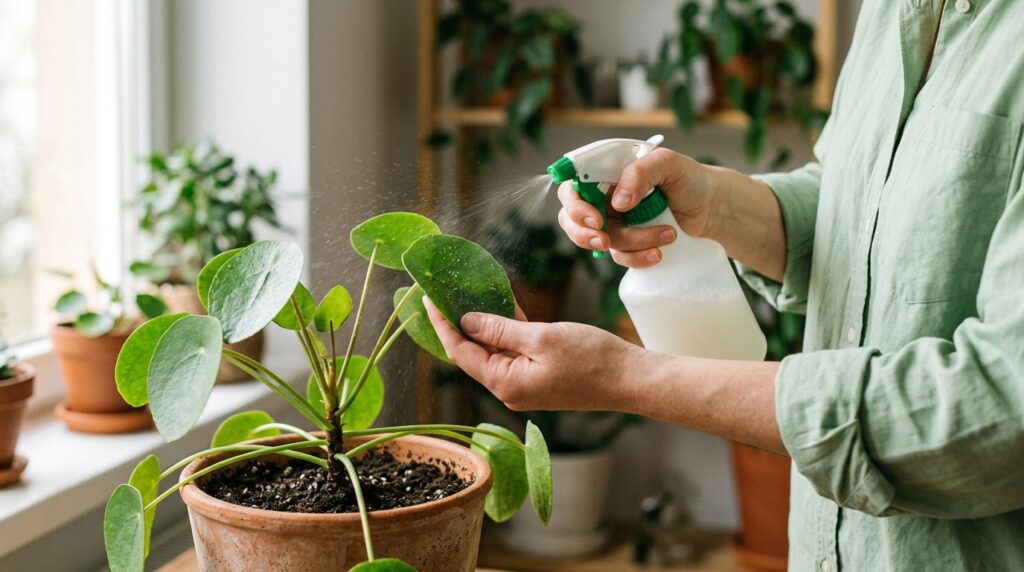
Once the visible colony is knocked back, follow up with an insecticidal soap or neem oil spray. These products smother mealybugs and their eggs, and they’re gentle enough for regular indoor use when applied correctly, a method supported by cooperative extension guidance on houseplant pest management.
Spray every surface of the plant, including the undersides of leaves and any hidden nooks near the soil line, since mealybugs are experts at tucking themselves into spots a casual spray will miss.
Step 5: Repeat on a Set Schedule
Mealybug eggs can survive a single treatment, which is why one spray almost never finishes the job. Reapply your soap or oil treatment every seven to ten days for at least three to four weeks, even after you stop seeing bugs, so newly hatched nymphs don’t get a chance to rebuild the colony.
Natural and Home Remedies Worth Trying
Not everyone wants to reach for a store-bought spray right away, and a few home approaches genuinely help when an infestation is caught early.
A simple dish soap and water solution (about one teaspoon of mild dish soap per liter of water) can suffocate light populations when sprayed directly on the bugs. Test it on a single leaf first, since some plants are sensitive to soap residue and can develop burnt patches.
Diluted neem oil works similarly and has the added benefit of disrupting the mealybug life cycle, making it harder for surviving eggs to develop into adults. A rubbing alcohol and water mix, roughly one part alcohol to four parts water in a spray bottle, offers a middle ground between spot-treating with a swab and a full soap spray.
None of these home remedies are instant fixes. They work the same way commercial sprays do, through repetition and thorough coverage, not a single application.
When to Use Systemic Insecticides
For infestations that keep coming back despite repeated soap or oil treatments, a systemic insecticide is sometimes the next step. These products get absorbed into the plant’s tissue, usually through the roots, so mealybugs are affected as they feed rather than only on contact.
They’re generally reserved for valuable or hard-to-replace plants, since systemic products take longer to show results and require careful attention to label directions. Keep pets and small children away from any treated plant, and always confirm the product is labeled safe for the specific plant type you’re treating.
If you’re dealing with an edible plant like a fruit tree or vegetable, systemic options are usually not appropriate, and a contact treatment applied directly to visible pests is the safer route.
Biological Control: Letting Predators Do the Work
For larger indoor collections, greenhouses, or persistent outdoor infestations, introducing natural predators can keep mealybug populations in check without repeated spraying. The mealybug destroyer beetle (Cryptolaemus montrouzieri) is a commonly used option, and both the adult beetles and their larvae feed directly on mealybugs and their eggs.
This approach is well documented by university-based integrated pest management researchers, who note that natural enemies including parasitic wasps can keep outdoor mealybug numbers at tolerable levels without much intervention. The Royal Horticultural Society also recommends predatory ladybirds and parasitic wasps for greenhouse settings where warmer, stable temperatures let the predators thrive.
Biological control works best in greenhouses or protected outdoor spaces rather than a single houseplant on a shelf, since the predators need a sustained population of pests and a suitable environment to establish themselves.
Preventing Mealybugs From Coming Back
Getting rid of an active infestation is only half the job. A few habits make a real difference in keeping mealybugs from returning.
- Inspect new plants closely, including the soil line and leaf undersides, before bringing them near your other plants
- Quarantine new arrivals for two to three weeks as a standard practice
- Wipe down leaves regularly with a damp cloth to catch early colonies before they establish
- Avoid overfertilizing, since excess nitrogen produces soft new growth that mealybugs prefer
- Keep humidity and airflow reasonable, since stressed or overcrowded plants are more susceptible
A monthly walk-through where you check the undersides of leaves and stem joints on every plant takes just a few minutes and catches problems long before they become visible from across the room.
Common Plants Mealybugs Love (and What to Watch For)
Mealybugs aren’t picky, but a handful of common houseplants seem to attract them more than others. Succulents, cacti, ficus, hoya, and pothos are frequent targets, largely because their thick or dense foliage gives mealybugs plenty of hiding spots.
Pothos in particular tends to develop mealybug colonies in the gaps between leaf and stem, which is easy to miss until the population has already grown. If you catch an infestation early on a pothos vine, healthy unaffected sections can often be saved by cutting them away and starting fresh, and you can propagate healthy cuttings into new, pest-free plants once you’re confident the cutting itself is clean.
Citrus trees, gardenias, and orchids are also common hosts, especially in warmer climates or when plants spend time outdoors during summer months before coming back inside for winter.
Expert Tips for Faster Results
A few small adjustments can speed up how quickly you clear an infestation.
Entomologist Alejandro Del-Pozo, an extension specialist who studies plant pests, points out that the size of the mealybug matters when planning treatment. As he explains it, the longer an infestation goes untreated, the thicker the waxy coating becomes, which makes the bugs progressively harder to kill with contact treatments alone.
That’s a strong argument for treating the moment you spot the first cluster rather than waiting to see if it gets worse. A few other practical tips:
- Treat in the morning or evening rather than in direct midday sun to avoid leaf scorch from soap or oil sprays
- Rotate between alcohol swabbing and spray treatments so you’re attacking the colony from more than one angle
- Check the soil surface and drainage holes, since some mealybug species live at the root level and won’t show up on the foliage at all
- Replace the top inch of soil if you suspect root mealybugs, since they’re much harder to eliminate with sprays alone
Pros and Cons of Different Treatment Methods
| Method | Pros | Cons |
|---|---|---|
| Alcohol swabbing | Fast, cheap, works well on small colonies | Time-consuming on large infestations, can harm sensitive leaves |
| Insecticidal soap | Safe for repeated use, effective on eggs and nymphs | Requires full coverage, multiple applications needed |
| Neem oil | Natural, disrupts life cycle, low toxicity | Strong smell, needs consistent reapplication |
| Systemic insecticide | Long-lasting, reaches hidden pests | Not for edible plants, slower initial results |
| Biological control | Chemical-free, self-sustaining in the right setting | Impractical for single houseplants, needs stable conditions |
FAQs
How long does it take to get rid of mealybugs completely?
Most infestations take three to six weeks to fully clear, since you’re treating both the visible bugs and any eggs that hatch afterward. Consistent, repeated treatment matters far more than the strength of any single spray.
Can mealybugs spread to other plants in my house?
Yes, they spread easily by crawling between plants that are touching or sitting close together, and they can also hitch a ride on your hands, clothing, or gardening tools. Isolating an infested plant is one of the most effective ways to protect the rest of your collection.
Is it safe to use rubbing alcohol on all houseplants?
Not always. Thin-leafed or highly sensitive plants can show damage from alcohol contact, so it’s worth testing a small area first and waiting a day or two before treating the whole plant.
Do mealybugs live in soil?
Some species, often called root mealybugs, do live below the soil surface and feed on roots rather than leaves. If a plant looks stressed with no visible pests on the foliage, checking the root ball and drainage holes is worth doing.
What kills mealybug eggs, not just the adults?
Neem oil and insecticidal soap are both effective against eggs when applied thoroughly and repeated on a schedule, since a single spray rarely reaches every hidden egg cluster the first time around.
Wrapping Up
Mealybugs are stubborn, but they’re not unbeatable. Isolate the plant, treat it consistently with alcohol and soap or neem oil, and keep an eye on it for several weeks after the bugs seem to be gone. That follow-through is what actually finishes the job, far more than any single product you use.
If you’re dealing with an infestation right now, start with the isolation and alcohol-swab steps today, then build your spray schedule around the timeline above. Your plant collection will thank you for it.

