
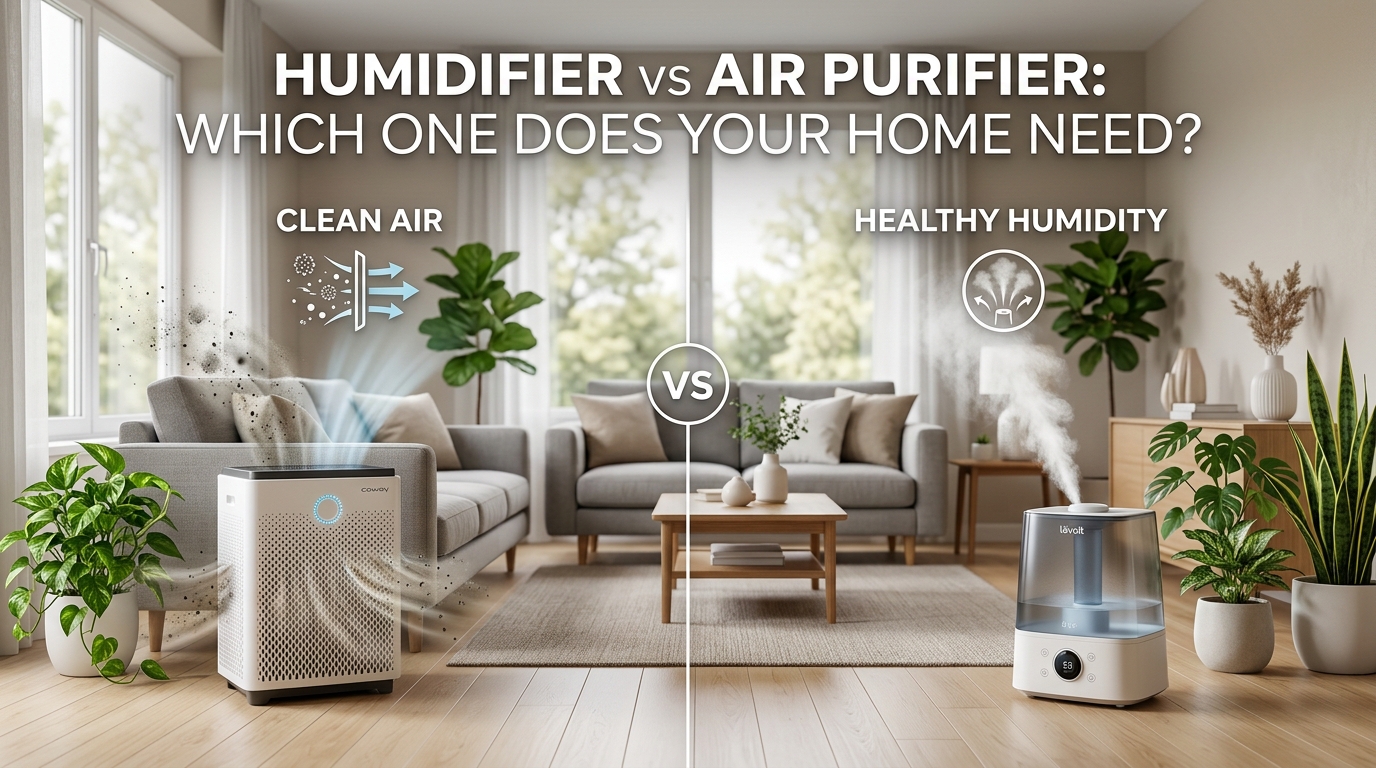
When comparing a humidifier vs air purifier, the easiest way to decide is to ask one simple question: does the room have dry air, dirty air, or both?
Many homeowners buy one of these appliances hoping to improve indoor air quality at home, sleep better, reduce dust, or make a room feel more comfortable. But they do very different jobs. A humidifier can help with dry indoor air, while an air purifier is designed to capture particles such as dust, pollen, pet dander, smoke, and some odors.
Choosing the right one starts with the actual problem in the room.
The Simple Difference: One Cleans Air, One Adds Moisture
An air purifier cleans the air by pulling it through filters that trap airborne particles. It is useful when a room feels dusty, stale, smoky, or affected by pollen or pet dander.
A humidifier does not clean the air. It adds moisture to dry air, which can make a bedroom, nursery, living room, or home office feel more comfortable during winter, in dry climates, or when heating systems make the air feel harsh.
In short, air purifiers improve air cleanliness. Humidifiers improve moisture levels. Buying the wrong one can leave the original issue unresolved.
What an Air Purifier Actually Does
An air purifier pulls air into the unit, passes it through one or more filters, and releases cleaner air back into the room. Depending on the filter type, it may capture dust, pollen, pet hair, pet dander, and smoke particles. Models with activated carbon or similar gas/odor filters may also help reduce some odors.
An air purifier for dust or pet dander is especially useful in homes with pets, bedrooms where dust builds up quickly, rooms near busy roads, homes affected by smoke, and allergy-sensitive households. It can also help in spaces that feel stale even after regular cleaning.
For bedrooms, placement matters. Keep the unit where air can circulate freely, avoid blocking vents with curtains or furniture, and choose a model sized for the room.
What a Humidifier Actually Does
A humidifier adds moisture to indoor air. It is most useful when the room feels dry rather than dirty.
Common signs of dry indoor air include a dry throat, dry skin, chapped lips, static electricity, dry eyes, cracked wooden furniture or floors, and uncomfortable sleep during winter. A humidifier for dry air can be helpful in bedrooms, nurseries, home offices, and living rooms when humidity is too low.
The best humidity level for home comfort is commonly around 30–50%. A small hygrometer can help you check the room instead of guessing. This matters because too little humidity feels uncomfortable, while too much can make a room feel damp.
Why Maintenance Matters Before You Run It Daily
A humidifier can make a dry room feel more comfortable, but it should not be treated as a “set and forget” appliance. Before running one daily through winter or in a dry bedroom, clean the tank regularly, check for mineral buildup, and replace the humidifier filter according to the manufacturer’s guidance so the unit can add moisture without pushing old residue or buildup back into the room.
Air Purifier vs Humidifier: Quick Comparison
| Feature | Air Purifier | Humidifier |
| Main job | Cleans airborne particles | Adds moisture to dry air |
| Best for | Dust, pollen, pet dander, smoke, odors | Dry skin, dry throat, static, winter dryness |
| Adds humidity? | No | Yes |
| Cleans air? | Yes, depending on filter type | No |
| Best rooms | Bedrooms, living rooms, pet areas, home offices | Bedrooms, nurseries, dry living spaces |
| Maintenance | Filter replacement and exterior cleaning | Tank cleaning, water changes, filter or wick replacement |
| Common mistake | Expecting it to fix dry air | Expecting it to remove dust or allergens |
When an Air Purifier Is the Better Choice
Choose an air purifier if the room has dirty, dusty, smoky, or allergen-filled air.
It may be the better option if dust collects quickly on surfaces, someone in the home is sensitive to pollen or pet dander, you have pets, cooking smells linger, smoke enters the home, or the room feels stale after cleaning. It can also be useful if your home is near traffic, construction, or seasonal smoke.
An air purifier for bedroom use may improve the feeling of the space overnight, especially when dust or pet dander collects in soft furnishings. But it will not fix dry skin, static electricity, or low humidity because it does not add moisture.
When a Humidifier Is the Better Choice
Choose a humidifier when the air feels too dry.
This is common in winter, in dry climates, or in rooms where heating systems strip moisture from the air. Signs include chapped lips, dry skin, scratchy throat in the morning, static shocks, dry timber furniture, and houseplants struggling indoors.
A humidifier for bedroom comfort can be especially useful if the room feels dry at night. However, it should be used carefully. Too much humidity can make rooms feel damp and may encourage mold or mildew. Monitor humidity levels rather than running the appliance constantly without checking the room.
Can You Use an Air Purifier and Humidifier Together?
Yes, you can use an air purifier and humidifier together because they solve different problems. An air purifier captures airborne particles, while a humidifier adds moisture.
They can work well together in a bedroom during winter if the air is both dusty and dry. Keep the units a few feet apart, avoid directing mist toward the air purifier, and make sure both appliances are cleaned and maintained properly.
This pairing can support better bedroom air quality, but it still requires balance. If the room becomes too humid, reduce the humidifier runtime.
Which One Belongs in Each Room?
Bedroom
Use an air purifier if the issue is dust, pollen, pet dander, or nighttime irritation from allergens. Use a humidifier if the problem is dry throat, dry skin, or dry winter air.
Nursery or Child’s Room
Comfort and cleanliness both matter in a child’s room. Keep appliances safely placed, cords out of reach, and avoid over-humidifying. Cleaning and maintenance are especially important in children’s spaces.
Living Room
Use an air purifier in open living areas with pets, dust, cooking smells, or outdoor air entering through windows. Use a humidifier if the room feels dry due to heating or climate.
Home Office
Choose based on how the room feels during long working hours. Dry eyes and static may point to a humidifier, while dust or stale air may point to an air purifier.
Bathroom or Damp Areas
Humidifiers are usually not needed in damp rooms. If moisture is already high, focus on ventilation rather than adding more humidity.
Common Mistakes to Avoid
One common mistake is buying an air purifier when the real issue is dry air. Another is buying a humidifier when the real issue is dust, smoke, or pet dander.
Avoid running a humidifier without cleaning it, ignoring replacement filters or wicks, letting humidity climb too high, or placing a humidifier too close to walls, curtains, timber furniture, or electronics. Also avoid expecting one appliance to solve every indoor air problem.
Final Decision: Choose Based on the Problem, Not the Appliance
Choose an air purifier if the room has dirty, dusty, smoky, or allergen-filled air.
Choose a humidifier if the room feels dry, especially during winter or in a dry climate.
Choose both if the room has both problems, but use them correctly, maintain them regularly, and monitor humidity levels. The right choice can make your home feel cleaner, calmer, and more comfortable by matching the appliance to what the room actually needs.

