
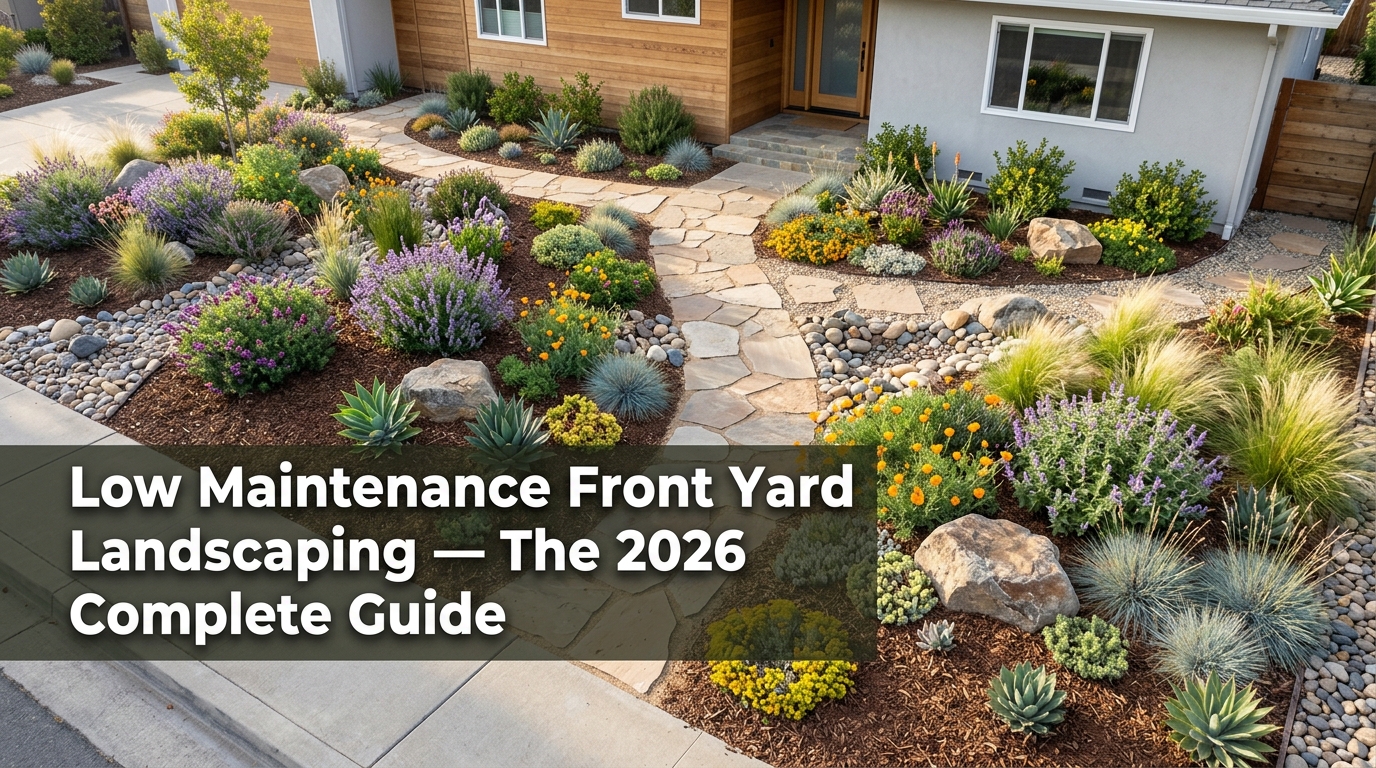
You bought the house. You love the house. But the front yard? That’s a whole different story.
Every weekend, there it is — calling for mowing, edging, fertilizing, weeding, watering. Before you know it, you’ve lost your entire Saturday to a patch of grass that’ll look the same (or worse) by next week.
Here’s the truth: a gorgeous front yard does NOT have to mean a high-maintenance front yard. In fact, some of the most stunning curb appeal you’ll find belongs to homes that barely require any upkeep at all.
This guide walks you through everything you need to know about low maintenance front yard landscaping — from the best plants and ground covers to smart design strategies, mulching tips, hardscaping ideas, and pro-level tricks that’ll keep your yard looking sharp year-round with minimal effort.
Whether you’ve got a tiny urban strip or a sprawling suburban lawn, there’s a solution here for you.
Why Low Maintenance Front Yard Landscaping Is Worth
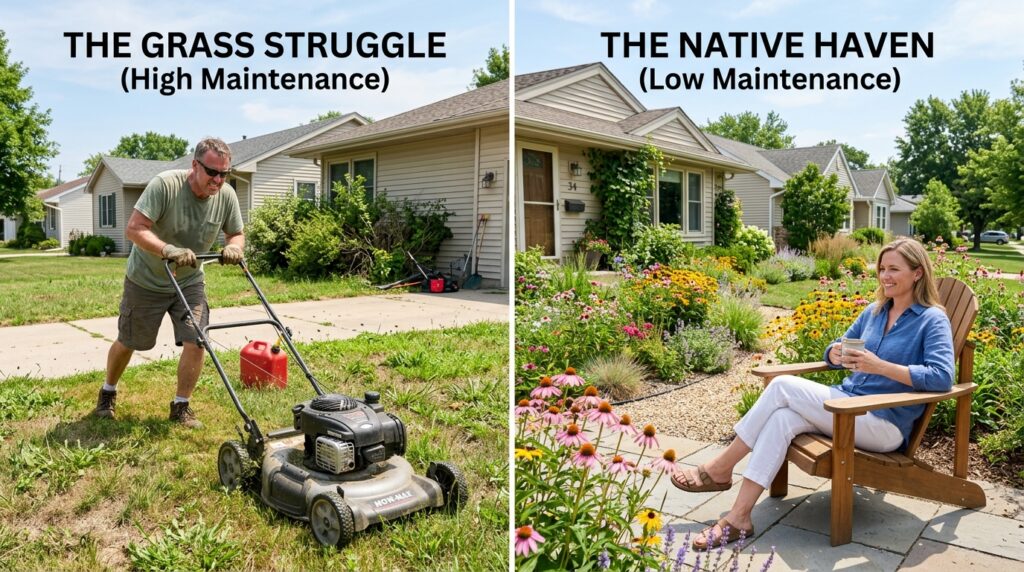
The idea of low maintenance landscaping has exploded in popularity — and it’s not hard to see why.
The American Time Use Survey from the Bureau of Labor Statistics found that Americans spend significant hours each year on lawn and garden care. For many homeowners, lawn maintenance is a chore they do out of obligation, not joy.
Beyond saving time, switching to a low-maintenance landscape can dramatically reduce water bills, while thoughtful landscaping can also contribute significantly to enhancing your home’s curb appeal. The EPA’s WaterSense program estimates that the average American household uses about 30% of its water outdoors, and a large chunk goes to irrigation.
Here’s what smart low-maintenance landscaping gives you:
- More free time — Stop spending weekends behind a mower.
- Lower water bills — Native and drought-tolerant plants need far less irrigation.
- Less chemical use — Healthy, well-chosen plants need fewer pesticides and fertilizers.
- Higher property value — Studies from the National Association of Realtors show that good curb appeal can add up to 10% to a home’s value.
- Better for pollinators — Native plantings support bees, butterflies, and birds.
Low maintenance doesn’t mean no maintenance. It means smart maintenance — doing less, but doing it right.
Start With a Plan — Designing Your Low Maintenance Front Yard
Before you pull out a single weed or buy a single plant, design is your best friend. A well-thought-out plan prevents costly mistakes and ensures the yard actually looks the way you envision.
Assess Your Yard First
Start by asking a few key questions:
- Sun exposure: Does your front yard get full sun (6+ hours), partial shade, or deep shade? This dictates which plants will thrive.
- Soil type: Sandy, clay, loamy? Test your soil with an inexpensive soil testing kit or through your local cooperative extension office.
- Drainage: Does water pool after rain? Poor drainage kills plants faster than neglect.
- HOA restrictions: Some neighborhoods have rules about what you can plant or how your yard can look. Check before you design.
- Climate zone: Use the USDA Plant Hardiness Zone Map to know exactly which plants will survive your winters.
Sketch a Basic Layout
You don’t need professional design software. A sheet of graph paper works fine. Map out:
- The location of your walkway and front door
- Areas of sun and shade
- Existing trees or shrubs you want to keep
- The street edge and any utility lines or irrigation heads
Apps like iScape or Garden Planner by Gardena can help you visualize ideas digitally before touching the ground.
Define Your Design Style
A few popular low-maintenance front yard styles:
| Style | Key Features | Best For |
|---|---|---|
| Modern/Minimalist | Gravel, ornamental grasses, geometric beds | Contemporary homes |
| Cottage Garden | Wildflowers, informal beds, soft edges | Traditional homes |
| Xeriscape | Drought-tolerant plants, rock, mulch | Hot/dry climates |
| Native Plant Garden | Local wildflowers, shrubs, grasses | Any region |
| Formal/Symmetrical | Clipped boxwoods, stone paths | Classic architecture |
Pick a style that complements your home’s exterior and matches your local climate for the least upkeep.
Replace Your Lawn With These Low Maintenance Alternatives
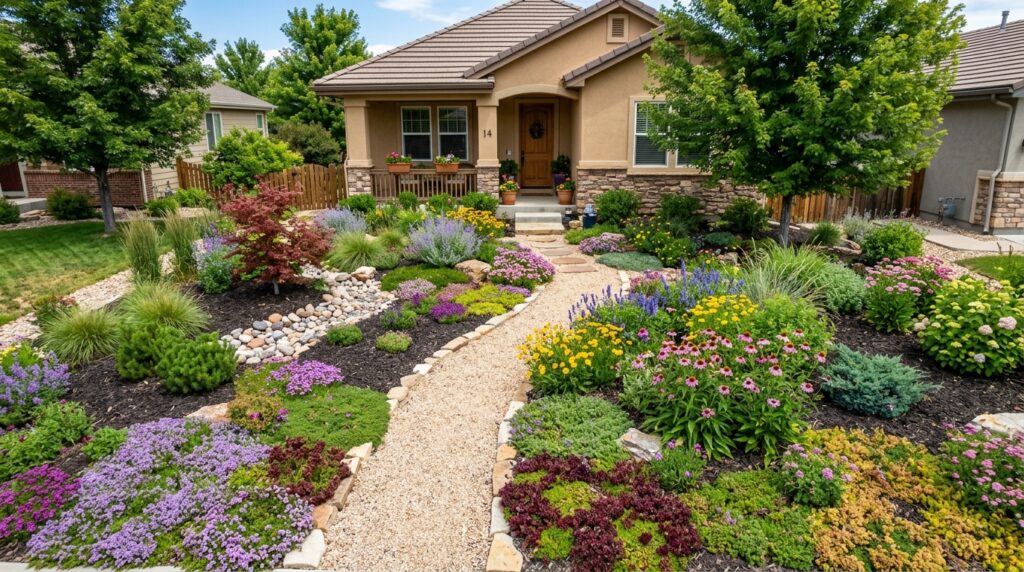
The traditional grass lawn is often the biggest time-sink in any front yard. Mowing, edging, fertilizing, aerating, dethatching — it never ends. The good news? You have many attractive alternatives.
Ground Covers That Replace Grass
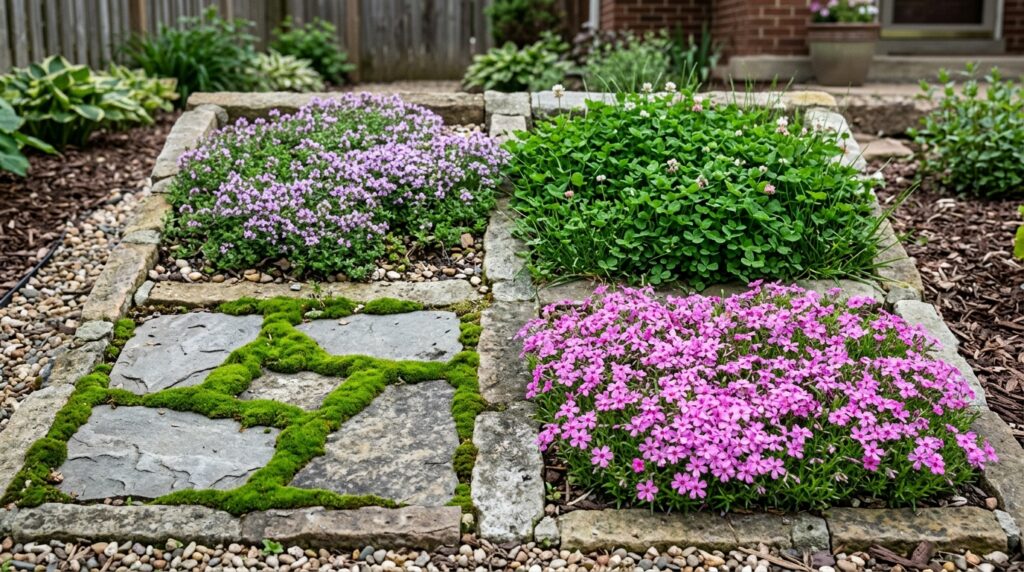
Ground covers spread horizontally to fill spaces without needing mowing. Some top choices include:
- Creeping Thyme (Thymus serpyllum) — Drought-tolerant, fragrant, blooms in pink/purple. Handles light foot traffic. Great between stepping stones.
- White Dutch Clover — Stays low, fixes nitrogen in the soil, and feeds pollinators. Virtually no care needed.
- Creeping Phlox — Explosively colorful in spring. Spreads slowly and requires almost no maintenance.
- Liriope (Monkey Grass) — Tough, shade-tolerant, and evergreen in warmer zones.
- Ajuga (Bugleweed) — Grows in sun or shade, produces beautiful purple flower spikes in spring.
- Moss — Perfect for deeply shaded, damp yards. Zero mowing, zero fertilizing.
Ornamental Grasses
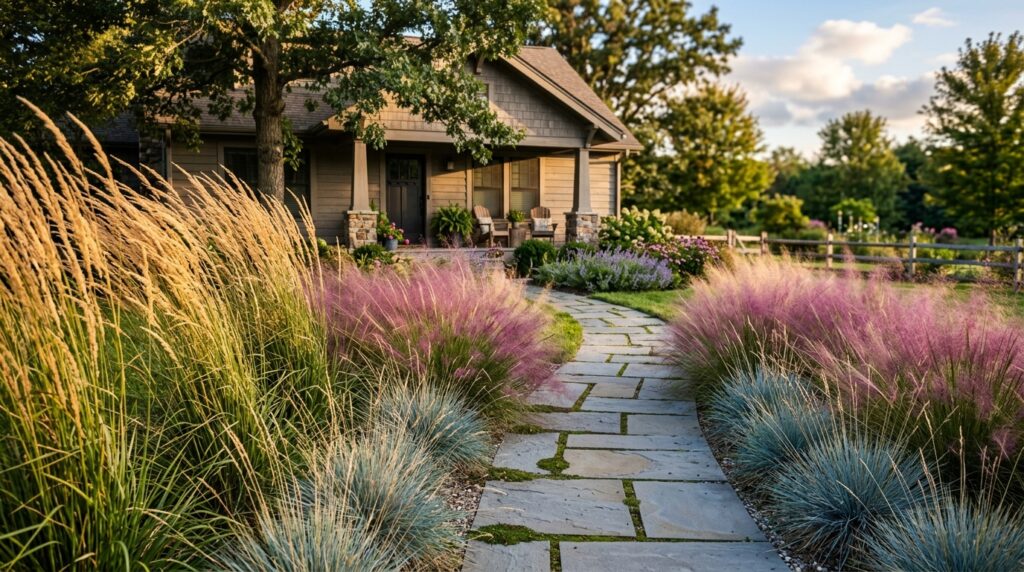
Ornamental grasses are among the lowest-maintenance plants you can grow. They:
- Grow in most soil types
- Need little or no fertilizer
- Resist drought once established
- Provide year-round structure and movement
Popular options include Blue Oat Grass (Helictotrichon sempervirens), Feather Reed Grass, Karl Foerster, and Pink Muhly Grass — a showstopper in fall.
Gravel and Rock Lawns
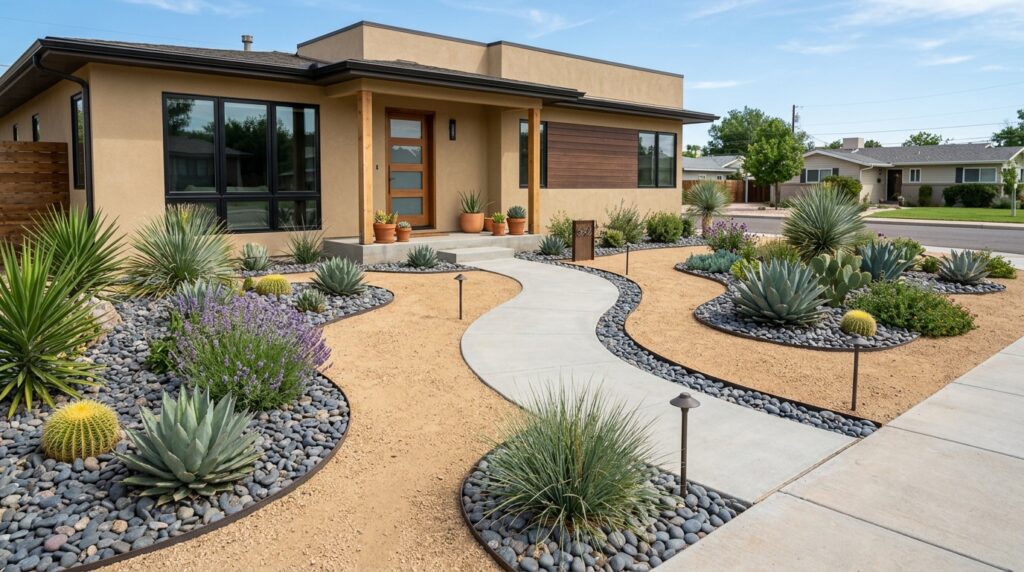
Rock and gravel are increasingly popular in front yards — especially in drought-prone areas. They:
- Never need mowing or watering
- Last decades with minimal care
- Create clean, contemporary aesthetics
- Come in many colors and textures (pea gravel, decomposed granite, river rock, lava rock)
Lay landscape fabric beneath gravel to prevent weed growth, or use a thick layer of rock (3+ inches) for better suppression.
Best Low Maintenance Plants for Front Yards
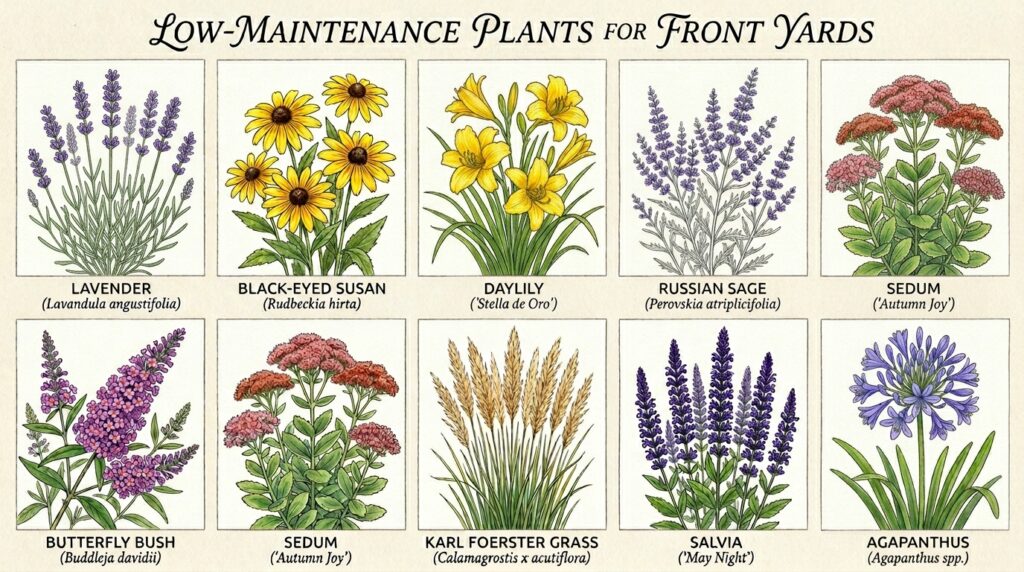
Plant selection is the most important decision you’ll make. Get this right, and your yard practically takes care of itself. Get it wrong, and you’ll be fighting plants that aren’t suited to your conditions.
The golden rule: right plant, right place.
Low Maintenance Shrubs
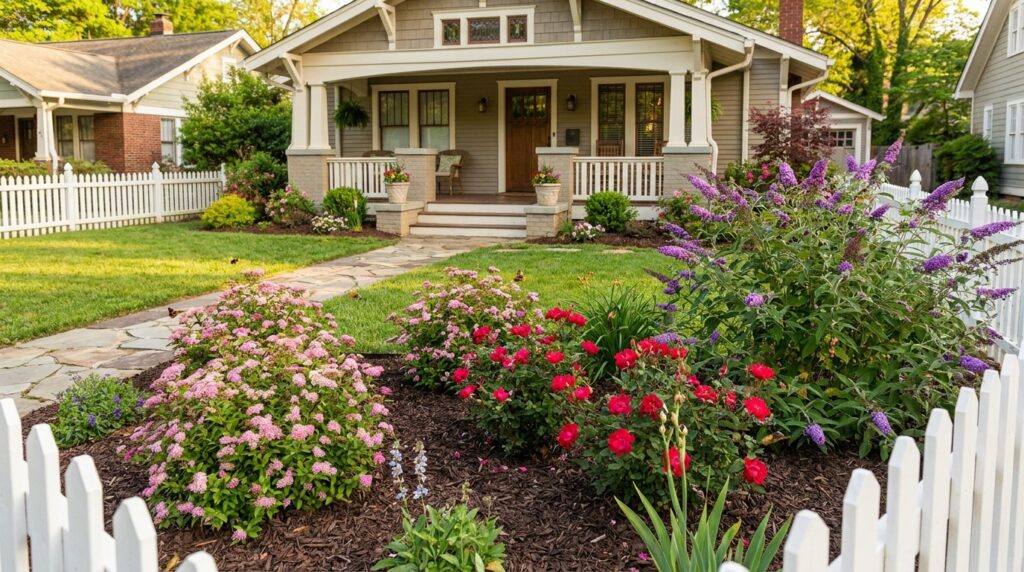
Shrubs give structure and volume to the landscape. Once established, most need only occasional pruning. Top picks:
- Knock Out Roses — Disease-resistant, repeat-blooming, available in multiple colors. See Texas A&M’s guide.
- Spirea — Carefree, spring-blooming, and available in compact dwarf varieties.
- Mugo Pine — Evergreen, very slow-growing, drought-tolerant after establishment.
- Inkberry Holly — Native, shade-tolerant, evergreen, attractive berries.
- Butterfly Bush — Fast-growing, stunning blooms, pollinator magnet. (Note: check if invasive in your state before planting.)
- Viburnum — Tough, adaptable, and beautiful across all seasons.
Low Maintenance Perennials
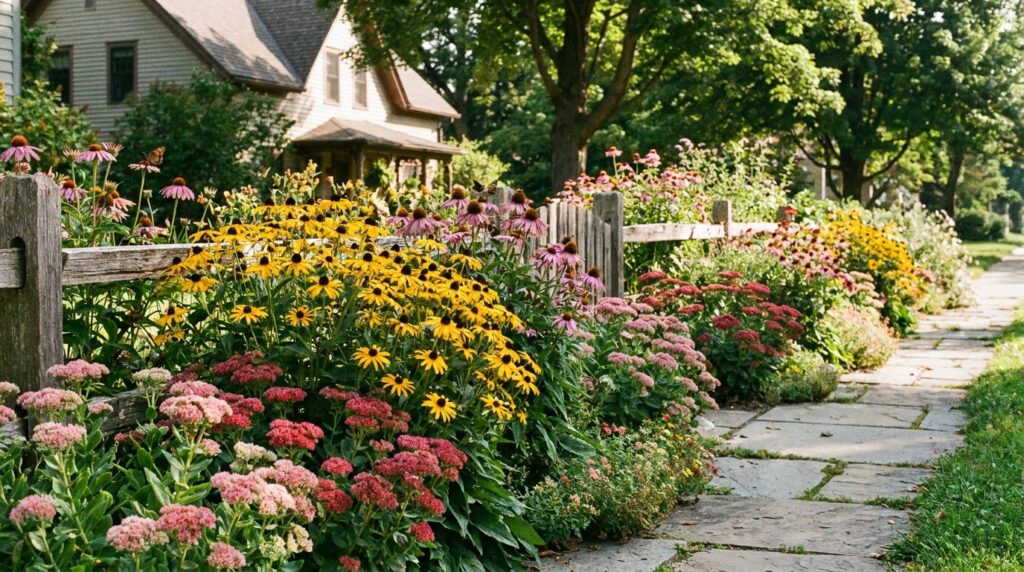
Perennials come back year after year — plant once, enjoy for decades.
- Black-Eyed Susan (Rudbeckia hirta) — Tough native wildflower, full sun, drought-tolerant.
- Purple Coneflower (Echinacea purpurea) — Beloved by pollinators, long-blooming, very hardy. Learn more at the Lady Bird Johnson Wildflower Center.
- Daylilies — Nearly indestructible. Available in thousands of colors.
- Sedum (Stonecrop) — Succulent-like, drought-resistant, gorgeous fall blooms.
- Russian Sage — Tall, silvery, blue-purple flowers all summer long. Deer-resistant.
- Salvia — Long-blooming, drought-tolerant, hummingbird magnet.
Native Plants — The Ultimate Low Maintenance Choice
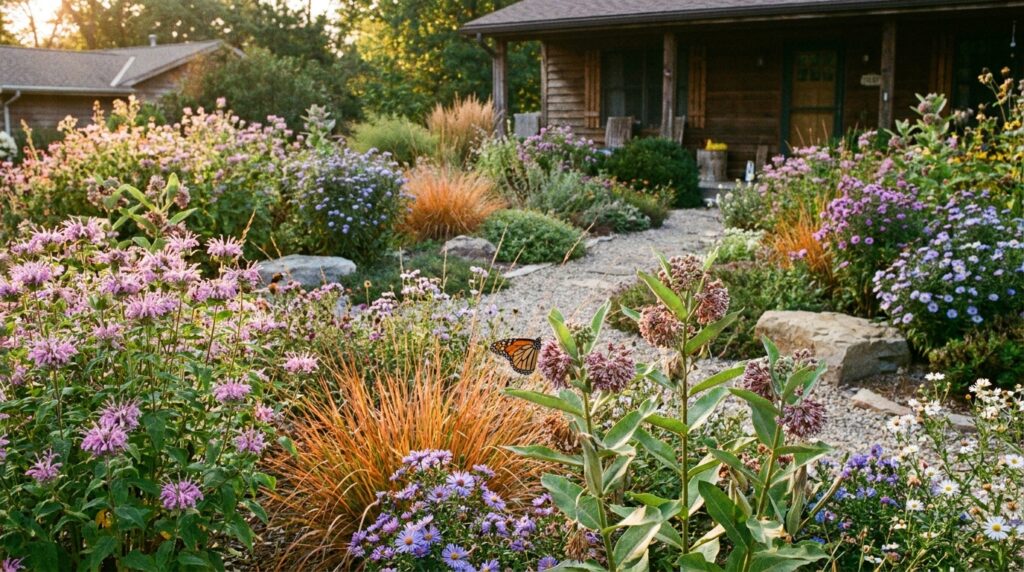
Native plants are the gold standard for low-maintenance landscaping because they’ve evolved to thrive in your local climate with no extra help.
The National Wildlife Federation’s Native Plant Finder lets you search by zip code to see exactly which native plants grow best in your area.
Benefits of native plants:
- Require no irrigation once established
- Need no fertilizer
- Resist local pests and diseases naturally
- Support local wildlife and pollinators
Popular native plants by region:
| Region | Native Plants |
|---|---|
| Northeast | Mountain Laurel, Wild Columbine, New England Aster |
| Southeast | Beautyberry, Oakleaf Hydrangea, Coral Honeysuckle |
| Midwest | Purple Coneflower, Wild Bergamot, Little Bluestem |
| Southwest | Desert Willow, Agave, Penstemon |
| Pacific Northwest | Red Flowering Currant, Oregon Grape, Sword Fern |
The Power of Mulch in Low Maintenance Landscaping
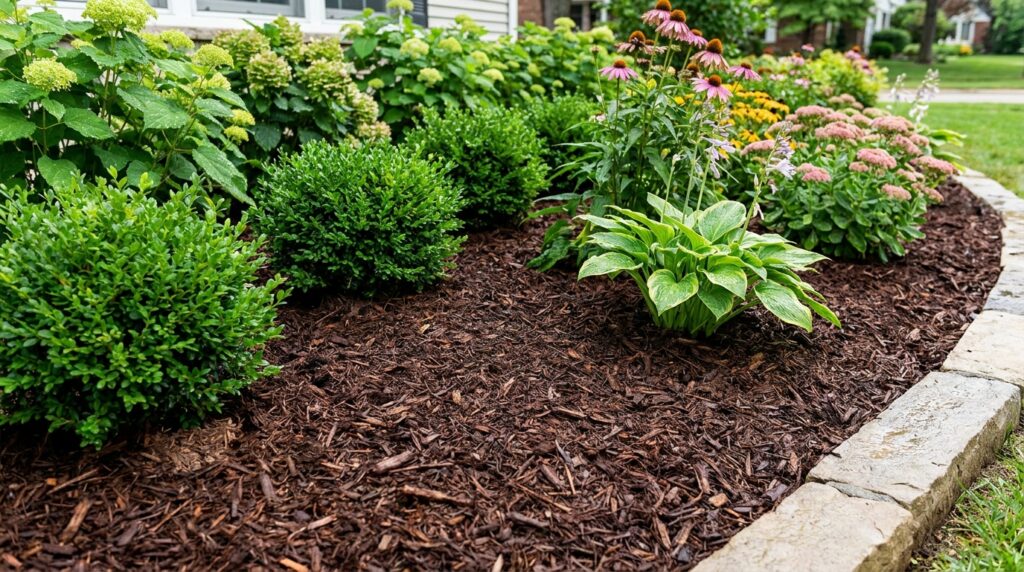
If there’s one single thing you can do to slash your yard maintenance, it’s mulch.
Mulch does multiple jobs at once:
- Suppresses weeds — A 3-inch layer blocks most weed seeds from germinating.
- Retains moisture — Less frequent watering needed.
- Regulates soil temperature — Protects plant roots in both summer heat and winter cold.
- Improves soil — Organic mulches break down and feed the soil over time.
- Looks polished — Neat mulched beds give the yard a professional, finished appearance.
Best Types of Mulch for Front Yards
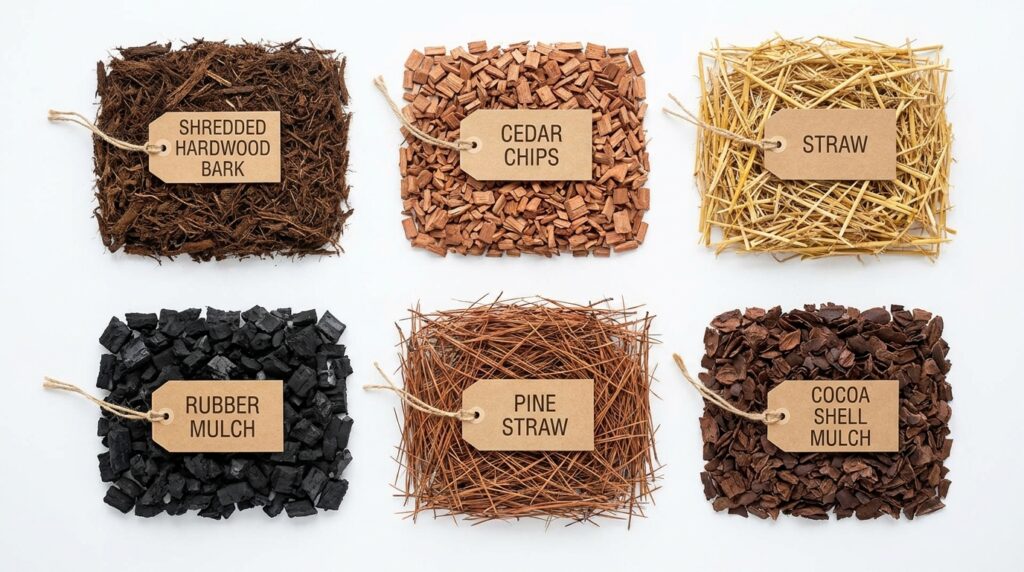
| Mulch Type | Cost | Longevity | Best For |
|---|---|---|---|
| Shredded Hardwood | Low | 1–2 years | Most beds |
| Cedar Chips | Medium | 2–3 years | Repels insects |
| Pine Straw | Low | 1 year | Acid-loving plants |
| Rubber Mulch | High | 10+ years | Playgrounds, paths |
| Gravel/Rock | Medium-High | Permanent | Xeriscape, modern |
| Cocoa Shell | Medium | 1–2 years | Fragrant, decorative |
Apply mulch 2–4 inches deep, keeping it a few inches away from plant stems and tree trunks to prevent rot.
The University of Florida’s IFAS Extension recommends refreshing organic mulch annually to maintain weed suppression and soil health.
Hardscaping Ideas That Reduce Lawn Maintenance
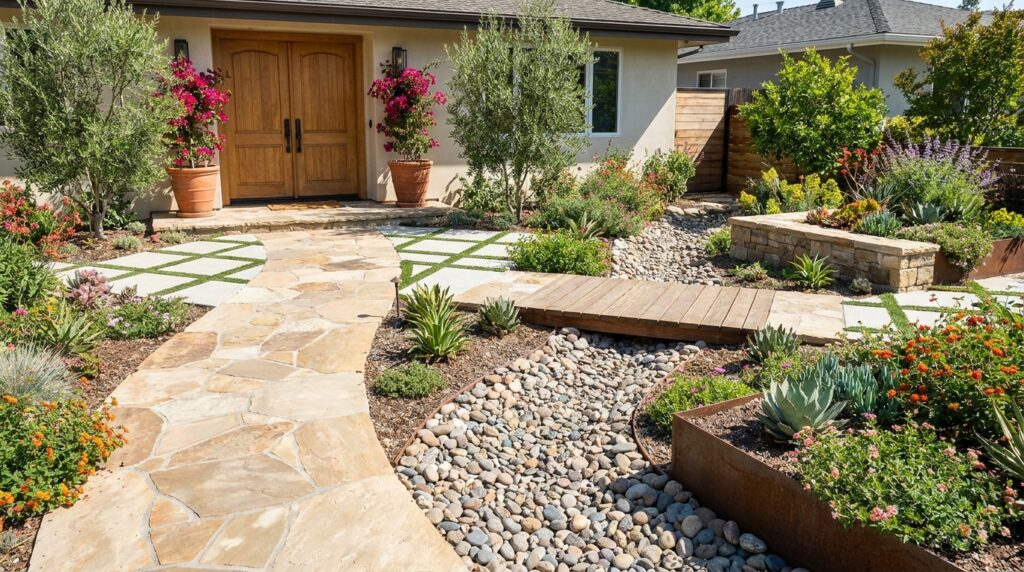
Hardscaping refers to the non-living elements of your landscape — pathways, patios, walls, edging, and more. Adding more hardscape means less ground that needs watering or mowing.
Pathways and Walkways
Replace a straight, boring concrete walk with something more interesting:
- Flagstone — Natural, timeless, fits any style.
- Brick pavers — Classic look, very durable.
- Decomposed granite paths — Informal, budget-friendly.
- Stepping stones with ground cover — Plant creeping thyme or moss between stones for a living path.
A wider walkway (at least 4 feet) also reduces the need to trim or edge around it.
Dry Creek Beds
Dry creek beds serve a dual purpose: they manage stormwater runoff and look stunning doing it. They’re especially valuable in yards with drainage problems.
Use smooth river rocks or cobblestones. Line the creek bed with landscape fabric beneath the rocks to prevent weeds. Plant ornamental grasses and native shrubs along the edges for a naturalistic look.
Raised Garden Beds and Borders
Raising your planting beds just 6–12 inches does something magical: it dramatically reduces weed pressure (because you’re filling with fresh, weed-free soil), improves drainage, and makes gardening easier on your back.
Build edged borders with materials like:
- Cedar or redwood lumber
- Corten steel (modern and long-lasting)
- Natural stone
- Concrete blocks
Smart Irrigation — Water Less, Waste Less
Even the most drought-tolerant yard needs some irrigation during establishment — and periodic watering during extreme heat. The key is watering smarter, not harder.
Drip Irrigation vs. Sprinklers
Drip irrigation delivers water directly to plant roots, reducing evaporation and runoff dramatically. According to the EPA’s WaterSense program, smart irrigation controllers can reduce outdoor water use by up to 15%.
Drip irrigation benefits:
- Up to 90% water efficiency (vs. 65-75% for sprinklers)
- Keeps foliage dry, reducing disease
- Works well with mulched beds
- Can be automated
Smart Controllers and Rain Sensors
A smart irrigation controller adjusts watering schedules automatically based on weather data. Brands like Rachio and RainBird Smart Controllers connect to weather apps and skip watering cycles after rain — something a manual timer can’t do.
Install a simple rain sensor on your existing system for as little as $20 at any hardware store.
Edging — The Secret to a Polished Look with Less Effort
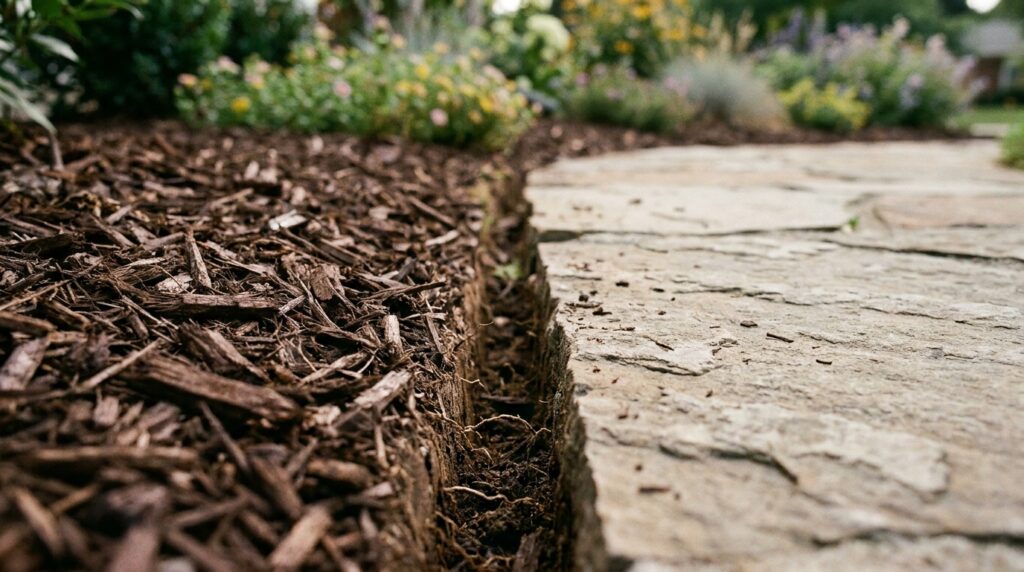
Clean edges are what separate an “okay” front yard from a stunning one. Even the simplest planting looks professional when the edges are sharp and defined.
But traditional hand-edging is time-consuming. These strategies will keep your edges clean with minimal effort:
- Install permanent plastic, steel, or aluminum edging — A one-time install that holds its shape for years.
- Use stone or brick as a border — Doubles as decoration and requires zero maintenance.
- Create a mow strip — A row of flat stones or pavers between lawn and bed lets your mower ride along the edge, eliminating the need for a separate edger.
Seasonal Maintenance Calendar for Low Maintenance Front Yards
Even a low-maintenance yard has a rhythm. Here’s what a whole year looks like when you’ve designed things right:
Spring
- Apply fresh mulch (2–3 inches) to all beds
- Cut back ornamental grasses and perennials
- Divide overcrowded perennials
- Plant new native plants and shrubs
- Check irrigation system and drip lines
Summer
- Water new plantings deeply once a week until established
- Deadhead annuals if included
- Spot-weed as needed (much less with good mulch)
- Inspect for pests, treat organically if needed
Fall
- Leave seed heads on native plants for birds
- Add a second layer of mulch before frost
- Plant spring-blooming bulbs
- Cut back only plants prone to disease overwintering
Winter
- Enjoy the show — ornamental grasses, berry-producing shrubs, and seedheads add winter interest
- Plan any changes for next year
- Service irrigation system before freeze
Expert Tips for Low Maintenance Front Yard Landscaping
These pro-level insights can make the difference between a yard that looks great on day one and one that thrives for decades.
Layer your plantings. A well-layered landscape has tall plants in back, medium ones in the middle, and low ground cover in front. This mimics nature and means plants shade out weeds for you.
Choose slow-growing plants. Fast-growing plants fill in quickly but also need frequent pruning. Slow growers need less shaping over time.
Group plants by water needs. This practice, called “hydrozoning,” allows you to water different zones differently rather than applying one schedule to everything. The US Botanical Garden and Sunset Magazine’s Garden Guide offer excellent plant combination resources.
Invest in soil prep upfront. Adding compost and correcting pH before planting pays dividends for years. Healthy soil grows healthy, self-sufficient plants.
Embrace imperfection. A naturalistic garden isn’t supposed to look like a putting green. Allow plants to fill in, self-seed, and mingle. The result is a yard that looks cared-for without being fussy.
Never plant invasive species. Always check USDA’s Invasive Plant Atlas and your state’s invasive species list before planting anything new.
Pros and Cons of Low Maintenance Front Yard Landscaping
Pros
- Time savings — Free your weekends permanently.
- Cost savings — Lower water bills, fewer supplies, less labor.
- Environmental benefits — Less runoff, healthier soil, more habitat.
- Year-round beauty — Well-designed landscapes have interest in every season.
- Increased property value — Native and designed gardens are increasingly valued by buyers.
Cons
- Higher upfront cost — Installing new plants, mulch, and hardscaping costs money.
- Establishment period — Most low-maintenance plants take 1–3 years to fully settle in.
- HOA restrictions — Some communities still require traditional lawns or manicured appearances.
- Learning curve — Choosing the right plants requires some research and local knowledge.
Budget Breakdown — How Much Does Low Maintenance Landscaping Cost?
Costs vary widely depending on yard size, plant choices, and whether you DIY or hire professionals.
| Component | DIY Cost Estimate | Professional Install |
|---|---|---|
| Mulch (per yard) | $30–$80 | $80–$200 (installed) |
| Native plants (per plant) | $5–$25 | Same + labor |
| Drip irrigation (zone) | $50–$200 | $200–$800 |
| Landscape edging (100 ft) | $50–$150 | $150–$400 |
| Gravel ground cover (sq ft) | $1–$3 | $3–$8 |
| Design consultation | N/A | $100–$500 |
For an average front yard (500–1,000 sq ft), a quality low-maintenance makeover might run:
- DIY budget approach: $500–$1,500
- Mid-range with some professional help: $2,000–$5,000
- Full professional installation: $5,000–$15,000+
Common Mistakes to Avoid in Low Maintenance Front Yard Landscaping
Even well-intentioned designs go wrong. Watch out for these common errors:
1. Planting too close together. Plants may look sparse at first, but crowding them leads to pest problems and extra work later. Always respect mature spacing requirements.
2. Skimping on mulch. A thin layer of mulch doesn’t suppress weeds. Apply a full 3 inches, and refresh yearly.
3. Choosing the wrong plants for your climate. A plant that thrives in Florida will fail miserably in Minnesota. Always choose plants rated for your USDA zone.
4. Ignoring soil health. Even drought-tolerant plants can fail in severely compacted or depleted soil. Amend first, plant second.
5. Over-designing. Complex patterns and many different species can paradoxically increase maintenance. Stick to a few well-chosen plants repeated throughout the bed.
6. Forgetting about mature size. A dwarf shrub that’s “2 feet tall” at purchase might reach 6 feet. Read the mature size on every plant tag.
FAQs About Low Maintenance Front Yard Landscaping
What is the most low maintenance front yard landscaping?
The most low-maintenance approach combines native plants, mulched beds, and hardscaping to eliminate or minimize lawn. Native plants adapted to your region need no irrigation once established, no fertilizing, and rarely need pruning. Add a drip irrigation system on a smart timer, apply 3 inches of mulch, and install permanent landscape edging. This combination can reduce yard maintenance to just a few hours per year.
How do I make my front yard look nice without grass?
You have several excellent options: ground covers like creeping thyme or clover, gravel and rock landscapes, hardscaping with pavers or flagstone, ornamental grasses, or native plant gardens with mulched beds. The key is to select visually interesting plants at multiple heights (shrubs, perennials, ground covers) and connect them with clean edges and walkways. Well-designed no-lawn yards often have more curb appeal than traditional grass.
What plants require the least maintenance in a front yard?
Top choices include native wildflowers and grasses (like coneflowers, black-eyed Susans, and little bluestem), drought-tolerant shrubs (like Knock Out Roses, spirea, or viburnum), ornamental grasses (like Karl Foerster or muhly grass), and ground covers (like sedum, daylilies, or liriope). All of these establish easily, resist pests, and require minimal care once planted.
How much mulch do I need for a low maintenance front yard?
For effective weed suppression, apply mulch at a depth of 2–4 inches. To calculate how much you need, measure the square footage of your beds and use this formula: (Square footage × depth in inches) ÷ 324 = cubic yards needed. For example, a 400 sq ft bed mulched 3 inches deep needs about 3.7 cubic yards. Most suppliers sell mulch by the cubic yard.
Is low maintenance landscaping more expensive upfront?
Yes, the initial investment for a low-maintenance landscape design (including plants, mulch, irrigation, and edging) is typically higher than simply sodding a lawn. However, the long-term savings in water, fertilizer, equipment, and time are substantial. Most homeowners recoup the investment within 2–5 years. Additionally, well-designed landscapes can increase property values.
Inspiration Gallery — Low Maintenance Front Yard Ideas by Style
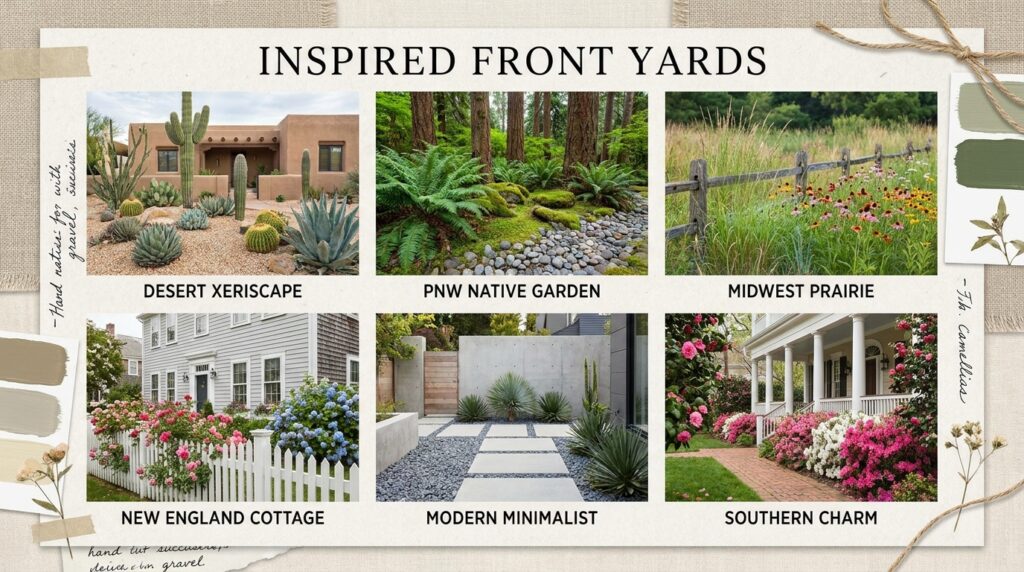
Not sure where to start? Let these real-world styles spark your imagination:
Desert Modern: Succulent beds, gravel paths, agave, palo verde trees. Zero lawn. Zero irrigation needed after year one.
Pacific Northwest Native: Sword ferns, red-twig dogwood, Oregon grape. A shady, lush look with no irrigation needed in most years.
Midwestern Prairie Style: Little bluestem, prairie dropseed, coneflowers, black-eyed Susans. A meadow of color with almost no care.
New England Cottage: Spirea, catmint, astilbe, stone paths. Classic charm with surprisingly little maintenance.
Southern Charm: Oakleaf hydrangea, beautyberry, coral honeysuckle, pine straw mulch. Beautiful year-round with deep drought tolerance.
Urban Minimalist: White gravel, boxwood spheres, a single ornamental tree, clean concrete pavers. Architectural and elegant.
Conclusion
Low maintenance front yard landscaping isn’t a compromise — it’s an upgrade.
When you replace a thirsty, demanding grass lawn with native plants, drought-tolerant perennials, smart mulching, and well-designed hardscaping, you get more than just free weekends. You get a yard that’s more beautiful, more resilient, more environmentally responsible, and more valuable than anything a bag of fertilizer and a mower could create.
The best part? You don’t have to do it all at once. Start small — replace one section of lawn with a mulched native plant bed. Add some edging. Install a drip line. Every small change compounds into a landscape that practically takes care of itself.
Ready to get started?
Visit the National Wildlife Federation’s Certified Wildlife Habitat program to learn how to create a front yard that supports local wildlife while staying effortlessly beautiful. Or find a certified landscape professional through the NALP (National Association of Landscape Professionals) who can help turn your vision into reality.
Your dream front yard — the one that impresses visitors, delights you every time you pull into the driveway, and never asks for a Saturday morning — is closer than you think.
This article is intended for informational purposes. Plant availability and suitability vary by region. Always consult your local cooperative extension office or a certified landscaping professional for location-specific advice.

