
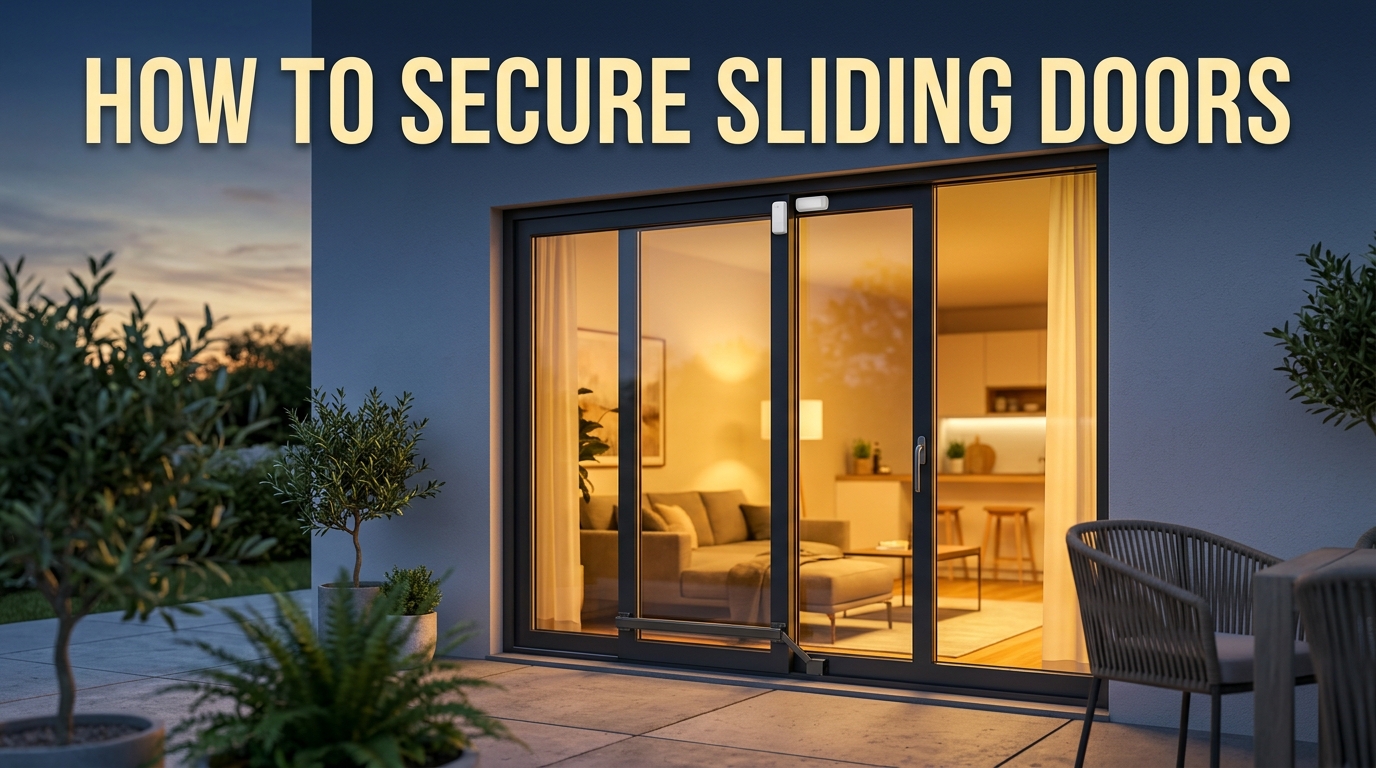
A sliding glass door looks great until you realize it’s basically a giant pane of glass held shut by a latch that a screwdriver can pop in seconds. If you’ve ever tested your own door by giving it a firm jiggle and felt it shift more than it should, you already know the problem.
Learning how to secure sliding doors doesn’t require a full door replacement or a professional installer. Most of the fixes below take under an hour, cost less than a dinner out, and address the three actual weak points burglars look for: the latch, the track, and the glass itself.
Why Sliding Doors Are an Easy Target
Patio doors sit at the back of the house, often screened by fences or landscaping, which means nobody passing by is likely to notice someone messing with the latch. That combination of privacy and weak hardware is exactly what makes them appealing to someone looking for a fast, quiet way in.
Two things usually go wrong. First, the factory latch is a simple hook, not a deadbolt, and it can be forced with basic hand tools. Second, older doors were often hung with extra clearance in the track, which means the entire panel can be lifted up and out without breaking anything at all.
Neither problem is expensive to fix. Once you understand where the weakness actually is, you can target it directly instead of buying gadgets you don’t need.
Add a Secondary Lock Beyond the Factory Latch
The single most effective upgrade is also the cheapest: a supplemental lock that doesn’t rely on the same mechanism the door shipped with.
- Foot-operated locks mount to the bottom rail and drop a bolt into the track, so you can lock the door with a light tap and release it the same way.
- Charley bars pivot from the frame and swing down to block the door from sliding, similar in spirit to a police lock on a front door.
- Keyed patio locks thread through both the moving and stationary panels, meaning the door genuinely can’t slide even a few inches.
These installs typically take fifteen minutes with a drill and a few screws. One detailed walkthrough of sliding glass door security breaks down which lock style suits older versus newer door frames, which is worth checking before you buy hardware that won’t fit your track depth.
Block the Track With a Bar or Dowel
Even a perfectly locked door can still be forced open if the latch itself gives way under enough pressure. A track bar solves that by physically stopping the panel from sliding, regardless of what happens to the lock.
A cut piece of wood dowel, a length of pipe, or a purpose-built adjustable security bar wedged into the bottom track does the same job. The bar should span nearly the full width of the track opening, leaving no gap for the door to slide even an inch before hitting resistance.
This is the same trick recommended by crime prevention specialists for decades, and it still works because it doesn’t depend on the door’s original hardware at all. It’s mechanical, cheap, and impossible for someone outside to disable without breaking the glass first.
Quick tip: Measure the track before cutting a dowel. A bar that’s slightly too short leaves just enough play for the door to be pried open a crack, which defeats the purpose.
Stop the Door From Being Lifted Off Its Track
Here’s the part most homeowners miss entirely. Many sliding doors, especially older aluminum-frame models, were installed with more vertical clearance than they need. That gap lets someone lift the panel up and angle it out of the frame without touching the lock at all.
The fix is almost embarrassingly simple: drive a few screws into the upper track, positioned so their heads hang down just far enough to block the door from being lifted, but not so far that they interfere with normal sliding. Anti-lift pins that serve the same purpose are also sold as a packaged kit if you’d rather not eyeball the spacing yourself.
Test it once you’re done. Grab the handle and try to lift the door a few inches. If it won’t budge, the fix worked.
Add a Security Pin Through Both Frames
For a permanent, low-visibility fix, drill a hole through the frame of the sliding panel and partway into the frame of the stationary panel while the door is closed. Insert a hardened steel pin into that hole, and the two panels are effectively locked together.
This method is popular because it requires no visible hardware on the glass itself, and it works whether or not the factory latch is functioning properly. One breakdown of this technique for protecting sliding doors from forced entry walks through the exact drilling depth to avoid going all the way through the frame, which is worth reading before you start.
A few notes before drilling:
- Use a drill bit slightly larger than the pin diameter so it slides in and out smoothly.
- Drill at a slight downward angle so gravity helps hold the pin in place.
- Keep a spare pin nearby in case the original gets misplaced during a move.
Reinforce the Glass Itself
Locks and bars stop someone from sliding the door open, but they don’t stop someone from simply breaking the glass and reaching through. That’s where security film comes in.
Applied to the interior side of the glass, this polyethylene film doesn’t make the glass unbreakable, but it holds the shattered pieces together instead of letting them fall apart cleanly. An intruder still has to punch, pry, and struggle through a sagging sheet of film-backed glass shards, which takes time and makes noise, two things burglars actively try to avoid.
A comparison of window protection options for reinforcing sliding glass doors notes that film comes in both clear and tinted versions, so you don’t have to sacrifice the view to get the benefit. It’s also a reasonable option for renters, since it can be removed without damaging the glass.
If you’re due for a door replacement anyway, ask about laminated glass instead of standard tempered glass. Laminated panes sandwich a plastic interlayer between two glass sheets, which resists a clean break far better than tempered glass does.
| Glass Reinforcement Option | Cost Level | Renter-Friendly | Break Resistance |
|---|---|---|---|
| Security window film | Low | Yes | Moderate |
| Laminated glass replacement | High | No | High |
| Security grille (interior) | Medium | Depends on install | High |
Install Door and Window Sensors
A physical barrier slows someone down. A sensor tells you the moment they’ve started trying. Entry sensors are two small magnetic pieces, one on the frame and one on the door itself, that trigger an alert the instant the connection breaks.
Paired with a monitored alarm system, this closes the gap between “the door was forced” and “someone actually knows about it.” Even a standalone sensor that just sounds a loud chime is often enough to send an intruder running, since noise is the last thing they want to deal with mid-break-in.
Glass break sensors take this a step further by listening for the specific frequency of shattering glass, which means they can trigger even if the intruder skips the door track entirely and goes straight for the pane.
Improve Lighting and Visibility Outside
Hardware upgrades matter, but so does making the area around your sliding door a place nobody wants to linger. Motion-activated floodlights near the patio remove the cover of darkness that makes a slow, careful break-in attempt possible in the first place.
Landscaping plays a role too. Overgrown shrubs near a patio door create a hiding spot while someone works on the lock. The home safety recommendations from crime prevention resources consistently point to trimming back dense greenery near entry points as one of the simplest, lowest-cost changes a homeowner can make.
A short checklist for the exterior:
- Trim bushes and hedges so they sit below window height near the patio.
- Add motion-sensor lighting angled toward the door, not just the yard.
- Avoid leaving ladders, tools, or patio furniture stacked near the door that could help someone reach a lock or upper window.
Keep Maintenance in the Loop
A door that’s properly locked but poorly maintained can still fail. Worn rollers, a warped frame, or a latch that no longer fully engages all create small gaps that add up to a real vulnerability.
Twice a year, check that the door glides smoothly without sagging, that the latch clicks fully into place without needing extra force, and that the track is clear of debris that could keep the door from closing all the way. A door that doesn’t close flush is a door that isn’t actually locked, even if the latch appears engaged.
Expert Tip: Layer, Don’t Replace
Security professionals generally agree that no single upgrade makes a sliding door impenetrable, and that’s fine. The goal isn’t an unbreakable door, it’s a door that takes long enough to defeat that an intruder gives up and moves somewhere easier. Combining a secondary lock, a track bar, and a sensor covers the latch, the slide, and the alert all at once, which is a stronger setup than any one fix on its own.
If your patio door connects to a larger outdoor living space, it’s also worth thinking about how the layout itself affects visibility and access, since lighting and sightlines around the whole area matter just as much as the door itself.
Pros and Cons of the Most Common Fixes
| Method | Pros | Cons |
|---|---|---|
| Secondary lock | Cheap, fast install, effective against forcing | Doesn’t stop glass breakage |
| Track bar or dowel | No tools required, works instantly | Must be removed to open the door daily |
| Anti-lift screws | Stops the lifting tactic completely | Requires drilling into the frame |
| Security pin | Permanent, invisible from outside | Slightly more involved install |
| Security film | Slows glass break attempts, renter-friendly | Doesn’t stop the door from sliding open |
| Door sensor | Instant alert, works with existing alarm systems | Requires a compatible base system |
Frequently Asked Questions
Can burglars really lift a sliding glass door off its track?
Yes, especially on older aluminum-frame doors installed with extra vertical clearance. Anti-lift screws or pins in the upper track close this gap and prevent the panel from being lifted out, even if the latch is otherwise secure.
Is a track bar or dowel actually effective?
It’s one of the more reliable low-cost fixes because it doesn’t depend on the door’s existing lock at all. As long as the bar spans the full width of the track with no gap, the door physically cannot slide open, regardless of what happens to the latch.
Does security film make sliding glass unbreakable?
No. Security film holds shattered glass together instead of letting it fall apart cleanly, which slows down and makes noise during a break-in attempt. It’s a deterrent that buys time, not a way to make the glass impossible to break.
Do I need a professional to install a secondary lock?
Most auxiliary locks, foot locks, and charley bars are designed for straightforward DIY installation with basic tools like a drill and screwdriver. Security pins and anti-lift screws are similarly simple, though taking careful measurements before drilling helps avoid mistakes.
What’s the single best upgrade if I can only do one thing?
A secondary lock combined with a track bar covers the two most common attack methods, forcing the latch and lifting the panel, for very little cost. If budget allows for a second step, a door sensor adds real-time awareness on top of the physical barrier.
Final Thoughts
None of these fixes require tearing out your patio door or spending a weekend on a renovation project. A secondary lock, a track bar, a few anti-lift screws, and a layer of security film cover the three real weak points on almost any sliding door, and most of it can be done in an afternoon with tools you likely already own.
Start with whichever weakness your own door has. If it lifts easily, fix the track first. If the latch feels loose, add a secondary lock before anything else. Small, targeted changes like these add up to a door that’s genuinely harder to get through, without changing how it looks or how you use it every day.
This article is for informational purposes only and does not constitute professional security, legal, or safety advice. Consult a licensed locksmith or security professional for recommendations specific to your home.

