
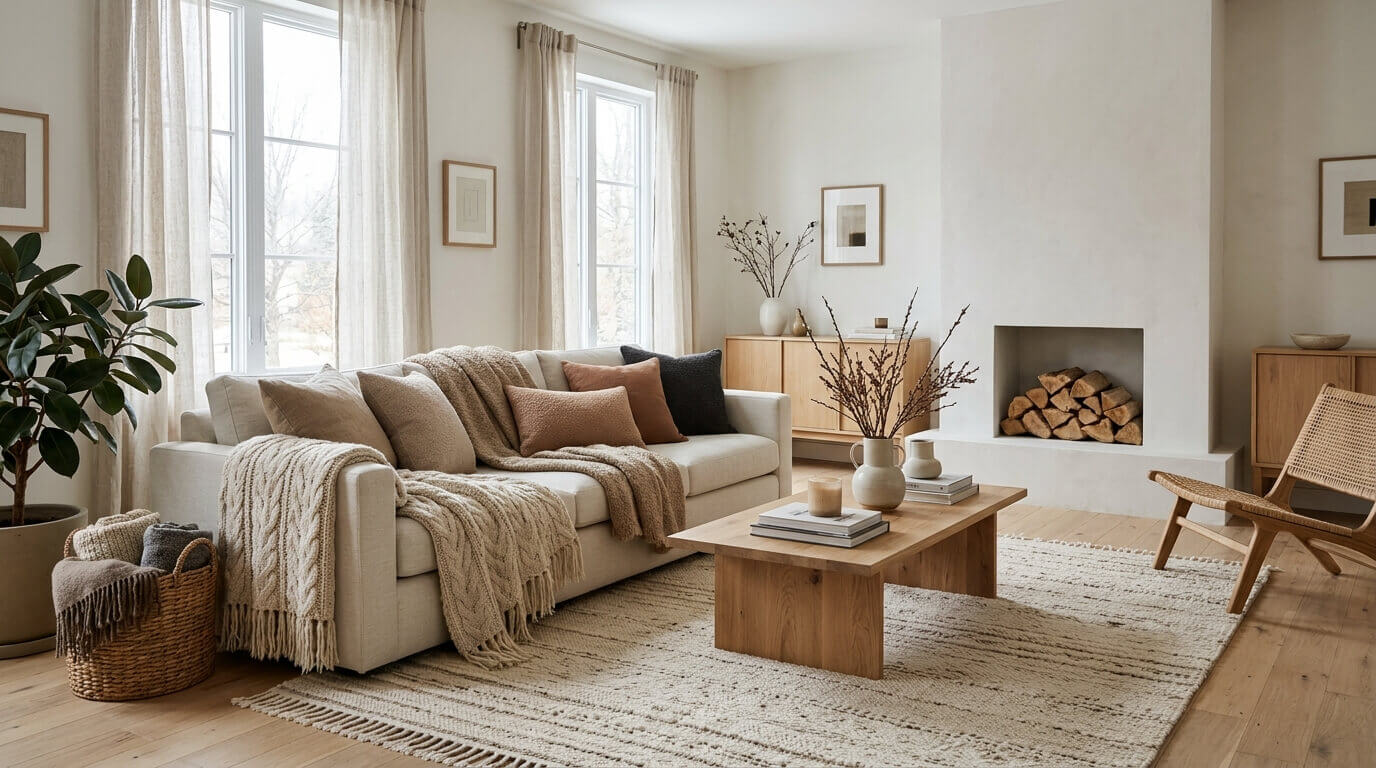
As the cooler months approach, households face the familiar challenge of keeping warm while managing rising energy bills. According to May 2026 data from Canstar, running a standard electric heater for three hours a day over a 90-day winter period costs households between $126 and $244, depending on the capital city and heater type. Government energy efficiency guidelines also note that raising a winter thermostat by one degree can increase heating costs by roughly 10 to 15 percent. Natural textiles offer a practical way to improve indoor comfort without depending entirely on additional heating. Refreshing your home with natural fabrics can provide warmth while changing your interior aesthetic, helping you create a comfortable space during colder weather.
Embracing Warm Minimalism and Earthy Tones
Recent interior design trends have moved away from stark minimalist spaces towards warmer and more welcoming interiors. Warm minimalism relies on layering tactile, natural textiles such as wool, linen, and jute to create an inviting appearance. Earthy browns have also become popular in interior colour palettes, influenced in part by Pantone’s 2025 selection of Mocha Mousse. This rich shade pairs well with the organic textures of natural fibres.
Introducing earthy tones through fabric layers can update a tired living room without replacing bulky furniture. Adding high-quality Blankets to sofas and armchairs is a practical way to introduce warmth and visual interest. These additions introduce tactile textures and make living spaces feel more comfortable during colder weather. For more ideas, explore ways to refresh a tired living room using existing furniture and decorative accessories.
Choosing the Best Natural Fibres for Your Space
Not all textiles provide the same level of warmth and comfort. Interest in natural fibres and traditional materials has grown as homeowners look for alternatives to synthetic fabrics. Materials such as wool, linen, and other natural fibres offer different insulating, breathable, and moisture-management properties.
When selecting textiles for a seasonal refresh, consider the characteristics of these popular materials:
- Alpaca Wool: Alpaca fibres have a hollow structure that helps trap insulating air while keeping the material relatively lightweight. This makes alpaca suitable for warm blankets and throws. Alpaca fibre also contains very little lanolin compared with sheep’s wool, which may make it suitable for some people with wool sensitivities, although individual reactions can vary.
- Merino Wool: This material has a fine, naturally crimped fibre structure that creates small air pockets. Merino wool retains body heat during cold weather while remaining breathable and capable of managing moisture.
- Un-dyed Wools: Natural, un-dyed wools are often used in biophilic interior design. Their original colours and textures create a visual connection with nature, helping living rooms and bedrooms feel calm and understated.
Layering for Comfort and Better Sleep
The benefits of natural textiles extend beyond the living room. Introducing these materials into the bedroom can improve comfort during colder nights. If you want to make your space cosier through practical layered bedding techniques, choosing suitable natural materials is a useful starting point. Natural wool fibres can help regulate temperature and moisture, making them a useful option for comfortable bedding.
Scientific research also provides insight into how bedding materials can affect sleep. A peer-reviewed clinical polysomnography study found that participants sleeping in wool experienced a sleep onset latency of 12.4 minutes, compared with 26.7 minutes for cotton and 21.6 minutes for polyester. The study also reported a lower sleep fragmentation index with wool. These findings suggest that bedding materials can influence sleep comfort and certain sleep measures, although individual results may differ.
Celebrating Quality and Craftsmanship
October is internationally recognised as Wool Month by the global coalition Campaign for Wool, providing an opportunity to highlight natural fibre products. Supported by Australian Wool Innovation, this initiative promotes awareness of wool production and the work of farmers and textile manufacturers. Organisations such as The Woolmark Company also provide research and certification to help consumers identify wool products that meet recognised quality standards.
Layering natural textiles can create a warmer and more comfortable interior while adding seasonal colour and texture. By choosing suitable fibres, combining different fabric layers, and considering their practical properties, you can make your home more inviting throughout the cooler months.

