
Key Takeaways
- Build a flexible household budget that can adapt to changing income and unexpected expenses.
- Use take-home pay to plan spending and prioritize dependable income over uncertain earnings.
- Separate essential, adjustable, optional, and irregular expenses to understand where money goes.
- Set realistic spending ranges instead of relying on rigid monthly limits.
- Build emergency savings for unexpected events and sinking funds for predictable future costs.
- Balance debt repayment with savings and essential household needs.
- Adjust spending quickly after income changes and contact creditors before missing payments.
- Review income, expenses, upcoming bills, savings, and financial goals during a monthly check-in.
- A local credit union can be one resource when reviewing household banking options.
Detroit households know that a money plan has to work through more than an ordinary month. A winter utility bill, a tire replacement after rough roads, a school expense, or a change in work hours can quickly shift the numbers. A credit union in Detroit may provide banking services and financial resources, but the foundation of a household money plan is a practical system that helps you make decisions before money becomes tight.
A flexible household money plan does not require a perfect income or a complicated spreadsheet. It gives your available dollars clear jobs, leaves room for changing costs, and makes it easier to adjust when life does not follow the calendar.
1. Why a Flexible Money Plan Works Better
A strict budget can break down when grocery prices rise, a child needs new shoes, or a household has variable hours, tips, commissions, or freelance income. A flexible plan still assigns each dollar a purpose, but it does not assume every month will look identical. It should guide choices rather than create pressure when an essential need changes.
Housing, food, transportation, health care, insurance, and utilities deserve attention first. After those needs are covered, a framework such as the 60/30/10 budgeting method can offer a useful starting point for comparing essentials, financial goals, and discretionary spending. Treat any percentage framework as a reference point, not a rule that every household must follow.
2. How to Review Household Income
Build your plan using take-home income, not gross pay. Start with wages, retirement income, benefits, regular support payments, and other dependable deposits after taxes and payroll deductions. Then separate income that varies, such as overtime, bonuses, gig work, commissions, tips, or seasonal work.
A Quick Income Worksheet
- What income arrives in a typical month?
- On which dates does each payment arrive?
- Which income sources can rise or fall?
- What lower amount is safe to use for regular bills?
If income changes from month to month, base required bills on the lower reliable amount. Extra income can strengthen savings, cover upcoming irregular costs, or reduce debt, but it should not automatically become a permanent monthly commitment.
3. How to Sort Fixed, Flexible, and Irregular Costs
Review the last 90 days of bank and card activity rather than relying on memory. Then sort expenses into three practical groups:
- Must Pay: Rent or mortgage, utilities, insurance, minimum loan payments, essential medications, groceries, and transportation needed for work or school.
- Can Adjust: Dining out, fuel use, clothing, household extras, entertainment, and other spending that can vary.
- Can Pause: Optional subscriptions, nonessential shopping, memberships, and upgrades that can be stopped during a tight month.
Also create a monthly line for irregular costs. Vehicle registration, gifts, school supplies, annual premiums, home upkeep, and car repairs may not arrive every month, but they are still part of household life. Keeping a record of recurring payments and due dates, as explained in this guide to organizing household bills, can make these expenses easier to track.
4. How to Set Spending Limits That Fit Real Life
For flexible categories, use ranges rather than a single, rigid number. A grocery category, for example, might have a normal target and a lower backup target for months when another priority appears. This approach helps households respond without feeling that the entire plan has failed.
A simple monthly allocation can include essentials, required debt payments, emergency savings, long-term goals, and personal or family spending. Protect the spending that supports health, work, family responsibilities, and genuine enjoyment. Reduce the spending that delivers less value when cash is limited.
5. How to Prepare for Surprise Expenses
An emergency fund is for urgent, unplanned events such as a job interruption, a major repair, or an unexpected medical expense. A sinking fund is for known future expenses, such as holiday gifts, annual insurance premiums, back-to-school purchases, or planned auto maintenance.
Start with a small cash reserve if saving feels difficult. Consistent deposits, even modest ones, create a habit and reduce the need to put every surprise on a credit card. After using emergency savings, rebuild it by restarting automatic transfers, trimming a temporary expense, or directing part of extra income back to the account. The Consumer Financial Protection Bureau explains why an emergency savings fund can help absorb financial shocks without relying entirely on borrowing.
Home-related emergencies can also create unexpected costs. Having a basic home emergency preparedness plan can help households prepare for disruptions and understand which situations may require immediate attention.
6. How to Balance Debt, Savings, and Daily Needs
Sending every extra dollar to debt may leave a household exposed to the next repair or missed shift. Keep a basic cash cushion while making required minimum payments, then direct additional funds toward high-interest debt after essential bills and urgent savings needs are covered.
Before choosing a strategy, check interest rates, fees, repayment terms, and any penalties. Credit card balances may deserve faster attention because of their cost, while retirement contributions, near-term purchases, and savings goals may need their own planned amounts. The best balance is one your household can sustain.
7. How to Adjust the Plan During Income Changes
After a pay cut, job change, reduced hours, or temporary gap, create a 30-day plan based only on confirmed income. First, protect housing, utilities, food, transportation, health needs, and insurance. Next, pause or reduce optional spending. Finally, contact creditors or service providers before a payment is missed to ask about available options.
For example, a family facing fewer work hours might cut back on restaurant meals, delay nonessential purchases, and pause subscriptions while keeping gas, transit, child care, and work-related costs in place. Avoid building long-term spending around a temporary boost in income.
8. Simple Tools for Tracking Progress
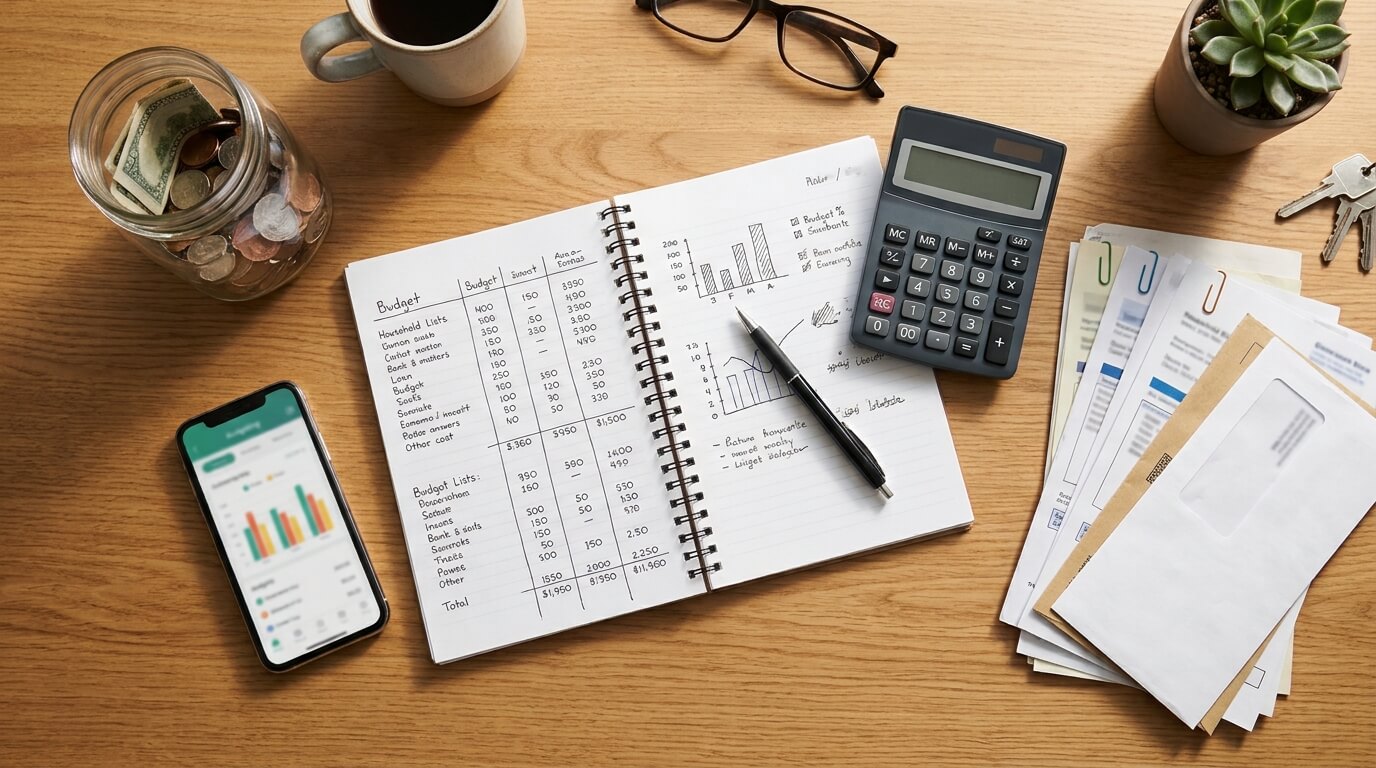
A notebook, a spreadsheet, a banking app, or a budgeting app can work. Choose the tool your household will consistently use. Track total income, required bills, flexible spending, debt balances, emergency savings, and upcoming irregular expenses. Too many categories can make the system harder to maintain than it needs to be.
9. Common Household Budgeting Mistakes
- Planning with gross income instead of take-home pay.
- Ignoring annual, seasonal, or occasional expenses.
- Setting savings goals with no room for normal household life.
- Forgetting to review subscriptions, insurance, and service costs.
- Using credit for a recurring monthly shortfall without changing the plan.
- Copying another household’s percentages without considering different needs.
- Waiting until a bill is late before asking for help.
10. A Simple Monthly Money Check-In
- Review the income that actually arrived.
- Compare planned spending with real spending.
- Look ahead at bills and known costs for the next 30 days.
- Move available money toward savings and debt priorities.
- Identify one cost to reduce, replace, or pause.
- Choose one realistic goal for the next month.
Conclusion
The strongest household money plan is not the one that looks perfect on paper. It is the one that can handle a higher grocery bill, a winter repair, a missed shift, or a new family need without falling apart. By reviewing income, sorting expenses, preparing for irregular costs, and making small monthly adjustments, households can build a money plan that remains useful throughout 2026.

