
Key Takeaways
- Build a dependable core menu before adding new items.
- Use ingredients across multiple dishes to simplify purchasing, prep, and storage.
- Define value through portion, quality, flavor, convenience, and choice, not price alone.
- Test seasonal ideas in small batches before making them permanent.
- Use sales, waste, margin, and kitchen-speed data together when making menu decisions.
Flexible menu planning helps restaurants, schools, healthcare facilities, campuses, convenience stores, and other foodservice operations respond to changing costs and customer preferences while maintaining consistency. Information from a foodservice manufacturer can also help operators understand available products and formats that fit their existing menus and kitchen processes.
The goal is not to chase every flavor trend or rebuild the menu whenever costs change. It is to create a practical framework that protects popular dishes while allowing adjustments to portions, ingredients, specials, and formats when needed.
Why Flexible Menus Matter
Food costs, labor availability, customer traffic, and supplier substitutions can all affect what a kitchen can profitably and consistently serve. A rigid menu may leave little room to react. A flexible menu, however, allows planned alternatives, such as a seasonal sauce, an interchangeable side, or a limited-time bowl built from existing ingredients. Menu trend research also identifies value and limited-time offers as ways operators can appeal to guests and encourage visits.
Flexibility matters across dayparts, too. An ingredient that works in a breakfast sandwich, lunch salad, dinner entrée, or grab-and-go snack can simplify ordering and production while giving guests more choices.
Build Around a Strong Core Menu
Start with dishes that generate repeat orders and that staff can prepare reliably. These form the menu’s foundation. Review each core item for sales, margin contribution, prep time, waste, and consistency. An item that sells well but creates service delays may need a simpler build, a revised portion, or better station preparation.
Keep the core focused
- Retain a small group of recognizable, dependable favorites throughout the year.
- Remove items that require unique ingredients, equipment, or training without delivering enough return.
- Document recipes, portions, and presentation so every shift can follow the same standards.
- Use the core menu as the foundation for specials rather than treating every new idea as a separate operation.
Use Shared Ingredients in Smart Ways
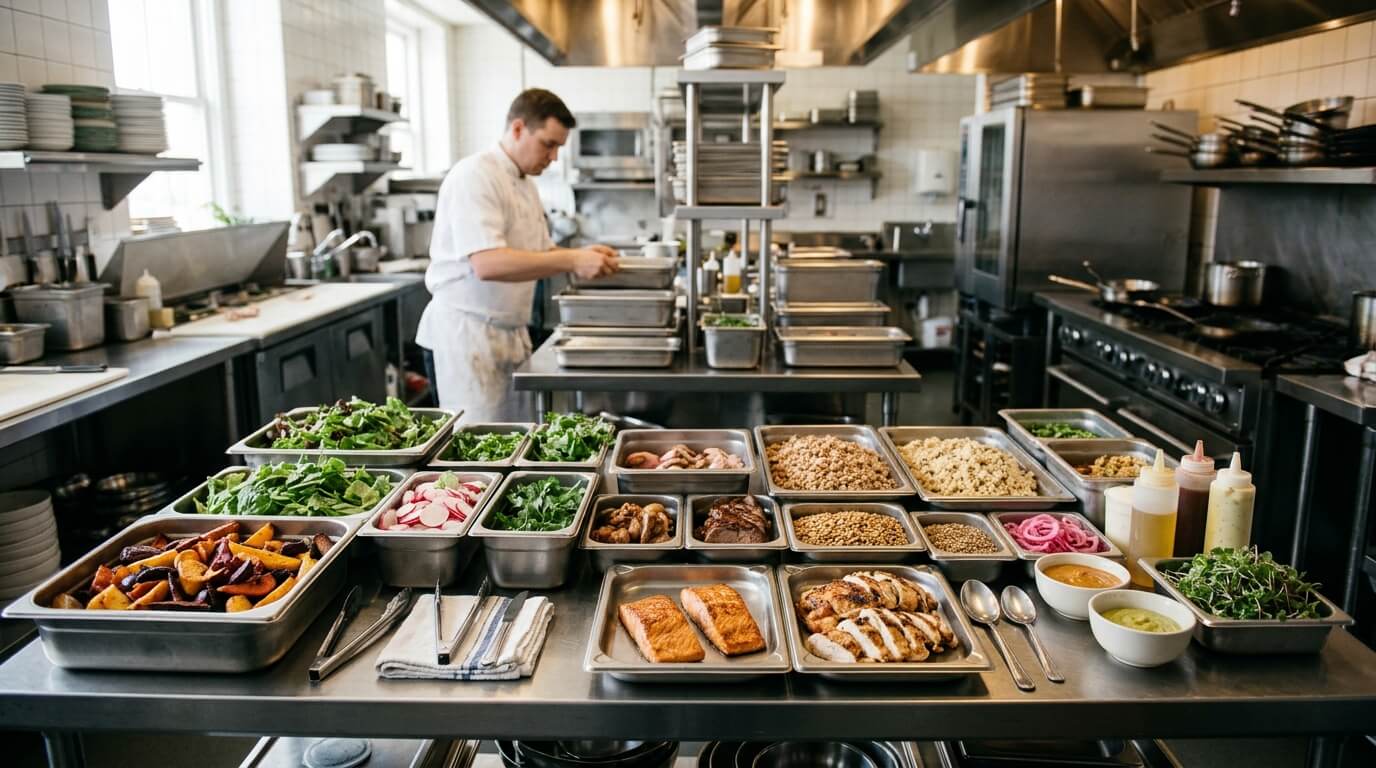
Shared ingredients can reduce purchasing complexity and help move inventory before quality declines. For example, roasted vegetables might appear in a grain bowl, sandwich, salad, or side dish. A neutral base can offer different flavors when paired with distinct sauces, seasonings, proteins, or toppings.
Cross-utilization should not make every item feel identical. Give each application its own flavor profile and purpose. A breakfast wrap should not simply be a lunch bowl folded into a tortilla. The best shared ingredients are versatile, easy to portion, and useful across multiple dayparts.
Sauces can also provide variety without requiring entirely new recipes. For example, brown gravy made from scratch offers one approach to creating a versatile sauce, while seafood boil sauce illustrates how seasoning combinations can change the flavor of familiar ingredients.
Balance Value, Quality, and Choice
Guests often judge value by more than the menu price. A satisfying portion, clear customization, good flavor, dependable quality, and a smooth ordering experience all shape whether a meal feels worthwhile. Operators can offer good, better, and premium choices when their kitchens support them, or provide half portions and add-ons that let guests control their spending.
Pricing should be reviewed alongside portion size and guest perception. A recent discussion of how chefs are rethinking price, portions, and value highlights why gradual increases, menu experience, and portion strategy should be considered together. Descriptions also matter. Explain what makes an item appealing, such as a house sauce, a particular preparation method, or a well-matched combination of ingredients.
Add Seasonal and Limited-Time Options
Limited-time offers create interest without permanently expanding the menu. Begin with one seasonal ingredient, spice blend, sauce, beverage, or dessert variation. Set clear start and end dates, use existing menu components whenever possible, and ensure the idea fits the available equipment and staff skills.
- Track sales, prep time, guest comments, and waste throughout the offer period.
- Use successful specials in a seasonal rotation instead of automatically adding them to the permanent menu.
- Keep the test simple enough for staff to execute during peak periods.
Plan for Real Kitchen Conditions
A menu idea must work during a busy service, not just during a tasting. Review the number of steps, required equipment, holding requirements, and potential bottlenecks before launch. Write clear build guides for each station, use brief demonstrations and tastings for training, and identify approved substitutions for common supply interruptions.
Use Menu Data Before Making Changes
Sales alone do not tell the full story. Review several factors before keeping, changing, or removing an item:
- Popularity: How often guests select it.
- Profitability: Whether it supports the operation’s financial goals.
- Speed: Whether it can be prepared during busy periods.
- Versatility: Whether its ingredients support other menu items.
- Consistency: Whether it looks and tastes right every time.
Test New Items in Small Steps
- Choose one goal, such as better value, faster service, more variety, or lower waste.
- Build a simple recipe using familiar ingredients and a limited number of preparation steps.
- Test it with staff first and collect feedback on flavor, appearance, portion, and execution.
- Run a short guest test at one location, during one daypart, or for a defined promotion period.
- Review sales, waste, ticket times, comments, and repeat orders before expanding.
Common Menu Planning Mistakes
- Adding too many items without considering labor, storage, and training needs.
- Using a specialty ingredient for only one dish.
- Following a trend that does not fit the operation’s customers or service model.
- Changing prices without checking perceived value.
- Keeping poor-performing items only because they have been on the menu for years.
Conclusion
Flexible menu planning means making thoughtful choices rather than constantly changing course. A strong core menu, shared ingredients, measured testing, and useful operational data help foodservice teams serve guests consistently while staying prepared for changing conditions.

