
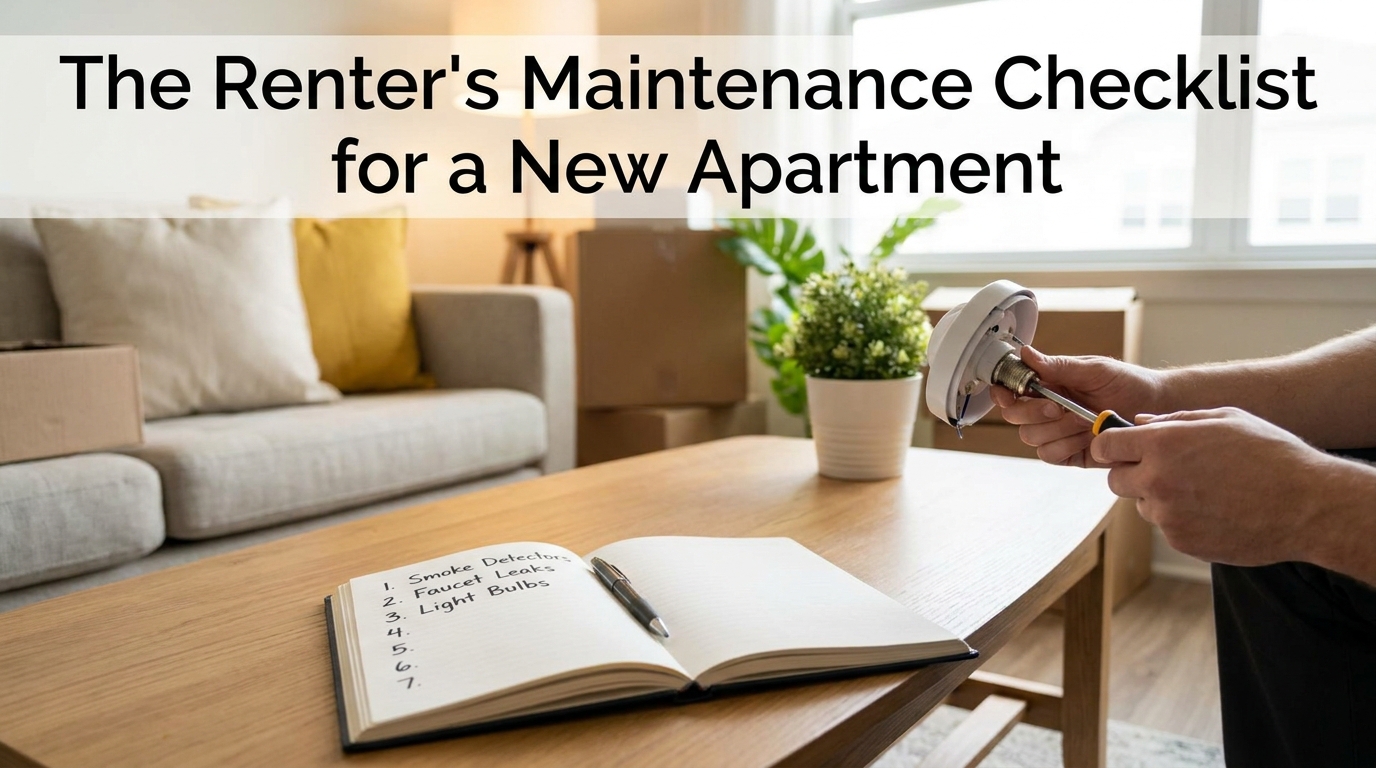
Moving into a new apartment involves more than unpacking boxes and arranging furniture. The first few days are your best opportunity to document existing damage, test essential equipment, and learn which maintenance tasks belong to you. This renter’s maintenance checklist will help you inspect the apartment properly, prevent avoidable problems, and report defects before they become difficult to trace.
Document the apartment before settling in
Walk through every room before placing furniture against walls or filling cabinets. Take clear, date-stamped photos and videos of floors, countertops, appliances, doors, windows, and bathroom fixtures. Pay particular attention to scratches, stains, cracked tiles, chipped paint, loose handles, and signs of previous water damage.
Complete any move-in condition form supplied by the property manager, but keep your own copy and supporting photos. Send written notice of existing defects, even when they seem minor. A small mark on a hardwood floor may not require repair, but documenting it helps distinguish pre-existing wear from damage that occurs during your tenancy.
This step is useful in any rental market. When comparing downtown Tucson rentals, for example, renters may tour several properties with different flooring, cooling systems, appliances, and building ages. A property-specific record is more reliable than trying to remember which issue appeared in which apartment.
Test the apartment’s essential systems
Turn on every faucet and let the water run long enough to check drainage, pressure, and temperature. Look inside cabinets under sinks for dampness, swollen wood, staining, or musty odors. Flush each toilet and watch whether the bowl fills normally or continues running.
Test the heating and cooling system rather than assuming it works because air comes from a vent. Check whether the thermostat responds, rooms reach a comfortable temperature, and unusual rattling or dripping develops. Replace or clean filters only when the lease assigns that task to the tenant. Otherwise, ask management when the filter was last serviced.
You should also test every smoke and carbon monoxide alarm using its test button. The Consumer Product Safety Commission’s alarm guidance recommends monthly testing and explains where alarms should be installed. Report missing, damaged, expired, or unresponsive units immediately instead of attempting electrical repairs yourself.
Check for moisture, pests, and ventilation problems
Moisture problems often begin in places that aren’t visible during a quick tour. Inspect window frames, ceiling corners, baseboards, bathroom grout, and the areas around the water heater and washing machine connections. Peeling paint, soft drywall, condensation, and persistent odors can indicate a leak or ventilation issue.
The EPA’s guide to mold and moisture explains that controlling moisture is the main way to prevent indoor mold growth. Use bathroom exhaust fans, avoid blocking air vents, and report plumbing leaks promptly. Photograph any suspicious area before cleaning it so the property manager can see its original condition.
Regional climate also affects what deserves attention. People viewing downtown Tucson rentals may focus on air-conditioning performance, window seals, sun exposure, and pest entry points. In wetter climates, bathroom ventilation, basement dampness, and window condensation may need closer inspection.
Look for pest evidence behind appliances and inside lower cabinets. Droppings, shed insect skins, gnaw marks, or gaps around pipes should be reported early. Avoid applying strong pesticides before speaking with management, especially when the lease includes scheduled pest-control service.
Build a simple maintenance routine
Once the initial inspection is complete, create a short monthly routine. Test alarms, check beneath sinks, clear hair from removable drain covers, inspect appliance hoses, and watch for changes in water pressure or indoor temperature. These checks take only a few minutes when done regularly.
Keep maintenance requests in writing and include the date, location, description, and photos. A message such as “The kitchen sink is leaking” gives limited information. “Water is dripping from the supply connection beneath the kitchen sink whenever the cold tap runs” helps maintenance staff arrive with a clearer idea of what needs attention.
Know where the electrical panel, water shutoff valves, and emergency contact details are located. You may not be responsible for repairs, but knowing how to respond to an overflowing toilet or tripped circuit can reduce damage while you wait for assistance. Never open electrical equipment, alter gas appliances, or attempt work that requires a qualified technician.
Separate tenant upkeep from property repairs
Routine housekeeping is usually the renter’s responsibility, while structural, plumbing, electrical, and major appliance repairs are generally handled by the property owner or manager. The exact division depends on the lease and local requirements, so read the maintenance clauses rather than relying on assumptions.
Ask before drilling into walls, replacing fixtures, painting, or installing equipment. Even a well-intended improvement can violate the lease or damage hidden wiring and plumbing. When something fails, document it, take reasonable steps to prevent further damage, and contact the designated maintenance team.
A good renter’s maintenance checklist isn’t about fixing everything yourself. It is about noticing problems early, keeping accurate records, and understanding how your apartment works. Complete the first inspection before unpacking fully, then repeat a smaller version each month to keep minor issues from becoming disruptive ones.

