
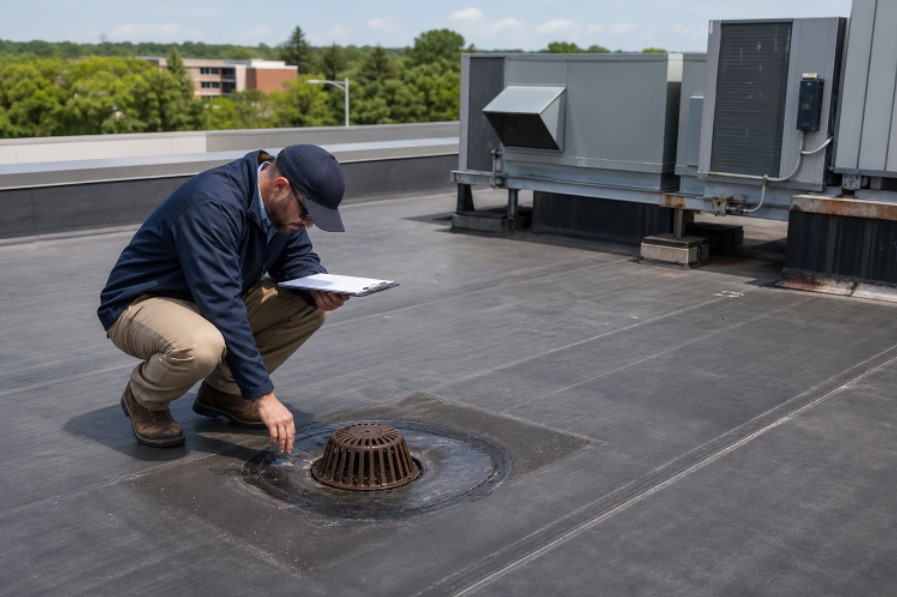
A commercial roof is easy to overlook when it is doing its job. Yet minor drainage issues, worn sealant, loose flashing, and membrane damage can become costly disruptions if not identified early. A planned maintenance program gives owners and facility managers a practical way to protect the building, reduce avoidable surprises, and make better capital decisions.
Whether a property has a low-slope membrane, metal panels, a coating system, or another roof assembly, regular care should be tailored to its age, exposure, rooftop equipment, and traffic patterns. Working with an experienced commercial roofing contractor can help establish an inspection routine and address problems before they affect interior spaces or operations. Consistent maintenance also helps preserve the roof’s expected service life and supports more predictable budgeting over time. Keeping detailed inspection and repair records can help monitor recurring issues and plan future improvements. Taking a proactive approach today can help reduce unexpected repairs and keep the building performing as intended for years to come.
Why Commercial Roof Maintenance Matters
Roof damage often develops long before a leak becomes visible on a ceiling. Water can move beneath roofing materials, enter insulation, travel along deck surfaces, and emerge far from the original opening. By that point, the issue may affect finishes, inventory, electrical systems, mechanical equipment, or normal business activity.
Planned maintenance is usually less disruptive than emergency work. It allows owners to schedule access, prioritize repairs, obtain documentation, and address small defects while they are still localized. Treat the roof as a major building asset, not a background feature that only deserves attention after a storm or interior leak.
What a Strong Maintenance Plan Includes
A useful program is more than an annual walk-around. It combines scheduled inspections with prompt follow-up, clear records, access controls, and a realistic forecast for future work.
For common terms and construction approaches, this overview of flat-roof systems can provide helpful background.
- Spring and fall inspections, plus reviews after severe weather.
- Drain, gutter, scupper, and downspout cleaning.
- Checks of seams, flashing, penetrations, fasteners, and sealants.
- Photo records, written reports, and documented repair history.
- Warranty tracking and planned repair or replacement forecasting.
- Controlled roof access for HVAC, solar, signage, and other service work.
A Simple Seasonal Inspection Schedule
Spring Review
Look for damage caused by snow, ice, wind, and freeze-thaw cycles. Clear debris, inspect drains, review seams and edge details, and note interior stains or moisture near upper-level ceilings and mechanical rooms.
Summer Review
Heat can expose membrane movement, worn coatings, open seams, and failing sealants. Inspect frequently traveled areas around rooftop units, vents, skylights, and service paths. Complete routine repairs before periods of heavy rain or wind.
Fall Review
Remove leaves and branches before they collect around drains and gutters. Confirm water has a clear path off the roof, inspect flashing around penetrations, and update the maintenance budget based on current findings.
After Severe Weather
Arrange a qualified review after high winds, hail, major rain events, or heavy snow. Check for displaced materials, punctures, damaged metal, blocked drainage, and loose equipment supports. Take dated photographs before cleanup or temporary repair work begins.
Commercial Roof Inspection Checklist
A professional inspection should cover interior clues as well as the roof itself. A complete review commonly includes the following areas:
- Interior areas: Water stains, peeling finishes, damp insulation, odors, visible daylight, and moisture near rooftop equipment rooms.
- Roof surface: Open seams, lifted edges, cracks, blisters, punctures, exposed reinforcement, loose fasteners, worn coatings, debris, and plant growth.
- Details and drainage: Flashing, curbs, vents, skylights, expansion joints, roof edges, drains, scuppers, gutters, downspouts, walk pads, and access routes.
- Standing water: Ponding that remains longer than expected may indicate blocked drainage, surface deflection, or slope concerns that need further review.
Common Problems to Watch For
Many commercial roof leaks begin at details rather than in large open sections of membrane. Blocked drains can hold water on the roof, while open seams and failed sealants can create small but important pathways for moisture. Damaged flashing around walls, curbs, skylights, and penetrations also deserves quick attention.
Unplanned foot traffic is another common source of damage. Tools, sharp equipment, and repeated travel can puncture or wear roofing materials, especially where there are no designated walk pads. Storm damage can be equally difficult to spot from the ground, which is why post-weather inspections are valuable even when no leak is immediately visible.
When to Repair, Restore, or Replace
Repair May Make Sense When
- Damage is limited, and the rest of the system remains sound.
- The leak source can be traced and safely accessed.
- The work can be performed in accordance with applicable warranty requirements.
Restoration May Be Worth Reviewing When
- The roof has widespread surface wear but a stable underlying assembly.
- A qualified assessment supports a coating or restoration system.
- The owner wants to reduce tear-off work and extend service life.
Replacement May Be Needed When
- Moisture has spread through broad sections of the roof assembly.
- Repeated repairs have not provided reliable performance.
- The system has reached the end of its useful life or no longer offers reasonable repair value.
Roof Records and Budget Planning
Accurate records turn roof maintenance into a manageable business decision. Keep inspection reports, dated photos, invoices, warranty information, repair notes, roof drawings, and leak locations in one shared location. Track how often issues occur and whether the same areas continue to need attention.
Separate routine maintenance costs from large capital projects. Reviewing roof conditions before annual budget meetings helps owners reserve funds for priority repairs, emergency contingencies, restoration options, or eventual replacement, rather than making rushed decisions during a leak event.
Safety and Warranty Considerations
Commercial roof access should be limited to authorized, trained personnel using appropriate safety procedures. Roof edges, skylights, wet surfaces, electrical equipment, and unstable materials can create serious hazards. OSHA provides guidance on walking-working surfaces and fall protection that facility teams should consider when establishing roof-access practices.
Before approving repairs or rooftop additions, review warranty requirements. HVAC service, solar installations, antennas, signage, and other work can affect roof access, penetrations, and warranty coverage. Maintain records showing when inspections, maintenance, and repairs were completed.
Steps to Build a 2026 Maintenance Plan
- Gather existing records. Collect warranties, reports, invoices, drawings, and prior repair notes.
- Schedule a baseline inspection. Document the roof’s present condition and major concerns.
- Rank findings by urgency. Separate active leaks, routine wear, and future capital needs.
- Set calendar dates. Plan spring, fall, and post-storm inspections.
- Assign responsibility. Identify who receives reports, approves work, and tracks follow-up.
- Document every visit. Save photographs, notes, invoices, and completed repair details.
- Review annually. Update the plan as the roof ages, building use changes, or rooftop equipment is added.
Final Takeaway
Commercial roof care works best as a planned process. Regular inspections, prompt attention to minor defects, safe access practices, clear records, and realistic budgeting can reduce disruption and support better long-term decision-making. A simple maintenance calendar is often the first step toward a healthier roof and a more predictable facilities budget.

