
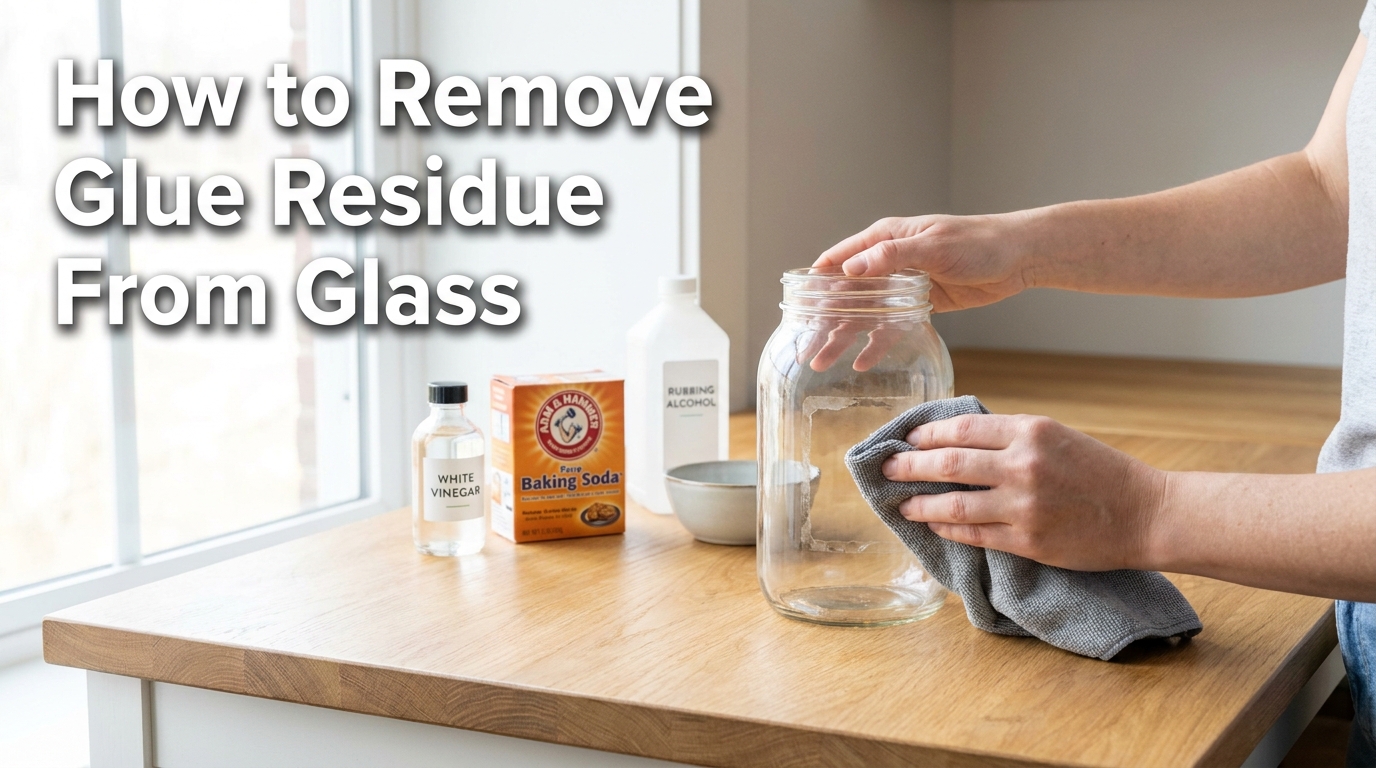
You finally peeled off that price sticker, and now there’s a sticky, gross patch of glue staring back at you. Annoying, right?
The good news: removing glue residue from glass is one of the easiest cleaning tasks once you know which products actually work—and which ones just smear the mess around.
In this guide, you’ll learn proven, safe methods using things you probably already have at home.
Why Glue Sticks So Stubbornly to Glass
Glass is smooth and non-porous, but adhesives are designed to bond tightly to surfaces. When exposed to heat, sunlight, or time, the adhesive’s polymers harden and become more resistant to simple washing.
According to the American Cleaning Institute, many household adhesives are oil-based, which is why oil-based solvents (rather than just soap and water) tend to dissolve them most effectively.
What You’ll Need Before You Start
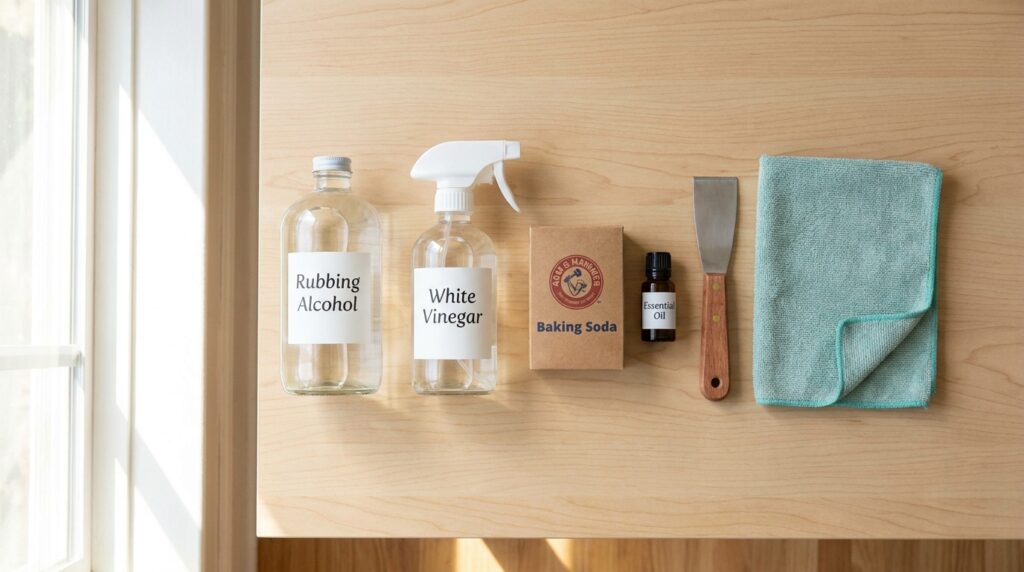
Most of these methods require items already sitting in your kitchen or bathroom cabinet.
| Item | Best For |
|---|---|
| Rubbing alcohol | General sticker glue |
| White vinegar | Natural, eco-friendly option |
| Baking soda | Scrubbing thick residue |
| Cooking oil (vegetable/olive) | Loosening old, hardened glue |
| Acetone/nail polish remover | Tough industrial adhesives |
| Plastic scraper or old credit card | Lifting residue without scratching |
| Microfiber cloth | Final polish |
Method 1: Rubbing Alcohol (Best All-Around Method)
Rubbing alcohol is a go-to because it evaporates quickly, won’t leave streaks, and breaks down most adhesive bonds within minutes.
Steps:
- Soak a cotton ball or cloth in rubbing alcohol.
- Press it onto the glue spot and let it sit for 2–3 minutes.
- Rub gently in circular motions.
- Wipe clean with a dry cloth.
The Mayo Clinic notes that isopropyl alcohol is a common solvent used in many household cleaning applications due to its effectiveness at dissolving oils and resins.
Method 2: White Vinegar Soak (Natural & Non-Toxic)
If you prefer a chemical-free approach, white vinegar’s mild acidity works wonders on dried glue.
Steps:
- Soak a cloth or paper towel in white vinegar.
- Lay it directly over the glue residue.
- Let it sit for 15–20 minutes (longer for stubborn spots).
- Scrape gently with a plastic scraper, then wipe clean.
This method is especially popular for glass jars you want to reuse for storage, since vinegar is food-safe.
Method 3: Baking Soda Paste (For Thick, Caked-On Residue)
For older glue that’s turned hard and gummy, a baking soda paste adds gentle abrasion without scratching glass.
Steps:
- Mix baking soda with a few drops of water (or vegetable oil) to form a paste.
- Apply directly to the residue.
- Let sit for 5 minutes.
- Scrub with a soft cloth or non-abrasive sponge.
- Rinse with warm water.
Method 4: Cooking Oil (Great for Old, Hardened Stickers)
Oil works because it penetrates and softens the adhesive from beneath, making it easy to peel off in one piece.
Steps:
- Apply a generous amount of vegetable, olive, or coconut oil to the glue.
- Let it soak for 10–15 minutes.
- Use a scraper or your fingers to lift the softened residue.
- Wash with dish soap to remove the oily film.
Method 5: Acetone or Nail Polish Remover (For Tough Adhesives)
This is your heavy-duty option for super-glue, label adhesive, or epoxy residue—but use it carefully.
Steps:
- Apply acetone to a cotton pad.
- Hold against the residue for 1–2 minutes.
- Rub in small circles until the glue dissolves.
- Rinse the area thoroughly with water.
Caution: Acetone can damage tinted, painted, or treated glass (like some smart-glass coatings or car windows with tinting film). Test on a small hidden area first. The U.S. Consumer Product Safety Commission recommends using acetone-based products in well-ventilated areas due to fume inhalation risks.
Method 6: Commercial Adhesive Removers (Goo Gone & Similar)
If household items aren’t cutting it, dedicated adhesive removers like Goo Gone are formulated specifically for this job and are safe on most glass surfaces.
Pros and Cons
| Pros | Cons |
|---|---|
| Fast-acting, designed for glue | Costs more than household items |
| Works on tough/old residue | Strong chemical smell |
| Widely available | Needs proper rinsing afterward |
How to Remove Glue Residue From Specific Glass Surfaces
Windows and Mirrors
Use rubbing alcohol or vinegar—avoid acetone near window tinting or decorative film.
Glass Jars and Bottles
Vinegar soaking works best since it’s food-safe and won’t leave chemical residue for reuse.
Car Windows
Stick to alcohol-based or specialized automotive adhesive removers, since some windows have UV-protective coatings sensitive to acetone.
Glass Cookware (e.g., Pyrex)
Baking soda paste is safest—it’s non-toxic and won’t react with food-grade glass.
Expert Tips for Faster, Easier Removal
- Heat helps: A hairdryer on low heat softens glue before scraping.
- Always test first: Try any solvent on a small, hidden corner.
- Work in sections: Don’t let solvents dry out before scraping.
- Use plastic, not metal: Metal scrapers can scratch glass; old gift cards work great.
- Layer methods: Combine oil soak + baking soda scrub for extremely stubborn residue.
Common Mistakes to Avoid
- Using a metal razor blade aggressively (can scratch glass)
- Skipping the test spot on tinted or coated glass
- Mixing chemicals (e.g., vinegar + bleach) — never combine cleaning agents
- Letting solvents dry before scraping, making removal harder
FAQs
1. Does WD-40 remove glue residue from glass?
Yes, WD-40 is effective at breaking down adhesive residue on glass, though it should be followed with dish soap to remove the oily film.
2. Will rubbing alcohol damage glass?
No, rubbing alcohol is safe on plain glass and won’t cause scratches or discoloration.
3. How do I remove glue from glass without scratching it?
Use a plastic scraper instead of metal, and always soften the glue first with oil, alcohol, or vinegar before scraping.
4. Can I use vinegar on glass cookware?
Yes, white vinegar is food-safe and commonly used to clean glass jars and cookware.
5. What’s the fastest way to remove sticker residue?
Rubbing alcohol typically works fastest—apply, wait 2-3 minutes, then wipe clean.
Conclusion
Removing glue residue from glass doesn’t require expensive products or special tools—just the right technique for your situation. Whether it’s rubbing alcohol for quick jobs, vinegar for food-safe surfaces, or oil for stubborn old stickers, you now have a complete toolkit to tackle any sticky mess.
Got a stubborn glue spot? Try these methods today and let your glass shine like new again!
Also Read: How to Remove Adhesive from Glass: 10 Easy Methods That Actually Work

