
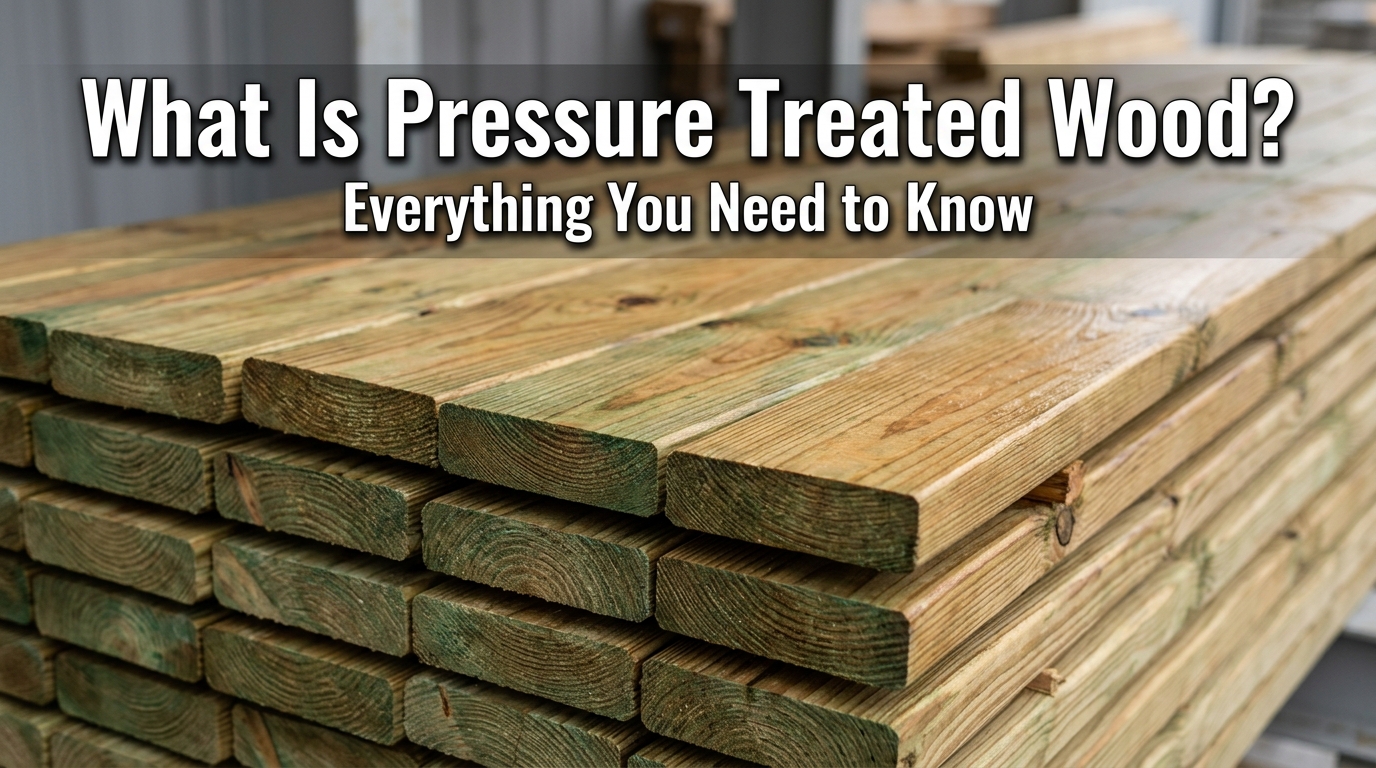
Every deck, fence post, and raised garden bed that survives years of rain and bugs owes its life to one process. That process is what turns ordinary lumber into pressure treated wood, and it’s a lot more specific than most people realize.
If you’ve stood in a lumber aisle staring at boards with a faint greenish tint and a tag full of fine print, you’ve already met this material. It’s not a separate species of tree, it’s not stained for looks, and it’s not the same product it was twenty years ago. It’s regular softwood that’s been forced, under pressure, to soak up chemical preservatives deep into its fibers so it can survive outdoors without rotting away.
This piece walks through what the term actually means, what the wood is made of, what it’s treated with today versus decades ago, how to spot it, what it costs, and whether the safety concerns you’ve heard about still apply.
What Does Pressure Treated Wood Mean?
So what is pressure treated wood mean in plain terms? It means the lumber has been placed inside a sealed steel cylinder, had the air pulled out of it under vacuum, and then had a liquid preservative solution forced deep into the wood cells under high pressure. The wood doesn’t just get sprayed or dipped. The chemical is driven into the grain itself, which is why the protection lasts for years instead of washing off after one rainstorm.
The process itself is straightforward once you break it down. Lumber goes into a pressure cylinder, a vacuum removes trapped air from the wood cells, the preservative solution floods in, and pressure pushes it deep into the fibers. Once the cycle finishes, the excess solution gets pumped back out and the boards sit on a drip pad to dry before shipping. Pressure treatment process is considered one of the most effective ways to extend the working life of ordinary lumber.
That single detail, chemicals forced into the wood rather than applied to its surface, is the whole reason this material behaves so differently from a plain board.
What Is Pressure Treated Wood Made Of?
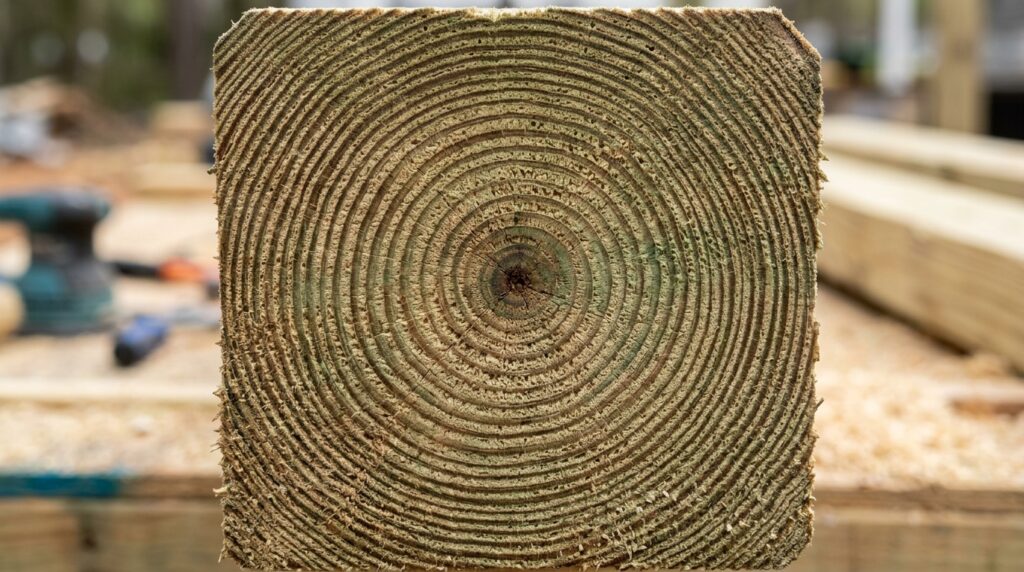
At its core, pressure treated wood is made of ordinary softwood, most commonly southern yellow pine, though species like hem-fir, spruce, and Douglas fir show up too. The wood itself isn’t special. What makes it different is the preservative solution pushed into it.
That solution is typically a water-based mixture built around copper, since copper compounds are highly effective at killing the fungi that cause rot and deterring wood-boring insects. The copper is combined with other active ingredients depending on the specific formulation, plus water that acts as the carrier so the chemicals can penetrate the wood’s cell structure.
Some western species resist preservative penetration along their length, so mills use a technique called incising, cutting small slits into the surface before treatment so the chemical can travel deeper into denser wood.
What Is Pressure Treated Wood Treated With Now?
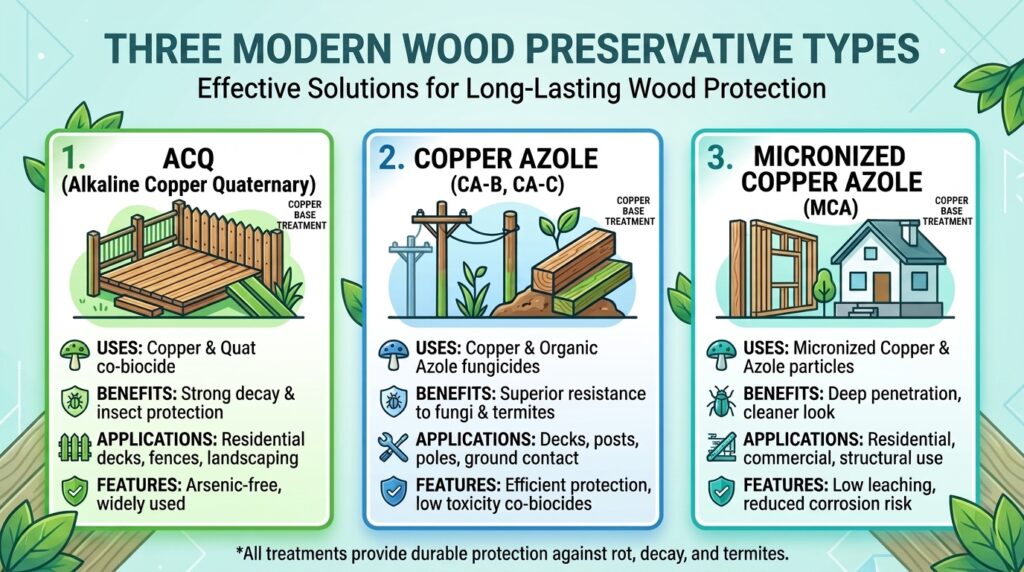
This is where a lot of confusion comes from, because what pressure treated wood is treated with today is genuinely different from what it was treated with a generation ago.
The active ingredients you’ll find in most residential lumber right now fall into a few categories:
- Alkaline Copper Quaternary (ACQ) – a copper-based preservative combined with a quaternary ammonium compound, one of the most widely used residential treatments.
- Copper Azole (CA) – copper paired with an azole fungicide, offering similar protection with a different chemical backbone.
- Micronized Copper Azole (MCA) – a newer version where the copper particles are ground extremely fine before being bonded to the wood, which tends to reduce the amount of free copper that can leach out.
These compounds are chosen specifically because they resist termites, fungus, and rot without relying on arsenic. Some borate-based products also show up on the market, which use water-soluble mineral salts instead of copper, though borate treatments tend to wash out faster in wet, constantly exposed conditions and are more common for interior framing than ground-contact decks.
What Was Pressure Treated Wood Soaked In Before?
If you’re researching what pressure treated wood was soaked in a few decades back, the short answer is arsenic, and it’s a big part of why the industry changed direction.
From the 1970s through 2003, the dominant preservative was chromated copper arsenate, better known as CCA. It worked well at stopping rot and insects, but it contained arsenic and chromium, both linked to serious health concerns with repeated exposure. Manufacturers voluntarily discontinued CCA for residential uses by the end of 2003, which pushed the industry toward the copper-based alternatives used today.
If you own a deck or fence built before 2004, there’s a real chance it was built with CCA lumber, and older CCA wood can still be legally sold and used even though it’s no longer manufactured for new residential products.
Is Pressure-Treated Lumber Toxic?
This is one of the most searched questions about this material, and it deserves a straight answer rather than a scare headline.
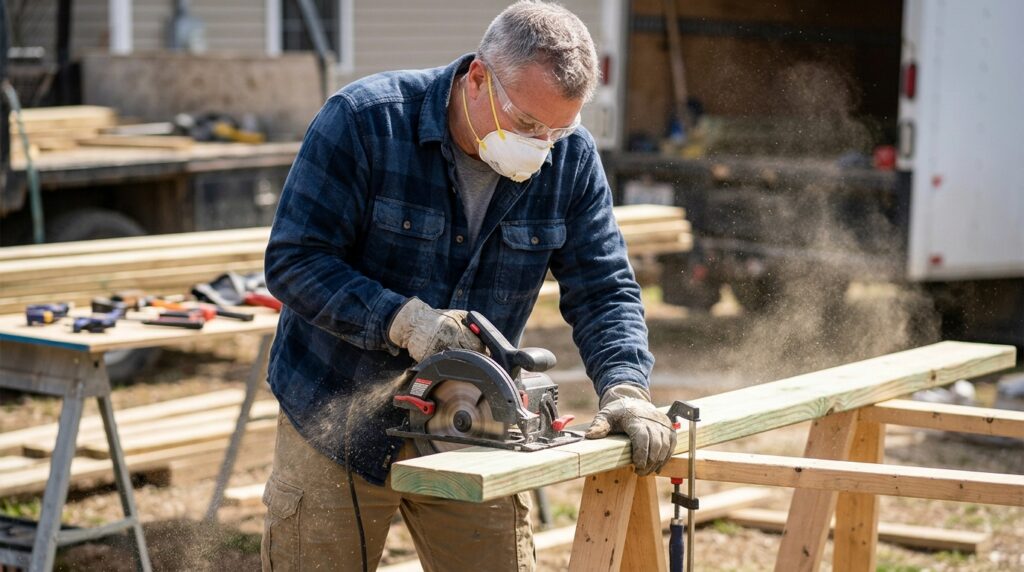
Modern ACQ, CA, and MCA treated wood is considered safe for typical residential use, including decks, fences, and raised garden beds, according to the current preservatives approved for those applications. That said, “safe when installed” doesn’t mean “risk-free during handling.” A few practical concerns still apply:
- Cutting or sanding treated wood produces sawdust containing trace preservative chemicals, so a dust mask and eye protection are worth using.
- Treated wood shouldn’t be burned, since burning can concentrate the chemicals in ash and smoke.
- It shouldn’t be used for surfaces that directly contact food, like cutting boards, though it’s widely accepted for garden bed frames as long as the soil itself doesn’t touch the cut, chemical-soaked interior repeatedly.
- Wash your hands after handling it, especially before eating.
Older CCA-treated wood is a different story. Because it contains arsenic, arsenic-treated wood can pose a measurable health risk, particularly for young children who touch playground equipment or old decking repeatedly and then put their hands near their mouths. If you suspect a structure on your property predates 2004, sealing it with an oil-based sealant or replacing it are the two most common recommendations.
Pressure Treated Wood Dangers to Keep in Mind
Beyond the chemical question, there are a few practical dangers worth knowing before you build with it:
- Corrosion of fasteners. Copper-based preservatives can corrode standard steel nails, screws, and joist hangers over time. Always use hardware rated for ACQ or CA contact, usually labeled hot-dip galvanized or stainless steel.
- Warping and cracking as it dries. Treated wood is often sold still damp from the treatment cycle, so it can shrink, twist, or crack as it dries out over the following weeks.
- Splinters carrying preservative residue. A splinter from treated wood is more of a concern than one from plain pine, so treat any puncture wound from treated lumber a bit more seriously and clean it well.
- Improper disposal. Treated wood scraps shouldn’t go in a wood stove, fire pit, or general yard-waste pile in areas where it’s restricted; check local disposal rules.
What Is Pressure Treated Wood Treated With in Canada?
The approach north of the border follows a similar path to the one taken domestically. Older Canadian lumber also relied on chromated copper arsenate before residential uses were phased out, and the market shifted toward the same family of copper-based alternatives, including alkaline copper quaternary and copper azole formulations. Canadian treatment plants operate under standards set by the Canadian Wood Preservation Certification Authority, which assigns “use categories” similar to the retention-level system used elsewhere, matching the treatment intensity to how the wood will be used, whether that’s above ground, in ground contact, or in fresh water.
What Is Pressure Treated Wood Called in the UK?
Terminology shifts once you cross the Atlantic. In the UK, this same category of material is most commonly called tanalised timber, a name that comes from Tanalith, a widely used brand of preservative. The process itself is functionally identical: timber is treated under pressure with a preservative so it resists rot, fungus, and insects in outdoor and damp conditions. So if a UK supplier calls a product “tanalised” rather than “pressure treated,” they’re describing the same underlying wood, just under a different regional name.
What Is Pressure Treated Wood Used For?
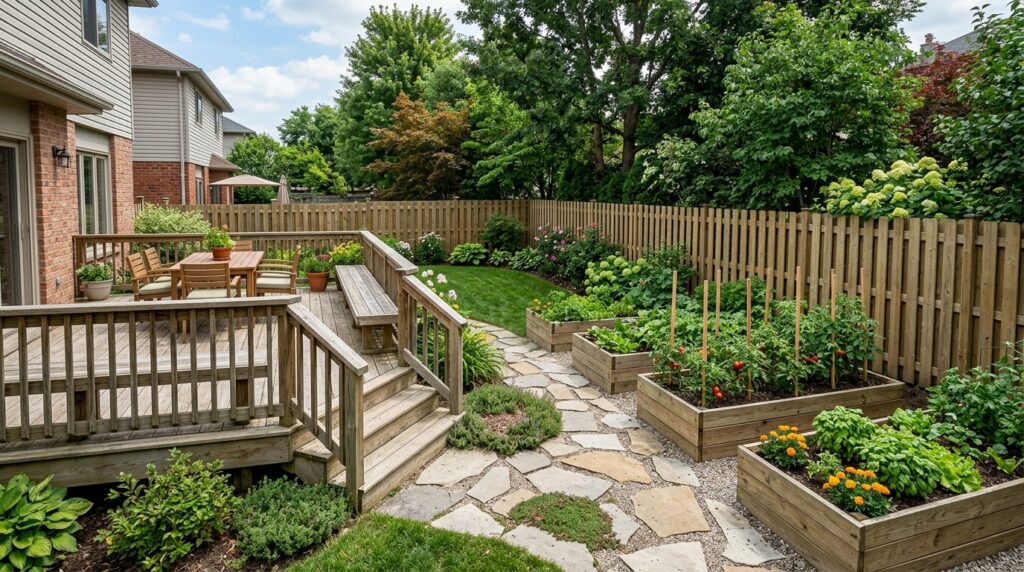
This material earns its popularity because of where it gets used, and the list is longer than most people expect. It shows up in decks, porches, fences, sheds, gazebos, retaining walls, playground structures, swing sets, sandboxes, arbors, and garden boxes. Basically, anywhere wood needs to survive direct exposure to rain, soil, or humidity without rotting out within a few seasons.
It’s also common in structural framing that sits close to the ground, like sill plates and mudsills, since building codes in many regions require treated lumber anywhere wood touches concrete or masonry near grade, due to the moisture that concrete tends to wick upward.
If you’re comparing it against panel-based alternatives for an indoor project instead, it’s worth understanding how it differs from manufactured options like engineered wood, which is built for stability and interior use rather than direct exposure to soil and weather. The two materials solve different problems: one resists decay outdoors, the other resists warping indoors.
What Is Pressure Treated Wood Good For?
Beyond the list of projects, it’s worth understanding what it’s actually good at solving. Three things stand out:
- Decay resistance. The preservative actively slows the fungi responsible for wood rot, which is the single biggest threat to any outdoor wood structure.
- Insect resistance. Termites and other wood-boring insects are deterred by the copper-based chemicals, protecting structural integrity over years of exposure.
- Longevity for the cost. Compared to naturally rot-resistant species like cedar or redwood, treated pine delivers similar durability at a noticeably lower price point, which is a major reason it dominates the framing and decking market.
It’s not indestructible, and it still needs occasional sealing or staining to look its best, but for the price, nothing else on the lumber rack offers the same balance of durability and cost.
What Does Pressure Treated Wood Look Like?
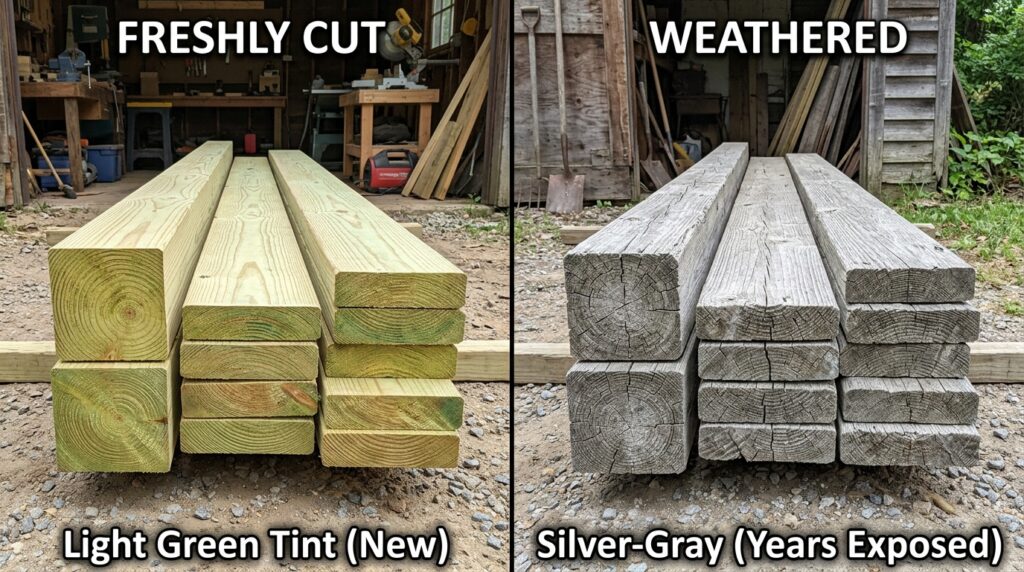
Fresh off the shelf, pressure treated wood usually has a subtle green or yellow-green tint, sometimes described as a “wet” or slightly damp appearance, since the boards are often still holding moisture from the treatment cycle. That tint comes from the copper in the preservative, not from a dye, and it fades noticeably within the first year outdoors.
Left unfinished, treated wood eventually weathers to a soft silvery gray, similar to how untreated cedar ages, though the wood underneath stays protected against decay even as the surface color shifts. If it’s stained or sealed early, that graying process slows down considerably.
How to Know If Wood Is Pressure Treated
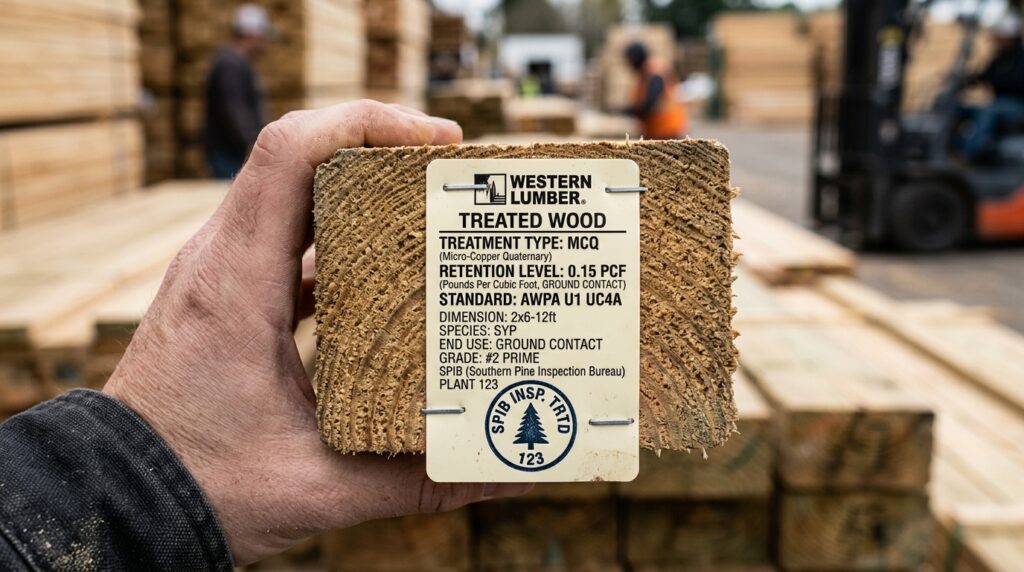
The most reliable way to confirm treatment is checking the end tag. Every properly treated board carries a small stamped or printed tag at one end listing the treating plant, the preservative used, its retention level in pounds per cubic foot, and the mark of an approved third-party inspection agency. If that tag is present, the wood is treated, and the label tells you exactly what it’s rated for.
A few other clues help when the tag is missing or has fallen off:
- Color and smell. A greenish or brownish tint and a faint chemical odor, especially near cut ends, both point to treated lumber.
- Weight and dampness. Freshly treated wood often feels noticeably heavier and slightly damp compared to kiln-dried untreated lumber of the same size.
- Where it was purchased. Lumber sold specifically as decking, ground-contact, or exterior framing stock is almost always treated, while stock labeled “select” or “premium” for interior trim usually isn’t.
If none of that is conclusive and you’re dealing with an older structure, a simple field test kit (sold at most hardware stores) can confirm whether arsenic-based CCA preservative is present.
Pressure Treated Wood Sizes
Pressure treated lumber follows the same nominal sizing convention as standard framing lumber, meaning the labeled size isn’t the actual measured size once the board is planed smooth.
| Nominal Size | Actual Size (inches) | Common Use |
|---|---|---|
| 2×4 | 1.5 x 3.5 | Framing, rails |
| 2×6 | 1.5 x 5.5 | Deck joists, fencing |
| 2×8 | 1.5 x 7.25 | Deck framing |
| 2×10 | 1.5 x 9.25 | Deck beams, stair stringers |
| 4×4 | 3.5 x 3.5 | Deck posts, fence posts |
| 6×6 | 5.5 x 5.5 | Structural posts, pergola supports |
Lengths typically run from 8 feet up to 20 feet for standard dimensional lumber, with longer specialty lengths available by special order for larger structural projects. If you’re planning a deck or fence, matching board size to span requirements matters for safety, so local building codes or a span chart should guide the final sizing decision rather than guesswork.
Pressure Treated Wood Prices
Pricing shifts with lumber markets, region, and board size, but general ranges give a useful starting point for budgeting:
- 2x4x8: roughly $6 to $10 per board
- 2x6x8: roughly $10 to $16 per board
- 2x6x12 (common decking length): roughly $16 to $26 per board
- 4x4x8 posts: roughly $12 to $22 per post
- 6x6x8 posts: roughly $30 to $50 per post
Ground-contact rated lumber, which carries a heavier chemical retention level for direct soil contact, typically costs somewhat more than standard above-ground treated stock of the same dimensions. Prices fluctuate with lumber supply, so checking current pricing at a local supplier before finalizing a project budget is always the safer move.
Pressure Treated Wood: Pros and Cons
| Pros | Cons |
|---|---|
| Resists rot, decay, and fungal damage | Needs galvanized or stainless fasteners to avoid corrosion |
| Deters termites and wood-boring insects | Can warp or crack as it dries after installation |
| Costs less than naturally rot-resistant species | Requires sealing to prevent graying and moisture damage |
| Widely available in standard construction sizes | Not suitable for food-contact surfaces |
| Backed by decades of building code acceptance | Sawdust and offcuts need careful handling and disposal |
Expert Tip: Let It Dry Before You Finish It
One mistake shows up constantly on first-time deck and fence projects: sealing or staining the wood too soon. Freshly treated lumber is often still carrying moisture from the treatment cycle, and coating it before that moisture escapes traps it inside, which can lead to peeling finish and slower drying overall. A simple water-drop test solves this: sprinkle a few drops of water on the surface, and if it beads up, the wood is still too wet to finish. If it soaks in within a few minutes, it’s ready. This usually takes anywhere from a few weeks to a couple of months depending on climate and board thickness.
Frequently Asked Questions
Is pressure treated wood safe for raised garden beds?
Modern ACQ and copper azole treated wood is generally accepted for raised garden bed frames, since the preservative stays bound to the wood fibers rather than leaching significantly into surrounding soil. Lining the interior with landscape fabric adds an extra layer of separation for anyone who prefers additional peace of mind.
How long does pressure treated wood last outdoors?
With proper installation and occasional sealing, treated wood commonly lasts 20 to 40 years in outdoor applications like decks and fences, though ground-contact conditions, climate, and maintenance habits all affect that range significantly.
Can pressure treated wood be used indoors?
It can, particularly for sill plates or framing near concrete slabs where moisture resistance is required by code, but it’s rarely used for visible interior trim or furniture since the chemical tint and rougher grade aren’t typically desired indoors.
Do you need special screws for pressure treated wood?
Yes. Standard uncoated steel fasteners corrode quickly in contact with copper-based preservatives, so hot-dip galvanized or stainless steel screws and nails are strongly recommended for any treated lumber project.
Is pressure treated wood the same as cedar or redwood?
No. Cedar and redwood are naturally decay-resistant due to compounds already present in the wood itself, while pressure treated wood is ordinary softwood, usually pine, that gains its resistance from an added chemical preservative rather than natural composition.
Final Word
Pressure treated wood isn’t a mystery material once you break down what actually happens to it. It starts as ordinary softwood, gets forced full of a copper-based preservative under pressure, and comes out the other side able to survive years of rain, soil contact, and insect pressure that would rot untreated lumber within a season or two. The chemistry has changed for the better since the arsenic-based products of the past, the sizing follows standard lumber conventions, and the pricing stays reasonable compared to naturally rot-resistant wood species.
Whether it’s a deck, a fence line, or a raised garden bed, understanding what’s actually inside that greenish board makes it a lot easier to build with confidence and maintain it properly for the long haul.

