
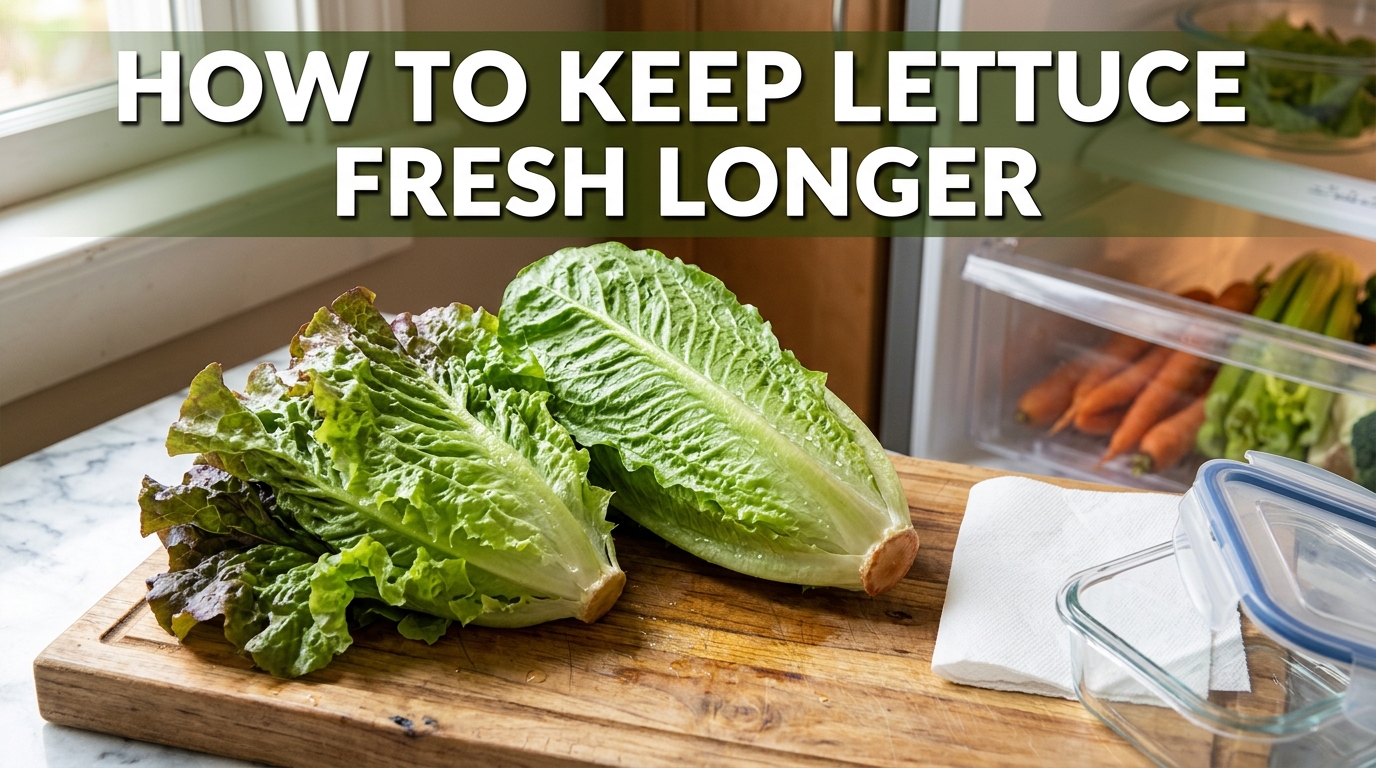
There’s nothing worse than opening the crisper drawer for a quick salad and finding a slimy, wilted mess instead. If you’ve ever wondered how to keep lettuce fresh, the answer usually comes down to two things: moisture control and airflow. Get those right, and a head of lettuce can easily outlast the sad, soggy version most people are used to.
Lettuce is mostly water, which makes it delicate. Too much moisture around the leaves speeds up decay. Too little, and the leaves dry out and go limp. The good news is that once you understand this balance, storing lettuce properly takes almost no extra effort.
Why Lettuce Wilts So Quickly in the First Place
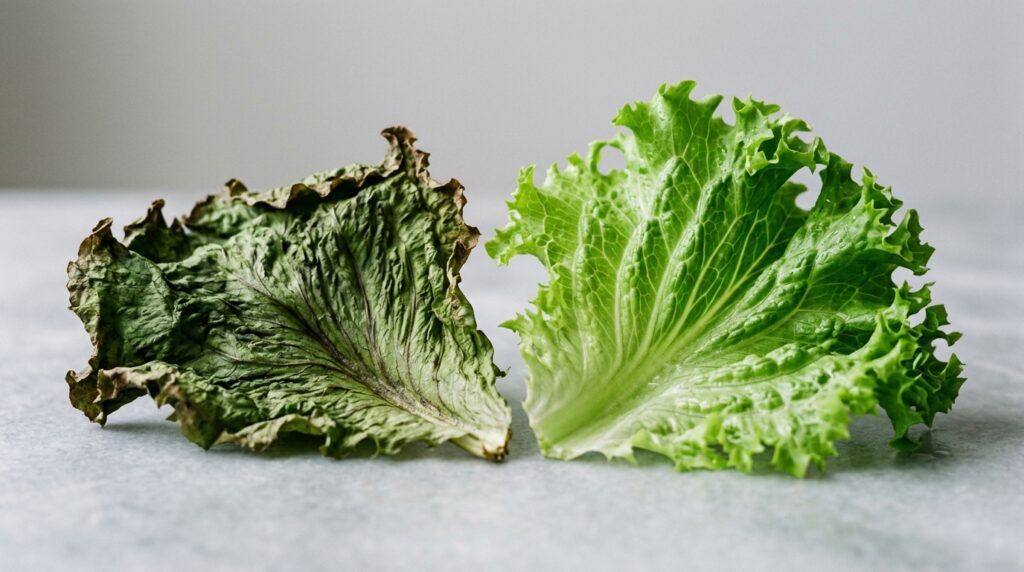
Before jumping into storage tricks, it helps to know what’s actually happening inside those leaves. Lettuce keeps “breathing” after it’s picked, losing moisture through its leaves the whole time it sits in your fridge. At the same time, any trapped water sitting on the surface of the leaves creates the perfect environment for bacteria and mold to grow.
That’s the core tension behind every lettuce storage method: leaves need some humidity to stay crisp, but standing water or a sealed, airless bag will rot them faster than almost anything else in the produce drawer.
Lettuce is also sensitive to ethylene gas, a natural compound given off by fruits like apples, bananas, and pears as they ripen. Storing lettuce near ethylene-producing produce is one of the most common reasons it goes brown and slimy days before it should.
The Best Way to Store Whole Heads of Lettuce
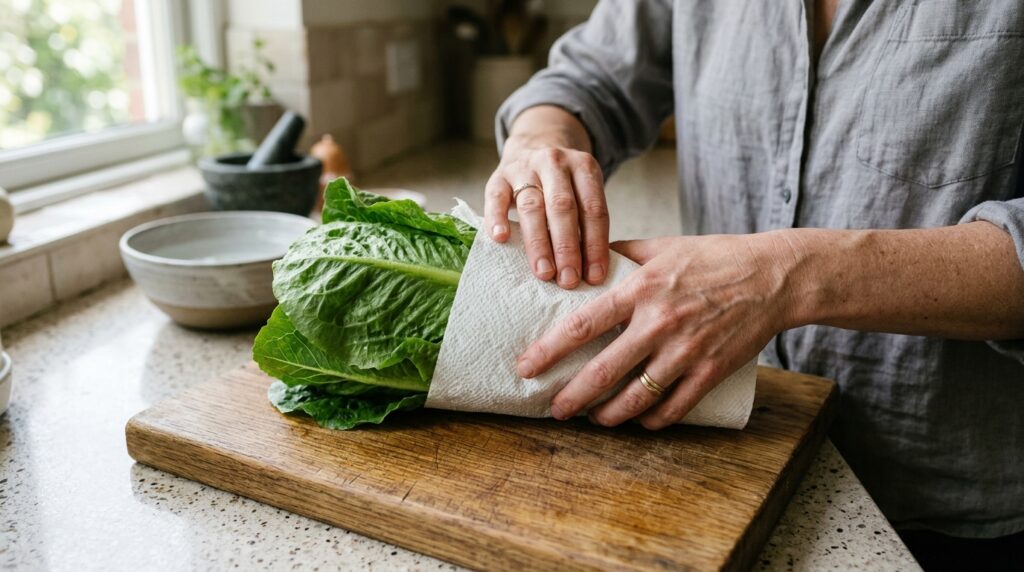
Whole, unwashed heads last noticeably longer than lettuce that’s already been cut or torn, so if you’re not using it right away, leave it intact.
- Trim off the stem end with a clean knife.
- Peel away any outer leaves that look bruised or damaged.
- Wrap the head loosely in a paper towel or a clean, dry dish towel.
- Place it inside a loosely closed plastic bag or reusable produce bag.
- Store it in the crisper drawer, ideally the one set to higher humidity.
The towel does the real work here. It soaks up the extra moisture that would otherwise sit against the leaves and cause them to break down. Swap it out every two to three days if it starts to feel damp.
Handled this way, a whole head of romaine, green leaf, or butterhead lettuce typically holds up for one to two weeks in the fridge. Iceberg is the exception: since it’s usually sold already wrapped tightly in plastic, you can leave that packaging on and simply place it in the crisper drawer as is.
How to Store Washed or Cut Lettuce Leaves
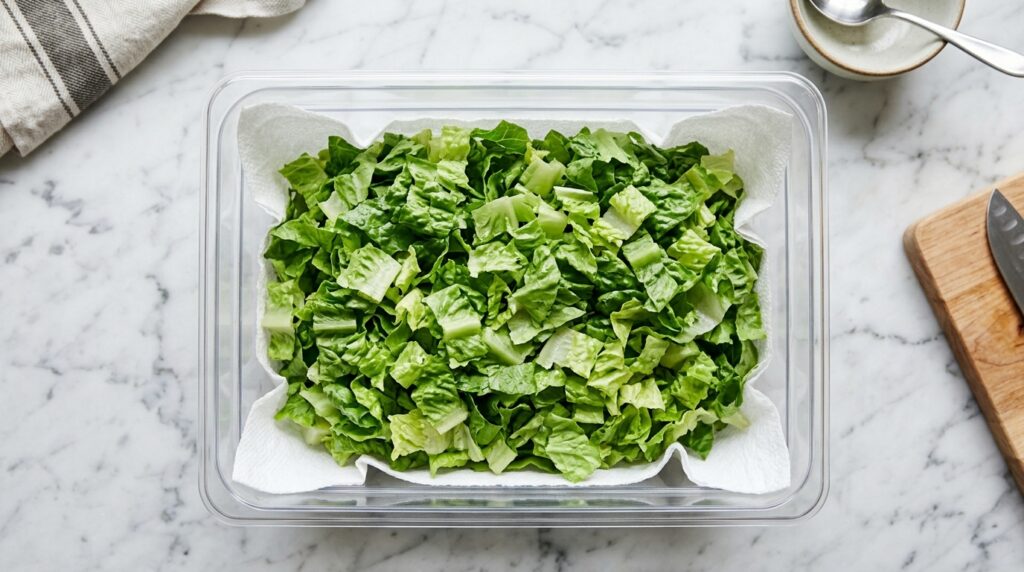
If you’ve already washed, torn, or chopped your lettuce, it won’t last quite as long, but you can still stretch its life significantly with the right container setup.
- Spin the leaves dry in a salad spinner, or pat them dry thoroughly with paper towels. Leftover surface water is the number one cause of slimy lettuce.
- Line a container with a layer of dry paper towels.
- Add the lettuce, then lay another paper towel loosely on top.
- Snap the lid on, but don’t press it airtight if you can avoid it. A little airflow prevents condensation from building up inside.
- Refrigerate right away, ideally toward the back of the fridge where temperatures stay more consistent.
Stored this way, cut or torn lettuce generally stays usable for about five to ten days, which is a big improvement over the two or three days it lasts when left loose in its original clamshell.
If you bought a bagged salad kit, transferring it out of the manufacturer bag and into a paper-towel-lined container as soon as you get home makes a real difference in how long it stays crisp.
Should You Wash Lettuce Before Storing It?
This trips people up constantly, and the answer depends on whether you’re storing a whole head or loose leaves.
For whole heads of butterhead, romaine, or iceberg lettuce, skip washing until you’re ready to eat it. The outer leaves act as a natural barrier, and washing early just adds moisture that speeds up spoilage.
For loose-leaf lettuce or salad greens that are already separated, washing and drying thoroughly before storage actually helps, as long as you dry the leaves completely afterward. The key word is completely. A salad spinner makes this fast, but patting leaves dry with a towel works fine too.
Fridge Temperature and Crisper Drawer Settings That Matter
Most crisper drawers have a small slider or dial that controls humidity, and this small detail gets overlooked constantly.
| Produce Type | Ideal Crisper Setting | Why |
|---|---|---|
| Leafy greens like lettuce | High humidity | Slows moisture loss from the leaves |
| Fruits like apples, pears | Low humidity | Vents ethylene gas away from other produce |
Set the drawer holding your lettuce to high humidity, and keep it in a separate drawer from ethylene-producing fruit whenever possible. Your fridge’s main compartment should sit at or below 40°F, which is the general food-safety benchmark for keeping perishable produce fresh and slowing bacterial growth.
If your fridge doesn’t have separate humidity-controlled drawers, don’t worry. Wrapping the lettuce properly, as described above, does most of the same job on its own.
Clever Tricks for Extending Lettuce’s Life Even Further
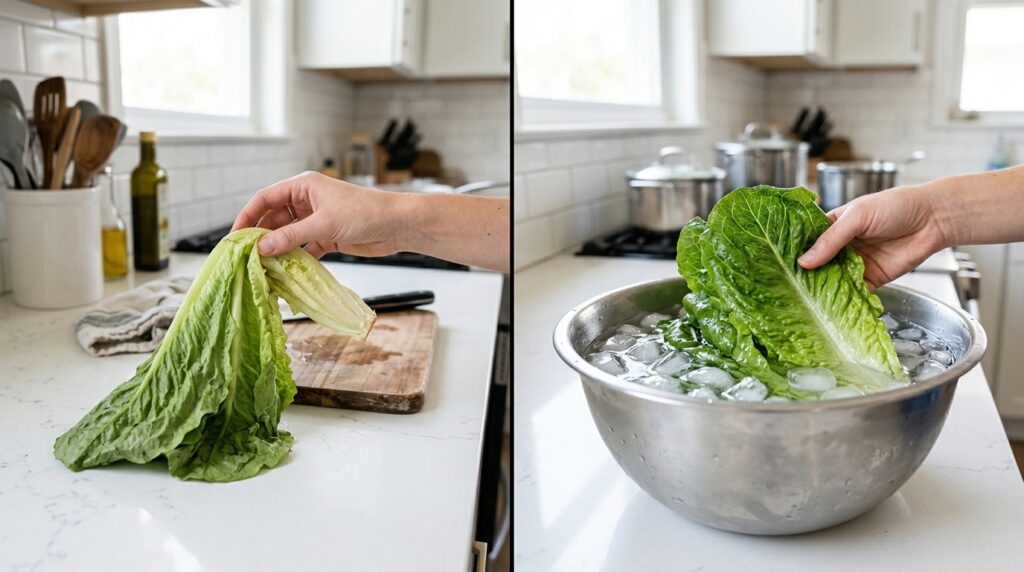
A few extra habits can push lettuce well past its usual shelf life:
- The foil wrap trick: Wrapping a whole head of romaine tightly in aluminum foil instead of plastic can keep it noticeably crisper for several extra weeks, since foil regulates moisture differently than plastic wrap does.
- Ice bath revival: If lettuce is starting to look a little limp but isn’t slimy or discolored, submerging the leaves in ice water for five to ten minutes can shock them back into a crisper texture.
- Store away from fruit: Keep lettuce in a separate crisper drawer from apples, bananas, tomatoes, and other ethylene-heavy produce.
- Don’t overpack the fridge: Airflow matters. A crammed fridge holds warmer, uneven temperatures that speed up spoilage across all your produce, not just lettuce.
- Freeze it for cooked dishes: Lettuce doesn’t freeze well for salads, but sturdier varieties like romaine can be frozen for soups, smoothies, or cooked dishes where texture matters less.
If you’re trying to get more mileage out of your fridge in general, organizing the space so cold air can circulate properly around your produce and leftovers helps everything last longer, not just lettuce.
Signs Your Lettuce Has Gone Bad
Lettuce usually gives fair warning before it’s no longer safe to eat. Watch for:
- A slimy or sticky texture on the leaves
- A sour or “off” smell, distinct from the usual earthy scent
- Dark brown or black spots spreading across the leaf, not just at the edges
- Leaves that have turned translucent or mushy throughout
A little browning at the cut edges or a few limp outer leaves usually isn’t a dealbreaker. Trim those parts away, and the rest is often still fine to eat. Sliminess and a sour smell, on the other hand, mean it’s time to toss it.
Pros and Cons of Common Lettuce Storage Methods
| Method | Pros | Cons |
|---|---|---|
| Paper towel + plastic bag | Cheap, easy, works for whole heads and loose leaves | Towel needs occasional replacing |
| Airtight container | Protects from crushing, good for pre-washed greens | Can trap condensation if not vented |
| Original plastic clamshell | No extra effort needed | Shortest shelf life once opened |
| Foil wrap (whole heads) | Extends shelf life the longest for romaine | Only works well for sturdy, whole heads |
Expert Tips for Buying Lettuce That Lasts Longer
- Choose heads with tightly packed, crisp leaves and no visible browning at the edges.
- Avoid pre-bagged salad mixes if you don’t plan to use them within a few days; they spoil faster than whole heads.
- Check sell-by dates on packaged greens and pick the latest date available, even if it means digging toward the back of the shelf.
- Buy only what you’ll realistically eat within a week or so, especially for delicate varieties like butterhead or spring mix.
Frequently Asked Questions
How long does lettuce last in the fridge?
Whole heads generally stay fresh for one to two weeks when stored properly, while washed or cut lettuce tends to last five to ten days. Pre-bagged salad mixes usually have the shortest window, often just three to five days after opening.
Can you freeze lettuce to make it last longer?
Yes, but only for cooked applications. Freezing breaks down lettuce’s water-rich cell structure, so thawed leaves turn limp and aren’t suitable for salads. Sturdier types like romaine can still work well in soups, smoothies, or blended sauces after freezing.
Why does my lettuce go slimy so fast?
Slime is almost always caused by trapped moisture combined with poor airflow. Washing lettuce and not drying it completely, sealing it in an airtight bag while damp, or storing it in a crowded fridge with limited circulation are the most common culprits.
Is it better to store lettuce in a bag or a container?
Both work, but containers tend to protect leaves from getting crushed and allow slightly better airflow than a sealed bag. If you use a bag, leave it loosely closed rather than fully sealed, and always add a dry paper towel inside.
Does washing lettuce before storing make it spoil faster?
For whole heads, yes, washing before storage adds unnecessary moisture and shortens shelf life. For pre-separated leaves, washing is fine as long as they’re dried thoroughly afterward, since it’s the leftover water, not the washing itself, that causes problems.
Final Thoughts
Keeping lettuce fresh isn’t complicated once the moisture-and-airflow balance clicks. Dry leaves thoroughly, wrap or store them with something to absorb excess water, keep them away from ethylene-producing fruit, and use a humidity-appropriate part of the fridge. Small habits like these are the difference between tossing half a head of lettuce every week and actually using what you buy.

