
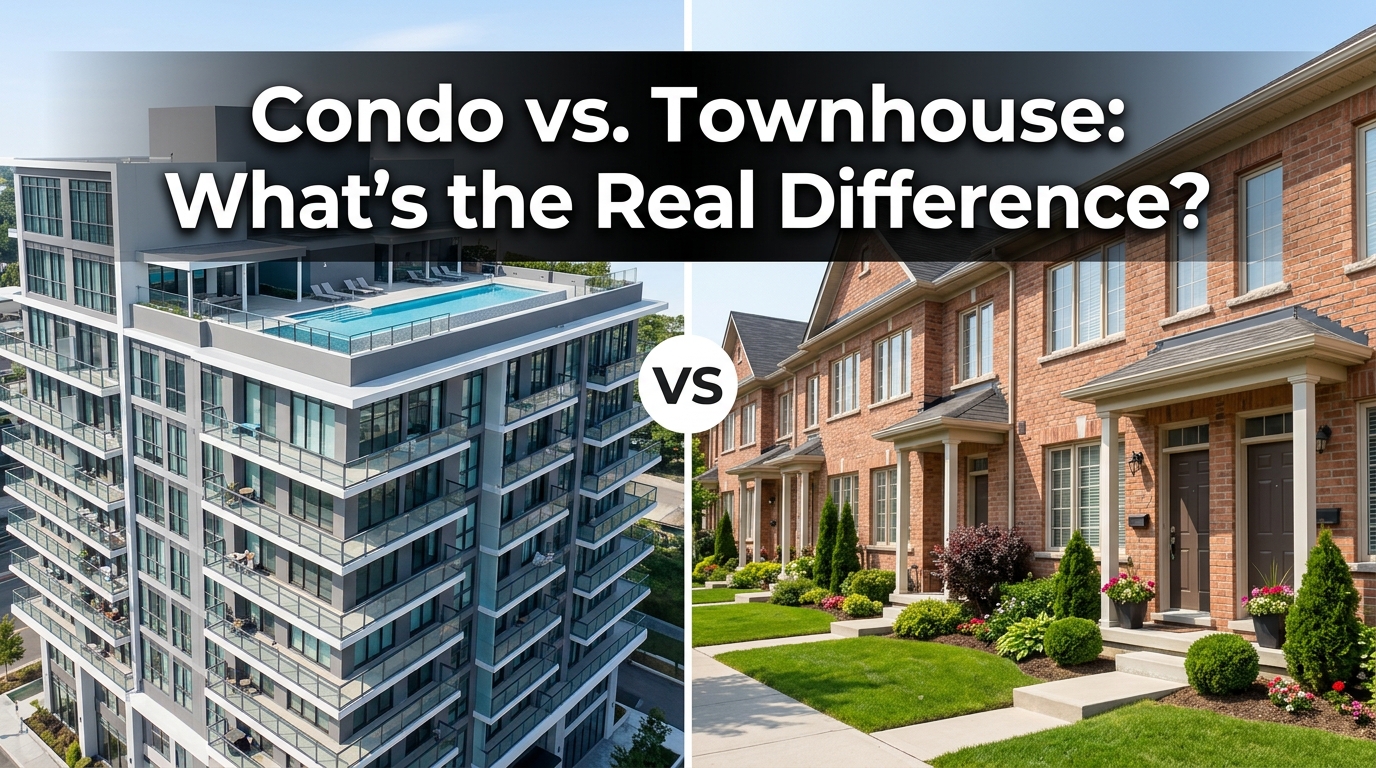
Condo vs. Townhouse: What’s the Real Difference?
If you’ve started house hunting, you’ve probably noticed that “condo” and “townhouse” get tossed around like they mean the same thing. They don’t.
On the surface, both can look like a row of attached homes with shared walls and a community feel. But underneath that surface, what you actually own, what you’re responsible for, and how much you’ll pay every month can be wildly different.
This guide breaks it all down in plain language — ownership structure, HOA fees, maintenance, financing, and which option tends to suit which type of buyer. By the end, you’ll know exactly what question to ask your realtor next.
What Is a Condo?

A condominium, or “condo,” is a privately owned unit within a larger building or complex. Think of it like owning an apartment — except instead of renting, you hold the title to that unit.
According to condo fees typically total up to several hundred dollars per month and cover building maintenance, insurance, and shared amenities. Everything outside your unit’s interior walls — the lobby, roof, elevators, landscaping, parking structure — belongs to everyone collectively.
What Is a Townhouse?
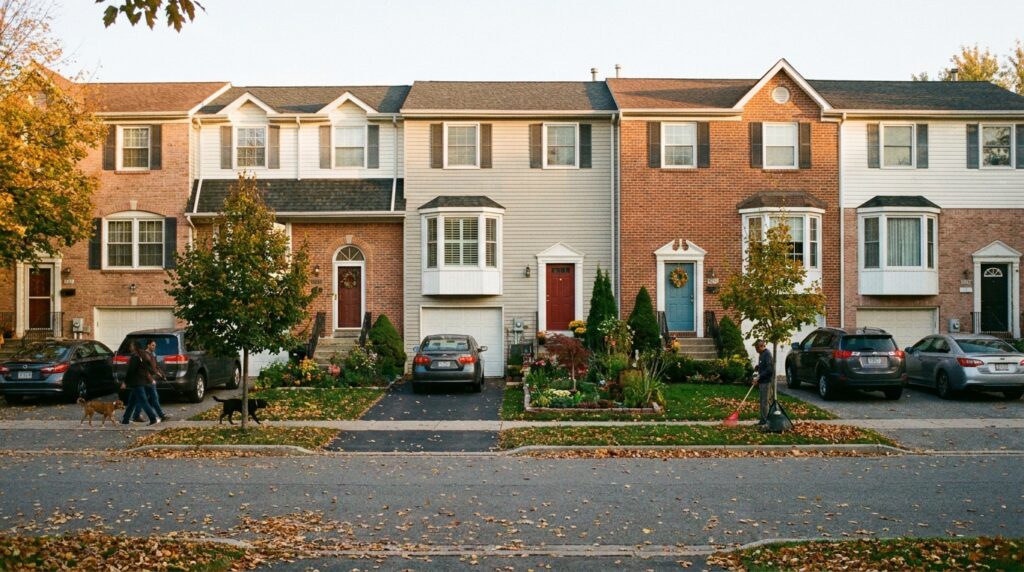
A townhouse (or townhome) is a multi-level home that shares one or two walls with neighboring units but typically comes with its own private entrance, and often a small yard, patio, or garage.
Most townhouses are two or three stories and look like multi-level homes attached to each other, with one townhome typically not stacking on top of another. Townhouses are commonly found in suburban areas, while condos tend to cluster in cities or suburbs.
Condo vs. Townhouse: The Core Difference (Ownership)
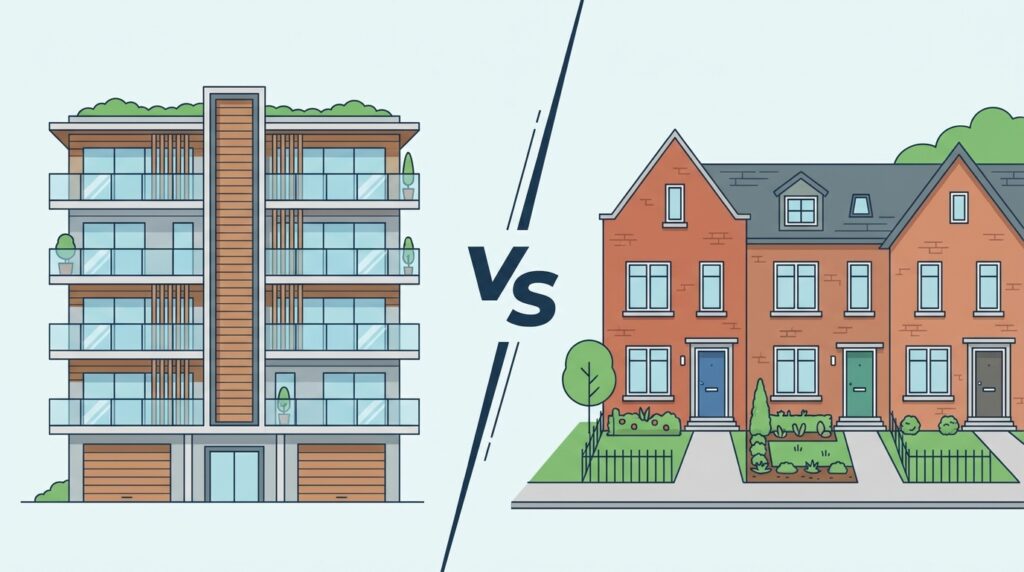
Here’s the one fact that explains almost everything else: what you actually own.
With a condo, you own only the interior of your unit, while the homeowners association (HOA) maintains the exterior and shared spaces. With a townhouse, you typically own both the interior and exterior — including the roof and yard — and may have fewer shared spaces.
In simpler terms:
| Feature | Condo | Townhouse |
|---|---|---|
| Interior of unit | You own it | You own it |
| Exterior walls, roof | HOA owns/maintains | You own it |
| Land underneath | Shared/HOA owned | Usually yours |
| Private yard | Rare | Common |
| Shared amenities (pool, gym) | Common | Less common |
According to Chase’s homebuying education resources, townhouse ownership includes the building itself and the lot it stands on, while condo ownership extends only to the unit’s interior.
HOA Fees and Maintenance Responsibilities
This is where the financial differences really start to show.
Condo HOA Fees
Condo HOAs tend to do more — and charge more. For a condo, everything is covered: the HOA handles insurance and building maintenance, according to a Lexington Homes co-principal quoted by NewHomeSource.
That means your monthly fee typically rolls in:
- Roof and exterior wall repairs
- Building insurance
- Landscaping and snow removal
- Shared amenities (pools, gyms, elevators)
- Common area cleaning and security
Townhouse HOA Fees
Not all townhouse communities have an HOA, but if they do, townhouse owners usually pay lower monthly fees than condo owners because they pay for much of their own upkeep.
Townhouse fees, which can range from under $100 to several hundred dollars per month, generally only go toward maintaining shared community areas — not toward updates or maintenance of individual townhouses.
Quick Comparison
| Cost Category | Condo | Townhouse |
|---|---|---|
| HOA fee range | Often higher (several hundred $/month) | Often lower (under $100–few hundred $/month) |
| Roof/exterior repairs | Covered by HOA fee | Your responsibility |
| Yard maintenance | N/A (no private yard) | Your responsibility |
| Personal repair flexibility | Limited, needs HOA approval | More freedom |
Rules and Restrictions: Who’s in Charge?
If you like having full control over how your home looks, this section matters a lot.
Condo owners are required to meet all HOA standards, which can dictate everything from what residents hang on their front door to pet policies, and renovations often need HOA approval first.
Townhouse rules tend to be lighter — but not always nonexistent. If a townhome is part of an HOA, many similar restrictions could apply. But in a non-HOA townhouse community, owners have more freedom to decorate the exterior or maintain their landscape as they see fit.
Townhouse HOAs, when they exist, typically have no say over the interior of your home — unlike condo HOAs — though they can still weigh in on exterior changes.
Amenities and Lifestyle
Condos generally win on shared amenities. Many complexes include:
- Swimming pools
- Fitness centers
- Concierge or security desk
- Rooftop lounges or community rooms
- Covered or assigned parking
Condos offer an easy, low-work lifestyle with extras like pools and a more urban feel, while townhouses give more space and control and feel closer to a classic single-family home.
Townhouses, on the other hand, lean into space and privacy. Townhouses are often built in walkable areas with access to public transportation, offering many of the perks of single-family living without moving to a more suburban neighborhood.
The trade-off? In a townhouse, it’s easier to isolate yourself, and you may need to make extra effort to attend community events or meet neighbors — otherwise you could feel disconnected.
Price Differences: Which Is Cheaper?
In most markets, condos cost less upfront. Because townhouses are often larger and more private, they generally cost more than condos, which makes condos especially attractive to first-time buyers.
But don’t stop at the sticker price. Condos are usually cheaper to buy but come with ongoing monthly HOA fees, while townhouses cost more upfront but typically have lower or no fees — so the long-term math can even out depending on how long you plan to stay.
Financing: Why Condo Loans Can Be Trickier
This is a part many first-time buyers don’t see coming — and it’s a real difference, not just a lifestyle preference.
Getting a loan for a townhouse is basically the same as getting one for a single-family house — a much less complicated process than financing a condo. Condo financing involves extra steps because lenders need to evaluate the entire building, not just your unit.
To finance a condo, the development itself must meet specific eligibility criteria set by the loan program — whether FHA, VA, USDA, or conventional — and these requirements can include limits on commercial space, owner-occupancy ratios, and financial reserve levels.
Why does this matter to lenders? If an HOA is poorly managed, delays repairs, or falls behind on bills, the value of every unit in the building could be affected — and condos are often more sensitive to market downturns as a whole.
If you’re considering a Federal Housing Administration (FHA) loan for a condo, it’s worth checking the HUD FHA-approved condo list before you fall in love with a unit — FHA condo approvals require formal review and must be renewed periodically.
For conventional loans, Fannie Mae requires that no more than 15% of units in a condo project have delinquent HOA assessments at the time of loan application, along with minimum owner-occupancy ratios and adequate reserve funding. You can review more on the Fannie Mae Selling Guide.
Pros and Cons at a Glance
Condos
Pros:
- Lower purchase price
- Less exterior maintenance hassle
- Access to shared amenities
- Often closer to city centers
Cons:
- Higher, sometimes unpredictable HOA fees
- More restrictive rules
- Trickier financing/approval process
- Less privacy (shared walls, floors, ceilings)
Townhouses
Pros:
- More space (often multiple floors plus a yard)
- Greater control over exterior changes
- Simpler financing process
- Lower or no HOA fees in non-HOA communities
Cons:
- Higher purchase price in many markets
- You’re responsible for roof, siding, and yard upkeep
- Easier to feel isolated from neighbors
- Fewer built-in amenities
Expert Tip: Read the HOA Documents Before You Buy
This is the step most buyers skip — and regret.
Whether you’re eyeing a condo or a townhouse, ask for the HOA’s financial statements, reserve study, and meeting minutes from the past year or two. As one real estate attorney duo notes, attached-home owners typically have fewer maintenance responsibilities than single-family homeowners precisely because the HOA covers structural items — but that only works if the HOA is actually funded properly.
A building with low reserves and rising special assessments can turn a “cheap” condo into an expensive mistake fast. If you’re unsure how to read these documents, ask your real estate agent or a real estate attorney to walk through them with you before you sign anything.
Which One Is Right for You?
Here’s a simple way to think about it:
- Choose a condo if: You want a lower entry price, minimal exterior maintenance, access to amenities, and you’re comfortable with HOA rules and shared-building living.
- Choose a townhouse if: You want more space and privacy, more control over your home’s exterior, and you’re willing (or excited) to handle your own upkeep.
A young professional working in a city might love a condo — they can walk to work, use the gym downstairs, and not worry about fixing anything, while a growing family might lean toward a townhouse for the extra square footage and yard space.
Frequently Asked Questions
1. What’s the main difference between a condo and a townhouse?
The biggest difference is ownership. With a condo, you own just the inside of your unit; with a townhouse, you own the whole building and sometimes a small yard.
2. Do townhouses always have HOA fees?
No. Not all townhouse communities have an HOA, but when they do, fees are typically lower than condo HOA fees because owners handle more of their own maintenance.
3. Is it harder to get a mortgage for a condo than a townhouse?
Often, yes. Townhouse loans work much like single-family home loans, while condo loans require the lender to also verify the entire building or development meets program guidelines, such as those from Fannie Mae or FHA.
4. Are condos cheaper than townhouses?
Generally yes upfront. Townhouses are often larger and more private, which typically makes them cost more than condos — though ongoing HOA fees can change the total cost picture.
5. Can I renovate the exterior of my condo or townhouse?
In a condo, exterior renovations usually require HOA approval. In a non-HOA townhouse community, owners generally have more freedom to change the exterior or landscaping as they wish.
Final Thoughts
At the end of the day, both condos and townhouses can be smart, solid ways to build equity without taking on a full detached house. The right pick really comes down to how much maintenance you want to handle, how much space and privacy you need, and what you can comfortably afford — both at closing and every month after.
Before you make an offer, sit down with a real estate agent or mortgage lender and ask them to walk you through the HOA fees, financing requirements, and resale considerations for the specific property you’re eyeing. That one conversation can save you from a costly surprise down the road.

