
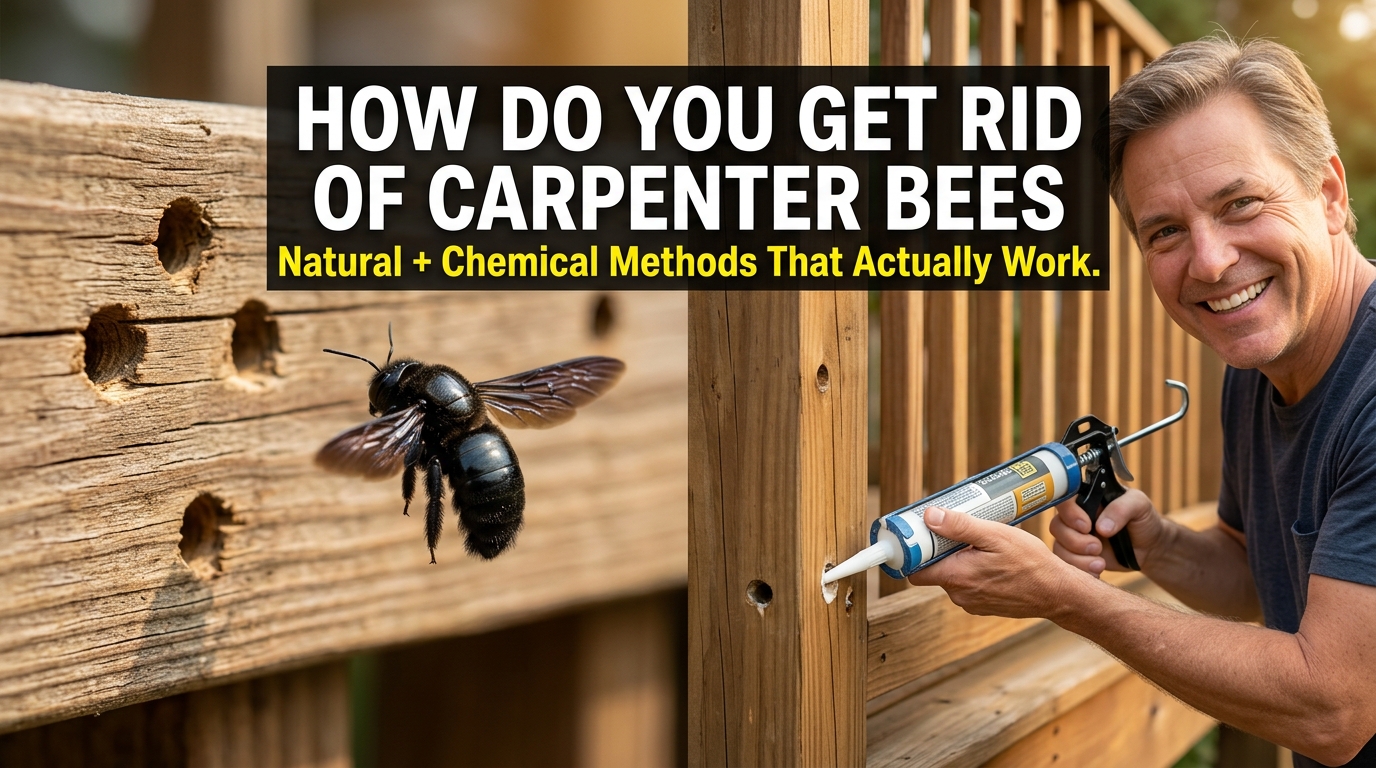
Introduction: That Hovering, Drilling Menace on Your Porch
You walk out to your back deck on a warm spring morning with your coffee in hand — and there it is. A big, chunky, shiny black bee hovering inches from your face like it owns the place. You swat at it. It circles back. Then you notice the perfectly round hole drilled into your wooden railing. And another. And another.
That’s a carpenter bee — and if you’ve got them, you already know how frustrating they can be.
Unlike honeybees or bumblebees, carpenter bees don’t form large colonies. But what they lack in numbers they make up for in destructive persistence. Year after year, generation after generation, they return to the same wood to drill new tunnels and expand old ones — weakening your deck, pergola, fence, or siding over time.
The good news? You don’t have to live with them. Whether you want to get rid of carpenter bees without killing them, use natural home remedies, or bring out the serious chemical treatments, there’s a solution that fits your situation.
This guide walks you through everything — from identifying the problem, finding the nest, choosing your method, and making sure they don’t come back next spring.
What Exactly Is a Carpenter Bee?
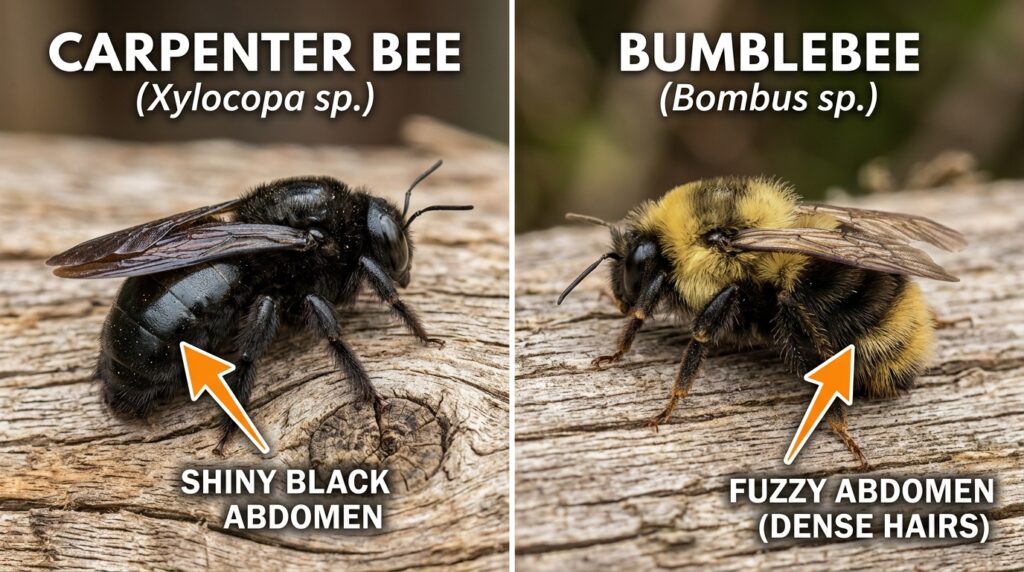
Before you start treating the problem, it helps to know what you’re actually dealing with.
Carpenter bees (Xylocopa species) are large, solitary bees that bore into wood to create nesting galleries. According to the University of Kentucky Entomology Department, they are one of the most common wood-boring insects in North America and are most active during late spring and early summer.
They’re often confused with bumblebees, but there’s an easy way to tell them apart: carpenter bees have a shiny, hairless abdomen, while bumblebees are fuzzy all over.
Key facts about carpenter bees:
- Size: 1/2 to 1 inch long — noticeably large
- Color: Black and yellow; females are all black on the abdomen
- Behavior: Solitary nesters; males are aggressive but can’t sting; females can sting but rarely do
- Season: Most active April through June
- Damage: They drill perfectly round 1/2-inch holes in unpainted or weathered softwoods
The males are the ones hovering in your face. They’re territorial and intimidating, but completely harmless — they don’t have stingers. The females do the actual drilling and can sting, though they’re docile unless directly handled.
How to Find a Carpenter Bee Nest
Finding the nest is the critical first step. You can spray all the wood you want, but if you don’t locate where they’re actually living, you’ll only solve half the problem.
Signs of Carpenter Bee Activity
Look for these telltale signs around your home:
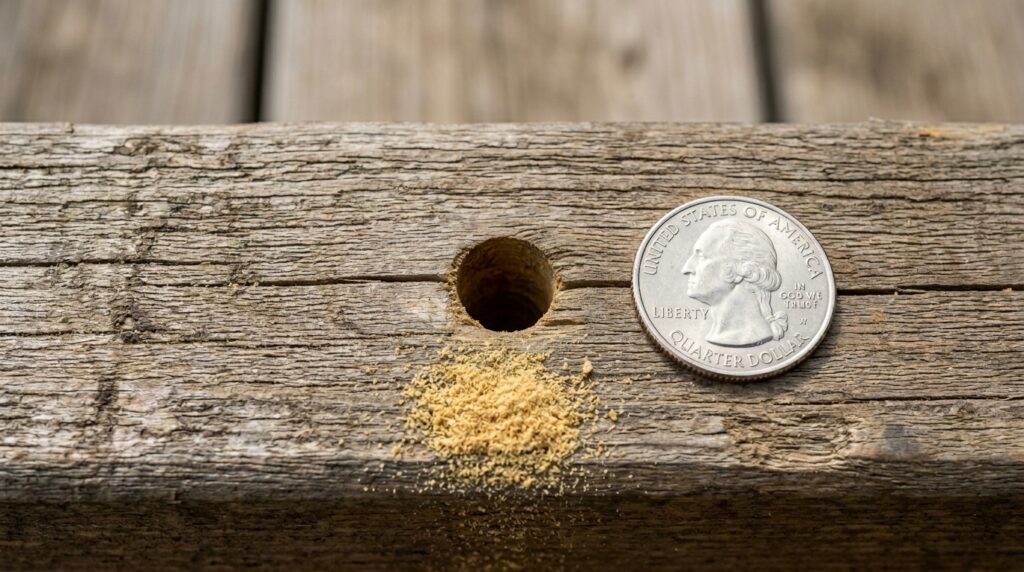
- Round entry holes: About 1/2 inch in diameter, usually on the underside or end grain of wood
- Sawdust piles: Fine, yellowish wood shavings directly below a hole (called frass)
- Yellow or brown staining: Around the entrance from pollen and bee waste
- Buzzing or scratching sounds: If you put your ear near the wood, you may hear them inside
Where Carpenter Bees Nest
Carpenter bees prefer unpainted, weathered softwood because it’s easier to drill. Common nesting locations include:
| Location | Why They Choose It |
|---|---|
| Deck railings | Soft pine, often unpainted underneath |
| Fascia boards | Exposed end grain, horizontal surfaces |
| Pergolas and gazebos | Thick, exposed structural wood |
| Wooden siding | Especially cedar or redwood |
| Fence posts | End grain is easy entry |
| Window trim | Often bare or weathered |
| Outdoor furniture | Untreated wood left outside |
The University of Florida IFAS Extension notes that carpenter bees are highly site-faithful — they return to the same nesting sites year after year, and offspring often nest in the same wood their parents used. This is why early intervention matters so much.
How to Find the Tunnel Inside
Once you find an entry hole, the actual tunnel turns 90 degrees and runs with the wood grain, extending anywhere from 6 inches to several feet. You won’t see the tunnel from outside — but this is exactly why treating just the surface isn’t enough.
How Do You Get Rid of Carpenter Bees? — All Your Options
Now let’s get into the actual solutions. You have several options depending on how bad the infestation is, your preferences, and whether you want to avoid harming them.
Method 1: How to Get Rid of Carpenter Bees Without Killing Them

If you’d prefer to repel rather than kill carpenter bees — whether for environmental reasons or because you appreciate their role as native pollinators — there are several humane approaches that actually work.
1. Citrus Oil Spray
Carpenter bees have a strong aversion to citrus scents. Boil citrus peels (orange, lemon, lime, grapefruit) in water for 20–30 minutes, let it cool, strain it, and pour it into a spray bottle.
Apply generously to wood surfaces — especially any existing holes or areas you’ve seen them hovering. Reapply every few days, especially after rain.
It won’t kill them, but it will make the area deeply unattractive for nesting.
2. Vinegar Spray
White vinegar diluted 50/50 with water works similarly. The strong acidic scent discourages bees from landing and drilling. Spray it around deck boards, fascia, and railings every 4–5 days during peak season.
3. Essential Oils (Tea Tree, Lavender, Eucalyptus)
Mix 10–15 drops of tea tree oil, lavender oil, or eucalyptus oil into a spray bottle with water and a small amount of dish soap to help it adhere. According to Penn State Extension, certain essential oils act as effective natural bee deterrents.
4. Noise and Vibration
Carpenter bees are highly sensitive to vibration. Hanging wind chimes near nesting areas, playing loud music through outdoor speakers, or even using a vibrating device near the wood can make a nesting site less appealing. It sounds unusual, but it genuinely disrupts them.
5. Decoy Nests
Commercially available carpenter bee traps mimic natural nesting sites. They attract the bees away from your valuable wood and trap them without pesticides. You can then relocate or release the bees. This is one of the most recommended humane methods by extension entomologists.
Method 2: How to Get Rid of Carpenter Bees Naturally
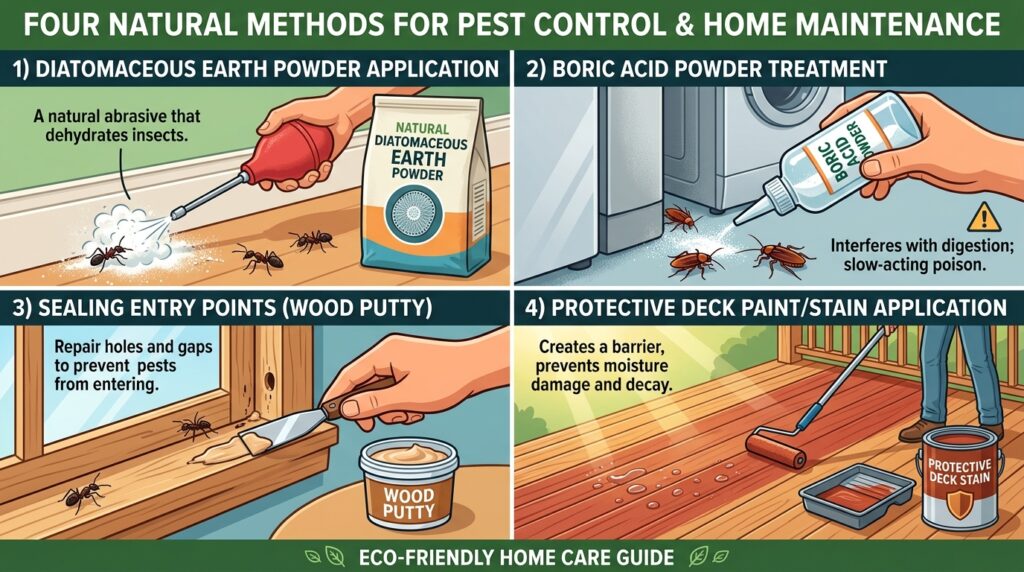
For homeowners who want effective control without synthetic chemicals, natural methods can be very effective when applied consistently.
1. Diatomaceous Earth (DE)
Food-grade diatomaceous earth is a naturally occurring substance made from fossilized algae. It’s lethal to insects (damages their exoskeleton) but non-toxic to humans and pets.
Puff DE directly into active carpenter bee holes using a bulb duster or squeeze bottle. The bee picks it up when moving in and out and eventually dies. It’s one of the most natural and effective methods available.
How to apply:
- Wait until dusk when bees are inside
- Use a duster to puff DE into the tunnel entrance
- Leave the hole open for a few days so bees track it inside
- Then seal the hole (see below)
2. Boric Acid
Similar to DE, boric acid can be applied directly into the tunnel. It’s a naturally occurring compound and is registered with the EPA as a pesticide. Use a bulb syringe to inject it into holes at dusk.
3. Plug the Holes in Fall
This is the single most impactful natural action you can take. After the bees complete their lifecycle (late summer to fall), plug all holes with steel wool (bees can’t chew through it), wood putty, or cork. Then paint or stain the wood.
By removing their ready-made galleries, you force next year’s bees to start from scratch in less-preferred locations — or give up entirely.
4. Paint or Stain All Wood Surfaces
Carpenter bees strongly prefer bare, untreated wood. Research from North Carolina State University confirms that painted or varnished wood is significantly less likely to be targeted. This is both a prevention and a natural repellent strategy.
Apply at least two coats of exterior paint, stain, or polyurethane to all exposed wood. Focus on end grain especially, since that’s their preferred entry point.
5. Replace Softwood with Hardwood
Carpenter bees almost never drill into hardwoods like oak, ash, or maple. If you’re replacing damaged wood, consider switching to pressure-treated lumber or hardwood alternatives. For decorative areas, composite decking is bee-proof.
Method 3: Chemical Treatments for Severe Infestations
When the infestation is widespread or the bees keep returning despite natural methods, chemical treatments are the most reliable solution.
1. Residual Insecticide Sprays
Products containing carbaryl (Sevin) or cypermethrin are among the most commonly recommended by pest control professionals for carpenter bees. These are registered with the EPA and widely available at home improvement stores.
Spray directly into holes and across wooden surfaces. The residual effect lasts several weeks and kills bees that make contact.
Safety notes:
- Apply at dusk when bees are less active
- Wear gloves and eye protection
- Keep pets and children away until dry
- Don’t spray near flowering plants or water sources — it’s toxic to all bees, including beneficial honeybees
2. Insecticide Dust (Carbaryl or Deltamethrin)
Insecticidal dusts like Delta Dust or Sevin Dust are particularly effective for treating active tunnels. Use a hand duster to puff dust into each hole. The dust coats the tunnel walls and kills any bee that passes through.
Leave the hole open for 24–48 hours after treatment, then seal it permanently.
3. WD-40 (A Controversial Shortcut)
Many homeowners swear by squirting WD-40 into carpenter bee holes. While not a registered pesticide, its petroleum-based composition appears to repel and disorient bees effectively. It’s not a recommended solution by extension services, but anecdotal evidence is widespread.
4. Professional Pest Control
If you have a multi-year infestation with dozens of holes and significant wood damage, calling a licensed pest control professional is worth it. They have access to stronger formulations and can assess structural damage you might miss.
The National Pest Management Association has a directory for finding certified professionals near you.
How to Get Rid of Carpenter Bee Nest in Wood — Step-by-Step
Here’s a complete action plan for treating an active nest:
Step 1: Identify All Active Holes
Walk the perimeter of your home and mark every hole you find with a piece of tape or chalk. Do this in bright daylight when holes are easiest to see.
Step 2: Time Your Treatment
The best time to treat is at dusk, when bees are inside the tunnel for the night. This maximizes contact with the treatment.
Step 3: Apply Your Chosen Treatment
- Natural: Puff diatomaceous earth or boric acid into the tunnel
- Chemical: Inject insecticidal dust or spray residual insecticide into the hole
Step 4: Wait and Monitor
Leave holes open for 48–72 hours after treatment to allow any returning bees to pick up the treatment on their bodies.
Step 5: Seal Every Hole
Once activity has stopped, seal all holes with one of the following:
- Steel wool + wood putty (most secure)
- Cork stoppers (easy and effective)
- Caulk (paintable for a clean finish)
- Wooden dowels cut to size + wood glue
Step 6: Paint or Stain the Sealed Wood
After sealing, apply exterior paint or stain over the repaired areas. This removes all scent trails and visual cues that attract returning bees.
Step 7: Treat the Surrounding Wood
Spray the surrounding wood — especially any unpainted areas — with a residual insecticide or citrus/essential oil spray to deter new drilling.
How Do You Get Rid of Carpenter Bees Around Your House? — Prevention for the Long Term
Getting rid of existing bees is only half the battle. If you don’t prevent re-infestation, you’ll be dealing with the same problem every spring.
1. Paint Every Inch of Exposed Wood
This is the single most effective preventive measure. According to Clemson Cooperative Extension, carpenter bees strongly avoid painted or varnished surfaces. Focus especially on:
- Eaves and fascia boards
- Deck railings and posts
- Fence boards and posts
- Window and door trim
- Outdoor furniture
Use a quality exterior paint or stain and reapply every 2–3 years as it weathers.
2. Install Vinyl or Metal Trim
Where possible, replace wood trim with vinyl, aluminum, or PVC alternatives. Carpenter bees cannot drill into these materials, making them bee-proof by design.
3. Set Up Carpenter Bee Traps
Hang carpenter bee traps in areas where you’ve seen activity. These box-style traps mimic nesting sites and funnel bees into a capture chamber. Empty and reset them every few weeks during spring.
4. Apply Residual Spray in Early Spring
The best time to apply a preventive spray is early April, before bees become active. Spray all wooden surfaces with a residual insecticide or natural deterrent. This creates a barrier before the season even starts.
5. Use Almond Oil or Almond Extract
Here’s a lesser-known tip: carpenter bees are highly sensitive to the scent of almond oil. Applying a small amount of almond oil or extract near potential nesting sites signals danger to them (it mimics the alarm pheromone of many bee species) and encourages them to relocate.
6. Seal Cracks and Gaps
Beyond circular drill holes, carpenter bees will also exploit existing cracks, gaps around wiring, and loose wood joints. Walk around your home each spring and seal any openings larger than 1/4 inch using exterior caulk.
7. Consider Bee-Friendly Alternatives
If you want to support pollinators while keeping them away from your home, consider placing a native bee hotel or solitary bee nesting blocks in a far corner of your yard. You give them a legitimate nesting site away from your structures, and they’re more likely to use it.
Carpenter Bee Damage: How Bad Can It Get?
Most people underestimate the damage carpenter bees can cause over time. A single pair boring one hole doesn’t seem serious — but here’s what happens when you let it go unchecked.
Year 1
One or two bees drill entry holes, each creating a tunnel 6–10 inches deep. Cosmetic damage, structurally insignificant.
Year 2–3
Offspring return to the same wood. New tunnels branch off old ones. Tunnels can extend 2–3 feet. Wood begins to weaken. Woodpeckers may start pecking at the wood looking for bee larvae, dramatically worsening structural damage.
Year 5+
Multiple generations of tunnels can hollow out major structural members. Deck posts, pergola beams, and fascia boards can fail. The Structural Pest Control Board notes that untreated infestations in structural wood can require costly professional repairs or outright replacement.
This is why early action is always better than delayed action.
Expert Tips Section
1: Treat at Dusk, Always
Extension entomologists universally recommend treating carpenter bee holes at dusk. Bees are inside for the night, so your treatment reaches them directly — and you’re at far less risk of getting stung.
2: Don’t Seal Holes Immediately After Treatment
It’s tempting to plug holes right after spraying, but wait 48–72 hours. Sealing immediately traps dead or dying bees inside, which can attract secondary pests like dermestid beetles and cause wood rot from decaying organic matter.
3: Steel Wool Is Your Best Filler
Wood putty alone can be chewed through by persistent bees. Stuff holes first with steel wool, then cover with wood putty for a fill that bees can neither drill through nor chew out.
4: Keep Records of Nesting Locations
Carpenter bees are highly site-faithful. If you don’t record and treat every hole this year, you’ll be dealing with the same spots next spring — and the year after. Take photos or sketch a diagram.
5: Never Ignore the Frass
If you see yellow sawdust below a spot but can’t find the hole, look above it. The entry hole is almost always directly above the frass pile. Drill-fresh holes are bright and pale yellow; old holes are darker and weathered around the edges.
Natural vs. Chemical Methods: Pros and Cons
| Method | Effectiveness | Safety | Cost | Best For |
|---|---|---|---|---|
| Citrus/Vinegar Spray | Moderate (repellent) | Very High | Very Low | Light infestations, prevention |
| Essential Oils | Moderate | Very High | Low | Early deterrence |
| Diatomaceous Earth | High | High | Low | Active tunnels, natural preference |
| Boric Acid | High | High | Low | Active tunnels |
| Decoy/Trap | High (humane) | Very High | Low–Medium | Ongoing prevention |
| Carbaryl/Cypermethrin Spray | Very High | Moderate | Low–Medium | Established infestations |
| Insecticidal Dust | Very High | Moderate | Low–Medium | Active tunnel treatment |
| Professional Treatment | Very High | Professional | High | Severe/multi-year infestations |
| Painting Wood | Very High (prevention) | Very High | Medium | Long-term prevention |
Frequently Asked Questions (FAQs)
How do you get rid of carpenter bees permanently?
There’s no single “one and done” solution, but the closest thing to permanent control is a combination of strategies: treat active nests with insecticide dust or diatomaceous earth, seal all holes in fall, and paint every exposed wood surface before spring. Repeated year-over-year prevention breaks the cycle and eventually discourages bees from targeting your property entirely.
What smell do carpenter bees hate?
Carpenter bees are strongly repelled by citrus, almond, tea tree oil, lavender, and eucalyptus. Among these, almond oil is considered the most effective because it mimics the alarm pheromone of bee colonies, signaling danger. Citrus sprays are also well-documented as deterrents by extension pest management resources.
Will carpenter bees sting me if I try to treat them?
Male carpenter bees — the ones hovering aggressively near your face — cannot sting at all. They’re territorial but harmless. Female carpenter bees can sting but are extremely docile and will only sting if directly grabbed or squeezed. Treating holes at dusk minimizes risk further since females are inside.
How do I know if I have carpenter bees or termites?
The damage looks different. Carpenter bee holes are perfectly round, about 1/2 inch in diameter, on the surface of wood, often with frass below. Termite damage is internal — you’ll see mud tubes, hollow wood, or crumbling grain, but rarely surface holes. If you’re unsure, consult a pest professional. The National Pest Management Association has a detailed pest identification guide.
Is it okay to leave carpenter bees alone?
If you have a very minor presence — one or two bees, no visible holes — and your wood is well-painted and in good condition, the risk is low. Carpenter bees are important native pollinators. However, if you see active drilling, frass, or multiple holes, intervention is necessary to prevent escalating damage over multiple seasons.
Conclusion: Take Action Before Spring — Every Year
Carpenter bees are persistent, smart, and site-faithful. Left unchecked, they’ll come back to the same boards, the same railings, the same deck posts — spring after spring — until the damage becomes structural and expensive.
The good news is that they’re also very manageable with the right approach. Whether you choose to go the natural route with citrus sprays, diatomaceous earth, and decoy traps, or bring out the chemical solutions for a serious infestation, consistent action works.
Here’s your action plan in a nutshell:
- Find every hole — inspect thoroughly in bright daylight
- Treat active nests — at dusk, with DE, boric acid, or insecticidal dust
- Wait 48–72 hours — then seal every hole with steel wool + wood putty
- Paint all exposed wood — before next spring
- Set up traps and deterrents — as an ongoing preventive layer
- Repeat annually in early spring — before the season starts
Tackle it once the right way, and you’ll spend far less time on it every year after.
Call to Action: Found this guide helpful? Bookmark it for next spring and share it with a neighbor who’s fighting the same battle. If you’re dealing with a severe infestation, don’t wait — contact a licensed pest professional through the National Pest Management Association directory for a professional assessment.

