
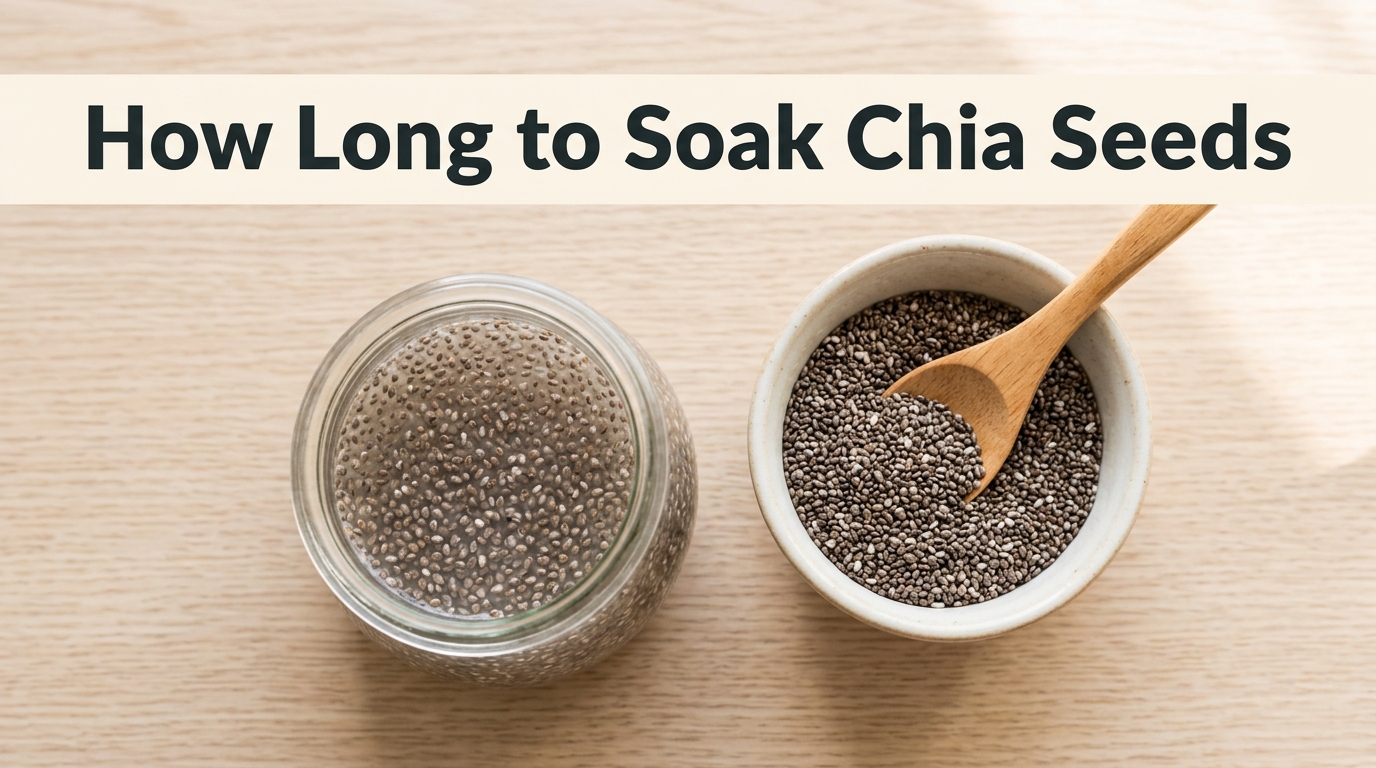
Chia seeds go from crunchy little specks to a soft, pudding-like gel the moment they meet liquid, and that change alone answers most of the confusion around them. How long to soak chia seeds really depends on what you’re making and what you’re soaking them in, but there’s a fairly reliable window that works for almost every use.
Get the timing wrong and you either end up with seeds that are still gritty and dry in the middle, or a jar that’s turned into a solid brick you have to chip apart with a spoon. Neither is dangerous, just annoying. Once you know the basic timing rules, chia becomes one of the easiest ingredients to keep on hand.
Why Soak Chia Seeds at All
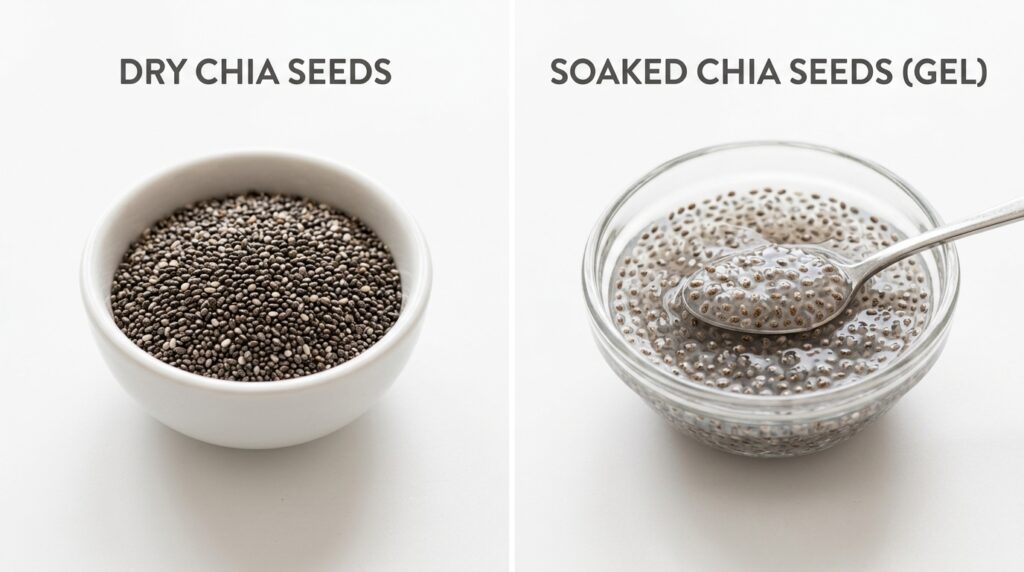
Dry chia seeds are surrounded by a thin outer layer that reacts to moisture almost instantly. When they touch water, milk, or any liquid, that layer swells into a soft gel casing around each seed, which is what gives soaked chia its familiar pudding texture.
This isn’t just about texture. Soaking also makes the seeds easier to digest, since the gel coating means you’re not chewing (or swallowing) a mouthful of dry, hard seeds that expand later in your stomach. It’s also part of why soaking chia seeds overnight benefits so many people who deal with sluggish digestion, since chia’s fiber content supports digestive and heart health in a way that’s easier to access once the seeds have softened.
There’s also a hydration angle worth mentioning. Chia seeds can absorb several times their own weight in liquid, so a spoonful of dry seeds turns into a noticeably larger amount of gel once fully soaked.
How Long to Soak Chia Seeds
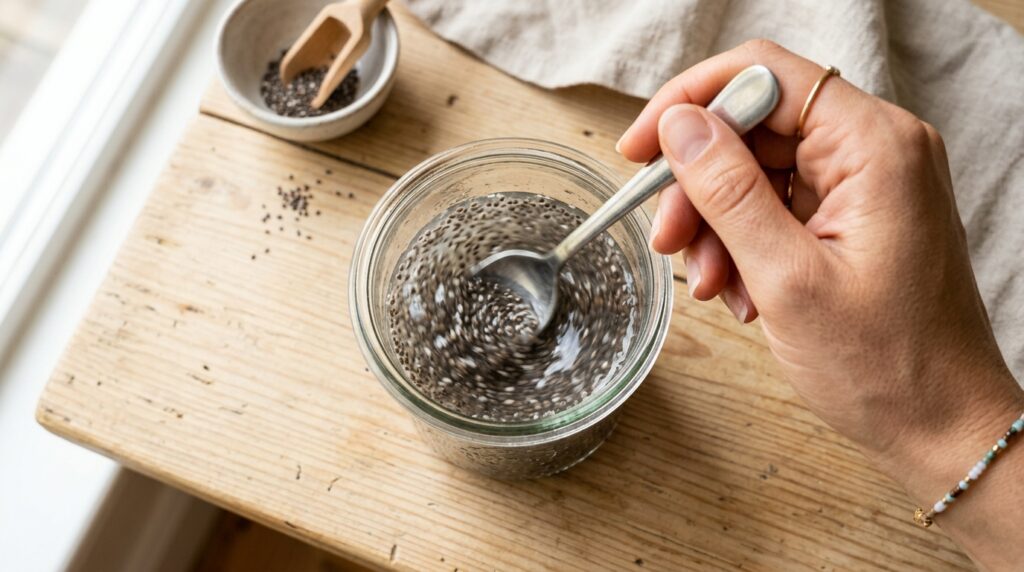
For a basic gel in plain water, 15 to 20 minutes is usually enough to get a soft, cohesive texture where the seeds are no longer crunchy. If you want a thicker, pudding-style consistency, letting them sit for 2 hours, or overnight, gets you there.
A simple starting ratio is about 1 tablespoon of chia seeds to a full cup of liquid. Stir right after adding the seeds, then again a few minutes later, since chia tends to clump if it’s left alone too soon after mixing.
How Long to Soak Chia Seeds in Water Before Drinking
If the goal is chia water, something you’ll actually sip rather than eat with a spoon, the seeds need enough time to form a light, drinkable gel without turning the glass into pudding. Fifteen to twenty minutes is the sweet spot here, and the liquid should look slightly thickened, not still watery with seeds floating loose on top.
Waiting until the seeds are visibly suspended in a thickened liquid rather than floating freely matters more than people realize. It’s a simple, practical way to know the seeds are properly hydrated before you drink them, since dry or barely-soaked seeds can be harder to swallow comfortably.
How Long to Soak Chia Seeds in Milk
Milk, whether it’s dairy or a plant-based version, behaves a bit differently than water because of its fat and protein content. Most people find 2 hours in the refrigerator gives a good, custard-like texture, though an overnight soak produces an even smoother, more pudding-like result with barely any distinct seeds left.
Stir the mixture again about 10 minutes after combining, since milk-based chia pudding tends to settle unevenly if it’s left completely undisturbed.
How Long to Soak Chia Seeds in Yogurt
Yogurt is thicker to begin with, so soaking chia seeds in yogurt usually needs a bit less time than milk or water; 30 minutes to 1 hour is typically enough for the seeds to soften and blend into the mixture. Because yogurt already has a creamy base, some people skip a long soak entirely and just let it sit while they prep the rest of breakfast.
How Long to Soak Chia Seeds in Applesauce
Applesauce works similarly to yogurt in terms of thickness, and soaking chia seeds in applesauce for about 20 to 30 minutes is generally enough to soften them and let the mixture bind together. This combination is popular for a quick, no-cook snack or a topping for oatmeal, since applesauce already has natural moisture the seeds can pull from.
Is Soaking Chia Seeds Overnight Good or Bad
Soaking chia seeds overnight is good for most people and, if anything, tends to produce the best texture of all the soaking methods. An 8 to 12 hour soak in the refrigerator gives the seeds plenty of time to fully hydrate, which usually means a smoother, more uniform gel with less of that grainy bite some people don’t love. The same gel-forming fiber is also behind why soaked chia tends to curb hunger between meals, since it slows how quickly the stomach empties.
There isn’t a meaningful downside to an overnight soak from a safety standpoint. The main things to watch are keeping the mixture refrigerated the whole time and using a sealed container, since chia gel left out at room temperature overnight can start to pick up off flavors or attract bacteria faster than it would chilled.
How Long Do Soaked Chia Seeds Last Without Refrigeration
Once chia seeds are soaked, they behave a lot like any other wet food that’s mostly water. At room temperature, soaked chia is best used within about 2 hours, in line with general food safety guidance for perishable items left unrefrigerated. Beyond that window, the moisture and sugars in whatever liquid you used create a fairly welcoming environment for bacteria to grow.
Refrigerated, the story changes considerably. A sealed jar of chia gel typically keeps well for about 5 days in the fridge, sometimes closer to a week, though it will keep thickening the longer it sits, so a splash of fresh liquid stirred in before serving helps loosen it back up.
Shelf life questions like this come up with plenty of other everyday staples too. If you’ve ever wondered how long a carton actually stays good once you crack it open, the same basic rule applies: cold storage buys you time that room temperature simply doesn’t.
Expert Tips for Better Chia Texture
- Stir twice, not once. A second stir a few minutes after the first breaks up any clumps that form as the seeds start absorbing liquid.
- Match the ratio to the use. Thinner ratios (closer to 1 tablespoon per cup) work well for drinks, while thicker ratios suit pudding.
- Use a jar with a tight lid. It makes overnight soaking mess-free and doubles as your storage container.
- Taste-test before serving. If the texture still feels gritty, give it another 10 to 15 minutes rather than assuming it’s done.
- Add sweeteners before soaking. Sugar, honey, or maple syrup dissolve more evenly when mixed in before the seeds swell rather than after.
Pros and Cons of Soaking Chia Seeds
Pros
- Softer, easier-to-digest texture compared to eating them dry
- Simple to prep ahead for busy mornings
- Works with almost any liquid base, from water to plant milk
- Keeps well in the fridge for several days once soaked
Cons
- Needs advance planning, especially for the overnight method
- Texture can turn overly thick if left too long without added liquid
- Not shelf-stable at room temperature once wet
- Some people still find the texture takes getting used to, even fully soaked
Common Mistakes to Avoid
- Not stirring soon enough. Seeds that sit undisturbed for the first few minutes tend to clump together instead of spreading evenly through the liquid.
- Using too little liquid. A ratio that’s too seed-heavy leaves the center of clumps dry even after a long soak.
- Leaving soaked chia out all day. Room-temperature storage should be measured in hours, not the full day.
- Assuming raw and soaked chia are interchangeable in recipes. Dry seeds behave very differently in baking than pre-soaked ones, so swapping one for the other without adjusting liquid can throw off a recipe.
- Skipping the soak before drinking chia water. Drinking the seeds while they’re still mostly dry defeats the purpose and can feel unpleasant going down.
Frequently Asked Questions
How long should I soak chia seeds before eating them?
For a basic gel texture, 15 to 20 minutes is usually enough. For a thicker pudding-style consistency, plan for at least 2 hours, or let them sit overnight in the refrigerator.
Can I eat chia seeds without soaking them first?
Yes, dry chia seeds are safe to eat, but they’re much easier to digest and swallow once they’ve absorbed some liquid and softened. Eating a large spoonful completely dry, especially without much liquid nearby, isn’t recommended.
Do chia seeds need to be refrigerated after soaking?
For anything beyond a couple of hours, yes. Soaked chia keeps well in the refrigerator for roughly 5 days, while at room temperature it should be eaten within about 2 hours for food safety.
Is it better to soak chia seeds in water or milk?
Neither is objectively better; it depends on the result you want. Water gives a lighter, more neutral gel suited for drinks, while milk creates a creamier, pudding-like texture with more flavor.
Why are my soaked chia seeds still crunchy?
It usually means they haven’t had enough time or liquid to fully hydrate. Add a little more liquid, stir well, and let the mixture sit for another 15 to 20 minutes before checking again.
Bringing It All Together
Once the basic timing clicks, chia seeds stop being an ingredient you have to think too hard about. A quick 15-minute soak covers most drinks, a couple of hours handles pudding, and an overnight rest in the fridge gives the smoothest texture of all. Keep a jar prepped in the fridge and it’s ready whenever breakfast, a snack, or a smoothie base calls for it.
This content is for informational purposes only and is not a substitute for professional nutrition or medical advice.

