
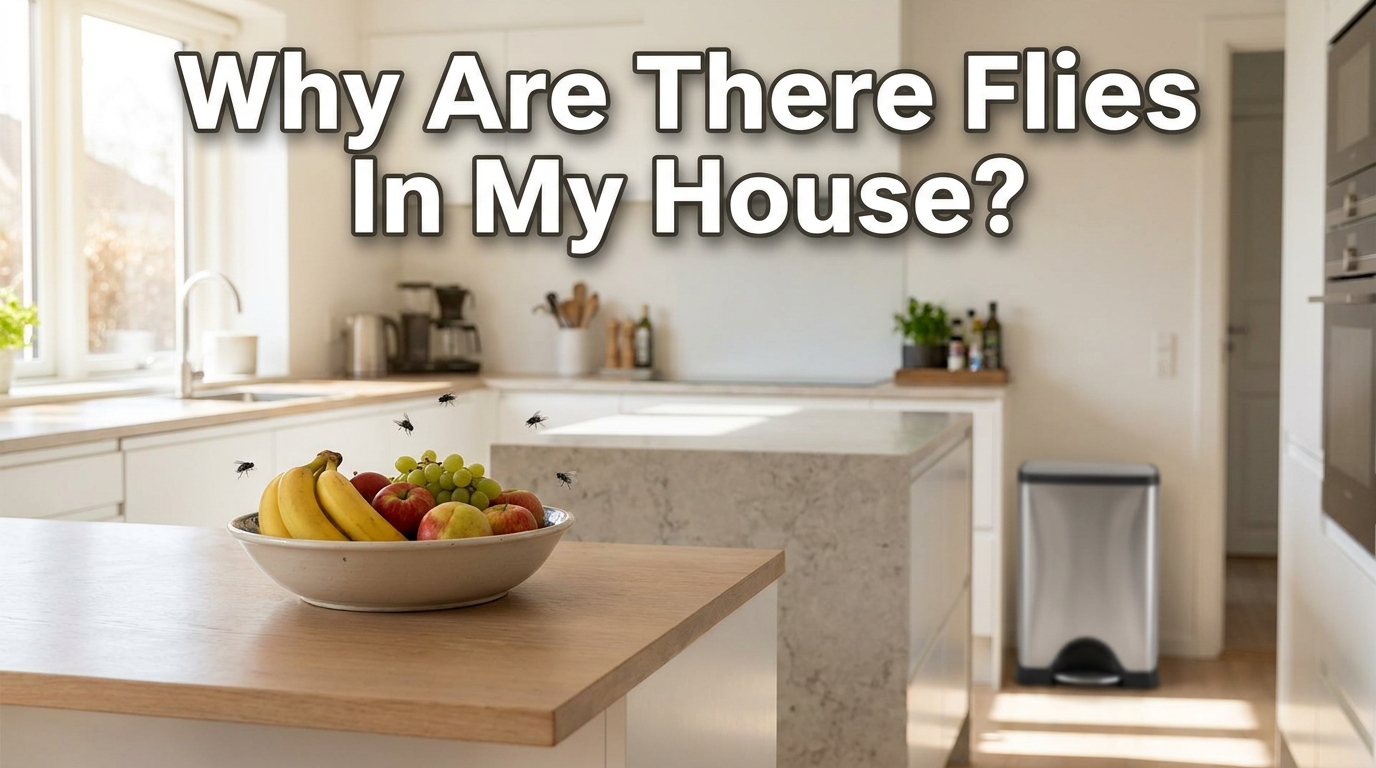
You walk into your kitchen, and there they are again — flies, buzzing around your fruit bowl, your trash can, or just floating lazily near the window. It’s annoying, a little gross, and honestly kind of mysterious. Where are they even coming from?
If you’ve found yourself searching “why are there flies in my house,” you’re definitely not alone. This is one of the most common pest complaints, especially during warmer months. The good news is that flies don’t just appear out of nowhere — there’s always a reason, and once you know what’s attracting them, getting rid of them becomes a lot easier.
In this guide, we’ll break down exactly why flies show up in homes, the different types you might be dealing with, how to find their source, and practical, science-backed ways to get rid of them and keep them out for good.
What Attracts Flies Into Your Home?
Flies are drawn into homes by a combination of smell, warmth, and food sources. According to the University of Kentucky Entomology Department, houseflies are particularly attracted to decaying organic matter, sugary substances, and moisture.
Here are the main attractants:
- Ripening or rotting fruit and vegetables
- Trash cans, especially ones with food residue
- Pet waste, indoors or in the yard
- Spilled drinks, juice, or sticky residues
- Drains with organic buildup
- Compost bins kept too close to the house
Even a small amount of exposed food can be enough to draw flies in from outside, especially if doors or windows are left open.
Common Types of Flies Found in Homes
Not all flies are the same, and identifying which type you’re dealing with can help you figure out the source faster.
House Flies
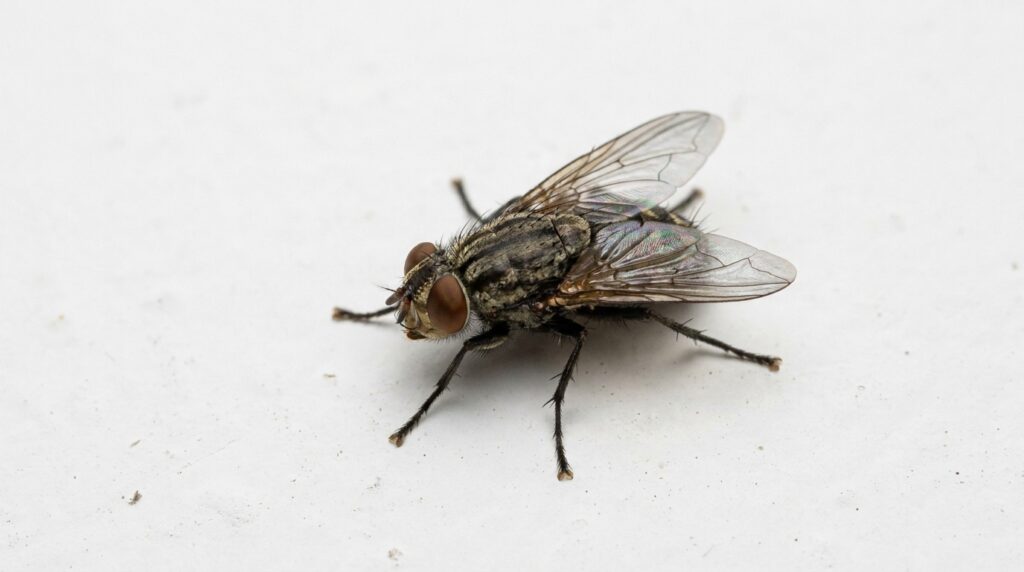
House flies are gray with four dark stripes on their thorax. They’re attracted to almost anything organic — garbage, pet food, and leftover meals. Per the CDC, house flies can carry over 100 different pathogens, making them more than just a nuisance.
Fruit Flies
Fruit flies are tiny, tan or brown, with red eyes. They’re drawn to fermenting fruit, vegetables, and even sugary residue in recycling bins. The University of California IPM Program notes that fruit flies can develop from egg to adult in as little as 8 days under warm conditions.
Drain Flies
Small, fuzzy, moth-like flies that breed in the gunk inside drains, especially ones that aren’t used often. They look almost like tiny moths and tend to cluster near sinks, showers, or floor drains.
Cluster Flies
These are larger, slow-moving flies that often appear in fall and winter, entering homes to seek warmth. They’re more of a seasonal nuisance than a sanitation issue.
How to Find Where Flies Are Coming From
Before you can solve a fly problem, you need to find the source. Here’s a simple checklist:
| Area to Check | What to Look For |
|---|---|
| Trash and recycling bins | Food residue, sticky spills, unwashed containers |
| Fruit bowls and pantry | Overripe produce, open packages |
| Drains (kitchen & bathroom) | Slow drainage, organic buildup, odor |
| Pet areas | Uneaten food, waste |
| Windows and doors | Gaps, torn screens, unsealed entry points |
| Compost bins | Proximity to house, lid seal |
A good trick recommended by pest professionals is the apple cider vinegar test: place a small dish of apple cider vinegar with a drop of dish soap near suspected areas. Flies will be drawn in and trapped, helping you confirm the hot spot.
Why Flies Multiply So Fast Indoors
Flies reproduce incredibly quickly, which is why a small problem can turn into a big one within days. According to Penn State Extension, a single female housefly can lay up to 500 eggs in her lifetime, and under ideal conditions, eggs can hatch into adult flies in less than two weeks.
This rapid life cycle means that even a tiny breeding spot — like a forgotten piece of fruit or a dirty drain — can produce dozens of new flies in a short time.
Practical Ways to Get Rid of Flies in Your House
1. Eliminate the Food Source
This is the single most effective step. Throw away overripe produce, wipe down counters, and store food in sealed containers.
2. Clean Your Trash and Recycling Bins
Rinse out containers before recycling, and clean trash cans regularly with soap and water to remove residue that attracts flies.
3. Fix Drain Issues
For drain flies, scrub the inside of drains with a drain brush and use a mixture of baking soda and vinegar to break down organic buildup.
4. Use Fly Traps
- Sticky traps for general house flies
- Apple cider vinegar traps for fruit flies
- UV light traps for larger infestations
5. Seal Entry Points
Check window screens for tears and ensure doors close tightly. Weatherstripping can help close small gaps.
6. Keep Pet Areas Clean
Pick up pet waste promptly and avoid leaving pet food out for long periods.
Natural and Chemical-Free Fly Repellents
Many people prefer natural solutions before reaching for chemical sprays. Some plants and scents that flies tend to avoid include:
- Basil
- Lavender
- Mint
- Eucalyptus
- Cloves combined with citrus
While these aren’t a guaranteed fix, they can help as part of a broader prevention strategy, especially when combined with proper sanitation.
When to Call a Pest Control Professional
If you’ve cleaned thoroughly and flies keep coming back, it might indicate a hidden breeding site — like a dead animal in a wall or a severe drain infestation. The National Pest Management Association recommends professional inspection if:
- Fly populations don’t decrease after a week of cleaning
- You notice flies concentrated in one specific room
- There’s an unexplained odor accompanying the flies
A professional can pinpoint hidden breeding grounds that aren’t visible during a regular cleaning routine.
Expert Tips to Prevent Flies Long-Term
- Take out the trash daily, especially in warmer months
- Don’t leave dishes in the sink overnight
- Run your garbage disposal regularly with ice and citrus peels to keep it clean
- Inspect window screens at the start of each season
- Store fruit in the fridge once it’s ripe, rather than on the counter
Pros and Cons of Common Fly Control Methods
| Method | Pros | Cons |
|---|---|---|
| Sticky traps | Cheap, easy, no chemicals | Not very discreet |
| Vinegar traps | Natural, effective for fruit flies | Needs frequent replacing |
| Sprays | Fast-acting | May contain chemicals, short-term fix |
| Professional pest control | Long-term solution, identifies root cause | Costs money |
FAQs
1. Why do I suddenly have flies in my house?
A sudden increase usually means there’s a new food source — like ripening fruit, a forgotten leftover, or a full trash bin — or an entry point like an open door or torn screen.
2. Do flies mean my house is dirty?
Not necessarily. Even clean homes can attract flies if there’s an open food source, a drain issue, or an entry point from outside.
3. How long do flies live indoors?
Most house flies live around 15 to 30 days, but they reproduce quickly, so the population can grow fast if conditions are favorable.
4. What smells do flies hate?
Flies tend to avoid strong scents like basil, lavender, mint, and eucalyptus, though these work best as a supplement to proper cleaning.
5. Can flies come from drains?
Yes. Drain flies specifically breed in the organic buildup inside drains, especially ones that aren’t used regularly.
Conclusion
Flies in your house aren’t random — they’re almost always a sign that something is attracting them, whether it’s a piece of overripe fruit, a dirty drain, or a small gap in a window screen. The good news is that once you identify the source, most fly problems can be solved with simple cleaning and prevention habits.
Start with the basics: clean up food sources, check your drains, and seal up entry points. If flies persist despite your best efforts, don’t hesitate to bring in a pest control professional to find what you might be missing.
Got a fly problem you’re still struggling with? Try the apple cider vinegar trap tonight and see how many you catch by morning — it’s a simple way to start taking back your space.

