
The first time most people bite into a cotton candy grape, they stop chewing for a second and check the label. It genuinely tastes like the fairground treat, yet there’s no sugar coating, no injection, and no flavor spray involved. So how are cotton candy grapes made, and is there a catch?
The short answer is patience. A tremendous amount of it. These grapes are the product of old-fashioned cross-pollination, repeated across thousands of plants over more than a decade, until one seedling finally carried the flavor breeders were chasing.
What Are Cotton Candy Grapes Made Out Of
Before getting into the breeding process, it helps to clear up a common misconception. A lot of people assume these grapes are injected with syrup, dipped in flavoring, or genetically engineered in a lab. None of that is true.
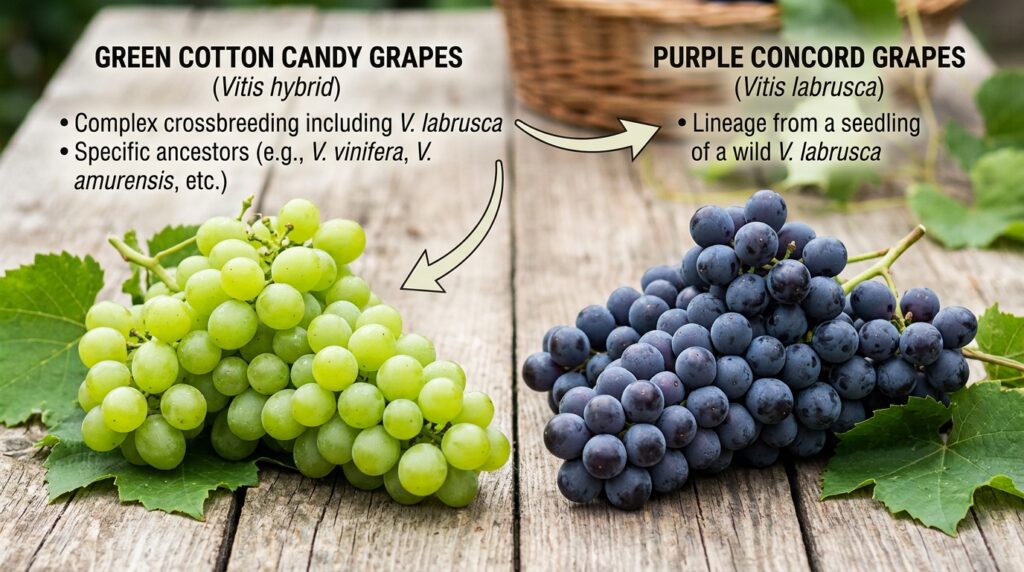
So what are cotton candy grapes made out of, exactly? They’re made from two existing grape varieties combined through natural pollination:
- A Concord-type grape (Vitis labrusca) from the University of Arkansas breeding program, prized for its sweet, candy-like flavor but too soft and seedy for grocery shelves
- A firm, seedless table grape variety of Vitis vinifera, chosen for its crisp texture and shelf stability
Breeders combined the pollen of one variety with the flower of the other, the same basic technique gardeners and farmers have used for centuries to create new fruit varieties. Nothing here involves inserting foreign DNA or lab-engineered genes. It’s closer to matchmaking than manufacturing.
The Breeding Process, Step by Step
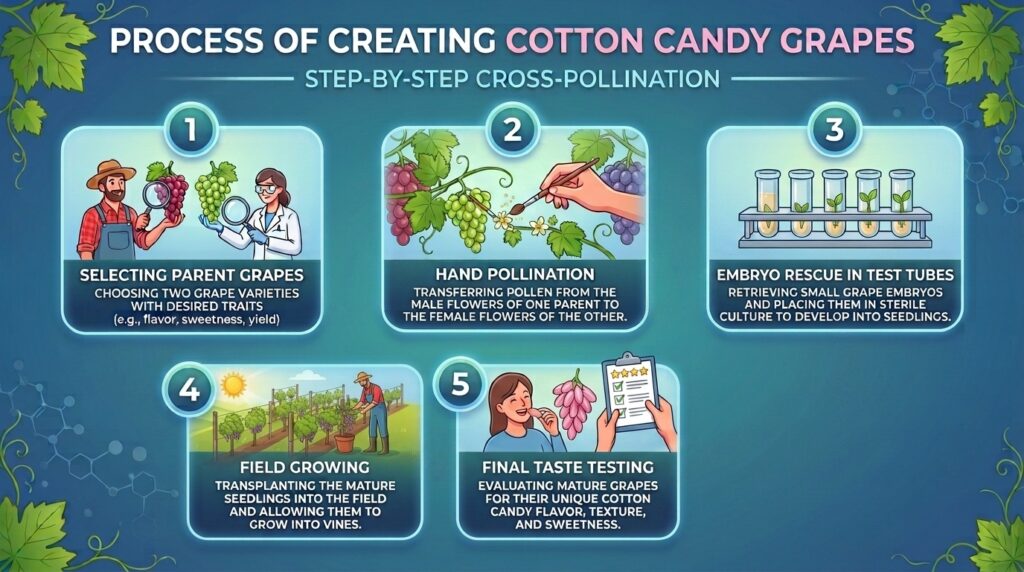
Creating a brand-new grape flavor doesn’t happen in a single growing season. Here’s roughly how the process unfolds on a working breeding farm.
Step 1: Selecting the Parent Plants
Breeders start by choosing two parent varieties that each bring something valuable to the table. One might carry an unusual flavor, while the other offers firmness, size, or disease resistance. For cotton candy grapes, the flavor donor was a soft, purple Concord-type grape, and the texture donor was a hardy green vinifera variety.
Step 2: Hand Pollination
Grape breeding at this level isn’t left to bees. Pollen is manually collected from the male flowers of one vine and brushed directly onto the female flower clusters of the other, a technique known as hand-pollination. This gives breeders precise control over which two plants actually combine their genetics.
Step 3: Growing Embryos in Tubes
Because the goal was a seedless grape, breeders couldn’t simply wait for seeds to sprout in soil. Instead, tiny embryos are rescued from the fertilized flowers shortly after pollination and grown in nutrient-filled test tubes in a lab, a technique plant scientists call embryo rescue. This step alone can involve tens of thousands of attempts for every plant that survives to maturity.
Step 4: Field Testing for Years
Once a seedling is strong enough, it gets moved out to a test vineyard. From there, growers wait, often three to five years, for the vine to mature and produce its first fruit. Most seedlings are discarded at this stage because the flavor, size, or texture simply isn’t right.
Step 5: Taste Testing and Selection
Out of tens of thousands of seedlings, only a tiny handful ever make it to a formal taste panel. According to breeding accounts, the winning cotton candy grape seedling was identified after a group of children sampling test fruit spontaneously said it tasted like the carnival treat, which is where the name came from.
Cotton Candy Grapes Are Not GMOs
This is worth repeating because it’s the single most common myth surrounding these grapes. Genetic modification involves inserting genes directly into a plant’s DNA, often from an unrelated species, using laboratory techniques. That is not what happened here.
Cotton candy grapes were created through conventional plant breeding, the same method used to produce seedless watermelons, tangelos, and thousands of other fruit hybrids sold in supermarkets today. The cross-pollination simply combines genetic material from two grape plants that could, in theory, cross naturally in the wild given enough time.
| Process | Cotton Candy Grapes | True GMO Crops |
|---|---|---|
| Method | Hand pollination between two grape plants | Direct gene insertion in a lab |
| Species involved | Two related grape varieties | Often genes from unrelated organisms |
| Regulatory classification | Conventionally bred | Regulated as genetically engineered |
| Time to develop | Roughly 10 to 12 years | Varies, often faster once traits are mapped |
Why It Took So Long to Get the Flavor Right
Grape breeding is a numbers game. Most new flavor traits only show up in a small fraction of seedlings, and even fewer of those combine flavor with the firmness and shelf life needed for a commercial grape.
Breeders behind this variety worked through roughly a decade of trial and error, testing thousands of seedlings across test vineyards before landing on the one that delivered both the taste and the texture needed for grocery store shelves. The variety was patented in the early 2010s and reached mainstream stores shortly after.
A few reasons the timeline stretched out so long:
- Seedless grapevines take longer to test because embryo rescue is required at every cross
- Flavor only becomes apparent once the vine matures and produces full-size fruit
- Firmness and shelf stability had to be balanced against sweetness, since overly soft grapes don’t survive shipping
- Climate mattered too; warm days and cool nights were needed to concentrate the natural sugars that create the candy-like taste
Where Cotton Candy Grapes Are Grown Today
These grapes need a specific climate to develop their signature flavor. Hot, dry days paired with cool nights help concentrate natural sugars in the fruit, which is part of why California’s Central Valley became the primary growing region.
To stretch the growing season and meet demand, cultivation has since expanded to additional regions with similar climates, including parts of Mexico, Chile, and Peru. This staggered growing calendar is why cotton candy grapes tend to show up in stores for a few weeks each summer rather than being available year-round.
Nutrition: How Do They Compare to Regular Grapes
People often assume a grape that tastes this sweet must be loaded with added sugar. In reality, the sweetness comes entirely from naturally occurring fruit sugars, concentrated through selective breeding rather than any additive.
Rough nutritional comparison per typical serving (numbers vary slightly by source and growing conditions):
| Nutrient | Cotton Candy Grapes | Standard Green Grapes |
|---|---|---|
| Calories | ~50-60 | ~50-60 |
| Sugar | Slightly higher, roughly 10-12% more | Baseline |
| Fiber | Present | Present |
| Vitamin C | Present | Present |
| Added sugar | None | None |
The takeaway is that these grapes are still a whole fruit. They contain a bit more natural sugar than a standard table grape, but nothing close to actual cotton candy, and no artificial sweeteners are involved at any stage.
Expert Tips for Buying and Storing Cotton Candy Grapes
A few practical tips if you’re planning to pick some up during their short growing window:
- Look for firm, plump grapes still attached to a green, flexible stem; a dry or brown stem often means the bunch is past its prime
- Store them unwashed in the refrigerator, ideally in a breathable container, and rinse just before eating
- They typically stay fresh for about one to two weeks when refrigerated properly
- Peak availability tends to run from mid-summer through early fall, though exact timing shifts by region and harvest conditions
- Prices usually run higher than standard grapes due to the shorter growing season and licensing costs tied to the patented variety
Pros and Cons of Cotton Candy Grapes
Pros
- Distinct, genuinely sweet flavor without any added sugar
- Bred using conventional, non-GMO methods
- Contains the same core nutrients as regular grapes, including fiber and vitamin C
- Fun way to introduce kids to eating more fruit
Cons
- Limited seasonal availability compared to standard grapes
- Typically more expensive per pound
- Slightly higher natural sugar content, worth noting for those watching sugar intake
- Not something home gardeners can grow from a store-bought bunch, since the variety is patented and licensed to specific growers
Frequently Asked Questions
Are cotton candy grapes genetically modified?
No. They’re created through traditional cross-pollination between two existing grape varieties, not gene insertion or laboratory engineering. This breeding method is the same conventional approach used for countless other fruit hybrids on the market.
What are cotton candy grapes made out of?
They come from crossing a sweet, Concord-type grape variety with a firm, seedless table grape. The Concord parent contributes the candy-like flavor, while the table grape parent contributes crunch and shelf stability.
Why do cotton candy grapes taste like cotton candy?
The flavor comes from a naturally higher sugar concentration paired with low tartness and subtle vanilla-like notes inherited from the Concord-type parent plant, a combination breeders spent years selecting for.
Can I grow cotton candy grapes at home?
Not from seeds or cuttings purchased at a grocery store, since the variety is patented and licensed only to approved commercial growers. Home gardeners can’t legally propagate the trademarked plant without a license.
When is the best time to buy cotton candy grapes?
Availability is seasonal and generally peaks during the warmer months of summer into early fall, though the exact window shifts depending on growing region and that year’s harvest conditions.
Final Thoughts
Cotton candy grapes are proof that some of the most surprising food innovations come from patience rather than technology. What started as a single promising seedling among tens of thousands eventually became one of the most talked-about fruits in the produce aisle, all without a single artificial ingredient.
If you spot a bag at your local grocery store this season, it’s worth grabbing one before the short window closes. And once you’ve tried them, you might find yourself checking the produce section every summer just to see if they’re back.
This article is for general informational purposes only and is not intended as medical, dietary, or agricultural advice. Nutritional values are approximate and may vary by source and growing season. Always consult a qualified professional for specific dietary guidance.

